10 things to make 2023 great!

2023 is set to be a great year don’t you think! There are some things that I need to absolutely focus on! There are some things I need to do better and there are some things I could do with doing a little less! Now though is a good time for me to embarking on a mission of self improvement. Things are settled. We’re in our new house and have managed to get done some of the things that needed doing and this will hopefully free up some time, some enthusiasm and some psychological capacity to achieve more. Here are the things I’m going to do and I’d urge you to do!

Get outside more

I love to run and cycle. I enjoy a good walk. Over the last couple of months I’ve started going to more gym classes so, while this is not a bad thing, it’s meant less outside time. And I love outside time! What are the benefits of being outside..

  • You will experience a great sense of well-being. Breathing in fresh air, embracing the space around you, feeling the cold upon your cheek. Even at this time of year getting wrapped up and going out for a walk will give you a boast.
  • And you’ll burn some calories! And let’s be honest we’re probably about to have too many of them in the next week or so! For those a little fitter get your running shoes on, on get your bike out and go out and get breathless and feel that cool refreshing air in your lung. Outdoor workouts are better than indoor ones. For example, running. Outdoors you are contending with different terrains or you are running against the wind… all better for you than the treadmill I feel!
  • Green exercise – or exercise in a natural environment – has been shown to boost self esteem and mood and you’ll get a well needed, at this time of year, boost in vitamin D which is reported to be good for your immune system – Now that’s got to be good!

Get lost in the moment
This one is simple. Just experience what is currently happening to you. The water on your skin in the shower, the air passing into and out of your lungs, the taste of the food in your mouth, the song on the radio….. Do any of these things or any others to the exclusion of other thoughts and distractions. The benefits of simply taking some time out to be mindful of a particular thing will reap benefits. Before you know where you are at you might find yourself wanting to try meditation! You never know!

Get myself (more!) organised

Being organised gives you a great sense of control and fuels your well being. As I’m fond of saying – if you don’t control it then it will control you. Try applying the two minute rule or grab a copy of David Allen’s book ‘Getting Things Done’. I can tell you, hand on heart, at work and at home my life is so much better for getting myself organised. I can do it better though, especially at home, to make sure I make the most productive use of the time I have. For me time is the most precious commodity we have and we waste it at our peril.

Drink more water

This one should be easy to do surely! How hard can it be to go to the tap and fill a glass up and just drink it! I know!! So why don’t I do it! I even have my phone remind me to drink water every few hours and still I don’t drink enough! Water is refreshing, calorie free, and it’s absolutely crucial for you body to function effectively. So come on! Flush those kidneys and feel great. More on this here.

Drink less coffee and alcohol

I don’t know how this one is going to go for me! I love coffee! And I do like the odd tipple on an evening. I read somewhere drinking coffee borrows time from later in the day…. You will crash later and be less productive. And drinking alcohol borrows time from tomorrow as it will affect your sleep and therefore your feeling of well being the next day. Must try harder!

Read for 15 minutes a day

I read every day. Knowledge is life improving, how could it not be! Reading for 15 minutes a day at an average speed of a page a minute will get you through a 300 page book in 20 days. That will get you through at least 15 books a year. Not a bad start to enhancing your knowledge! And I bet if you get the habit you’ll read more! Add the next thing on the list in and you’ll be amassing information at a fair rate of knots!

Embrace audio books

Time is the most precious of commodities and I want to put as much of it as I can to good use. It takes me 40 minutes to drive to work and the same to get back home or 30 minutes to walk the dog. Sometimes I listen to music – that’s a good thing. Sometimes I listen to the news on Radio 4….. but now mostly I listen to audio books and they are great! I get mine through Audible. They download to my iphone and play through the car stereo seamlessly! The books are anything from 4 to 7 hours long and one lasts me through most of the month when interspersed with other things…. And that’s another 12 books in a year… done! Sorted!

Set small achievable goals

How do you eat an elephant? One bite at a time! Several books I’ve read talk about setting achievable goals and some of the models I talk about in some workshops show that breaking down big tasks into smaller steps achieve progress. Problems or projects seem daunting when you just think of the end goal. But if you think of the many small steps and tackle them one at a time you stand more chance of achieving success! My goal for this year is weight loss – more about the steps I’m taking later. I’m read Mini Habits: Smaller Habits, Bigger Results by Stephen Guise where he talks about setting himself the target of doing one sit up a day… that was all! Just one! And he explores where that got him! Worth a read!

Sit quietly from time to time

This is a bit like ‘getting lost in a moment’ but slightly different. Getting lost in a moment can be about getting engrossed in an activity. But sometimes we need to just sit quietly. It could be, but doesn’t need to be, meditation. It could be sitting quietly while clearing your mind but, for me, more than this, sitting quietly can be a time for you to think things though in a calm, focussed way. In the rushing about of modern life our responses are, dare I say, reactionary rather than well thought through often. I’m going to sit and experience time just passing in a quiet state from time to time, maybe first thing on a morning…. Now that’s good use of time!

Once a month mix it up

Don’t get into a rut. For all the things above keep mixing it up. Been out running a lot this month? Then next month go out walking! Been spending quiet time on a morning? Then, for the next month do it on your lunch break… you get the idea. From an exercise point of view your body gets used to what you ask it to do so mixing it up challenges it to ‘re-think’. As for your mind, giving yourself space at different or being in the moment for different experiences will help you understand yourself and what works for you and what will, hopefully, lead you to a greater sense of well-being, a greater sense of inner-peace.

I’m going to try all of these things and I’ll let you know how I get on. Let me know what you get up to!

7 small steps that could lead to big things

Last week I stumbled across a great Twitter thread by Dr. Nicole LePera (@Theholisticpsychttps) while I was pondering self-care, well-being and reflection… you know the usual stuff I ponder. She is a Psychologist, Author (How To Do The Work) and a podcast host. She listed 7 things that she felt were great small steps that could lead to big changes. And as you know, I am a fan of such things.

Image

She started by suggesting ‘self-witnessing’. I love this phrase! She says it’s helpful to observe yourself without judgment but with curiosity. This is reflection pure and simple I’d suggest. What did I do? Why did I do it? And what can I learn from it? A much better approach than mulling something over, dwelling on it, and then just sitting with it. We must analyse and ponder and then make some change if change is required. We may also not need to change because we might find something is outside of our control anyway and we just have to accept it and move on.

Secondly, and this this another crucial step, have boundaries around your time. Absolutely! In her book ‘Time Management from the Inside Out’ Julie Morgenstern observes, “Good time management is not about buying a great calendar or planner. It is not about learning tricks to move faster, or about doing everything with mechanical efficiency. It’s about creating days that are meaningful and rewarding to you and feeling a sense of satisfaction in each and every one of your tasks.” You cannot manage time – you can only manage what you do with it – and one of the things you can do with time if you have no boundaries is waste it. The other option would be to set your intention to something that would be useful to you, set some time aside for it, and get to it. You also though do need time to do nothing, slump in the chair, or lie down and rest, but be cautious as this can become counterproductive if not done with intent and you find yourself drifting through a whole day doing this.

Then, be aware of the company you keep. You might have heard the phrase ‘energy vampires’? People who just sap the energy from you. You may have people in your life who encourage you to do things that don’t fit with your identity and your goals. You need people in your life who support where you’re heading. Some can drag you back. You may need to ease them out of your time and life. You may need to just remove them straight away.

LePera then goes on to say, ‘Move Your Body’! Sound Advice! Exercise is a gateway habit. People who exercise are more likely to do other positive ‘life’ things and make healthier choices. And it makes you feel great. It doesn’t matter what you do in your life taking regular exercise will enhance it. Even those involved in roles where they predominantly use their brains will find they can do that better through exercise. The organ in your body that uses the most energy is your brain – so there’s a physical preparedness required for mental work.

Next, surround yourself with the voices of helpful, supportive people. This might be people close to you or people who you can tune into through podcasts, YouTube, blogs and the like. This, in LePera’s words keeps ‘inspiration flowing in your ears’.

Her penultimate suggestion is to give back. There is oodles of evidence that if we feel like we are contributing, feel like we are giving back then we feel positive. Circulate that positive energy.

And finally, another phrase that she uses is, ‘become your own wise inner parent’. Self-talk is crucial to our well-being. But the right self-talk. You need to love yourself, hold yourself, tell yourself how great you are. Because you are. Yes we have to live and learn and acknowledge the things we need to work on. But, right here, right now, for this moment you are all you need to be. We’ll work on tomorrow, tomorrow. David Allen (my favourite writer on getting things done says we can do anything, but we can’t do everything. He is absolutely right. As human being we are amazing and capable of taking ourselves to all sorts of ‘places’. But we need to take small steps in order to not overwhelm ourselves. We can’t do everything, but we can do something and LePera’s ideas give us some great starting points!

Effort begets Motivation

It’s really hard to stay motivated and focussed isn’t it. I find I’m on about a 3 or 4 week cycle with many things like exercise and nutrition. I have maybe 2 to 3 weeks of intense focussed helpful activity and then into the third week things slide and then in the fourth week things have morphed into disaster. No run and lots of crisps. Familiar?

EFFORT MAKES ALL THE DIFFERENCE - Forging Fitness in Norfolk

There is a huge disconnect in our psychology somewhere that means we know exactly what we need to do but often don’t do it. I know what to eat, I know that exercise is good for me but doing it routinely day in day out takes huge effort!

I’ve always thought, and still do, that change has to come from within. We have to want to do something different. As Daniel Pink says in his book ‘When’, keep engaging in the same habits you’ll get the same results. Different habits, different results. We’re approaching the new year, a time of resolutions and ‘this is my year’ talk. The reality is that starting to change on January 1st is no better a time than May 18th, or October 7th. The days are all the same. I’d argue that January isn’t a good time to try and change anything particularly around nutrition (there will still be left over festive goodies) or exercise (it’s cold out there, and dark!) When we start to do something like this and don’t continue we feel guilt and revert back to old behaviours because they are comfortable.

If what you are doing isn’t working maybe it’s time to try something different.

What’s interesting is that there is a view that effort begets motivation. Now, I’ve always thought that I should do things to prepare myself to stimulate motivation and then get on with the task at hand. This turns that around and says that actually by just doing something, however small, you will generate motivation.

There’s the story of the man that did one press-up. I’m not sure if this is a true story or an allegorical tale but either way (I found it online) the man in question wasn’t getting anywhere with his exercise routine and wasn’t feeling motivated so asked himself the question, ‘what could I do to get started’. One press-up. So he got up the next day got on the floor and did one press-up and fuelled by this success he thought – well now I’m down here I might as well do another and another. The success of the small effort led to a motivation fuelling loop.

This has a name and it’s called ‘The Power of Small Wins’. When we do something, however small, we feel good and we get a little dopamine rush. Dopamine is our feel-good hormone. Feeling good motivates us on to do something else. Effort begets motivation.

It’s the same when we feel overwhelmed and don’t know what to do. Overwhelm is very demotivating – I don’t know what to do so I’ll procrastinate and do nothing. We have a predilection for the easy. So when overwhelmed do something, however small, and this has a snowball effect. You will gather pace, enthusiasm, and motivation.

Effort begets motivation… be a snowball!

How To Roll The Hugest Snowball Possible - Your Essential Guide

The Power of Small Steps for Making Big Changes

Guest Blog by Emma Grace Brown

When it comes to building healthier habits, too many people decide to make huge, sweeping changes overnight. Almost inevitably, they realize that these massive lifestyle shifts are impossible to keep up and, after a few days of trying without success, they give up entirely and go back to their old ways. As you can see, this isn’t the picture of crafting an effective lifestyle change.

If you’re hoping to make a change in your life, your first step is to let go of this all-or-nothing, everything-at-once mentality. We promise: It’s holding you back. I have put together this guide with Social Work Shorts and Self Care Shorts about how to use incremental changes to point your life in the right direction:

For more helpful content, if you are a social worker or social care professional turn to Social Work Shorts your go-to source of information and obviously there are loads more self care and productivity tips here at Self Care Shorts!

Start Keeping Track

The Ultimate Habit Tracker Guide: Why and How to Track Your Habits | James  Clear

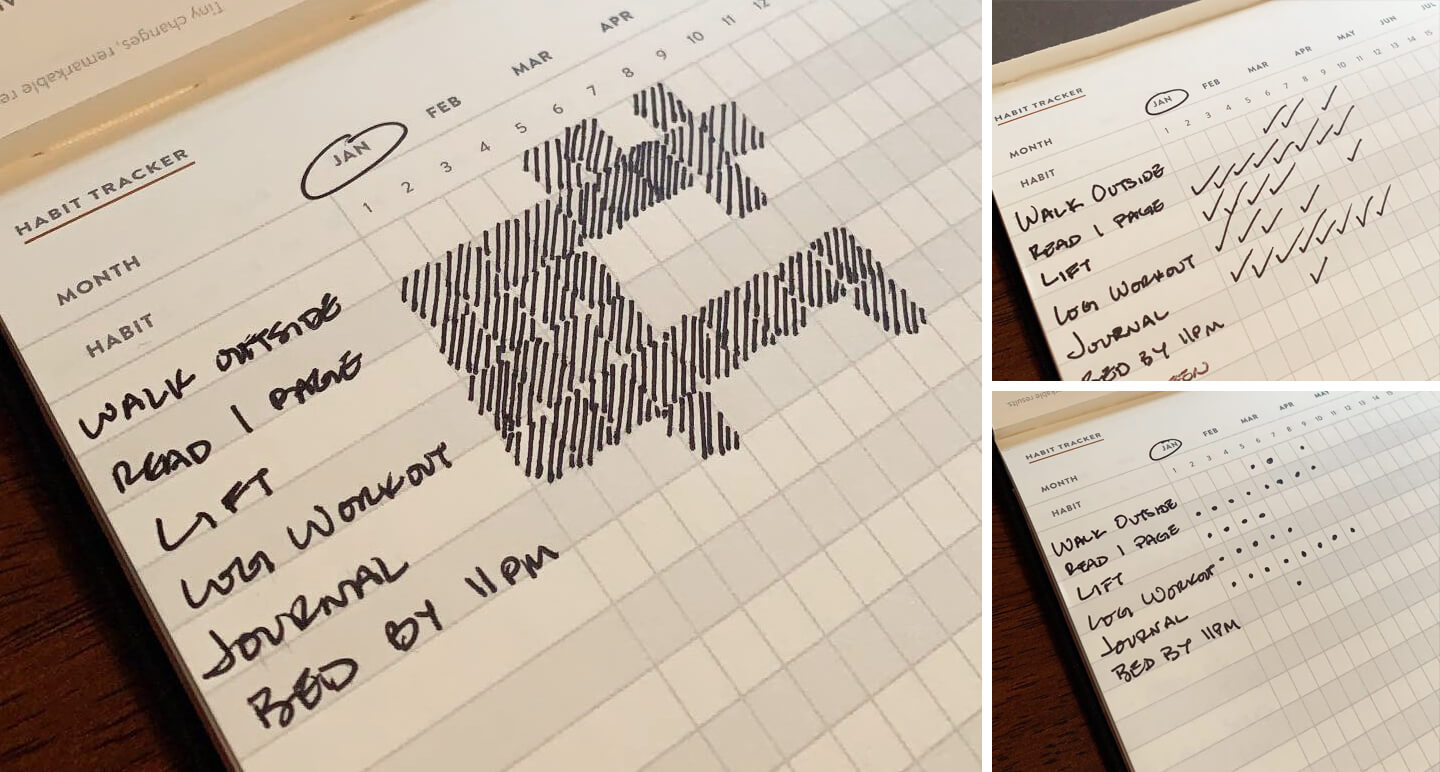
It’s hard to know where to go if you don’t know where you’re starting. That’s why it’s so important to start keeping track of your habits before you start trying to change them. You need a baseline in order to set realistic goals for yourself going forward. Give yourself a month or so to note your current habits, and use that information to inform your next steps.

There are several ways to track your routine. You can use a journal or planner to note how often you exercise, what kind of meals you tend to eat, as well as your mood throughout the day. You can also use a phone or smartwatch or fitness tracker to gauge your efforts. You can even take your tracking efforts one step further with more useful tech gadgets, such as a quality pair of headphones. They can come in handy when following along to a fitness video on your phone or listening to your favorite workout playlist.

No matter what you use to track, remember to take note of both the actions you take and how you feel during the day. For example, you might notice you tend to have more energy after a walk, or feel more anxious on days when you have two cups of coffee. Recognizing these patterns helps you define your goals and gives you solid proof that the choices you make really do matter.

Pelvic Pain When Walking: Causes, Treatment, Prevention

Pick One Small Change

Your first step should be to identify one small, effective change you can make based on the baseline habits you’ve noticed. Let’s come back to the walking example. If you notice you have more energy after your walks, you might decide to try and take a walk every day. Keep it simple – avoid adding specifications about the amount of time or distance you have to walk. Instead, focus on a “no zero days” mentality. If you walk around the block that still counts. Focus on consistency, not perfection.

Once you’ve kept up with this new habit for at least a month, you can start thinking about the next habit you’d like to build. However, it’s important that you use the notes you’ve taken since you added the new habit to define your next steps. After all, if you no longer feel anxious on two-coffee days now that you’re walking more, maybe having two cups of coffee isn’t a problem anymore.

Practice Self-Compassion

Changing habits isn’t easy, even when you give yourself the best start by going small and simple. That’s why it’s extremely important to go into goal-setting periods with self-compassion. If you mess up or fall behind, that’s not a sign of failure. It might be a sign that you need to make things simpler for yourself or try a different habit first, but it doesn’t close a door. Give yourself the space and time you need to grow, and remember that slow progress is still progress.

Self compassion through grief - SAS Life

The all-or-nothing mentality will always hold you back. Learn how to let go of it and, instead, focus on honouring the gradual, back-and-forth nature of change. You might just find that shifting your worldview brings your goals closer than ever before.

You can find more from Emma on her own website here

Photo Credit: Pexels

Stephen Covey’s 7 Habits for Highly Effective People

How to Form Better Habits as an Entrepreneur

The message that I’m going to give you here is a simple one….

Keep engaging in the same habits and you’ll get the same results
Engage in different habits you’ll get different results

Simple!

So if you are aceing all of your habits – good job! But maybe a little reflection on our habits at some point is good for us all. What are the things that are constantly getting in your way? What are the things you do that seem to keep throwing you off course? What might you want to change, what might you want to be different? What habits would make things better. Pick better habits and you’ll get better results.

When thinking about developing a habit – Think trajectory as well as goal

We set goals quite easily but we need to plan how to get there. Habits help us achieve things. Habits help us achieve our goals (or they get in the way!)
How you go about your business is more important than the goal (even though the goal is important). ‘I will run 3 miles’ is a goal – but you won’t ever do it unless you figure out what the process is to get there. You need to break the goal down into manageable steps and form habits to get you there. And if you engage in negative habits they’ll get in the way of running 3 miles.

Small changes over a period of time lead to big changes

Changes that are small and seem unimportant (going for a walk, eating well, drinking less caffeine) appear unimportant but compound over time – daily choices compound over time

Small – fairly inconsequential steps – lead to massive transformations. We needed to develop positive habits (and maybe hang onto one or two of the bad ones ;-)!) The problem is some of the ways we operate can have a negative impact on us overall.

Zoom out

The problem is when we’re stressed – when we’re up against it – we tend to have a narrow view of what’s going on – we focus on the single thing causing us stress. What we need to do is zoom out and look at the big picture. And when we stand back a clearer picture often emerges. When we stand back it allows us to think about a priority. It gives us the space to consider next steps. It gives us the chance to consider what we may need to change in our environment or in terms of our habits – what we need to change in ourselves. Looking at the bigger picture can help us overcome overwhelm as long as when we’re looking at the bigger picture we take what we find, break it down into what needs to be done, and then make a start.

Stop Setting Goals And Start Building Habits - Focus

Construct habits one step at a time – start small looking for small changes that will lead to transformation

So, what habits might we want to think about establishing – what things can we focus on that over time might transform how productive we are at life….

Stephen Covey’s 7 Habits

Proactive vs. Reactive: How Savvy Use of Analytics Helps Contact Centers  Navigate and Adapt to Uncertainty | NICE inContact

1. Be Proactive

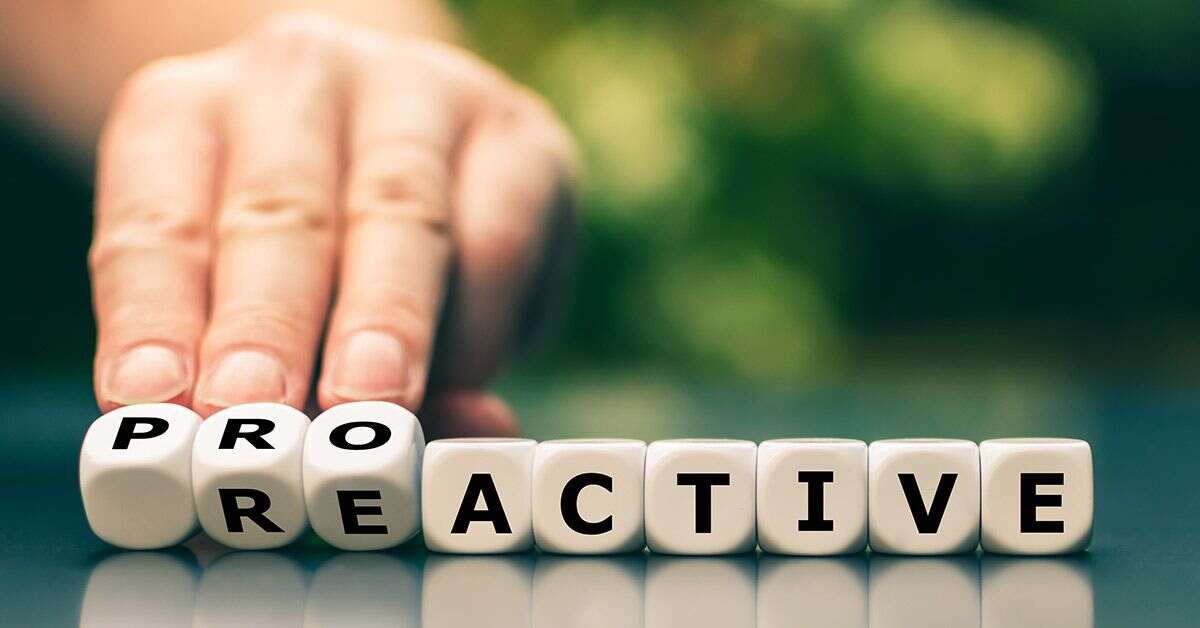
The problem is that people are much more inclined to be reactive. Rather than plan, rather than control what they can, they just wait to see what happens and then react. One of the things we can do is bring the future into the present and consider it, so that we can, as far as possible, predict it. This has a fancy word. It’s called planning. ‘Control it or it will control you’ (David Allen – Getting things Done)

Visualize: Business Lesson #1 - International Image Institute

2. Begin with the end in mind

Where are you going and how are you going to get there. Visualise what you want to achieve this week, this month, this year… this life! This is rooted in your values. Covey talks about Personality Ethics – how you look from the outside – your image – your concern for how other people view you. He says that this is not what we should be rooted in but rather we should be rooted in character ethics – what we are inside. The fabric of our person, not what we look like to other people is what’s important. Values – your values – should drive your goals and your habits

First Things First - YouTube

3. Put first things first

There is a disconnect about how we talk about the things that we know are good for us – or the things that we want to do – and actually doing them. Most of know what we should eat and that we need to exercise but do we do these things effectively!? We procrastinate – which is the art of ruining your life for no apparent reason!

We allow ourselves to disconnect from the things that really matter
From activities, family, friends and rest.

You need to figure out what your first things are by ‘Beginning With The End In Mind’ and then by ‘Being Proactive’ in pursuing your first things first. The science and the research tells us what the first things should be. Rest and recovery, sleep, exercise, nutrition, connecting with others.

How to Create Marketing Win-Win Scenarios - Trade Press Services

4. Think Win-Win

Thinking win-win is about connecting things together (This is not quite how Covey talks about it – but similar). Combine things to encourage habits by connecting something you don’t like doing with something you do like doing – win – win. Instead of walking the dog on a morning – I run with the dog. The dog gets ‘walked’ and I get a run!

Or see planning as a productive process, not time wasted, but time invested
It will mean that you feel more in control of the tasks you have to do and then when you get to the task it will mean you should have everything you need in place. You’ll be in the right place at the right time for the task you are undertaking. So stopping and taking precious time out will be good for you and will mean you get to stand back and take stock and then be better organised – win – win

Research tells us that unmanaged – incomplete tasks drain psychological energy and capacity but managed tasks – even when still not completed -have less of a psychological drain. This allows you to focus on the task at hand while the other tasks wait patiently for their turn. So spending that precious time in planning means you can leave behind the things that are waiting to be done and get on with the next thing you need to do.

Journal Club: How much you think you understand depends on what you believe  others understand | National Academy of Sciences

5. Seek first to understand and then to be understood

By understanding the other person first, you will have taken time to build a relationship and you will be able to cooperate effectively in whatever you are doing. This will support a good working relationship or a good family relationship and will improve the emotional content of interactions.

Seeking to understand may be self reflection. You may be trying to know yourself better or understand what you may need to changed. Know yourself to lead yourself.

Use These 5 'Cogs' to Plan Lessons Like a Pro

6. Synergise

The whole is greater than the sum of the parts. In all the areas of self-care (physical, emotional, practical) small steps over time will lead to big changes and all of these things interact and support each other…..
– you eat better – you feel more like exercising – you exercise – you sleep better – you sleep better you work better – you work better (more efficiently) you feel more able to rest – you rest better you feel more able to look after your nutrition or you exercise – and so it goes.

Also, collaborate – synergise with others. Work with your family on meal prep, buddy up for exercise, make a pact to take a lunch break and lunch together with a colleague.

Self-care is very important. Here's why you need to invest in YOU! |  Goodhomes.co.in

7. Sharpen the saw

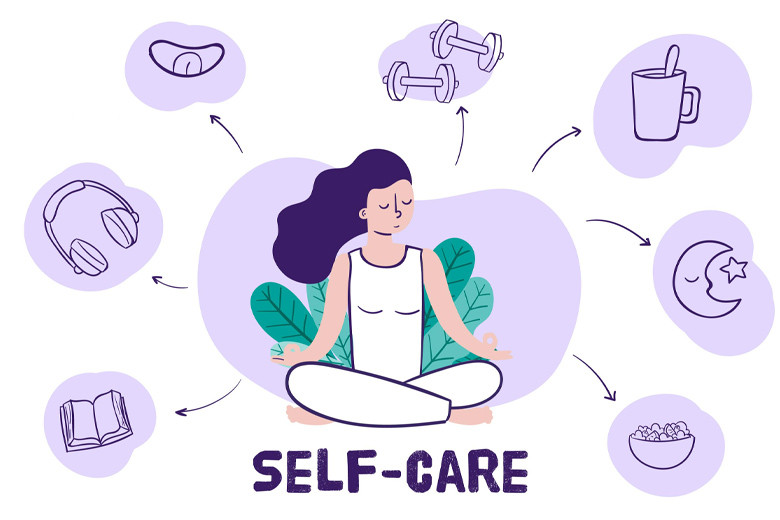
Self care is a necessity not a luxury. If you spend all of your time sawing down trees your saw will become blunt. If you don’t take time to sharpen your saw the trees will take longer and longer to cut down. We need to keep our minds sharp by resting and recovering effectively and by initiating good self-care.

Growing Healthy Habits - CrossFit Leyland

Keep engaging in the same habits and you’ll get the same results

Engage in different habits you’ll get different results

Set your mind to the planning

I’ve got into the habit when talking to people about self-care of finding myself often saying, “all we are doing here is playing psychological tricks on ourselves to get the best out of ourselves so ‘ourselves’ stop getting in the way”.

There’s a funny thing goes on in my head when I go for a run. Sometimes I head off and run a big loop but sometimes I run laps close to home. I have a route that is ‘near as damn it’ exactly a mile long and I have another route that is ‘as near as damn it’ one and a half miles long. If I want to run three miles I find it easier to run the longer route than the shorter one because I only have to do two loops and I’m done! On the shorter one I have to do 3 loops and that, psychologically, seems so much harder. Which is daft really because either way, it’s 3 miles! But it’s a very real thing. In fact, sometimes (like today) when I get to the end of the 3 miles on the 2-lap route, I think, well I might as do another lap because I usually have to! What’s that all about!

Everything we do has a psychological element to it that we can either let get in the way, make work for us, or use to trick us into convincing ourselves that something is a good idea.

Lockdown is difficult for a lot of us. Many people I sense are finding it hard to motivate themselves to do things they would usually just get on and do. Exercise is a good example of this. Lots of people seem to be finding it harder to motivate themselves to do what they know already is good for them.

How can we overcome that moment of inertia when, at the end of a busy day we know we should take some exercise but we just don’t feel like it.

Firstly, let’s give ourselves a break and in some ways identify the problem. When you are feeling stressed you don’t feel like exercising. This is a fact – well researched – well established. An American study from Yale University tested this out and found that levels of stress are a predictor for low physical activity. But it’s a double bind because exercise is a great stress buster. Indeed the same Yale University study showed that those who managed 30 minutes of exercise during the day experienced a reduction in stress.

There are lots of reasons why this might be and all have been researched. Which it is for you is probably down to your own uniqueness! For some the exercise simply takes their attention away from the thing that’s causing them stress and gives them a break from it so they can return to it refreshed.

For others it could the rush of feel good endorphins, the ‘runners high’ you might have heard of. It could be that our stress response, the fight or flight adrenaline and cortisol rush, readies us for physical activity, so in doing something physical we ‘burn off’ these chemicals and we return our body to a state of calm. We in effect ‘took flight’.

So, given exercise is good for us, how do we get past our inertia?

We need to plan for our future self – arrange what it is our future self needs to do. Then, trust our past self to have arranged things that are good for us. The just do them at the moment our past self planned them, safe in the knowledge that our future self will thank us for doing what we planned!

When we try to imagine our future we are strongly influenced by how we are feeling in the present moment. So if you try to imagine what something later in the week will be like when you are experiencing a tiring Thursday and you are just a tad grumpy and ‘down-in-the-mouth’ you are likely to think about the future event negatively. ‘That run will be hard work’, ‘Getting my gear on to do the online workout will be sooooo time consuming!’ And the same works the other way – if you are in a good place then you will think positively about the future. (See Daniel Gilbert’s book ‘Stumbling on Happiness’ for more – Professor Gilbert has spent his life studying the psychology of happiness – he knows his stuff!)

So, how do we make this psychological quirk work for us. Let’s keep going with the exercise example. When on a weekend are you feeling in a good place? I find I have a sweet spot that usually occurs early afternoon on a Sunday. I’m feeling rested and I’m not yet grumpy because it’s nearly time for work again. In this sweet spot I plan my exercise for the week because I’m feeling at the top of my game in terms of motivation. I still keep my planning realistic. I bring the future into the present so I can do something with it. I plan what I will do. I remind myself that about 20 minutes a day is sufficient and if I can do more great!

Then, my week starts. And, as we know, motivation wanes as the week goes on and stress rises. So when I spot at 5.30 on Wednesday evening that my diary says ‘3-mile run’ I trust my past self, when I was in a good place to have thought, ‘I’m going to need something to pick me up by Wednesday and I’ll feel great after a run. Clear headed, invigorated, and if I get some exercise I’ll probably sleep well’. Had I left my planning for exercise on Wednesday until I got home at 5.30 I would probably have said, ‘I can’t be bothered, stuff it, where’s the wine’. Familiar?

In that moment when you think, ‘I can’t be bothered with this running thing in my diary’, you have to trust your past self to have done the right thing for your future self and thought, when in a good place, he’s going to NEED a run by Wednesday. On Wednesday his future self will thank his past self for insisting he went for a run!

There is great power in planning. And there is great power in trusting what you have planned. David Allen (productivity guru of the highest order) says you can’t plan and do at the same time and this is why. The feelings of past self, present self, and future self will get all confused. Our ‘selves’ need to find a good positive moment and plan for our future selves so when we hit that ‘present’ moment we can be fully in that present moment knowing that this must be the best thing that can be done right now or why would I have planned it so!?

Plan.
Then deliver on the plan.
You’ll thank your past self in the future for knowing what will be good for you.

Reworked – Let me tell you about the new book!

Excited to be telling you that today (Friday 15th January 2021) the new book is out! Strictly speaking it’s a reworking of the other book – a remix if you like for the music people among you!

We wrote a book (myself, Lisa and Steph) and we aimed that book at Social Workers because we are all social workers and wanted to provide some sort of ‘toolbox’ to social workers to help them with their self-care, wellbeing, and productivity, because we knew for ourselves and from our social work friends that social work takes its toll.

But, what we and the publisher noted, as we were finishing the book and it was set for publication, was that the advice in it was relevant to so many more people than just social workers because many people in many workplaces experience work based stress and indeed many people experience the stresses of life overall. The book would work for everyone.

So, the publisher, Critical Publishing, had me re-write the book for the general market as the launch of their Business in Mind series – and there are more books to come in that series! Exciting!

So there are two ‘How to Thrive….’ books. How to Thrive in Professional Practice is the one aimed at Social Workers and How to Thrive at Work is the one aimed at everyone (and social workers would find it useful too). So buy one or the other – whichever suits who you are – but don’t buy both as they are very very similar.

I would say though there’s a very nice chapter in the How to Thrive at Work one on Rest which isn’t in the first one…. and even though I say it myself it’s a very nice addition!

Whichever you were to buy – I hope you get something from it!

Happy days!

Lunch Breaks – the rules

I think you know this already but maybe don’t acknowledge it or feel you can do anything about it? Motivation is finite. The further you get into the day the less of it you have at your disposal. The perfect time to top it up is lunch time! So here are the Lunch Break Rules!

Rule Number 1:
Take a lunch break!
Don’t feel guilty. I remember a poster in a senior manager’s office that said – Just because everyone else is doing it doesn’t make it right, and just because no one is doing it doesn’t make it wrong. We need to overturn this ethos that you are somehow more worthy if you work through your lunch break. The reality is taking a break makes you more productive in the afternoon. You will get back the time ‘lost’ to the lunch break in increased productivity. A study at Bristol University showed that a lunch break (with some gentle exercise – see rule 4) boosted mood and motivation by 41% and improved peoples ability to deal with stress by 20%. Put some motivation in the bank. Oh…. and you are legally entitled to a break. Just saying!

Rule Number 2:
Move away from your desk.
There is strong evidence that simply taking time away from your desk and moving your thoughts onto something else replenishes your ability to stay on task when you return to work. In fact when you take your attention away from the external and take some time to be a little more internal through ‘switching off’ and thinking of nothing, maybe through meditation (or just by not thinking too much!), you engage your brain’s Default Mode Network. This is the part of your brain that gets to work when you stop engaging with the external world. Interestingly your brain is only 5 to 10% less active when you are not thinking about anything. That’s your DMN getting to work on what it needs to do at a sub-conscious level, consolidating things, making connections, and the like. You must have experienced something coming to mind, a solution to a problem maybe, when you weren’t even trying to solve it. So get away from work, get away from your desk.

Rule Number 3:
Get outside.
Being in the natural world is a great healer. If you work somewhere where you can spend some time in a green space then do it. We are hard wired from an evolutionary point of view to be in such spaces. They have a calming effect. And fresh air is good for you. Moving around is good for you. And that brings us to rule number 4…..

Get Outside

Rule Number 4:
Take some gentle exercise.
I’ve already mentioned the Bristol Study above that involved some gentle exercise. A different study looked at how sitting less and moving more helped peoples productivity. They showed that a lunch time walk reduced stress, reduced sickness in staff, and led to more mindful practice. A walk will suffice but him the gym or go for a run if you want! As the UK Chief Medical Officer says…. some is good… more is better!

So…. You must achieve Rule 1! And then… if you can achieve 1 or 2 of rules 2, 3, and 4 – we’re onto a winner!

Take that lunch break
Be productive!

Working from home? Here’s how to start your day!

It might surprise you to find that I’m not going to tell you much about how to start work… although I will end up there. This is because what you do before you start your work day is so important no matter where you are working but at this time of ‘lockdown’ it feels doubly important to get the start of the day right. Like it or not having to work in a new way will bring additional anxiety and stress. So here we go..

Get up at the same time you normally would.
Keeping a regular bed time and a regular getting up time fuels good sleep. You should have a pattern that you sustain 7 days a week and should aim to go to bed between 10 and 10.30 and get up between 6 and 6.30. These times are in tune with your body’s natural rhythm. There’s a real risk that in avoiding the commute you use the time to sleep later. This isn’t good for you and there are some much better things you can do to set yourself up for the day.

Make your bed
Small wins are powerful motivators. Every small thing you achieve gives you a little dopamine hit (our feel good chemical) so starting your day by achieving making your bed gets you off to a good start. Also, when it comes to bed time and you go to climb into a nicely made bed it is a satisfying feeling. It will take you a couple of minutes and means you’ve started your day by completing your first task.

Avoid your phone
Don’t start your day with your devices. To be honest I wouldn’t normally say this. I usually have a check of facebook and twitter early in my day, but, at the moment, working from home, you are likely to be locked to tech all day in Teams meetings or replying to emails, and the like. Tech drains us. Eradicate unnecessary tech to avoid tired eyes and a tired brain. Set yourself a little time aside to indulge yourself in the latest meme at the end of the day.

Exercise
I know for definite that if I start the day with some light physical activity it sets me up for the day. I know that I feel more switched on, alert, and able to get into flow. It doesn’t have to be a great deal. I do two things on a morning. I go through a yoga stretching routine to wake my body up and then take the dog for a brisk walk. It will energise you. Also, getting outside on a morning, if you can do so safely at the minute, sets in motion a process that ends with a good nights sleep. The exposure to daylight early in the day sets off a biological process that ends with quality shut eye.

Eat and hydrate
Start with a good breakfast. If you’re having trouble fitting everything in make some overnight oats the night before and then all you do is grab them from the fridge and you’re sorted. But really how long does it take to make some toast or have some cereal. Start the day with something.

Try to get a glass of water in early as you dehydrate while you are asleep. I always have coffee early on a morning. Just go careful with how much you drink as you will have a coffee slump later on. Avoid managing the coffee slump with more coffee. I have two coffee slots first thing in the morning and early after lunch. Strategic coffee drinking! Outside of these times if I feel like reaching for a coffee I go for water and a quick walk – even just around the house. I find, if nothing else, it distracts me, and often hydrating with the water takes the craving away. It’s so important to keep hydrated during the day. Have a glass of water every hour or so or keep a bottle on your desk and sip it.

Get dressed
It’s so easy to slip into something comfortable working from home. Or even to stay in your PJ’s if you’ve got no video calls to make. Don’t. get showered and get ready. Routine is everything. We may be having to establish new routines but establish them we must! We thrive on routine. We give babies and children routine because we know it works. Here’s the thing… when those babies and children turn into adults they thrive on routine too! Getting dressed also signals ‘ready to work’. You will feel much better, you will feel professional, you’ll feel ready to go. I do have a compromise personally which is that I still wear my regulation v-neck black t-shirt, but, instead of my regulation black jeans I’m wearing a smart pair of joggers. I’m still getting ready but enjoying the comfort. And fella’s have a shave. There’s nothing worse than a video conference with some stubbly fella. And I mean you fella’s with beards as well…. nows your chance… shave it off… you do know these beards are going to be viewed in the same way as the mullet is in 20 years time don’t you 😉 …I digress ?

And now you’re ready to start work….

But before you do that – before you go near those emails – two things

Set your goals – Visualise your day

Open up your dairy and think about what you want to achieve today. Setting your intention promotes motivation and overcomes procrastination. Visualise what a successful day looks like. Experience yourself completing tasks and having effective video meetings. Picture yourself ticking things off your ‘to-do’s’. And watch yourself as you close your laptop and move away from work and embark on a lovely evening. There is real power in this – give it a go.

Now you can start work…….

Go get ’em!

Stephen’s book, written with Lisa Watson and Steph Hunter is due out in early May and is called “How to Thrive in Professional Practice”.

Available here https://www.criticalpublishing.com/how-to-thrive-in-professional-practice
for pre order (due out 5th May 2020)

The book is an engaging yet undemanding read, and pulls together the various individual strains of self-care, spirituality and common sense, housing them under one external literary jacket, in a ‘whole system’ approach. A one stop ‘bible’ to give social workers and other professionals an uncomplicated, easy to read, go to resource that empowers them to manage and maintain their wellbeing through personal responsibility and self-care.

Is just enough enough?

Earlier this week I was talking to a group of final year students at the University where I work about self care. They are currently entering their final stages of their undergraduate degree, on placement, writing dissertations, and balancing all of that with family and personal life. I mentioned the importance of exercise and one student rightly observed, “how am I meant to fit exercise in when I have so much to do!?” This got me thinking over the following days, “How do you fit self-care in when you have many things demanding your time?” I began to ponder how much self care can you get away with?

This has dominated my thoughts for the last few days. The problem here is that if you encourage people to do just enough then they’ll do just enough. The Chief Medical Officer in the UK, writing about how much exercise is enough, rightly says, “some is good, more is better”. I’m reminded of the zen adage that you should spend 20 minutes in meditation every day unless you are too busy to do so. In which case you should spend an hour in meditation! That’s because, if you have a colossal amount to do then you need the gains from effective self care more than someone who doesn’t have much to do.

I spent the last few months of 2019 incredibly busy. I looked back through my diary in early January of 2020 and noticed that not a day had gone by between mid September and mid December where I hadn’t done some sort of work for at least a few hours every day, even weekends. My self-care did suffer. But, I maintained a level of self care that meant I remained productive. I had to! there was so much to do! So that got me thinking that maybe there is a minimal level you should engage in to ensure that you get through, remain well, and stay focussed and productive. Maybe there is a baseline that you shouldn’t drop below until you reach a point where you can do more. “Some is good, more is better”.

My journey to understand how exercise, nutrition, sleep and being organised improve productivity has led me to conclude that if you don’t get these things right consistently your mental and physical well-being will suffer. Not might. Will. So…. can just enough ever be enough?

Dr Ranjan Chatterjee (author of the The Four Pillar Plan – that explores well-being) refers to exercise as a gateway habit. If we can establish exercise as a routine then we will be able to establish routines in other places. Exercise can be uncomfortable and hard going but if we can apply ourselves to it then it helps us drive ourselves to manage other challenges that make us feel uncomfortable. It helps us manage our stress response. Exercise though is merely a subset of being ‘physically active’. We don’t need to be gym bunnies or marathon runners for physical activity to have a positive impact on our well being and productivity.

The Chief Medical Officer recommends 150 minutes of moderate exercise per week. That’s just over 20 minutes per day. Are you telling me you can’t achieve that? Park the car and walk the long way to the office – 5 to 10 minutes. Walk back to the car at the end of the day the same way – 5 to 10 minutes. Take a lunch break and walk outside for 15 minutes (and have something to eat away from the desk). That’s easily more than 20 minutes. Add in things like getting up from your desk and walking to a colleagues office to talk to them rather than phoning them and you’re upping your step count. If you want to do ‘more’ and improve your response, you can do more by doing less. You could aim for 75 minutes of vigorous activity, also recommended by the Chief Medical Officer in the UK. That’s just over half an hour twice a week, or just over 1 (that’s one, ‘1’, uno) gym session per week. You can achieve enough moderate exercise as I describe above to off-set the 15 minutes vigorous exercise you are short by doing maybe 30 minutes of gentle exercise over the week. So, a combination of vigorous and moderate exercise to hit the target.

The benefits are huge. Exercise ‘burns off’ the cortisol and adrenaline that are your bodies response to stress. Too much of these hormones in your body, over the long term, cause serious health problems. In fact excessive cortisol has been linked to depression. Exercise generates the production of serotonin, noradrenaline and dopamine which makes us feel good. Dopamine is the brains reward system and fuels motivation and drive. You will work more productively as a consequence. These levels are increased after just one bout of vigorous exercise and to a lesser extent after moderate exercise, but still elevated nevertheless.

But there’s something else… Brain-derived neurotrophic factor (BDNF), is a protein that stimulates the production of new brain cells and strengthens existing ones. When you release BDNF it helps grow brand new brain cells and pathways. High levels of BDNF makes you learn faster and remember better. BDNF also increases your brain’s plasticity – it’s ability to adapt. When you face stressful situations BDNF protects brain cells and helps them come back stronger. Exercise naturally raises levels of BDNF in your body. Cardiovascular exercise is best and, while a one-off session does no harm, BDNF increases more effectively with regular engagement in exercise.

So, how much exercise is enough. What’s the minimum you can get away with? The answer is in what you have just read. 150 minutes of moderate exercise, or 75 minutes of vigorous exercise, per week. This level of exercise may well be sufficient to maintain your well-being in the short term but…. Some is good, more is better.

The other two elements of the self-care triangle, sleep and nutrition, I feel, are largely non negotiable. You need to eat. But you need to make sensible choices. An increasing body of research is showing that you are what you eat. Or at the very least your emotions are driven by what you eat. Your gut biome – the microbes in your gut, have a significant impact on your emotions and emotional reactions. A healthy diet, free from additives and excess sugar, and rooted in fresh produce is best. You can read more here. The office environment can also be a hellish experience of a steady supply of cake and biscuits and busy people tend to grab something to eat on the go and often make poor choices. Planning is everything. You can read more here and get some tips.

Then there’s no getting away from the need for 8 hours sleep. Ideally from about 10/10.30 to 6/6.30. You can read more here and here. But, what I know, because people tell me and I’ve expereinced it myself, is that the ‘churn’ of things to do keeps you awake or has you tossing and turning in the early hours. The secret here for me is having a trusted system – your diary, a spreadsheet, a to-do list – whatever works for you – that captures everything in your sphere of responsibility so that you can go to bed not worried about remembering what you need to do tomorrow. If it’s all in a system somewhere (and I wholeheartedly recommend David Allen’s Getting Things Done methodology – it’s what I use) then research has shown that it helps alleviate some, if not all, of the stress associated with what is to do.

Even with such a system it can be difficult to get to sleep when it’s not what is to be done that’s troubling you but rather the emotional content of what you have been involved in or need to be involved in. Meditation helps. Meditation has been shown to improve general feelings of well-being, reduced feelings of anxiety and depressive symptoms, and reduced feelings of job strain in the workplace. Even one session was shown to have a short term impact. When I can’t sleep I try breathing exercises, or I do a body scan. A body scan if a great meditative technique. Start at your toes and tense them then relax them, concentrating on how it feels. And then continue relaxing each part of your body working your way up to your head. When I do this I don’t get as far as my head as I fall asleep. How you prepare for sleep is also important so have a look at the links above. Meditation also increases levels of BDNF (see above on exercise).

Being organised is crucial. A good week needs planning. A good month needs planning. If you plan what you are going to do in detail and write it down either in your calendar or in a journal then you are more likely to do it. I spend some time on a Sunday looking ahead to the following week and thinking about where I can fit exercise in. I spend some time preparing things to leave in the fridge to make food prep for taking lunch to work easy. My back up plan is always to have tins of soup in the cupboard. If I don’t have time to make something I grab a tin of soup chuck it in my bag and that’s lunch sorted (assuming of course you have access to a microwave at work!).

I’m not saying it’s always easy but I do feel there is always a way to maintain at least some level of engagement in things that keep you well and productive. As I often say self care is not a luxury. It has to be a priority. You can only invest in others for so long if you are not investing in yourself. And if you are not investing in yourself through positive habits then you risk not being available to the very people you are trying to support.

It’s not selfish to prioritise yourself.