Strengths based practice – Verbs and Powerlifting meet social work.

Verbs

As a solution focused social worker, I am interested in supporting sustainable positive change.

However precisely what activity (in the broadest sense) do we offer as professionals to achieve this. 

To describe our activity we use a set of transitive verbs (a verb that requires a direct object to implement an action) that have barely crawled out of the wishy washy swamp – Support, Refer, Talk, Visit, Advise, Signpost, Engage…………………….

Oh the insipid horror………………………

Our profession is distinct from say teaching that has its own patron saint Bloom of the verb, who passed down from education paradise the demonstrable language of, Analyse, Memorize, Classify, Measure, and Recall (amongst a list of dozens). Teachers plan lessons with activities that achieve Blooms outcomes. For example, if the lesson plan says the learners need to memorise and then recall the formula, that is explicitly what they must do.  In social work our verbs fall short, what does support look like, how can we say X (support, engagement etc) has happened or not, how much variation in practice between workers should we tolerate?  Social workers seem to do far less planning than teachers for their core activities, but then we do far more writing up of outcomes and case notes.

One cynical interpretation here is that we can only justify our roles within chaotic settings with a large dollop of hindsight.  Walk in a room and most of us would recognize when “teaching” was taking place, but I would defy most none professionally qualified to identify a social work session from observing its activity. It would look 90 % similar to the activity of the housing worker, the therapist, the probation worker or the mental health nurse.

Fit for practice, how can  the world of strength training help Social work.

Allow me to introduce the gruff, acerbic Texan Mark Rippertoe or Rip for short.

Rippertoe is an author, gym owner, podcaster, and ex powerlifter. His books offer the definitive guide to barbell or weight training. There are no flabby terms. Each element is articulated precisely and scientifically. For example, his opus work Starting Strength (basic barbell training) takes 66 pages to describe the mechanics of the squat, his empirical approach echoes Betrand Russel’s 360 page effort on showing how 1 + 2 = 3.  Russel and Rippertoe’s approach is to build an encompassing method that rests on precisely defined key terms, which allows for a successive accumulation of confidence for the trainee.

Betrand Russel

Two terms that Rippertoe defines and differentiates (thanks Bloom) are Training and Exercise.   Exercise is the verb that happens when you walk into a gym or lace up your trainers with no plan in mind, no time limit, no body part focus. Exercise’s only goal is to Exercise.

Training is a verb that happens only when it is planned in advance, through progressive overload. Through the performing of effective exercises the athlete gets faster, stronger or more powerful (whichever is their specific and defined target). 

Any improvements that are achieved through exercise (even if performed with significant effort and intensity) will be short lived and will quickly plateau. Most runners are not getting faster most folk in the gym are not getting stronger as they are only exercising.

As social workers our activity is so ill defined, we suffer a risk of “exercising” with our clients due to very little planning, a low willingness to tackle resistance and no forensic measuring of outcomes.  This malaise is linked to repeated referrals, disguised compliance, high levels of staff turnover and a lack of public and professional confidence.  The families we work with will mostly only experience short term change as there has been no depth to the work, no professional triangulation of the issues. Families have been ‘Visited’ and little more.   Being explicit, children or vulnerable adults are not made safe by being ‘Visited’ but by the resultant safeguarding actions, ringing the police, physically removing the risk and asking the revealing question.  This “exercising” offers only a corporate cloak of risk management. Serious case reviews often focus on the bean counting – how many visits? In what time period? They focus less on the modality of the intervention or its efficacy.

Canadian psychiatrist Eric Berne, aka the god father of transactional analysis, offers up the term of “pass-timing” to describe the discussion of activities without any meaningful actions or purpose. Pass-timing can be a meandering discussion of the weather or past events that serves little direction or purpose to either side of a relationship with this shielding them from the experience of true intimacy and honesty. As social workers on visits we must be aware of the proportion of our time we spend going over past events, discussing minor matters, or in idle conversation with the families we help.

As social work practitioners we perhaps have more freedom than any other profession to direct an intervention a certain way. This freedom can lead to “exercising or passtiming” or it can lead to tremendous insights and breakthroughs through creative practice. This creative practice may seem like some ephemeral fire that we can catch just for a brief moment in a session, however it is only available to those who have done the hard yards of learning, being mentored and getting it wrong. Just like an amazing feature of strength (like the picture at the opening of this article) quality social work practice only comes after a series of planned and measurable steps where the complexity and depth increase incrementally.

To sum up, social work activity, just like walking into a gym, will not be productive unless it is planned for. And significant positive results require many ingredients –

Clarity on the activity and its purpose

Access to a mentor (shortcutting mastery)

Some form of measurement (or how can you say progress has been made)

Any pass-timing should be done mindfully and not as a means to avoid the harder more demanding and rewarding actions.

Forming our views; Rishi, social workers, and primates.

In the caring professions our experiences are the cornerstone of our practice, setting our moral compass and future decision-making processes (heuristics). Despite each individual experience being important our brains are designed to weight and recall some experiences, including our practice ones, more readily than others, such as ones that trigger powerful emotions like fear, disgust, and anger.  Practice ‘stories’ can be filed in our brain inside a red binder with ‘MUST RECALL REGULARY’ in bold marker. Out of a plethora of old cases we may remember only a handful in five to ten years’ time. Put simply, as professionals, we may only use a small proportion of our past experiences to develop a way of working with all future cases – a potentially skewed schema.

To give a simple example let’s say you go fishing off a pier and you know there are only cod and mackerel in the sea. What you don’t know is that cod are ten times more common.  On the first day you catch 4 fish; 3 mackerel and 1 cod, then on the second day only 1 fish – a mackerel. If Captain Birdseye asks you about this fishing spot you will say that there are loads of mackerel and hardly any cod, having no perspective on how rare your catches were. Similarly, we would lambast a scientist for not having a large enough sample size to support their research conclusions, or for not correcting for some statistical selection bias. So, equally, we should ask ourselves, “are we asking ourselves enough questions about how our practice views and how they stack up into a working model?”

It does not take too much of a salmon leap to switch to the Social Work context here.

Let’s say in all your past experiences of working with single fathers in relation to child protection they have all been difficult to engage and show signs of physical abuse. When allocated your next similar case your past experiences will undoubtedly skew your future expectations. The question is, “how many similar cases will it take to cause a permanent belief system switch (conscious or unconscious)?”   

One particularly influential belief system is the one held by our current PM (at time of writing Mr Sunak). His family settled in East Africa from India, with this community becoming an economically dominant force in both Kenya and Uganda. Roughly Asians where 2% of the population but they owned 66% of all the wealth.

When these African countries achieved independence from the British Empire the vast majority of Asians left with many using British passports to come to enter the UK. Sunak’s family did just that with his parents settling in Southampton. His mother was a pharmacist and his father a GP.  Sunak’s parents had three children, one is our prime minister, one is the head of strategy at the UN and the other a psychologist.  Sunak when interviewed always points out that nothing was handed to his family on a plate, but it was all achieved through hard work and sacrifice.

Sunak therefore believes that the government should support and not restrict hard working families as they could achieve outcomes similar to the Sunak’s.  To use the earlier fishing analogy Sunak’s family were successful in catching some of the rarest fish in the ocean. Now their son, the prime minister, hands out rods for others expecting them to do the same.  To illustrate this point, look out for the many stories about children from poor backgrounds getting straight A’s and going to Oxbridge…… You won’t find many. The success stories that there are have the perverse effect of keeping the lid firmly on the social mobility box. A few plucky stories block out the reality that there are a majority of hard-working families who barely make ends meet.

Why could a smart man like Sunak make such an error in assuming his specific experience can be generalized to the entire population. Well, like us Sunak has a brain that is hardwired to hold a finite number of peoples’ tales. This was famously proven by Dunbar’s work on monkeys and group size. His work demonstrated a link between neo cortex size and how many individuals could be in a primate’s social group. The larger the cortex the greater the potential group size. Even though humans have a larger brain than other primates there is still a hard limit to social group size Dunbar’s work suggests. We can only integrate so much social context and so many stories when we function in such a group. Our brains are ultimately finite. Whilst modern critics have latterly ganged up on Dunbar’s work for being statistically flawed, I feel there remains some truth in the general conclusion for us humans and our relationships. The relationship as found below in the graph is made more significant when you consider that the majority of us humans live in highly selective groups – rich alongside rich, or poor alongside poor, older people, young people, or selection around race or sex. In other words, we are limited both by absolute number and by variety. Can social workers hold in mind only a finite number of case stories that are highly likely to have some selection bias in terms of their characteristics?  

Much of what we do as social workers involves hypothesising about situations based, often, on limited information. We start to build a hypothesis at the earliest point of contact. In fact, maybe even before the first physical contact. We maybe start to make assumptions from case recording or referral information. Daniel Kahneman, author of the wonderful ‘Thinking Fast and Slow’, has concluded we have two aspects to our brains. We can let our automatic brain – or ‘System 1’ as he refers to it – run riot, jumping to conclusions! This automatic system is like being on autopilot. This part of our brain likes routine things and easy solutions. It relies, when thinking about people, on stereotypes that have been constructed for us and that we have added to. Ideas that sit in our subconscious mind. He says that we don’t like using ‘System 2’, our ‘deliberate’ brain, because it’s hard work. It takes effort to get this part of our brain going so that we can consciously and logically think things through. So, his idea goes, why would we not use a ready-made ‘model’ from our automatic brain like ‘all fathers in child protection cases are like ‘this’ or ‘that’’.

This can lead to bias in our hypothesising that we might not even spot. Confirmation bias is an operational mode where we select information from that which is available to ‘confirm’ the position we want it to. We form a view early on and then select information that supports that idea. When we fall into this trap gathering more information doesn’t necessarily yield a better decision. In fact, more information means we simply have more to select from to confirm our bias. As practitioners it’s important we consider whether we are relying on archetypes we have constructed from past experiences, or whether we are seeing the reality of the situation as it truly is.

Metal anchor near river on sunny day

We can also become anchored to a first impression – called the Anchoring Effect – which leads to that first impression becoming the only one relevant. Or, we anchor ourselves to a single factor as a root cause and miss others possible causes of the presenting circumstances. A famous experiment conducted by the magazine The Economist on MIT students gave an interesting insight into this. Initially they offered their publication as Web Only at $59 and Print & Web at $125. 68% of people went for web only version and 32% went for the Print + Web option. Wise MIT students! Same information, half the price! They offered their publication again, this time at three rates – Web Only $59, Print Only $125, and Print and Web $125. What happened? Well, no one went for the Print Only option. Why would you when you can have Print and Web for the same price. However! 84% chose the Print and Web option with the rest going for Web Only. This trick apparently is often used in marketing in a range of ways. People were anchored to the Print option thinking they were getting a fabulous deal – Print and Web for the same price as Print. Without this option in play most people went for the sensible Web only option. When we become anchored to a piece of information it exerts undue influence on us and clouds our judgment

With Sunak going to elite universities and Winchester college I wonder how diverse the ‘clan’ of 150 individuals housed in his brain is. How skewed is his idea of how the world operates. Is he anchored to a particular idea born out of his emotional attachments, role models and major life events. Does he have a ‘confirmation bias’ toward things that he will share (to a significant percentage) with the striding elite class who are a tiny majority of the population but constitute the votes Sunak needs to win a General Election in two years’ time.

As social workers we work at the total opposite end of the social mobility scale. We encounter the most disadvantaged and the most vulnerable. Whilst the families we support are a growing proportion of society they still represent a minority. 95% of children do not have involvement from social care.  As social workers do we have two world views? One which is narrow based on possible biases rooted in a ‘professional world’ view and one for the people we come across in day-to-day life where we pause and suspend judgment before deciding anything about them?

The Social Work superhero skill here is reflection.

Reflection is crucial to avoid the bias trap. Critical reflective thinking is essential in relation to each family, service user, or child to avoid falling into automatic thinking. Critical thinking is deliberate thinking. Critical thinking is disciplined thinking. It needs to happen before action so we can identify any potential for bias. Then, in action, so that we don’t seek out only the information to justify a predetermined decision. And finally after action to ensure our decisions are rooted in a solid rationale devoid of bias.

This article was written by George Bull and Stephen J Mordue

George has been a social worker for 10 years working mainly in child protection and Early Help. He has lectured with Jamie Scorer at New College Durham, University of Sunderland and University of Northumbria in solution focused practice.

Stephen J. Mordue Stephen is a lecturer in social work at the University of Sunderland, in the North East of England. He was a social work practitioner for 12 years working on an Older Persons team. His particular areas of interest are communication, how organisations function, and the application of the Mental Capacity Act and Deprivation of Liberty Safeguards. He is passionate about being organised, productivity and self care – ask him about diary management and spreadsheets! 

Social Work Change, Priti Patel and Gauss Linear and non-linear Problems

Written by George Bull….

Thousands of words, column inches and twitter feeds have been spilled out by our profession paining over what is going wrong; poverty, a ‘crowbarred in’ care review and profit in the sector to name just 3.   Strikingly there is very little conflict over what the problems are…………… what to do about them however is a question in a different cosmos.

This brings us to Priti Patel and her maniacal perma-grin.

Patel (the Foreign Secretary) last month pointed out that those who decried her plan to process asylum seekers in Rwanda could offer no real solutions to the immigration crisis.   The next sentence is one I thought I would never write, or any social worker would write for that matter……………………………………… Piri Patel may have a point!!!!! We are too often stuck in the ‘complaining and explaining quicksand’ with no vision for workable improvements or solutions.

The problems Social Work face are similar in nature to immigration with there being linear (straight forward) and non-linear (not straightforward) elements.

To list a few more examples from the ‘problems’ menu.

COVID
Linear – millions of people need vaccines – solution buy loads of vaccines and line loads of arms up to jab them.
Non-Linear – long covid is multi-faceted across the age range, combing mental, physical and social aspects. I for one have heard almost no credible solution or ideas on this.

Foster care
Linear – need more foster carers and more placements
Non-Linear – How do we promote, retain, train, support and develop foster carers locally and how do we remove increasing profit from sector at a time of restrained supply. How much should a foster carer be paid, should they have second jobs etc.

Safeguarding
Linear – support families at the right time with the right service and take decisive action in the cases where children’s lives are going to be threatened by their carers
Non-Linear – how do we decide between families that can make the changes or ones where the chances of harm will just increase, how do we enhance time spent with families and away from paperwork and how do we revitalize and add respect back to our profession.

To move the debate and our profession on I argue we desperately need to hone our skills in conceptualizing non-linear problems.

To assist us we need the help of an 18th century maths genius Johann Carl Friedrich Gauss.

Gauss was born to a poor family in Lower Saxony. His mother was illiterate (Gauss had to calculate his own birthday). Very early on Gauss’s genius for problem solving and mathematics was spotted, and he added greatly to many fields and – most usefully for our discussion – non-linear geometry.  For two-thousand years maths only recognised shapes that could be drawn by a ruler and a compass. That was it!!!! That was the complete set of things. An entirely linear world with no external frame of reference. Gauss however refused to accept something that was the fundamental bedrock of mathematics since Plato was a lad. He established a world of curves and parabolas (think triangles or hexagons on a football – see picture). In short, he opened the world up to a different reality. If there was no Gauss then there was no general relativity, no GPS, no chaos theory (see below) the list goes on and on. 

Lorentz butterfly effect – sensitivity to initial conditions creates significantly different outcomes.

As much as I like writing about long dead mathematicians, it is a fair question to ask what does this have to do with social work etc?   The answer comes from Gauss and how he offered a totally different perspective on established fundamental problems. As social workers I feel we fall foul of not having many of our own theories and, not being a core theoretical field like mathematics, this causes us often to struggle to think outside of our borrowed theoretical world. Could this be why we get everyone from judges, McAlister/teacher types and a whole host of non-social workers being so pivotal to our future.  Equally we can ask which other professions seek our perspective. Do psychologists, doctors and others regularly seek our opinions outside of the confines of our field, sadly I think almost never.

We need to go on a journey of reconstituting and reimagining our core position…. Anyway… back to Gauss……….

Whilst sat in primary school Gauss’s  teacher, wanting to distract the class for 10 minutes, asked the young children to add up all the numbers from 1 to 100. The other children set about this linear question by just adding all the numbers up one by one – 1+2+3 etc. with the problem solved by two ingredients time and effort.

Gauss however conceptualized the problem in a different way to his school chums. He looked like all good social workers do for nonlinear connections and solutions. Young Gauss figured that 1 has a pair in 99, 2 with 98 , 3 with 97 and that there would be 50 of these pairs and 50 paring with 0, so all he need to do was 50 X 100 + the spare 50…. equals 5050.

Gauss must have looked across at his classmates at the chalk plume from the frantic calculations just as Piri Patel looked at the twitter comments and column inches regaling against her Rwanda asylum policy. The commonalty is responses without insightful solutions.  My point is our profession has flogged the dead horse of talking about the problems and now we need to set our collective minds to creative solutions instead. The caterwauling status quo will only offer social work the same old outcomes whilst rocking all over the world with matchstick men (see what I did there!? – status quo… Status Quo!?).

How do we begin this re-imaging endeavour? Well, I would suggest we need to free ourselves of the following thought traps….

  • A baby P case could happen to me as a social worker, and I need to be mindful of that whilst dealing with every Child Protection case. Instead think… Baby P cases are rare events. I need to be thorough in my assessment but not be frozen by the thought that such extreme things are inevitable
  • Is the 1989 Children Act fit for purpose at 30 years old (many hold it in blind reverence)? Do we need more radical and critical social work that explores the application of legislation?
  • How many children should my Local Authority be removing? We should understand that there is no number, there are only individuals whose situations are assessed.
  • Are Local Authorities authorities with £80K paid Directors of Children’s Services much better than Ltd companies who provide social care services. They may be, they may not be. We need to be open to options.
  • Do our meetings satisfy a narrow professional interest or that of the family? We need to root ourselves in ‘why’ we are doing what we are doing, not in ‘how’. ‘Our’ meeting is not the important thing.
  • Do we ask too much of parents in too narrow a time-scale? To explore this one try working on more than one deeply personal issue at a time (you will struggle).
  • Do we as social workers do what we think is right or merely do we do what our mangers think is right within a Local Authority context. If we do not agree to a plan say to place a 16 year old in unregulated accommodation what action should we take as a professional? Do we show our dissent? Are we willing to? Is there a roll for radical and critical social work
  • Do we as social workers ever think much outside the narrow lanes of Child Protection, Child in Need and Looked After Children. Are we putting process before values.
  • Are our efforts as social workers redundant if austerity is levelling a far greater downside to any potential upside we can muster. Do a small but significant minority of our families just need more cash not a visit from a social worker ?
  • Why do the more experienced social workers stop working with families just because managerial and corporate positions are better paid. The best surgeons still operate, the best stockbrokers still invest. Why do the most experienced social workers stop visiting homes and providing assistance. Do we need a different career structure model?
  • Is social work best situated in local authorities? As a good friend says they are good at only emptying bins and sometimes they can’t do that. Does the bureaucratic environment of a local authority align well with a profession that should be responsive to individuals rather than process driven?
  • Would I work for a national fostering agency, or Child Protection agency? Do my morals only matter outside of the frame of reference where I am offered a job? Surely, we can carry our ethics to where ever we work?
  • Are schools increasingly taking over the Early Help and Child in Need role? Does our flimsy involvement with children and families pale into insignificance against the daily fraternal nature of school? Is that not where social workers should be located.

INSERT YOUR OWN SOCIAL WORK THOUGHT TRAP HERE………

Just like Gauss if we seek to pose tough non-linear questions like those above we have already stopped complaining and started reimaging.  Only if we unshackle ourselves from the confines of local authority groupthink and our borrowed theories can we question fundamental truths in our profession. Whilst anybody with an ounce of humanity feels Patel’s Rwanda plan is abhorrent it is no doubt radical. How do we as social workers reclaim our Radical nature but also dance the realist tight rope of costs, political will and long term implementation.  If we don’t get our act together a steamroller driven by McAlister, pseudo corporations and neo-conservatives are heading our way. Steamrollers take no heed of non-linearity they will crush all of our professional nuance and creativity in a moment.

Rare picture of the  IRCSS 540 PPMcAlister Steam roller

About the writer…..

George Bull

George has been a social worker for 10 years working mainly in child protection and Early Help. He has lectured with Jamie Scorer at New College Durham, University of Sunderland and University of Northumbria in solution focused practice.

Churning the Soil, caring professions (health, teaching and social care) and Madonna.

agraph

Last month I enjoyed the lecture of Durham University’s new social work lead Professor Carlene Firmin, on contextual safeguarding. I was particularly energized by the language of “spaces” and shifting the risk assessment paradigm from a myopic focus on families to variously friendship groups, streets and parks, or entire school years, and as investigative social workers exploring these rich untapped veins for solutions and real dangers for children.

Whilst energized however a second thought came over me like a groaning wave, (one familiar to all key workers) – PLEASE NOT ANOTHER…. new idea, review, reinvention, piece of legislation, policy, procedure, theory, research says, academic says, think tanks says, the news says, Daily Mail headline, in country X they, in local authority Y they, new computer system, new head of service, serious case review, act of parliament, DFE says………………………………..

Children’s social care is currently going through a major review, led amazingly by a non-social worker (Josh McAlister) whose current agenda has been developed variously through rehashing either ideas he had ten years ago, or elite teacher training models, whilst staring through a pair of Tory blue Etonian binoculars. Like many confidence tricks however the solution or outcome must be seen to be the idea of the “mark”, the “mark’ being the victim of the con. Josh has achieved this through the cynical way he has used people with lived experience from care experience in a similar way that McDonalds uses salad and its grassroots football sponsorship to promote itself as part of a healthy diet.

Josh and the Conservatives will seek to implement this review and once again our profession will be asked to march unquestioningly in a new direction.

However, is there any energy or resources left in our professions to turn from caterpillar to butterfly or do a Madonna (Like a Prayer-Dick Tracy-Frozen). Do we need to stand still and reflect, or must we lunge forward, must we radically change over and over and over? And in doing so what is the impact?

Whilst this link to relentless change in social work or other caring professions may seem loose, perhaps this strangely prescient quote from the material girl makes the case;

“49% of the time I was crying, usually from over-exhaustion. But there’s something about pushing yourself out there when it’s pouring rain or you’re freezing cold or you don’t feel well or something really crazy happened in the world like Hurricane Sandy.”

As teachers, carers and social workers we can’t solider for long or we slowly surrender our essence, our life force (I’m using the word ‘soldier’ here both in the army sense and the scientific management sense of Talyorism). There is a cruel juxtaposition of being drained, burnt out and chewed up while doing the job (the human part) we adore and helping people we are committed to and love working with. Every few months, or for bigger changes each few years, we are meant to leap on board an entirely new way of teaching, or safeguarding or treating, because someone sat well away from the classroom, frontline or ward says we should.

Each time we change direction and re focus we are giving up even more of our already depleted resources (however well-intentioned the changes are)

We are collectively the soil of our professions. (Nothing will grow without us)

  • Time for some amazing Soil facts.
  • It is essential for 95% of our food
  • It stores ten times more carbon than the worlds trees
  • It’s a living complex and sophisticated system passing nutrients
  • Darwin heralded the earth worm as the most important creature on earth.
  • It takes thousands of years to make an inch of new soil

How do we treat this most vital resource and what’s the link to our professions?

  • We over work the soil (overcropping) – (High caseloads, large classrooms, workload)
  • We spray chemicals (privatization, outsiders coming in to tell us how to do it better. Soil does not need much more than not to be harmed)
  • Man made floods rip it from the land, (Regular external threats tip the balance further against us – COVID, Austerity)
  • Two thirds of the worlds soil is lost. (High turnover rate in the caring professions, most don’t last more than 5 years with one third quitting (this example from teaching))
  • Global vampire capitalists own vast sways of farmland firms like Monsanto or McDonalds (Care Tech, Credit Suisse, KPMG all involved in the review and the ££care££sector££)

History tells us that the decline of the Roman, Aztec and Mesopotamian (fertile crescent) empires can be put down to exhausting soils nutrients through war and over and mono cropping. I feel the caring professions are in a similar set of dire straits. The main culprits who deplete our professions soil being OFSTED, the government, and the media.

Endless Change = Endless Depletion

As we are cajoled and pressured by the likes of OFSTED or the care review, our resources are drained and the quality of the soil is derogated, simply ask too much too often of soil and the crops will start to fail and fail permanently.

However how do we survive this agricultural abuse as practitioners because many of us strive to do so?

I would suggest there are 4 main damaging positions we occupy in the caring professions

These positions are extremes but many of you will have seen countless examples of them partly or fully formed in colleagues across the years. They are understandable hiding places we seek to occupy as we are repeatedly damaged by external factors in our professions.

My warning is that unless our professions resources are seen as a key part of any review or change from government inevitably it will just be another act of strip farming with our capacity depleted further and further.

To get the most out of the Soil we must allow the farmers who work and care for the land to be in charge. Left alone they will prosper. Interference from those far from the field who seek profit and success over partnership with the land will be ultimately catastrophic.

About the writer…..

Bull

George has been a social worker for 10 years working mainly in child protection and Early Help. He has lectured with Jamie Scorer at New College Durham, University of Sunderland and University of Northumbria in solution focused practice.

Language and Power in Social Work, a fresh perspective from the Philosophy of Ludwig Wittgenstein

Social work can be seen as an endeavour of attempting to grasp at another person’s reality. We assess people and families striving to be as faithful as possible.  In this article I will discuss how Austrian philosopher Ludwig Wittgenstein may assist in providing some warnings and possibly a map of where the limits lie in attempting to describe another human’s existence.

Wittgenstein is often seen as a totally impenetrable and unnecessarily difficult thinker, whose tomes are the jealous property of grey faced professors at posh Universities.  I aim to hopefully present some straightforward uses for his philosophy on language and how it can help social work practice.

Life and Times

Wittgenstein’s life story would not fit into one film! Don’t believe me? Here goes!

He was born into a large super wealthy Jewish family in Austria with their wealth matched only by the Rothschild’s (them of the Illuminati). He went to primary school with Adolf Hitler.  As a toddler he made machines out of scrap discarded items in his home, he designed a new method to heal wounds after car accidents, he invented the corner radiator, created a precursor to the jet engine and liked a pint round Jesmond when working in the RVI.  Despite this list he was the least famous member of his family. One his brothers was the best concert pianist in the world which he did playing only with one hand (strangely there is an episode of MASH based on his life).

Despite his wealth he left the 7 palaces and even more grand pianos (his siblings had one each) and served in the first World War with him single handily diverting machine gun fire on the Russian front and being awarded medals for bravery. During this time on one of the most brutal campaigns in WW1 he wrote one of the greatest works of philosophy the Tractatus.

However the true genius of Wittgenstein is that he is two philosophers in one as his later work comes to re-meet and reinvent (or more accurately decimate) his earlier work, with this hinging on language being variously limited, meaningless and redundant.

Our Language Affects What We See - Scientific American

Language according to Wittgenstein is best seen, and perhaps can only be seen, in the context of a game, with a game being described as an activity where participants have a pre-understanding of some commonly held rules. The important point here is the meaning is held only between the active participants. To an outsider it is meaningless.

This chimes exactly with a recent Radio 4 documentary about a young parent’s experiences of the family court where their children are removed. One quote in particular about the barristers and the social worker struck me – “it was like a play where everyone but me had a script and knew their lines but me(sic)”.

This highlights a true Kafkaesque nightmare. This parent does not understand the very language that is being used to deny her of her most basic right to be a mother to her child.  How do we, in the most caring of professions, engage in such a cruel language game?

It is highly likely that the barrister, the judge and the solicitors have never seen one second of the parent being a parent yet they are able to make complex arguments, statements and decisions on that very matter.  Their Jargon is as removed from the reality as their experience is.  ­­­­The below attempts to formalise this picture.

This frames language as being the main agent of oppressive practice. Power is held by those whose professional and remote jargon trumps real experience every single time.  This reminds me of an old thought I had at my first Section 47 strategy meeting when I realised (despite being a newly qualified worker), I was the only person in the room to have seen the family, but everyone else’s perception held much more sway and influence.  What a strange set of affairs! It’s all a bit like reviewing a film without seeing it. At best you will only offer a derivative generic version of what’s come before, which is shorthand for terrible social work practice, “I don’t need to visit the family I have worked with neglect etc for over twenty years” is surely the defence of the team manager.  Do we overvalue an argument from career experience at the expense of the view from the practitioner who has seen the “whites of the family’s eyes” and visited their home? If good social work aims to get to the essence or the true nature of a child and their family’s life this cannot be done from a remote place. You’ve got to be sat at the board to play the game.

Wittgenstein provides a good example that chimes well with social workers, that of the family resemblance.  Look at the family picture below:

It is clear that they are all related and resemble each other; however their quality cannot be pinned down to a few simple elements. It is a collective range of positive and negative features that create a very real but fuzzy concept.  This feels familiar. As social workers we often have to describe things like the mood in the house or the relationship between individuals, how close are we getting to the real picture, especially when we only demonstrate our evidence through written assessments.

Indeed, as social workers we must be cautious that whilst we strive to understand the context of the child and the parent, our language can only grasp at their reality fleetingly. To say we have fully captured (the language of a bounty hunter??) the child in our assessment is to crush their experience into oblivion. ‘I know better than you about your own experience’, is a disturbing thought in the extreme. Conceptually this can be seen as Naïve Realism (see poster). My world view is the solely correct one.

I’ll close on one of Wittgenstein’s most famous quotes, “If a Lion could talk, we could not understand him”

The message here hinges on a double meaning of understanding. Whilst we could understand the grammar, words and sentences if the lion spoke perfect English all of the common concepts would not be shared ones. Their lives as a lions are inaccessible to ours as humans with no common rules for the exchange.

Luckily as social workers we do not have such a chasm to cross, however, we must acknowledge there remains differences and fuzziness that cannot be fully held by our assessment and certainly cannot be got at remotely by professionals who have never met the family. So, tread carefully, meet families where they are (actually and figuratively) and be cautious of language’s exclusory and assumptive power.

You might also like the following from George and the Social Work Shorts Team talking more about Wittengstein’s Lion

https://anchor.fm/socialworkshorts/embed/episodes/Social-Work-Shorts-Episode-10-Presents-Beers-and-Ideas—Philosophy-and-Social-Work—Wittgensteins-Lion-e10sbfi

George talks about Poverty in this Social Work Shorts Podcast

https://anchor.fm/socialworkshorts/embed/episodes/Social-Work-Shorts-Episode-15-Insights-1—Poverty-and-Children-and-Families-Social-Work-e14i2k7

Or listen to George talk to Stephen about Risk

https://anchor.fm/socialworkshorts/embed/episodes/Social-Work-Shorts-Episode-25-Insights-8-Stephen-in-conversation-with-George-Bull-about-Risk-in-light-of-the-murder-of-Arthur-e1bfo48

About the writer…..

George Bull

George has been a social worker for 10 years working mainly in child protection and Early Help. He has lectured with Jamie Scorer at New College Durham, University of Sunderland and University of Northumbria in solution focused practice.

Thoughts on ‘Radical Perspectives On Mental Health’

I had the luxury of a spare Saturday yesterday (12th February 2022) that coincided with an online festival of presentations and discussion on all manner of things from philosophy to science, all the way around culture and back again. It was the Winter Revel brought to us by How The Light Gets In.

I’ve been to one of their online festivals before and loved listening to people who were new to me and people whose books I’d read. They have some ‘heavy hitters’ on the bill. 

Lucy Johnstone | In-depth interview

I was so pleased to listen to Lucy Johnstone’s (left) take on Mental Health…. a radical take, as she put it, in many ways. Lucy is is a UK clinical psychologist, trainer, speaker and writer, and a long-standing critic of biomedical model psychiatry. She has worked in adult mental health settings for many years, alternating with academic posts.

She said a number of interesting things that critique the current professional and public perception of mental health that I am still thinking through for myself but I felt were worthy of getting out there for further exploration. You can comment below or join the chat at our Social Work Shorts Discord server – you’ll need to download the app or desktop version and then follow this link. 

So what did she say!?

She started by quoting Dr Allen Francis the chair of the DSM IV Committee (the mental health diagnostic manual) as saying ‘there is no definition of a mental disorder ….it’s bullshit.’ Johnstone was keen to point out in saying this and the other things she said she wasn’t denying the very real and problematic experiences that people have. She was simply suggesting that we are approaching it in the wrong way ….and she did offer a solution which I’ll get to later. She confirmed the view of Francis stating that diagnosis is not scientifically valid saying that diagnosis is circular. You’re hearing voices – you have schizophrenia – how to we know you have schizophrenia – you’re hearing voices etc. This points to the fact that mental health diagnosis is social not medical. The person doesn’t fit with what society perceives as ‘normal’.

She went on to suggest that psychiatry rarely helps people. She wasn’t saying that it sometimes didn’t help but that mostly it doesn’t. In fact she suggested that psychiatry can sometimes reinforce the stigma that goes with having a mental health problem. She suggested also that well intentioned anti-stigma campaigns often do quite the opposite and reinforce the ‘othering’ of people with such ‘problems’. They are based, she feels, on an illness model rather than a model that centres emotional suffering. She noted that the mantra ‘we all have mental health’ elevates the normal range of emotions and feelings to a higher level and problematises or medicalises a range of feelings that sit within a ‘normal’ range. Again she was not saying that people with emotional difficulties should not be supported but rather that the elevation is inappropriate for many. Self diagnosis is unhelpful and also so is the over medicalisation of a range of emotions.

The problem with diagnosis and the diagnostic manual she suggests is that 9 out of 10 of us at some point will meet the criteria for one or other of the ‘mental illnesses’ so eventually it will be 10 out of 10 so then we all are mentally ill and systems get overwhelmed and people that should be at the top of the priority list for support don’t get it. Of course such over diagnosis plays right into the hand of pharmaceutical companies who can offer us medication.

In relation to current treatments she makes the startlingly obvious point that is overlooked that despite such treatments rates of distress across the world are rising. So if what you’re doing isn’t working maybe it’s time to do something different.

First of all what is the problem!?

She suggested that economic conditions brought about by neoliberalism had created job insecurity, reduced welfare services, reduced community ties, excluded some groups and led to materialist values which in turn has led to an increase in mental health problems. It takes me back to a quote from Alvin Toffler that I often use from his book Futureshock written in 1970. He predicted that the change of pace he saw then would continue into the future (our present) and people wouldn’t be unable to keep pace with the change. Add into this Debord’s view in his The Society of the Spectacle that people’s worth will become tied up not in what they ‘are’ but in what they have. This leads to a drive to consume more and more to signal to others our success. This creates a tension that he refers to as an ‘opium war’ that forces people to equate goods with satisfaction. Mental health ‘problems’ are therefore rooted in a social phenomenon that has a psychological impact. This requires us to change the social world to make it a better ‘fit’ with the universal human condition

Johnstone, with Mary Boyle propose in their book ‘A Straight Talking Introduction to the Power Threat Meaning Framework: An alternative to psychiatric diagnosis’ an alternative. The framework mentioned in the title Power Threat Meaning.

The framework haas been developed by a core group of psychologists and service users over a 5 year period laying out the following key principles. The framework builds on trauma informed practice, de-medicalises and de-professionalises mental health intervention, explores how distress makes sense in a context and creates no separate group of the mentally ill.

The framework asks some core questions:

  • What has happened to you? (How is Power operating in your life?)
  • How did it affect you? (What kind of Threats does this pose?)
  • What sense did you make of it? (What is the Meaning of these experiences to you?)
  • What did you have to do to survive? (What kinds of Threat Response are you using?)
  • What are your strengths? (What access to Power resources do you have?)
  • and to draw it all together What is your story?

Johnstone suggests that this framework draws on the importance of the group to the individual, acknowledges our relationship tot he natural world, integrates mind, body, and spirit with that natural world and builds on (among other things) community narratives and values.

Now if like me you’re a social work you’re probably thinking…. that sounds like it aligns with social work practice and values very well to me! What do you think? Hearing Lucy Johnstone talk about this felt like turning a corner and was so refreshing. Check out the book. It’s available here from the publishers web site and all the other usual places.

A Straight Talking Introduction to the Power Threat Meaning Framework: An alternative to Psychiatric diagnosis 9781910919712

Podcast Show Notes: Stephen talks to George Bull about risk in light of the murder of Arthur

Social Work Shorts (Episode 25): Insights #8

In the latest episode of the Social Work Podcast Insights series Stephen and George talk about risk in light of the murder of Arthur and the media response to the Social Work Profession.

Here is the podcast – click this link

We acknowledge this is a difficult topic and that there may be a range of views. It would be good to have a discussion over on our Discord
Server which you can link to at this link Social Works Shorts brings you Social Work UK on Discord
You will need to download the app and/or create an account

Below are show notes. You need to listen to the podcast and use these notes in conjunction with each other.

Risky terms

Risk – the probability of a FUTURE event.

Uncertainty – future events that  cannot be assigned a probability.

Now – if it’s happening ‘now’ there is no Risk it is happening 100%

Likelihood – the probability of a past event occurring in a specific way – i.e The likelihood of the father causing the injury (in the past)

Irreducible uncertainty/risk – the element in any assessment that cannot be captured despite endless time and infinite resources. (Stephen Webb)

Hardboiled social work

Assuming your instinct and practice experience are enough , with absence of best evidence and professional theory etc.

The Chart

In the chart the curves can be thought of as the group of all children who don’t need a social worker and those that do (in red)

Since life is complex and messy no test could ever separate these groups totally , even when there is a scientific /clinical test we cannot e.g CoviD-19. So, in a test based on opinion and judgement this zone of ambiguity will likely be much higher. In setting our thresholds we only have the following choices –

a – reduce the number of children we miss (false negatives) to as low as possible. This increases the number of unneeded interventions.

b – reduce the number of children we remove or assess but don’t need to (false positives) this would increase the number of children who will suffer harm as they have missed social work intervention (false negatives)

c – attempt to reduce the red area – for example Leeds Councils model of early help that has reduced Looked After Children numbers. This reduces the whole red section i.e. both false positive and false negatives. #Landscape shift.

The numbers on the chart

1 – this point in the chart is where False positives are very high as we set the threshold very low for intervention removal.

2 – is a mid way point with a proportion of false positives and false negatives , but also true negative and positives

3 – is where we only remove or become involved with children who need Social Work involvement and no children that don’t. Highly specific, however we miss some children who need Social Work (false negatives)

Example Airports want their security to be highly sensitive. They want to double check every shampoo bottle or phone battery is not a bomb for example.  So they set the test level to be low when scanning bags thus incurring  a lot of unneeded checks.

How many children is it worth removing (that don’t need to be) to prevent another tragic death?  A very challenging ethical question

Queens Professor of Risk Sir David Spiegelhalter and Brian “it’s amazing” Cox discuss risk and Bayes.

Link to the Community Care article mentioned

Zahawi: take children into care when ‘any inkling of harm’

Efficiency, Slack and Social Work – Featuring Pareto, Cost Co and Privatisation.

There is a war raging in UK social work presently.  To name a few of the various battle fronts – the COVID recovery, rising inequality, the lurking shadow of increased privatization and increased levels of professional disaffection.

Sometimes as social workers we feel we are not doing enough of the right work with the right people and families. How do we provide good services within a turgid economic background, even with a sizable expansion in spending demand on our services will outstrip what we can ‘produce’.

Luckily our government have hired the wise Josh MacAlister to sweep away these issues….. And they all lived happily ever after etc.

To provide a different slant on the challenges I would like to consider the economic concept of Efficiency, (as I type I feel the combined vampiric recoil like I have just brandished a wooden crucifix or clove of garlic)

Efficiency and business speak is the bane of many of the caring professions, but I hope to offer a fresh context and embolden social workers strengthening their hand with some economic battle armour.

Economics can be looked at as the science of scarcity, how to maximize impact from a limited set of existing resources.  Imagine you are the head of Social Care at a local authority, you have a budget normally in the £100’s of millions. How do you best allocate these resources to maximize their impact, across adults, education, mental health and childrens’ services?

Well, this question only leads to a further question – what impact is desirable ,what specific moral choice should we work towards.?

As social workers surely, we are looking to maximize positive lasting change.

The easy place to start our exploration of the history of efficiency is Scottish economist Adam Smith (he of the ‘wealth of nations’ 1776). His famous example was the producing of pins. Smith visited a pin factory that employed ten men each given one or two tasks out of a set of 18 (the total number of steps to make a pin). By specializing and using the correct tools they could produce 48,000 per day, if each worker made a pin from start to finish they would produce only 1-3 pins maximum each.

If only social work was as simple as the pin making production line, I would not have much to write about…..

There are 4 models of efficiency I feel worthy of exploration out of which I’ll attempt to squeeze something useful for Social Work.

Efficiency No.1 – Pareto Efficiency.

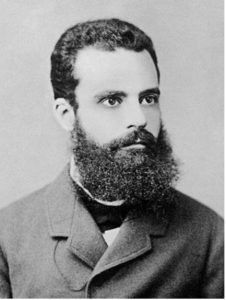
You think we have a hard job as social workers? Try founding data led economic and social sciences in Mussolini’s Italy, or further still being the El Duche’s Lecturer and growing one of the best hipster beards around! I give you Vilfredo Pareto.

Pareto’s take on efficiency focuses our minds on the marginal decision i.e., the impact of the next £1. If I had an extra £1 to spend as head of service, I would not spend it (rationally) on service X if I can get better impact with service Y (even if the difference is slight). If every pound is spent to this rule we have reached an efficient outcome. The imaginary local authority could not get a better outcome with any other spending configuration.

This is known as a Pareto optimal outcome. If the head of service changes the spending plan there would be a winner and a loser, a service or a family would gain, and one would lose out.  If I take funds from leaving care and divert them to disabilities, leaving care will suffer and disabilities will gain, for example.

Pareto efficiency, or Pareto optimality, is an economic state where resources cannot be reallocated to make one individual better off without making at least one individual worse off.

Such a perfect situation exists only in economic text books, however I feel it is useful as a Occam’s razor type rule regarding resource allocation,  the effective sharing of resources between Early Help and Child Protection being one prime example.

Efficiency No.2 – Social Work Management Speak (MS) efficiency.

(This is my made-up efficiency)

At this point it is important to highlight that when we hear of efficiency typically in our industry it only means costs savings – Cuts.

I feel a fair definition could be….

Social Work Efficiency (MS). The reduction of costs without a perceived reduction in statutory service delivery.

Perhaps more cynically how far can you reduce costs without OFSTED cottoning on – or more dramatically being put into special measures and possibly being taken over by an arms-length private provider.

The danger of looking only at costs savings above all else will never end well. Paradoxically in this case it will end up in inefficiency and ultimate failure, which in our industry can destroy people and families lives. Cost savings and their impact could be easily managed in Adams Smiths pin factory, with staff turnover and the daily number of pins produced likely to be the only considerations. Social care is far more complex with endless unintended consequences for families and communities. A golden rule is a measure i.e. cost saving cannot become a surrogate for running a good and efficient service  (Goodharts Law)

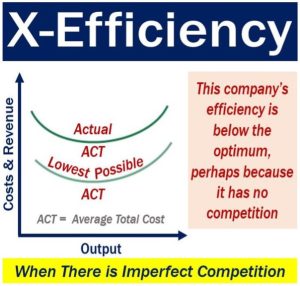
Efficiency No.3 X- Efficiency and Privatization.

When tenders become available (for example to run a children’s home), firms will compete to win the bid which in the current climate will be the offering the lowest possible price whilst providing an acceptable standard in relation to statutory duties (MS efficiency)

The biggest firms will be able to bid the lowest and still make profits as their costs (HR department’s, management pay etc) will be spread across more contracts than a much smaller company. This process leads only to, bigger winners winning bigger and bigger, so the care system could end up like the UK supermarket industry with a few big players and thousands of tiny corner shops. Already ½ of all Independent Fostering Agency placements nationally are offered by just 6 providers. This has created obvious monopolistic concerns.

X efficiency is where, due to lack of competition or collusion of pricing or non-aggressively battling through contracts, firms can artificially increase their price and not offer creative solutions. Simply why would a dominant firm with a slick pitch team and a slew of attractive national contracts seek to innovate with risky new practices and look to reduce its prices

Josh MacAlisterhas in his part of the care view asked these providers to reduce their costs. I wonder if kind words will win or  the Darwinian truism of hawks relentlessly eating up the doves till there are no doves left be the victor – I’ll hold my breath.

Boring chart lovers behold…….

Efficiency has an Evil Twin (as seen by managers) Slack.

Slack I feel can offer a further useful analysis for social care.

Let’s start this story like all good stories in the aisle of “stack ‘em high sell ‘em cheap” warehouse store CostCo.

Imagine walking round in CostCo not being able to find what you were looking for, faced with long queues and miserable unhelpful staff, other customers wandering around aimlessly , not buying as much as they once did . This was the case 15 years ago with the giant retailer due to management suits demanding it be as efficient or as Lean as possible. Staffing was cut to an absolute minimum, wages as low as possible to pump up its profits and the share price higher and higher.

Well, turns out the Jack Sprat (no fat) school of economics just leaves unhappy customers and staff feeling undervalued, underpaid, and over worked.

Costco turned this situation around through the leadership of their now CEO Craig Jelinek.

Craig’s CV is a short one, he started at CostCo in 1984, over the next 40 years working in nearly every position he became the heartbeat of their culture.  When he got the reins at the top, he increased staffing (number of workers) and wages to $16 per hour (US min is $7.64). He kept the famous loss making $1.5 hot dog and soda deal and in short introduced “slack” in the system.

Slack in this sense meant paying more and having more staff on the shop floor way more than traditional efficiency would say was optimal. The outcome was a WIN for the markets and profits, the lowest staff turnover of any retailer in America (7% compared to industry average of 60%) and happy customers who keep coming back.

In Short Slack created success, the extra bits outside the boring economic charts or profit projections. Jelinek took an economic risk albeit based on 40 years of grinding hard work and getting to know every dusty corner of the business.

It is in the SLACK that us social workers do our best work, whilst record keeping, and timely assessments are a part of the story (despite what management say it is not 100% of the story).

NO Service user has ever said,

“It was when the IRO explained point 13 on the CP plan that the penny dropped and I made the changes I need to make for my family”

Slack sits outside bureaucracy and measurement and on the other side professional procrastination and laziness.  This sweet spot, after we have completed our quota of recordings and assessments to a reasonable level, is where the social work gold dust happens.  The extra human connection, the turn of phrase, the creative idea and that positive risk that was taken – this is social work. If social work services are cut to the minimum in the spirt of efficiency we will pay the cost.

If CostCo can do it bloody hell – so can we! Let’s arm ourselves with this jargon, challenge the glib smoke screen of efficiency savings, ask questions about private providers. If they are charging more ask why where is the additional value?

CostCo’s good example came from embracing their culture and a leader who has walked in every employee’s shoes, there are no short cuts to these type of wins that’s why there aren’t many examples in the business world.

For efficiency’s sake here are some take away messages

  1. Efficiency comes in many forms not just cost cutting.
  2. Economics must come into play when we have scare resources and competing demands.
  3. Slack is the space where we do our best work as Social workers and is therefore the antithesis of privatization and Management speak.
  4. Whilst SLACK can be championed by private companies like CostCo there are no shortcuts – the wisdom is hard and long won.  Private providers in our industry I feel are bereft of this thoughtful culture.
  5. The danger of bigger winners winning bigger and bigger is creeping nearer to social workers. We need to gear our thinking up to slay this beast, so don’t be frightened to learn a little ‘Biz’ jargon to fight for what you believe in.

About the writer…..

George Bull

George has been a social worker for 10 years working mainly in child protection and Early Help. He has lectured with Jamie Scorer at New College Durham, University of Sunderland and University of Northumbria in solution focused practice.

Social Work and Poverty Echoes through Time, Stewart, Sterling and Situated Choice

1895 London, Mary Stewart walks into work in her new role as hospital almoner (churchy term for some one that gives out charity/alms to poor). With this the profession of social work was born.

Mary, made referrals, conducted home visits, trained aspiring social workers, battled against bureaucracy, worked with drug and alcohol misuse, mental health problems and child abuse.

Sound familiar?

Mary’s work had a laser focus on poverty, with her work based on hospital patients that were too poor to afford treatment (the NHS coming 60 years later).  She saw poverty as a major causal factor, heavily linked to health and wellbeing and the safety of children.

It seems after hiring the services of the Third Sector ‘007’ Josh McAllister and this week the publishing of Kingston upon Hull University’ findings we have amazingly come to the same conclusion as the first social worker 125 years ago.  The Hull report found that Children in the poorest areas are 14 times more likely to be referred to social care than children in the richest areas.  Simply, its not who your parents or family are its your postcode.

Can social work be boiled done to the simplest equation?

POVERTY = bad outcomes for children and families + Social Care intervention.

Mary’s work chronicled the lives of London’s poor in her own recording system, The Almoner’s Handbook. It highlighted poor living conditions, lack of funds to purchase quality nutritious food and a lack of social and employment opportunities.

Imagine Mary working solo in one of the biggest cities in the world, on a daily basis observing the relentless anguish caused by poverty but being powerless to change the labour market, housing, the price of alcohol or the availability of fresh fruit and vegetables.

Are we equally stuck in 2021 as social workers, merely typing up the misery of people’s lives into computers with no leverage to hack at the root causes of poverty? 

Despite being a trailblazer Mary was still a product of her time and the discrimination of the deserving and undeserving poor was evident throughout her work.

In one example she refused to assist a Lady who was found to be “gossiping in the street”, whilst another who was extremely grateful to speak to Mary received a waterbed, free GP visits, and a trip to the seaside. However, let’s not pretend as social workers we don’t find it easier to advocate for families that we have a better connection with or are in some way fond of.

Or should we ask our selves a harder question? Is sexual abuse, emotional harm and domestic violence evenly spread in households regardless of income.  For example, the middle-class professional father who enacts such violence on his wife and children and then often himself, is strangely never regarded as a social care issue.

Are there any answers?

Our Assessments

There is now an extensive evidence base in the UK around the impact of poverty including, life expectancy decline, limited healthy life expectancy, poor health outcomes for children, problematic mental health, and poor social mobility. 

Yet do we own this evidence in our assessments? Do we in our analysis place the responsibility solely on parents, when our Child Protection caseloads are often situated (the vast majority of the time) on a select few estates in our Local Authorities rather than spread equally or randomly.

To call this out I feel we need to be brave and start using sentences such as the following in our assessments,

Whilst these parents have made negative choices and are responsible for the consequences these have had on their children, the impact of poverty and poor access to mental health services and improved work prospects have had a demonstrable negative impact on this vulnerable family.

Whilst the interventions offered have improved some aspects of parenting capacity, the lack of good schooling, positive local role models and access to pro social activities are likely to play a far greater role in the long term outcomes for this family.

As Kingston upon hull (2021) have evidenced this families poor financial circumstances have increased their prospects of being involved with social care and having concerns investigated irrespective of any individual features or characteristics.

Whilst this feels a radical step, if it’s true and evidenced based, are we not duty bound in terms of our professional standards to seek to include this in our work? Or, we are just playing a professional version of the Emperor’s New Clothes fable. Or even worse are we playing Mary Stewarts game of feeling that the families we work with are somehow bad or undeserving of good outcomes.

Situated choice

Micheal Blastland’s book the Hidden Half, raises a potential area that social workers can seek to explore to offer a ladder out of the poverty trap, using the lens of escaping a life of crime.The Hidden Half discusses the Shared Beginnings, Divergent Lives study. The study offered a longitudinal investigation over a 70 year period, with the focus being on following up life outcomes for boys in borstals in the Boston area in the 1940’s.

The basic question was who continued to offend and who turned their lives around despite the bad start. The crucial question, however, was what made the difference in those that turned their back on a life of crime.

Did Mary Stewart wonder about her families that she visited, comparing the ones who did slightly better or managed to get out of the slums with the ones who lived short harsh miserable lives (as the majority did). Possibly like social work Mary never got to see the success stories as they would naturally not be in need of her services as much due to their improved lives.

Micheal Blasland points out that the team, when looking at the data, could find no statistically significant correlation between any variable (education level, zip code, marital status or type of offence).  It seemed it was just the roulette wheel of life – RED or BLACK – return to prison or a happy and long family life.

The researches were totally stuck until they started visiting the 70 year old men by physically tracking them down (no mobile numbers in the 1940’s etc). What they quickly discovered was that the men who never returned to crime each had a story about a ‘Sliding Doors’ moment when they made a clear life choice.

One example was a man returned home to his wife after a hard day at the saw mill –
“I hate this job I could make ten times back in the gang”
To which his wife replied, 
“Quit the job and I quit this marriage”
From that point on the guy stayed in work and was never arrested again.

Others talked about solemn moments where they considered joining the army and made a life changing positive decision for themselves, or hard work and chance encounters offering up opportunities that they grasped with both hands.

In short, they all recalled making life changing situated choices that set them on a different life trajectory.

To give a current example the England forward Raheem Sterling’s success can be tracked down to two situated choices. One, his mother making the decision to leave the family home in a poor and violent area of Jamaica to live in the UK when Raheem was 4 and the other when Raheem’s behaviour was unmanageable at home and a youth worker in a residential project had the idea of a football match in the local park. Should he ask Raheem, could Raheem be bothered to go to the park, are the questions that would of swirled around their heads. The rest is history, Raheem made a positive situated choice when he very easily could have refused.

So, what has this got to do with social work?

I feel the issues we address such as child abuse, alcohol abuse, domestic violence and mental health can often lead to a narrow focus which only serves to narrow the opportunities for positive change. People are never single issues solutions and interventions should not make this mistake.

I would suggest we consider this. When a case is allocated look at how many assessments have predated yours. How many times has the traditional Children Act led intervention been meted out with no or little lasting change?

For example, would the father who has been suffering from depression benefit from an engaging employment skills course or clearing his debt. Are these actions more achievable and more beneficial than a long NHS waiting list and short course of CBT?  Or would a young mother who is socially isolated and struggling with their child’s schooling not benefit from volunteering a few days a week at the child’s school.

Do our interventions open doors up to families or do they just seek to close the Child in Need or Child Protection door behind them when they scrape through our artificial risk threshold. Whilst any intervention we offer can end up in a dead end, should we not seek the ones that would maximize the potential of the individual and their families, supporting situated choices.

Crucially I am not denigrating mental health support and traditional services, I am just suggesting that if we don’t support an expanding of horizons and options for families we are doing no better than Mary Stewart visiting the same poor families to offer help that are living in conditions they have no means to escape from.

As social workers we must believe that all families are deserving of enhanced life options. We need to be willing to explore creative options and take a chance to jointly develop a map out of their current circumstance and hopefully that may create at least some lasting change.

About the writer…..

George Bull

George has been a social worker for 10 years working mainly in child protection and Early Help. He has lectured with Jamie Scorer at New College Durham, University of Sunderland and University of Northumbria in solution focused practice.

Voices: It’s a struggle being poor

In the first ‘Voices’ that Social Work Shorts would like to bring you this is a testimony from a 38-year-old single mum living in the South of England and is taken from the insightful collection of illuminating and much needed writing in a book created by Dominic Watters (Twitter @SingleDadSW).

You can find the book at this link. 

It’s a struggle being poor

I’m a Dutch national of African descent and single mother of two boys. I have been living and working in the United Kingdom for the past 15 years. I was in a tumultuous relationship for nine years which resulted in my children and myself being made homeless. We were initially placed in a hostel for eight weeks in another borough before my local council rehoused us into a temporary one bed council complex, where we were placed with families who faced similar circumstances that I’ve been experiencing. After three years, I’m currently still waiting to be housed into my permanent place.

I’ve worked at Gatwick Airport for the past 15 years and was made redundant due to the impact Covid had on the airport. During lockdown, not only did I lose my job, my electricity and shopping expenses increased due to the kids being stuck indoors. Prior to when the government finally decided to introduce school meal provisions and the £20 Universal Credit top-up, I succumbed to using my credit card to provide for our basic needs. At times, I had to reach out to the local church for help with food and supplies.

Going through all this, I was also faced with the task of home-schooling my children in an overcrowded space and unable to engage in social activities which has been very challenging. This negative impact has definitely tested my boy’s mental health.

As if this hasn’t been stressful enough, I also endured racist abuse from my new next door neighbour’s boyfriend (they moved in during Covid) who referred to me as the N-word after a violent outburst in the middle of the night. I was both angry and scared for my children and I felt trapped in my own space. I reported this and he has been spoken to by the police. Although I hope this won’t happen again, he’s still there.

It is a real struggle having a narcissistic ex-partner who doesn’t pay child maintenance, myself not being financially secure. Living in half-way housing and trying to keep my sons unaffected has proved to be very testing for my own sanity at times but I’m pleased to say that I have found a new job as a teaching assistant at my boy’s primary school.

Snippet taken from the Social Distance in Social Work: COVID Capsule One

About Social Distance in Social Work: COVID Capsule One

A social work student facing eviction from his home and experiencing food insecurity authored this book in the hope that it could get his voice heard. As a single dad living in a council estate block of flats, Dominic @SingleDadSW lets the reader into an environment drenched in poverty. He invites some of the leading thinkers, practitioners, and people with lived experience of services to discuss the impact of the COVID crisis.

The COVID crisis made everyone aware of keeping their distance from other people because of health concerns, but SingleDadSW was reflecting on the distance between people due to poverty, culture, class, and other factors. Social Distance in Social Work: COVID Capsule One is both an action in the face of destitution, and a collection of notes from the crisis. A collection of pieces that he has curated to tell a story and capture a moment in time.

A book that discusses established and new approaches in Social Work:

  • • Social Justice & Social Distance
  • • Food Poverty & Food Insecurity
  • • Lived Experience & Living Experience
  • • Child Protection & Social Harms
  • • COVID Crisis & Crisis Capitalism
  • • Social Work During the Pandemic

Featuring all exclusive work by Ray Jones, Phil Watson, Brid Featherstone, Cal Webb, Gerry Nosowska, Simon Haworth, Lewis Roberts, Ian Gould and more… and includes a foreword by Ruth Allen, chief executive of BASW.

Book Endorsements

‘A stunning book right from the heart of exciting, newly emerging social work practitioners. At its core is a genuine commitment to the application of rights-based practice made possible by the authors personal, deep understanding of social justice and the impact of structural oppression of poverty.’

Rob Mitchell, principal social worker, co-author of ‘Social Work, Cats & Rocket Science

‘We are a human rights profession. But it can be hard to embed this into everyday practice. This book is a precious and creative contribution to understanding how we can do that.’

Ruth Allen, chief executive of the British Association of Social Work (BASW)