Common student questions answered

As we come to the end of the academic year and another group of social work students are set to graduate, I’ve been thinking about common questions I’ve been asked over the years. Here are some of my responses.

Diary Management
Paper diary or electronic calendar? Which is best?
By far the best option is electronic. Let’s be honest how many of us don’t have a smartphone these days. If you’re using a paper diary and you put it down somewhere and forget you’ve lost it all, but most electronic calendars are stored in the cloud so you’ve got it wherever you are and you can’t lose it. Add to that functionally. You don’t get something done one day you just move it into the next day. I use the time slots on Google Calendar for time sensitive stuff and the daily entries for stuff I hope to get done in the gaps! Start getting used to diary management now and it will be much easier when you’re in practice.

What should I be looking for in a good diary?

Let’s talk paper diaries first if you want to go in that direction! I don’t think, as a student, you can get away with anything less than a page a day. You’re going to have a lot to keep track of assignments, tutorials and lectures, never mind your social life. ‘Page a day’ means you’ve got space for the things you’re doing and room to make quick to do lists for the day. Maybe even look for something that has a diary page and a note page facing each other. Personally, you can’t go past Molskine for quality and there are similar budget versions available. As for electronic calendars – accessibility is everything. You need something that’s useable on your desktop and on your phone. My personal favourite is Google Calendar.

What sort of things should I be putting in my diary?
Easy answer! Everything! Everything that is demanding your attention should have a diary entry. Most people just use their diary for things that have an actual time attached to them; lectures, seminars – that kind of thing. You should be putting everything else in your diary – allotted time to go to the library, time to draft your assignment, time to write your plan. That way you get a sense of everything you need to do, not just when your appointments are! And I’d suggest you diary longer than you think you’ll need. Invariably we underestimate how long things will take. And when you finish a task early you can start on another one!

Proof Reading
No matter how much I proofread I’m still missing things! Help?
You probably just need to slow down. It’s easy to miss stuff when you’ve written it because you know what it needs to say so you ‘see’ what should be there not what is there. It’s often the small words that cause the problems. ‘It’ and ‘is’ are easy to miss as are missing words. You brain is very clever and will ‘see’ the word even when it’s not there. I always feel that reading it out loud is a good tactic. This makes you actually say what’s there and it’s harder then to automatically fill in the missing bits and gaps. Do you struggle with punctuation? Again reading it out loud might help you figure out where the commas go as you will often naturally pause or take a breath where a comma should be. Reading out loud will also help you spot sentences that are simply too long… you’ll run out of breath!

What’s the best approach to proof reading?
Proof reading isn’t easy and you’ll often miss common errors as your brain fools you into seeing what’s not there. What’s the best option then? Get someone else to proof read it for you. It’s even better if they don’t know much about the subject matter as they can then tell you whether it makes sense to the casual reader. Other people will more easily spot errors, as they don’t know what’s coming so are actually focussed on reading it properly more than you will be when it’s your own work. If you have to proof read yourself slow down or read it out loud.

Time Management
I keep running out of time for everything. What’s going wrong?
You’re probably not planning effectively. People who write about productivity say that you can’t plan and do at the same time. So plan then do! Start your week planning what you need to achieve this week (or even better end the previous week planning the following week) and start each day with considering what you need to achieve that day. Every so often look ahead a month and work backwards from things you need to achieve putting all of the steps into your diary. This is based on the old adage “how do you eat and elephant”? The answer… one bite at a time. When you have big tasks to complete, like an assignment, break it down into achievable steps. For example, “go to the library to get books”, “read the books”, “collate notes”, “write assignment plan”….you see how it goes. And put all of these things in your dairy. This will help you hit the end goal.

How do I manage my time to meet deadlines?
The first thing to do is to set yourself a deadline that is before the actual deadline. That way if you do hit a problem you’ve got built in capacity to give yourself that little more time. This reduces your stress response to the situation. When you are stressed you are less productive – so you need to avoid that. Break the task down into smaller steps and put these in your dairy. Always give yourself more time than you think you’ll need. As humans we have a tendency to overestimate the time small tasks take so we put them off, and underestimate big tasks so always end up running out of time. Apply the two minute rule for small tasks. If it’s going to take less than two minutes just get on and do it. If you need to diary it for later diary up to 50% more time than you think you need.

What’s the best strategy to make the best use of my weekends!?
Plan! And not just your academic or work stuff but also your household and social stuff. There’s sound evidence that if you plan something and put it your calendar you are more likely to do it. If you get up on a Saturday morning without a plan I guarantee you’ll get to Saturday afternoon having achieved nothing. Focus on your home and social life in the same way as you would your study or work life. Make sure there’s something in there for you. You can’t work and study all of the time. All work and no play makes Jack a dull boy – as the saying goes.

Effective communication
Should my emails to my tutor be formal or informal?
I would generally err on the side of formal. Also, make sure the email is useful and clearly sets out what you are after. Don’t just email and say, “can I have a tutorial please”. Email and say “Can I have a tutorial please to look at the assignment that’s due in on 17th December. It would be useful to meet next week and I’m available on…….” With all of that information one email back from the tutor might be enough rather than it taking lots of emails. Your tutor will be busy so anything you can do to help with your request will improve the chances of a helpful response. Start ‘Hello Stephen” and end ‘Thanks Debbie Jones, First Year BA”. This is really helpful as if your course is big the tutor may not know who just ‘Debbie’ is and may well teach into more than one programme. Let clarity be your watchword!

What are the most important things when it comes to communication?
Well, that depends on the communication activity. If we are talking about in writing then brevity and clarity are important. When emailing in a professional context, to your tutor for example, they will have a lot of emails to get through. My guess is they will read the first line or two and then if it’s a long email just scan to the end. So, put the important stuff at the start, but also keep it short, as that will mean there’s more chance of the recipient actually reading to the end! Sometimes if I’m asking for support from someone and I’m not sure if they will have the time to read a lot I give them a brief outline and suggest that I can give them more detail if they feel we can progress things. In face-to-face communication body language is important. Various pieces of research say that it’s the primary way we communicate. So how you present yourself is just as important as what you say. Make time for the face-to-face communication so that you are not distracted. Maybe think through in advance what you want to say so you get the words right and get the tone right.

How to I communicate effectively in emails?
You need to make the email effective for the person on the other end. Be clear about what you are after and offer a solution or a range of options to the person you are sending it to. If you want to meet, tell them what you want to meet about and what timescale you want to work to. Tell people the dates you are available. If you want a response to something from the person that’s time sensitive for you then tell the person when you need a response by. Personally I’d tell them a date a couple of days before you actually need it to account for slippage. Be clear and succinct. No waffle! People get hundreds of emails and often don’t read all the way to the bottom of long emails.

Working in groups
When we work in a group at university one person always dominates. What can I do about it?
I’m assuming you’ve been given a task like a presentation to prepare and deliver as a group. Group work is not easy as personalities are powerful things! I would formulate the group in a formal way with someone acting as Chair who facilitates the group. They are not in charge they just steer things. I’d also have someone taking notes so you know what has been agreed. People who dominate often just want their view validated so it’s helpful to listen and acknowledge what’s been said positively then ask the others to contribute. If it gets difficult start the meeting by saying we’ll go around the group and feedback where we are up to. Or, we’ll go around the group and make suggestions before deciding. This is also a useful tactic for including quiet members.


When we work in groups one person never pulls their weight. What can I do about it?
You can try and tackle this yourself by discussing it with the person but I suspect you’ve already done that! I would alert the module leader of your concerns in a timely fashion. It’s not much use telling the module leader just before you need to present whatever the group have been doing. When working in the group take notes with clear timescales identified. Even if the person not pulling their weight isn’t there identify tasks for them and email the notes and tasks. Ask them to respond to say they’ve got the email. Keep including them because if the module leader is to do anything they will need evidence that you’ve tried to include the person. If the work you are preparing is to be graded as a group you may have to just ‘bite the bullet’ while the module leader deals with the situation, as you don’t want to compromise the group mark.


Struggling academically
How do I make the best use of my tutor?
Make sure you take up all of the tutorials you are entitled to. Prepare for them. Your university will probably have tutor guidance telling you what you can expect from your tutor, so, within those parameters figure out what you might want to ask for guidance on. Always have something to ask so that you engage the tutor or they may think you are not interested and draw the tutorial to a close. If the tutorial is about something specific, like an assignment, then again the important thing is to prepare. Have a list of what you have read, prepare an outline of what you are going to write and have some questions prepared. Be clear about the learning outcomes and if you are unsure make sure you ask.


How do I plan an assignment?
The first thing to do is read! Have you read the set reading? You need to do this to at least have an overview of the subject in question. Make notes as you go. Make sure you note where you have written it down directly from the book or where you have paraphrased so you know how you need to reference it if you use it. Keep a reference list as you go. Then and only then you should start with the learning outcomes and the task. There’ll also be a question to consider probably! Break the question or task down into its parts and consider what you are being asked to do. Consider words like ‘describe’ and ‘critique’ as they require different things. Where you are asked to describe you are simply going to provide an overview or a narrative. Where you are asked to critique you will need to start by explaining one position and offering alternatives, all from academic literature, to show there is more than one opinion. Once you’ve broken down the question consider what you will write and construct a plan. Your plan is probably going to follow the task if the assignment sets one out. Once you’ve created your plan then look at each learning outcome in turn and make sure that there is an element in your plan that covers each learning outcome. If you miss a learning outcome the assignment will not pass so this is a crucial step.


How do I make sure I’m doing what I need to do in assignments?
There are a few things you can do to be sure. Firstly listen in class. Tutors will often guide you to teaching that is relevant to assignments. Then make sure you read the set reading or chapters referenced by the lecturer. Then you need to plan clearly. Make sure your plan addresses the task and the learning outcomes. Make use of tutorials to ensure you are on the right path. Then, stick to your plan. Don’t go off at a tangent and, if the subject matter is emotive or has personal resonance, don’t make it personal. In a sense your view isn’t important. What’s important is that you understand the view, or range of views, in the literature. Penultimately proof read effectively… then proof read it again… then get someone else to proof read it. Then! Go back over the learning outcomes and task and make sure you have absolutely addressed all things!

How much reading is enough!?
Read as much as you can. Then read more. Then read more! You can’t read enough. The reality is that the students that do the best are the students that read the most. Your module guides will direct you as to the key texts but also read around the subject to get different views. Delve into journal articles on your subject matter as this will give you the absolute latest in terms of thinking and research. Use the Internet carefully. Make sure the sources of the information you are using are legitimate and ideally peer reviewed or you risk using sites that have a bias. This is particularly important if you are going to reference it in assignments. Reading widely will improve your vocabulary and therefore your writing.

Working from home: Are you a segmentor or an integrator? It could make a difference.

When it comes to thinking about working from home the psychology literature would suggest there are broadly two types of people.

Some of us are Segmentors. We prefer to keep work and non-work separate so may struggle with them being in the same place. Segmentors may find it difficult to strike a balance. Sometimes this is to do with work role. So, some of these things are job as well as person specific. Some jobs have weak role boundaries while some maybe can offer more flexibility. Maybe there is significant overlap between personal interests and professional ones. Possibly the job allows for a great deal of autonomous work. These things may make it difficult for some to keep things separate when working and living in the same space. Some jobs have strict role boundaries so may be easier to segment even at home especially if you are a segmentor.

Some people are Integrators. Such people prefer (or are happy to) integrate work and non-work. Alternatively, where a job has weak role boundaries it may be inevitable that the two merge. Integrators might therefore struggle at home with a job that has strong role boundaries and maybe such jobs are less suitable for home working.

My job as an example.
For most of my working days each week I work for a university. This job drifts between days when role boundaries are weak. For example, I may have the opportunity to read a lot, and I often read for pleasure the sort of books I need to read for my job. There is no boundary between the two. I browse the web, take notes, connect ideas, and spend time thinking. I do this for work, and I do this for myself for pleasure. On days like these it can be difficult to see whether a particular activity is work related or not. Some days though I need to deliver lectures and seminars. There are strong role boundaries on those days, and even when I was delivering things from home during the pandemic, I had to be in a certain place at a certain time to do a certain thing with little flexibility. I work freelance some of the week and on those days it’s often difficult across a whole day to see any delineation. I’m definitely a natural integrator which is probably why I love home working but I’m happy to be a segmentor when the tasks of the day require it.

Our well-being when it comes to our whole lives is an interaction between person – role – and environment.

What sort of person are you?
What sort of roles do you have at work and outside of works?
What is the environment like you have to operate in? Does it help or hinder?

Are you a segmentor or an integrator?

10 things to make 2023 great!

2023 is set to be a great year don’t you think! There are some things that I need to absolutely focus on! There are some things I need to do better and there are some things I could do with doing a little less! Now though is a good time for me to embarking on a mission of self improvement. Things are settled. We’re in our new house and have managed to get done some of the things that needed doing and this will hopefully free up some time, some enthusiasm and some psychological capacity to achieve more. Here are the things I’m going to do and I’d urge you to do!

Get outside more

I love to run and cycle. I enjoy a good walk. Over the last couple of months I’ve started going to more gym classes so, while this is not a bad thing, it’s meant less outside time. And I love outside time! What are the benefits of being outside..

  • You will experience a great sense of well-being. Breathing in fresh air, embracing the space around you, feeling the cold upon your cheek. Even at this time of year getting wrapped up and going out for a walk will give you a boast.
  • And you’ll burn some calories! And let’s be honest we’re probably about to have too many of them in the next week or so! For those a little fitter get your running shoes on, on get your bike out and go out and get breathless and feel that cool refreshing air in your lung. Outdoor workouts are better than indoor ones. For example, running. Outdoors you are contending with different terrains or you are running against the wind… all better for you than the treadmill I feel!
  • Green exercise – or exercise in a natural environment – has been shown to boost self esteem and mood and you’ll get a well needed, at this time of year, boost in vitamin D which is reported to be good for your immune system – Now that’s got to be good!

Get lost in the moment

This one is simple. Just experience what is currently happening to you. The water on your skin in the shower, the air passing into and out of your lungs, the taste of the food in your mouth, the song on the radio….. Do any of these things or any others to the exclusion of other thoughts and distractions. The benefits of simply taking some time out to be mindful of a particular thing will reap benefits. Before you know where you are at you might find yourself wanting to try meditation! You never know!

Get myself (more!) organised

Being organised gives you a great sense of control and fuels your well being. As I’m fond of saying – if you don’t control it then it will control you. Try applying the two minute rule or grab a copy of David Allen’s book ‘Getting Things Done’. I can tell you, hand on heart, at work and at home my life is so much better for getting myself organised. I can do it better though, especially at home, to make sure I make the most productive use of the time I have. For me time is the most precious commodity we have and we waste it at our peril.

Drink more water

This one should be easy to do surely! How hard can it be to go to the tap and fill a glass up and just drink it! I know!! So why don’t I do it! I even have my phone remind me to drink water every few hours and still I don’t drink enough! Water is refreshing, calorie free, and it’s absolutely crucial for you body to function effectively. So come on! Flush those kidneys and feel great. More on this here.

Drink less coffee and alcohol

I don’t know how this one is going to go for me! I love coffee! And I do like the odd tipple on an evening. I read somewhere drinking coffee borrows time from later in the day…. You will crash later and be less productive. And drinking alcohol borrows time from tomorrow as it will affect your sleep and therefore your feeling of well being the next day. Must try harder!

Read for 15 minutes a day

I read every day. Knowledge is life improving, how could it not be! Reading for 15 minutes a day at an average speed of a page a minute will get you through a 300 page book in 20 days. That will get you through at least 15 books a year. Not a bad start to enhancing your knowledge! And I bet if you get the habit you’ll read more! Add the next thing on the list in and you’ll be amassing information at a fair rate of knots!

Embrace audio books

Time is the most precious of commodities and I want to put as much of it as I can to good use. It takes me 40 minutes to drive to work and the same to get back home or 30 minutes to walk the dog. Sometimes I listen to music – that’s a good thing. Sometimes I listen to the news on Radio 4….. but now mostly I listen to audio books and they are great! I get mine through Audible. They download to my iphone and play through the car stereo seamlessly! The books are anything from 4 to 7 hours long and one lasts me through most of the month when interspersed with other things…. And that’s another 12 books in a year… done! Sorted!

Set small achievable goals

How do you eat an elephant? One bite at a time! Several books I’ve read talk about setting achievable goals and some of the models I talk about in some workshops show that breaking down big tasks into smaller steps achieve progress. Problems or projects seem daunting when you just think of the end goal. But if you think of the many small steps and tackle them one at a time you stand more chance of achieving success! My goal for this year is weight loss – more about the steps I’m taking later. I’m read Mini Habits: Smaller Habits, Bigger Results by Stephen Guise where he talks about setting himself the target of doing one sit up a day… that was all! Just one! And he explores where that got him! Worth a read!

Sit quietly from time to time

This is a bit like ‘getting lost in a moment’ but slightly different. Getting lost in a moment can be about getting engrossed in an activity. But sometimes we need to just sit quietly. It could be, but doesn’t need to be, meditation. It could be sitting quietly while clearing your mind but, for me, more than this, sitting quietly can be a time for you to think things though in a calm, focussed way. In the rushing about of modern life our responses are, dare I say, reactionary rather than well thought through often. I’m going to sit and experience time just passing in a quiet state from time to time, maybe first thing on a morning…. Now that’s good use of time!

Once a month mix it up

Don’t get into a rut. For all the things above keep mixing it up. Been out running a lot this month? Then next month go out walking! Been spending quiet time on a morning? Then, for the next month do it on your lunch break… you get the idea. From an exercise point of view your body gets used to what you ask it to do so mixing it up challenges it to ‘re-think’. As for your mind, giving yourself space at different or being in the moment for different experiences will help you understand yourself and what works for you and what will, hopefully, lead you to a greater sense of well-being, a greater sense of inner-peace.

I’m going to try all of these things and I’ll let you know how I get on. Let me know what you get up to!

7 small steps that could lead to big things

Last week I stumbled across a great Twitter thread by Dr. Nicole LePera (@Theholisticpsychttps) while I was pondering self-care, well-being and reflection… you know the usual stuff I ponder. She is a Psychologist, Author (How To Do The Work) and a podcast host. She listed 7 things that she felt were great small steps that could lead to big changes. And as you know, I am a fan of such things.

Image

She started by suggesting ‘self-witnessing’. I love this phrase! She says it’s helpful to observe yourself without judgment but with curiosity. This is reflection pure and simple I’d suggest. What did I do? Why did I do it? And what can I learn from it? A much better approach than mulling something over, dwelling on it, and then just sitting with it. We must analyse and ponder and then make some change if change is required. We may also not need to change because we might find something is outside of our control anyway and we just have to accept it and move on.

Secondly, and this this another crucial step, have boundaries around your time. Absolutely! In her book ‘Time Management from the Inside Out’ Julie Morgenstern observes, “Good time management is not about buying a great calendar or planner. It is not about learning tricks to move faster, or about doing everything with mechanical efficiency. It’s about creating days that are meaningful and rewarding to you and feeling a sense of satisfaction in each and every one of your tasks.” You cannot manage time – you can only manage what you do with it – and one of the things you can do with time if you have no boundaries is waste it. The other option would be to set your intention to something that would be useful to you, set some time aside for it, and get to it. You also though do need time to do nothing, slump in the chair, or lie down and rest, but be cautious as this can become counterproductive if not done with intent and you find yourself drifting through a whole day doing this.

Then, be aware of the company you keep. You might have heard the phrase ‘energy vampires’? People who just sap the energy from you. You may have people in your life who encourage you to do things that don’t fit with your identity and your goals. You need people in your life who support where you’re heading. Some can drag you back. You may need to ease them out of your time and life. You may need to just remove them straight away.

LePera then goes on to say, ‘Move Your Body’! Sound Advice! Exercise is a gateway habit. People who exercise are more likely to do other positive ‘life’ things and make healthier choices. And it makes you feel great. It doesn’t matter what you do in your life taking regular exercise will enhance it. Even those involved in roles where they predominantly use their brains will find they can do that better through exercise. The organ in your body that uses the most energy is your brain – so there’s a physical preparedness required for mental work.

Next, surround yourself with the voices of helpful, supportive people. This might be people close to you or people who you can tune into through podcasts, YouTube, blogs and the like. This, in LePera’s words keeps ‘inspiration flowing in your ears’.

Her penultimate suggestion is to give back. There is oodles of evidence that if we feel like we are contributing, feel like we are giving back then we feel positive. Circulate that positive energy.

And finally, another phrase that she uses is, ‘become your own wise inner parent’. Self-talk is crucial to our well-being. But the right self-talk. You need to love yourself, hold yourself, tell yourself how great you are. Because you are. Yes we have to live and learn and acknowledge the things we need to work on. But, right here, right now, for this moment you are all you need to be. We’ll work on tomorrow, tomorrow. David Allen (my favourite writer on getting things done says we can do anything, but we can’t do everything. He is absolutely right. As human being we are amazing and capable of taking ourselves to all sorts of ‘places’. But we need to take small steps in order to not overwhelm ourselves. We can’t do everything, but we can do something and LePera’s ideas give us some great starting points!

Getting into ‘flow’.

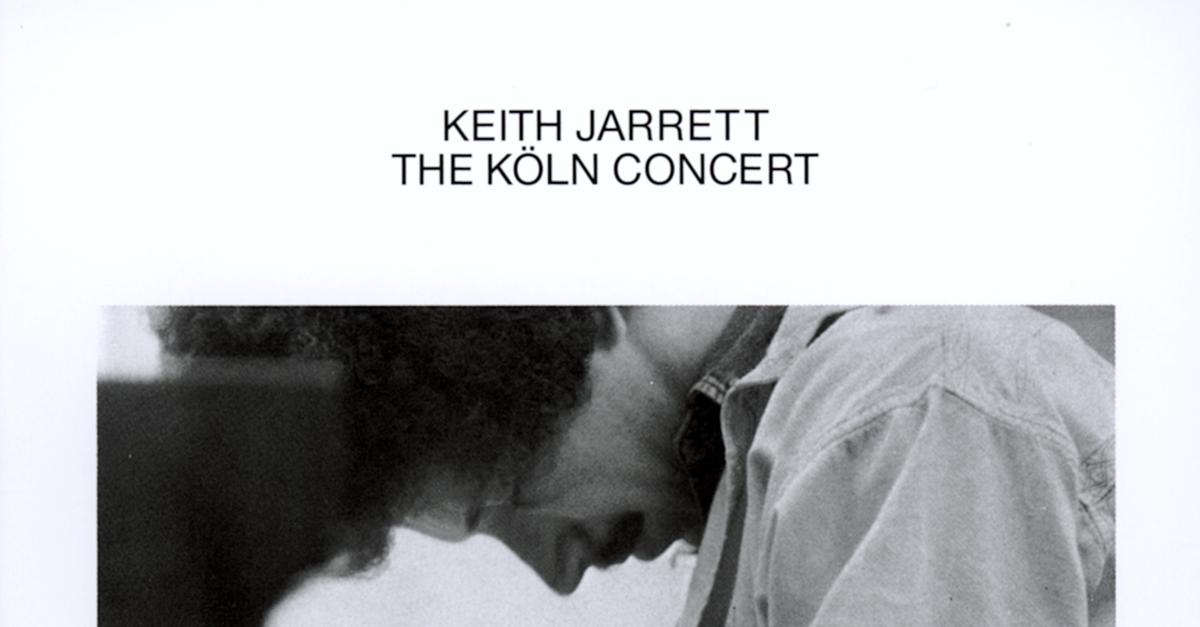
January 24th 1975: The Koln Opera House

An Hour with Keith Jarrett | Music | WNYC

Keith and Vera stood on the stage just looking at the piano wondering what could possibly be done. It wasn’t the right one and it was in poor condition. Keith had briefly played it and found it to be out of tune, ‘thin’ at the treble end, and lacking in substance at the bass end. The pedals which can be used to create softer sounds or sustain the notes weren’t working. This was a disaster!

Vera Brandes at 17 years of age was the youngest concert promoter in Germany at the time and had secured a performance at The Koln Opera House from non-other than Keith Jarret. Keith Jarret had played Jazz piano with the greats like Art Blakey and Miles Davis during the 1960’s and during the 1970’s had moved into playing solo jazz piano or as part of quartets. It was safe to say that securing Jarrett to play a gig for the 17-year-old promoter was a bit of a coup. And here they were stood in front of this problematic piano late in the afternoon on the day of the gig. The problem had arisen due to some obvious confusion over the piano. Jarrett had selected a Bosendorfer 290 Imperial to play for the performance. It is the company’s largest piano with an eight-octave range and is their flagship instrument. The extra bass strings create a richer sound due to the harmonic resonance. What was in front of Jarret and Brandes on the stage was much smaller Bosendorfer baby grand that was a rehearsal piano and in poor condition. Due to some confusion the wrong Bosendorfer had been set up on the stage. The problem of the wrong piano couldn’t be corrected by installing the correct one because, if you know pianos, you know that moving one then acclimatising it to the environment before then tuning it is a time-consuming process. So, if the gig was to go ahead it had to be on this piano. The piano tuner did the best he could.

It gets worse. Jarret had arrived from Switzerland after a long drive from Zurich where he had performed a couple of days previously. He was tired having not slept well and was in a back brace due to back problems that left him uncomfortable and in pain. Confronted with this substandard piano it took all of Brandes’ persuasive power to convince him to still play. He agreed to go ahead so Brandes and Jarrett headed off to get something to eat. In the local Italian restaurant, there was a mix up with the order which meant Jarrett only managed to eat a few mouthfuls before they had to leave to return to the venue.

The concert took place to an audience of 1,400 people at 11.30 after the evening performance of the opera as that was the only time that the opera house would indulge the promoters request to stage the gig. So, late in the evening, in pain, hungry, playing a piano that wasn’t to the standard required Jarrett sat down to play. The recording of the performance became the best-selling solo album and the best-selling piano album in jazz history. That’s remarkable in itself but it becomes even more remarkable when you find out that Jarrett took the decision before playing to largely improvise the performance! How can someone faced with this situation deliver what was to be one of, if not the, performance of his career? Flow.

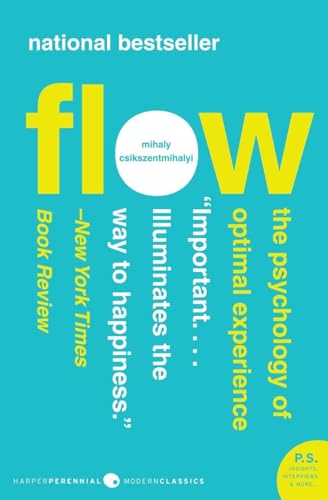
Mihaly Csikszentmihalyi is the father of the concept of flow (Csikszentmihalyi, M (2002) Flow. London: Rider (The Random House Group)) describing it as a state of being where you are completely absorbed in the task you are doing to the extent that nothing else seems to matter and you are finding joy in every moment. Concentration, he suggests, becomes so intense that there is nothing left over to draw you into thinking about anything else. In a state of flow people were able to ‘tune out’ external stimuli in order to focus on task and in doing so became more efficient at the task.

There are a number of things that help to create this flow state – all of which are ably demonstrated by Keith Jarrett’s ability to deliver his stunning performance. The first is mastery or competence. The literature in this area uses them interchangeably. Simply put a good starting point is that you know what you are doing. There is a relationship between what you need to do and what you are able to do. These things need as far as possible to match each other. The thing you are being asked to do should not appear unachievable when stacked up against your knowledge or your skills set. You may not have knowledge of something but may have the skills to go and figure it out. Or you may have knowledge of something but not the skills (yet!) to do it. Either is an opportunity for growth so may mean you still have some element of mastery in the required area.

For Carol Dweck, a psychology professor at Stanford University, how masterful you feel in such circumstances can be dependent on whether you have a fixed mindset or a growth mindset. If you have a fixed mindset you might look at a problem and think ‘I have available to offer what I have, and that is all – no more’ which may lead to you not considering what you do have and what you could develop. People with a growth mind set do exactly that. They think ‘I have some of the things to do this task, I can work on the other things I need, or go and find them out, because I am capable of new things’. People with a growth mindset can still be Masters of a task even when they don’t know or have available to them all the skills they need. They will be master of themselves and adopt a ‘can-do’ attitude to finding out. Obviously, there is a tipping-point here where if something is predominantly outside of your area of knowledge or skills you may need to question why it is you are being asked to do it. In reality we are never masters of all we may want or need to be masters of. We are always going to need to develop in some way, but we need to feel like we can develop.

Jarrett, in improvising The Koln Concert can get into a state of flow because he has Mastery of his instrument and the technical aspects of music. In the case of an improvised Jazz piece, he also has complete autonomy.

Freedom/Autonomy: How to articulate autonomy and an increase in quality  level? - Phusis Partners

Autonomy is the next thing that helps us develop a flow state. The more autonomy that someone has the more they can achieve a state of flow and, remember, the more you achieve a state of flow, the more efficient and productive you will be. When talking about motivation Daniel Pink tells us that control leads to compliance, but autonomy leads to engagement and it is that engagement element that will contribute to flow. The usual approach to the management of people in the workplace is to assume that to get them to do things you need to give them a prod. I’d argue that, while people do sometimes need prodding, if you set up the right sort of environment, if you are clear on the task and the outcome, and you have people you have selected or trained who are masters in the area you are asking them to operate in, they will figure out how to get the task done to get to the outcome you want on their own if you leave them alone – thank you very much! People who feel they have the skills to do what they are required to do and are left to do it autonomously will be happier people. Managers note.

Daniel Pink introduces purpose as another element that supports motivation and flow. This relates to Csikszentmihaly’s view that to get into flow we need to find joy or pleasure in everything we do. So, in order to get into flow, the question to ponder is what is your purpose here? Keith Jarret’s purpose was clear and links to another theoretical idea called Self Determination Theory that interacts with this idea of flow. Self Determination Theory suggests that alongside autonomy and competence we need relatedness or connectedness. It’s clear that as a performer and artist Jarrett’s purpose is to perform and entertain. He was at the top of his game in 1975 when he stepped onto the stage at The Koln Opera House and his purpose was to entertain but also to show his mastery which people wanted to delight in. He wanted to also connect and relate to his audience and they to him. To achieve flow, we need to do the same. Ask “how does what I am doing relate to others that are effected by it”.

In achieving these things, we achieve Csikszentmihaly’s state of flow and, as he says, in doing so we are on the way to an improved quality of life and a state of well-being. Achieving this state takes personal responsibility and the right environment which can only be achieved in partnership with others. In terms of work this partnership has to be with our employer, at home with our family and friends. And it needs to be two-way. The same responsibility needs to be evident in return. This is a whole life concept. We need to create an environment where these things, mastery, autonomy, and purpose, are possible.

Working at home…. with the children!

It always sparks my interest when I’m delivering presentations about productivity and someone asks me a question that causes me to fumble for an ineffective answer! This happened just this week when someone asked me if I had any tips for working from home when you also have your children around. In my head I thought, ‘Hmmm no not really’! When you’re presenting you have to come up with something, so i did… and I have no idea what I said! So I thought… time to delve into the literature and she what people think in terms of tips for working at home when the children are around.

Obviously the first thing to say is that I suppose it depends largely on the age of the children. Younger children I imagine are more of a challenge than older children who, quite frankly, I’d think will be over the moon that you are distracted with work, which means you leave them alone! My ‘children’ are now adults so I have no idea. But thinking about them as teenagers, as long as they were fed and watered and the x-box was fully operational they probably wouldn’t have cared. Anyway! Apply these tips as you see fit!

Create a schedule

Now, as you can imagine I love this one! Create a schedule – well yes – you should have a schedule for everything, so it’s not a big leap to create a schedule for the whole family. Be clear about when it’s work time and when it’s time for ‘family’. I’d imagine with younger children you’ll need to have short time frames here so that they get to regularly check in with you. Children I find love routine so i can see how this idea might work.

How about organising what you are all doing on a timer so they can watch the countdown. This would make it fun and give children a visible cue. Hint: this works for us as adults as well in terms of focus and productivity (after all adults are just bigger children with responsibilities!) The schedule needs to be realistic.

Maintain the schedule

Its no good having a schedule if you don’t stick to it. I imagine as adults we are just as bad at this as our children are. So be clear and then deliver. You might need to work on this with colleagues and managers and colleagues and managers will need to on board. They need to be helpful as they are going to get the best out of you if they understand you, the demands on you, and how you are managing those demands – this includes what you need from them. So agree with them to switch off alerts during deep work and family time. You have to do your bit by being available consistently when you say you will be as well – balance is key here.

Here’s the other thing with your schedule. You might want to throw out 9 to 5. Again you need employer buy-in but it might be better for you to work in blocks with big gaps. Maybe starting earlier in the day might help. Crucially create pockets of time to work in that are engineered around the child’s concentration span not yours.

What about this….
6 – 7.30 Work
7.30 to 9 Family
9 to 11 Work
11 to 1 Family
1 to 3.30 Work
3.30 to 6 Family
6 to 7.30 Work
Now… this won’t work for everyone but shows how you can chuck out 9 to 5 and work differently

Start the day off right

I’m a big believer in us all starting the day off right! I’ve written about this here. Maybe get up earlier. This means going to bed earlier! But I guarantee that hour 6 till 7 in the morning is worth more to you than that hour 10 till 11 sat in front of another Netflix episode. Get out of those pj’s and get dressed – everyone – including the children. This signals that it’s time for something else. Have a morning routine that includes some dedicated family time so that the children have had your undivided attention before clearly indicating ‘time for work’ time to go with the schedule.

Designate work and play areas

Having a dedicated workspace is really important of you can. A separate study or office room is best but I appreciate not always achievable. You should not though be trying to work in the same room as the children. Obviously if they are young you will need to be close by but… not in the same room. You may be able to close the door (depending on the age of children again) and that should be a clearly explained signal that is ‘do not disturb’. You could enlist the help of the children to make signs for the door (even if the door can’t be closed) that signals ‘do not disturb’ or ‘come on in’. Enlisting the children in making these signs makes them feel part of what is going on.

Create a drinks and snacks station that the children know can be accessed without asking. Healthy snacks and drinks obviously! You use it as well so they see it as a family thing.

Have patience and make concessions

…and this is not just aimed at the worker but at the organisation as well.

As the parent be attentive to your child no matter what. Take a breath and listen, don’t be dismissive. I know you know this makes sense but I also know this is very difficult. I have to work on this even when an adult interrupts me when I’m right in the middle of something. But what I know is that getting irritated by the interruption only fuels stress, and stress fuels lack of focus and procrastination. Stop, attend, resolve, and move on.

Mangers and organisations…. plan further ahead – especially when you have people working at home with children. It’s a modern work place problem that we don’t plan far enough ahead. It’s not acceptable to crash into someones day. We know the importance of focus and concentration when we’re in deep work and how being interrupted creates low productivity. So, it’s a good habit anyway that you plan ahead as much as you can. Plan the conversations you need to have and plan when to have them so both you and others know what is expected and feel as much in control as possible. If you are constantly asking for last minute meetings you need to think about your workflow and planning. We have to start to think not just about what we need but about how the way we operate impacts on others. If we don’t do this we will never make hybrid working work effectively. Obviously sometimes there are things that you can’t predict and you have to interrupt people but that shouldn’t be the norm.

The key here is good communication in all directions. Be clear about what you are trying to achieve in your day and how you are going to balance things. Be clear about when you are available (or as a manager – when you need someone to available). No last minute surprises from anyone that are avoidable. Over inform rather than under inform.

….oh and you might want to relax your ‘screen time’ rules for your children 😉

Work harder in the troughs

For all of us I’d imagine, or most of us at least, the amount of work we have to do moment to moment or day to day or week to week fluctuates. We have peaks and troughs. Those peaks and troughs might span across long time periods – busy weeks or busy days – or might be much shorter – busy half days or busy hours. This will depend on the sort of work you do. But whatever you do there will be fluctuations. The troughs may not be low, like you’ve got absolutely nothing to do (unlikely!), but there will be natural fluctuations and busy periods.

Because of the way our brains work when we spot a trough we are most likely to take our foot of the gas and slow down and settle into the trough and enjoy the moment. When we hit a peak in demand we tend to then work harder (although I’m going to suggest this is impossible) or we work longer.

You can’t work harder.

It’s a fact that once you hit a certain point you can’t work any harder. Once you have hit your energy and cognitive peak you can’t push beyond it. You don’t have the mental capability to do so. There is a ceiling to what you can do cognitively (and physically to be honest) that you simply can’t exceed. You can’t write or think faster than your brain will allow. Yet this is what we do. We wallow in the troughs – and why shouldn’t we – it’s great to take a break (but taking a mindful break is different to being in a trough) – and we’ve been working hard so we deserve it. Yes, I get that. And then after wallowing we try to work harder and this ends up with us working longer because we can’t work harder. I suppose this is then about working smarter?

Workflow forecasting

The smarter working I’m going to propose is work harder in the troughs so that you don’t have to work as hard in the peaks. I don’t necessarily mean work as hard as you do in the peaks but, at least, work harder than you do in the troughs. We have a tendency to procrastinate when the pressure is off. But there’s a crucial skill here. And that is workflow forecasting.

Look ahead at what’s coming and predict the peaks. This is planning. And then look at what is going on in the peaks and figure out what you can do when a trough presents itself to make that peak, well… less of a peak. Read the report ahead of the meeting, plan what you want to say for a difficult phone call, map out that report, pull together the information you need.

This might be about making the most of a 10 minute trough or spending a whole day trough (oh the luxury) in planning some months ahead. Again, your job will dictate some of this. What we are trying to do here is, during your working hours, create a work flow where the peaks and troughs are less extreme. A gently rippling river rather than tempestuous sea. Maybe you need to plan a trough into your diary if troughs don’t happen very often. A time to step back and plan. A time to look ahead and forecast. The further you can look ahead the better but even if you can only look ahead a day or two then that’s still got to help.

Make the troughs work hard for you

Effort begets Motivation

It’s really hard to stay motivated and focussed isn’t it. I find I’m on about a 3 or 4 week cycle with many things like exercise and nutrition. I have maybe 2 to 3 weeks of intense focussed helpful activity and then into the third week things slide and then in the fourth week things have morphed into disaster. No run and lots of crisps. Familiar?

EFFORT MAKES ALL THE DIFFERENCE - Forging Fitness in Norfolk

There is a huge disconnect in our psychology somewhere that means we know exactly what we need to do but often don’t do it. I know what to eat, I know that exercise is good for me but doing it routinely day in day out takes huge effort!

I’ve always thought, and still do, that change has to come from within. We have to want to do something different. As Daniel Pink says in his book ‘When’, keep engaging in the same habits you’ll get the same results. Different habits, different results. We’re approaching the new year, a time of resolutions and ‘this is my year’ talk. The reality is that starting to change on January 1st is no better a time than May 18th, or October 7th. The days are all the same. I’d argue that January isn’t a good time to try and change anything particularly around nutrition (there will still be left over festive goodies) or exercise (it’s cold out there, and dark!) When we start to do something like this and don’t continue we feel guilt and revert back to old behaviours because they are comfortable.

If what you are doing isn’t working maybe it’s time to try something different.

What’s interesting is that there is a view that effort begets motivation. Now, I’ve always thought that I should do things to prepare myself to stimulate motivation and then get on with the task at hand. This turns that around and says that actually by just doing something, however small, you will generate motivation.

There’s the story of the man that did one press-up. I’m not sure if this is a true story or an allegorical tale but either way (I found it online) the man in question wasn’t getting anywhere with his exercise routine and wasn’t feeling motivated so asked himself the question, ‘what could I do to get started’. One press-up. So he got up the next day got on the floor and did one press-up and fuelled by this success he thought – well now I’m down here I might as well do another and another. The success of the small effort led to a motivation fuelling loop.

This has a name and it’s called ‘The Power of Small Wins’. When we do something, however small, we feel good and we get a little dopamine rush. Dopamine is our feel-good hormone. Feeling good motivates us on to do something else. Effort begets motivation.

It’s the same when we feel overwhelmed and don’t know what to do. Overwhelm is very demotivating – I don’t know what to do so I’ll procrastinate and do nothing. We have a predilection for the easy. So when overwhelmed do something, however small, and this has a snowball effect. You will gather pace, enthusiasm, and motivation.

Effort begets motivation… be a snowball!

How To Roll The Hugest Snowball Possible - Your Essential Guide

The Power of Small Steps for Making Big Changes

Guest Blog by Emma Grace Brown

When it comes to building healthier habits, too many people decide to make huge, sweeping changes overnight. Almost inevitably, they realize that these massive lifestyle shifts are impossible to keep up and, after a few days of trying without success, they give up entirely and go back to their old ways. As you can see, this isn’t the picture of crafting an effective lifestyle change.

If you’re hoping to make a change in your life, your first step is to let go of this all-or-nothing, everything-at-once mentality. We promise: It’s holding you back. I have put together this guide with Social Work Shorts and Self Care Shorts about how to use incremental changes to point your life in the right direction:

For more helpful content, if you are a social worker or social care professional turn to Social Work Shorts your go-to source of information and obviously there are loads more self care and productivity tips here at Self Care Shorts!

Start Keeping Track

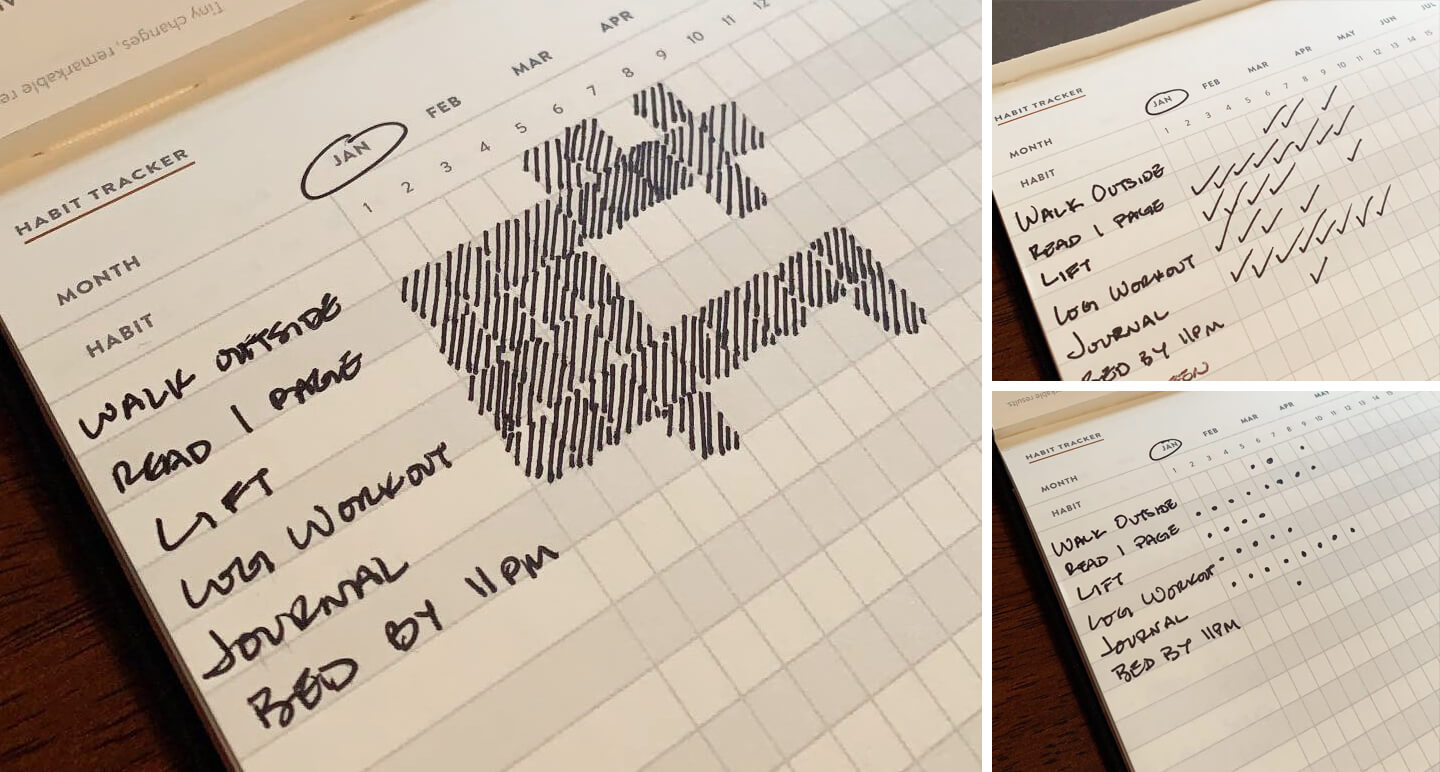
The Ultimate Habit Tracker Guide: Why and How to Track Your Habits | James  Clear

It’s hard to know where to go if you don’t know where you’re starting. That’s why it’s so important to start keeping track of your habits before you start trying to change them. You need a baseline in order to set realistic goals for yourself going forward. Give yourself a month or so to note your current habits, and use that information to inform your next steps.

There are several ways to track your routine. You can use a journal or planner to note how often you exercise, what kind of meals you tend to eat, as well as your mood throughout the day. You can also use a phone or smartwatch or fitness tracker to gauge your efforts. You can even take your tracking efforts one step further with more useful tech gadgets, such as a quality pair of headphones. They can come in handy when following along to a fitness video on your phone or listening to your favorite workout playlist.

No matter what you use to track, remember to take note of both the actions you take and how you feel during the day. For example, you might notice you tend to have more energy after a walk, or feel more anxious on days when you have two cups of coffee. Recognizing these patterns helps you define your goals and gives you solid proof that the choices you make really do matter.

Pelvic Pain When Walking: Causes, Treatment, Prevention

Pick One Small Change

Your first step should be to identify one small, effective change you can make based on the baseline habits you’ve noticed. Let’s come back to the walking example. If you notice you have more energy after your walks, you might decide to try and take a walk every day. Keep it simple – avoid adding specifications about the amount of time or distance you have to walk. Instead, focus on a “no zero days” mentality. If you walk around the block that still counts. Focus on consistency, not perfection.

Once you’ve kept up with this new habit for at least a month, you can start thinking about the next habit you’d like to build. However, it’s important that you use the notes you’ve taken since you added the new habit to define your next steps. After all, if you no longer feel anxious on two-coffee days now that you’re walking more, maybe having two cups of coffee isn’t a problem anymore.

Practice Self-Compassion

Changing habits isn’t easy, even when you give yourself the best start by going small and simple. That’s why it’s extremely important to go into goal-setting periods with self-compassion. If you mess up or fall behind, that’s not a sign of failure. It might be a sign that you need to make things simpler for yourself or try a different habit first, but it doesn’t close a door. Give yourself the space and time you need to grow, and remember that slow progress is still progress.

Self compassion through grief - SAS Life

The all-or-nothing mentality will always hold you back. Learn how to let go of it and, instead, focus on honouring the gradual, back-and-forth nature of change. You might just find that shifting your worldview brings your goals closer than ever before.

You can find more from Emma on her own website here

Photo Credit: Pexels

Stick to the process

John Deere Tractors - Tractor Hire Uk | Tractor Trailer Hire | Specialist  Agricultural Vehicles

Stick to the process even if you need to replan. Sticking to the process and having a plan are two different things. The process is the order in which you do things, the plan is how you are going to do those things in the order that is required.

My youngest son works on a farm. When it comes to farming there is indeed a process. It would be no good simply deciding to plant crops whenever you fancied. Or getting the ploughing, seeding, and fertilising in the wrong order. You have to do what you have to do in the order you have to do it at a particular time.

Understanding Manufacturing Process Controls in Your Factory -  QualityInspection.org

The first thing is to establish what the process is. This is where you you take the task, the goal, and break it down into all of the steps that it will take to achieve the goal. Now you have a process. In many of the jobs we do there will be processes mapped out. Remember this and get someone to tell you the process if they haven’t already and this will save you a huge amount of time. As a friend said to me recently, “It’s so time consuming not knowing what you are doing”. Unless you are a trailblazer doing something completely unique someone will already know the process. Find that person. Get them to tell you.

Then make a plan. The farm my son works on has a plan and sometimes the plan works and sometimes it rains. When it rains they have to replan the plan. This is fine. One of the benefits of having a plan is that replanning a plan is fairly easy because you have a plan. If you don’t have a plan then you have nothing to replan because you have no idea what you were meant to be doing in the first place. You were just drifting about like a rudderless ship just going wherever the wind and sea takes you. You need to grab the rudder and steer the ship.

When it rains on the farm they can’t work the land. This means that they have to do other things, they can’t just go home! They then plough or seed or fertilise twice as much land tomorrow, working late, or work an extra day. This is how life is.

More Days of Heavy Rain - Conservation in a Changing Climate

The crucial part is having a plan. Have you got a plan?
What came to mind when I asked that question? That’s probably the thing you need to start with. ‘You tend to mention what has your attention’ (or you tend to ‘think of’ in this example). That thing is eating away at your psychological energy to get that thing and other things done. Having a plan helps you settle the thing that is not yet complete in your head and in your system. Then if that’s the thing you need to do you can get on with it. If you don’t need to do that thing yet – then you have freed up psychological capacity to do other things because you’ve sorted the attention seeking task out.

Unmanaged, incomplete tasks drain psychological energy.
Managed, incomplete tasks don’t drain psychological energy (or at least not as much)

Planning is the cornerstone of a productive less stressful life.