Happiness – the elusive goal!

Happy Christmas we have all just been saying to each other. And then Happy New Year. We’re obsessed! Once a year we say Happy Birthday to each other as well. Clearly ‘Happy’ is very important to us. Yet it alludes us – or at least its elusive more often than we’re like it to be. Daniel Levitin in his book ‘The Organized Mind’ says that generally we think life should be easy, so, when it proves difficult we don’t like it.

‘Life’ (in all its guises) is largely difficult and takes some ‘doing’ and every so often we get that little pocket of happiness. So, if there are little pockets of happiness then the more we can find them then the more we can be happy – and happy people get more done – more in their work lives and more in their personal lives

Sometimes we look for happiness in things – but that’s not where to find it. Advertisers and sellers of things wouldn’t tell us that though. ‘Buy this’, they say, ‘and it will make you happy, have the perfect life’ etc etc. This comes with a ‘Halo Effect’. The thing you buy is wonderful. The new TV, the new car. But after a while it becomes just the car you get from A to B in or the TV you watch Masterchef on. Oh – except you are now in debt possibly paying for it for the next ‘however long’ and now you’re not happy anymore!

Mihaly Csikszentmihalyi says we have to find joy in everything in order to create flow. Flow is that ability to move effortlessly from thing to thing and get things done. But he means joy in everything – not just that new purchase. Joy in the washing and ironing, joy in the reporting writing. By doing this we will find flow and flow leads to people being happy.

We find happiness in the most unusual places sometimes

Sometimes, I’d argue, we get joy in difficult and problematic things. In Alex Pang’s book ‘Rest’ he talks about how difficult things – things that we are trying to master but are difficult – are actually restful and good for us – something that is mentally absorbing, that feels difficult to do, is deeply satisfying – such things – difficult things – hard work – make us happy.

In a Jewish Parable there are two men arguing over some knotty issue in the Torah. God gets annoyed so comes down from on high and says, ‘I’ve listened to you two argue about this for 20 years so let me tell you what it means’. ‘No’, they say, ‘what right have you! Clear off!’ They delight in the difficult thing – they are thinking, striving, and making a connection with one another.

I find that I am a person who finds great joy in the process rather than the outcome. Stoic philosophers say that some things are outside of our control, but we still need to do them. Some things are completely under our control and some things are not fully under our control, but we have influence. The influence is where we have control.

The secret, they would tell us, is to focus on the bit you can control and as Massimo Pigliucci (in a video presentation I watched recently on iai.tv) said “bet your happiness on those things”. We have no choice other than to take the stuff we can’t control just as it comes, because, well, we can’t control it. We also have limited control over the outcome of things. I can control when I write a blog, what I write about, what words I use, and take great joy in the doing. But I very little control over how you receive it. That is dependent on so many things, like, what you already know about the subject, what you think of me, whether you agree or disagree with the idea. So I set my happiness on the doing of it (I am currently very happy in the doing!) and not on how many ‘likes’ it gets, or how many people read it…. although I do hope you enjoy it. The pleasure and happiness is in the doing not in the plaudits.

So we need to find our happiness in every moment – the work we do – the study we do – the fun we have – tidying things up – we need to find joy in all of these things. Where do you find your joy and where do you find your happiness I wonder? And here’s the thing – if we think that everyone else has found it and we haven’t – then – sorry – for the most part they haven’t either.

Sometimes those difficult things will be at work, some will be home, some we’ll create all on our own by not being in charge of ourselves – how we approach things – how we set our minds to what is to do

Daniel Gilbert in ‘Stumbling on Happiness’ says that we come into this world wanting to control things and we go out the same way – and that research suggests that if at any point during our arrival in, and departure from, this world, we lose our ability to control things we become unhappy, feel helpless and hopeless and can become depressed. I hate to use the ‘P’ word again but planning is the key. Bringing the future into the present so we can have a look at it and control, I’d suggest, is the root to happiness. Delight in the doing!

We look into the future so we can make predictions about it and control it – that’s where happiness is.

Priority

It’s taken me a while but I’ve finally finished it. I started reading Robert A. Heinlein’s ‘The Moon is a Harsh Mistress‘ in July of this year. It was an interesting choice as I don’t usually read fiction and I’m not a fan of sci-fi particularly. But I’ll have seen some cool character in a film reading it and will have ordered it on Amazon in the blink of an eye. It is, by all accounts, a classic – and I would agree. For all it has taken me a while to read that was more because I needed to read lots of other things while working my way through it. It is indeed a good yarn. It’s a book of revolution.

no procrastination concept – do it now

But what has this to do with self care and productivity I hear you ask? Well, it threw me this line towards the end. “When faced with a problem you do not understand, do any part of it you do understand, then look at it again.” Brilliant! We are often confronted with things that are challenging, things we don’t quite get. Tasks that seem too big, that don’t match the skills we have. But there is often a bit of it we can do. Do that bit.

My favourite ‘quote’ about procrastination is that it is the art of ruining your life for no apparent reason. Sometime we put off and put off because the task seems too difficult and we don’t quite get some aspects of it. So, we don’t do any of it! But if we just tiptoed into the bits we do understand and could do, then maybe the difficult bits would seem, well, less difficult. Sometimes I find in making a start and doing something the next step, that I hadn’t spotted, reveals itself. I don’t understand something so I do something with what I do understand and in doing so something falls into place and the next thing seems more understandable or more achievable.

I find this a lot when trying to understand some complex idea or process. It all seems too difficult. But if I, for example, read the first thing I come across – take from it what I can, and the read the second thing. The second thing sometimes makes more sense. And then I move onto a third thing and that makes more sense than the first two things and then eventually I’m all over it. This relies on another favourite idea of mine – small steps, over a period of time, lead to big changes.

What’s stopping you from starting?

Make a start

You never know where you might end up!

Lunch Breaks – the rules

I think you know this already but maybe don’t acknowledge it or feel you can do anything about it? Motivation is finite. The further you get into the day the less of it you have at your disposal. The perfect time to top it up is lunch time! So here are the Lunch Break Rules!

Rule Number 1:
Take a lunch break!
Don’t feel guilty. I remember a poster in a senior manager’s office that said – Just because everyone else is doing it doesn’t make it right, and just because no one is doing it doesn’t make it wrong. We need to overturn this ethos that you are somehow more worthy if you work through your lunch break. The reality is taking a break makes you more productive in the afternoon. You will get back the time ‘lost’ to the lunch break in increased productivity. A study at Bristol University showed that a lunch break (with some gentle exercise – see rule 4) boosted mood and motivation by 41% and improved peoples ability to deal with stress by 20%. Put some motivation in the bank. Oh…. and you are legally entitled to a break. Just saying!

Rule Number 2:
Move away from your desk.
There is strong evidence that simply taking time away from your desk and moving your thoughts onto something else replenishes your ability to stay on task when you return to work. In fact when you take your attention away from the external and take some time to be a little more internal through ‘switching off’ and thinking of nothing, maybe through meditation (or just by not thinking too much!), you engage your brain’s Default Mode Network. This is the part of your brain that gets to work when you stop engaging with the external world. Interestingly your brain is only 5 to 10% less active when you are not thinking about anything. That’s your DMN getting to work on what it needs to do at a sub-conscious level, consolidating things, making connections, and the like. You must have experienced something coming to mind, a solution to a problem maybe, when you weren’t even trying to solve it. So get away from work, get away from your desk.

Rule Number 3:
Get outside.
Being in the natural world is a great healer. If you work somewhere where you can spend some time in a green space then do it. We are hard wired from an evolutionary point of view to be in such spaces. They have a calming effect. And fresh air is good for you. Moving around is good for you. And that brings us to rule number 4…..

Get Outside

Rule Number 4:
Take some gentle exercise.
I’ve already mentioned the Bristol Study above that involved some gentle exercise. A different study looked at how sitting less and moving more helped peoples productivity. They showed that a lunch time walk reduced stress, reduced sickness in staff, and led to more mindful practice. A walk will suffice but him the gym or go for a run if you want! As the UK Chief Medical Officer says…. some is good… more is better!

So…. You must achieve Rule 1! And then… if you can achieve 1 or 2 of rules 2, 3, and 4 – we’re onto a winner!

Take that lunch break
Be productive!

Moving a mountain

I was reminded recently of this Chinese proverb – “The man who moved a mountain was the one who began carrying away small stones.” 

This resonates with me so much. I’m often put off getting started with big tasks because they just seem, well, too big! What reminded me of the Chinese proverb was Nassim Nicholas Talib writing in his great book Antifragile about the the analogy of asking someone to move a one ton rock or one ton of pebbles. One person alone can not move a one ton rock but can move a ton of pebbles, over time, by chipping away at the task.

This is how we need to approach mammoth things that confront us. Procrastination is fuelled by feeling things are too big for us to achieve. The power of small wins – a psychological concept – relies on us breaking big tasks down into smaller constituent parts. I was recently saying to someone that success is sometimes about using our brain chemistry to our advantage and tricking ourselves into better ways of thinking or doing. So, what we know is every time we tick something off our ‘to do’ list we get a little dopamine hit that drives us onto the next step. If completion of the task is only ever ‘ticked off’ when the whole task is complete we only get the one ‘hit’. If we break it down into lots of tasks we get lots of hits! Win!!

What’s even better is if you have the right tools for the job! Shifting that ton of pebbles is going to be so much easier if you have a shovel and a wheel-barrow. If all you have is your hands, you’ll get it done, but it will be painful and slow. Before you start any task ask yourself, “do I have the right tools for this task”. ‘Tools’ can be many things. Simple things like pen and paper, information things likes names and phone numbers, or bigger things like the right software or equipment. With the right stuff around us things get done.

The crucial technique for this is planning. Plan every day. Think – “what am I doing tomorrow”, and, “do I have what I need?” Prepare what you need, or check you have it in the right place and accessible. Plan big on your last working day before a break (for most of us a Friday before the the weekend). Plan all of next week – get your ducks in a row. Check before you leave that you have everything you need for next week. If you haven’t, find it, buy it, email someone about it. If there’s no chance of you getting it for next week can you move the task. If you can’t how will you get around the lack of the right thing. Planning is everything!

Planning brings the future into the present so you can do something about it (Alan Lakein). I have a little planning session daily (usually just checking stuff is where it should be because…) I have a big plan every week, and a massive plan every 3 months, usually going up to six months ahead to see what I need, including, crucially, how much time do I need.

Control it or it will control you, says David Allen.

In a recent on line conference I was asked, “what are your 3 key messages to help people with their well-being and productivity. I pinched an idea from the property world and said….

“Plan, plan, plan”

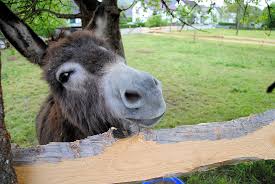
Don’t be a procrastinating donkey!

There’s a parable of sorts, a metaphor maybe, about a donkey. The donkey in the tale is stuck. He is both ravaged with thirst and famished with hunger and he is equidistant between the water trough and the hay bale. The donkey in this tale of woe was proposed by Jean de Buridan, and is indeed named after him – the Buridan Donkey. He proposes that, disabled by indecision, the donkey becomes stuck and doesn’t know whether to satiate his hunger or quench his thirst. As a consequence, he dies. Stuck between a rock and a hard place!

It has amazed me, in a really positive way, how during lockdown many people have taken up exercise. The streets around where we live are positively strewn with people who I’ve never seen out running, cycling, or walking before. We walk the dog several times a day and I run regularly so you get used to the faces and lots of these faces are new. Turns out all it took was a pandemic, a lock down, and a suggestion from the Prime Minister (…well he has to be good for something!) to motivate people to get out and exercise. It’s great! If only someone had nudged the donkey one way or the other (probably towards the water first!) the donkey would still be alive. (Disclaimer: to my knowledge no real donkeys were harmed during this thought experiment!)

How many times is it like that for us? We want to get on with something, yet we don’t, we procrastinate. We find other things to do. Easier things. We talk about this in our recently published book How to Thrive in Professional Practice. Here’s an excerpt that talks about this idea from the chapter on motivation:

Steel (in Levitin, 2015 ) says we procrastinate because, in the moment, we have a low tolerance for frustration – so if something appears difficult, we will tend to put it off. When we do initiate a task, we tend to choose the easiest tasks rather than the ones that will give us the greatest reward in the long term. He suggests that there are two problems with the human mind. First, we think life should be easy, so we have a tendency to put off difficult things and, second, our self- worth is bound up in our success. If something looks like it is going to be difficult and there’s a risk we might not do it well then we put off doing it. There’s an obvious link here to Deci and Ryan’s idea of mastery that we’ve just considered.
(Mordue et al, 2020, pg. 127)
…..always wanted to do that! First time I have! Yay!

Picking up where that paragraph leaves off Deci and Ryan are talking about achieving flow, and the three things they say we need to achieve flow are Mastery, Autonomy, and Purpose. When we don’t have these things we may not be able to get into flow or even get started with the task to hand and will procrastinate and put the task off. “You may delay, but time will not”, as Benjamin Franklin is reported to have said.

So, what can you do….

There’s more in the book 😉 [Buy your copy here!]

The key points are:

If Mastery is the issue, if you feel unable to complete the task then seek advice. Don’t put off. Go to someone who can help you. It seems simple but we don’t do it because we don’t want to look incapable. But how more incapable do we look when we do a poor job. Go and ask someone. Then, be in control of your development. Explore what you need to do with others, ask for help, and figure out if you need some training.

If Autonomy is the problem, then explore where you do have control. Some things are outside of our control, but we still need to do them (more below under Purpose). Some things are completely under our control – do I do this now or later (see the same bit below under Purpose!). Some things are not fully under our control, but we have influence. The influence is where we have control. “Do I have to do this now or can I make a case that it would be better done at another time?” (See the same bit below under Purpose!!!) The secret, Stoic philosophy would tell us, is to focus on the bit you can control and as Massimo Pigliucci (in video presentation I watched recently on iai.tv) said “bet your happiness on those things”. We have no choice other than to take the stuff we don’t control just as it comes, because, well, we can’t control it. (Note: This doesn’t mean we shouldn’t challenge the status quo…. That would fall under the category using our influence which is completely under our control… but it might not get you anywhere…. But don’t stop trying… in the meantime you have to accept it….)

If Purpose is the problem, then be aware it’s often a problem for us all. So, don’t beat yourself up. Our lazy brains (see Chapter 8 in the book for a layman’s summary, or ‘Thinking, Fast and Slow’ by Daniel Kahneman for a comprehensive view from the master!) like easy things so we don’t see the advantage of doing something right now that’s difficult that doesn’t need to be done right now. We prefer to do something easy. The problem is that if we don’t do those things that are due in the future, they eventually become due today, and we’re left manning the panic stations and feeling stressed. You need to accept that long term gains are more important that short term gains. Imagine it’s Monday and something is due on Friday, and you do it on Monday, and on Thursday your boss says, “don’t forget I need that report tomorrow”. And you say “yes, no problem”, because it’s done!! Of course, you don’t tell them it’s done… you play the office game. Because if you tell them it’s done then they’ll start giving you shorter timescales…. Ssshhhh just saying 😉

So, if you have the time, do it now.

Don’t put it off simply because it’s not due for a while. This, for me, is where I really started feeling in control of my work. If I had a due date, I set myself my own due date which was before the actual date and I aimed for that. And once I started getting things done in that way not much ever crept up on me.

There are other things you can do to help!

The “How to Eat an Elephant” idea of breaking down big tasks into smaller tasks

The 2-minute rule that gets small tasks done

….and others, that, you guessed it, we cover in the book 😉

Recommended Reading:

Daniel Kahneman Thinking, Fast and Slow

Massimo Pigliucci How to be a Stoic

Daniel Levitin The Organised Mind

And obviously!

Mordue, Watson, and Hunter How to Thrive in Professional Practice

Working from home? Here’s how to start your day!

It might surprise you to find that I’m not going to tell you much about how to start work… although I will end up there. This is because what you do before you start your work day is so important no matter where you are working but at this time of ‘lockdown’ it feels doubly important to get the start of the day right. Like it or not having to work in a new way will bring additional anxiety and stress. So here we go..

Get up at the same time you normally would.
Keeping a regular bed time and a regular getting up time fuels good sleep. You should have a pattern that you sustain 7 days a week and should aim to go to bed between 10 and 10.30 and get up between 6 and 6.30. These times are in tune with your body’s natural rhythm. There’s a real risk that in avoiding the commute you use the time to sleep later. This isn’t good for you and there are some much better things you can do to set yourself up for the day.

Make your bed
Small wins are powerful motivators. Every small thing you achieve gives you a little dopamine hit (our feel good chemical) so starting your day by achieving making your bed gets you off to a good start. Also, when it comes to bed time and you go to climb into a nicely made bed it is a satisfying feeling. It will take you a couple of minutes and means you’ve started your day by completing your first task.

Avoid your phone
Don’t start your day with your devices. To be honest I wouldn’t normally say this. I usually have a check of facebook and twitter early in my day, but, at the moment, working from home, you are likely to be locked to tech all day in Teams meetings or replying to emails, and the like. Tech drains us. Eradicate unnecessary tech to avoid tired eyes and a tired brain. Set yourself a little time aside to indulge yourself in the latest meme at the end of the day.

Exercise
I know for definite that if I start the day with some light physical activity it sets me up for the day. I know that I feel more switched on, alert, and able to get into flow. It doesn’t have to be a great deal. I do two things on a morning. I go through a yoga stretching routine to wake my body up and then take the dog for a brisk walk. It will energise you. Also, getting outside on a morning, if you can do so safely at the minute, sets in motion a process that ends with a good nights sleep. The exposure to daylight early in the day sets off a biological process that ends with quality shut eye.

Eat and hydrate
Start with a good breakfast. If you’re having trouble fitting everything in make some overnight oats the night before and then all you do is grab them from the fridge and you’re sorted. But really how long does it take to make some toast or have some cereal. Start the day with something.

Try to get a glass of water in early as you dehydrate while you are asleep. I always have coffee early on a morning. Just go careful with how much you drink as you will have a coffee slump later on. Avoid managing the coffee slump with more coffee. I have two coffee slots first thing in the morning and early after lunch. Strategic coffee drinking! Outside of these times if I feel like reaching for a coffee I go for water and a quick walk – even just around the house. I find, if nothing else, it distracts me, and often hydrating with the water takes the craving away. It’s so important to keep hydrated during the day. Have a glass of water every hour or so or keep a bottle on your desk and sip it.

Get dressed
It’s so easy to slip into something comfortable working from home. Or even to stay in your PJ’s if you’ve got no video calls to make. Don’t. get showered and get ready. Routine is everything. We may be having to establish new routines but establish them we must! We thrive on routine. We give babies and children routine because we know it works. Here’s the thing… when those babies and children turn into adults they thrive on routine too! Getting dressed also signals ‘ready to work’. You will feel much better, you will feel professional, you’ll feel ready to go. I do have a compromise personally which is that I still wear my regulation v-neck black t-shirt, but, instead of my regulation black jeans I’m wearing a smart pair of joggers. I’m still getting ready but enjoying the comfort. And fella’s have a shave. There’s nothing worse than a video conference with some stubbly fella. And I mean you fella’s with beards as well…. nows your chance… shave it off… you do know these beards are going to be viewed in the same way as the mullet is in 20 years time don’t you 😉 …I digress ?

And now you’re ready to start work….

But before you do that – before you go near those emails – two things

Set your goals – Visualise your day

Open up your dairy and think about what you want to achieve today. Setting your intention promotes motivation and overcomes procrastination. Visualise what a successful day looks like. Experience yourself completing tasks and having effective video meetings. Picture yourself ticking things off your ‘to-do’s’. And watch yourself as you close your laptop and move away from work and embark on a lovely evening. There is real power in this – give it a go.

Now you can start work…….

Go get ’em!

Stephen’s book, written with Lisa Watson and Steph Hunter is due out in early May and is called “How to Thrive in Professional Practice”.

Available here https://www.criticalpublishing.com/how-to-thrive-in-professional-practice
for pre order (due out 5th May 2020)

The book is an engaging yet undemanding read, and pulls together the various individual strains of self-care, spirituality and common sense, housing them under one external literary jacket, in a ‘whole system’ approach. A one stop ‘bible’ to give social workers and other professionals an uncomplicated, easy to read, go to resource that empowers them to manage and maintain their wellbeing through personal responsibility and self-care.

The ‘Two Minute’ Rule

Being productive either at work or at home is a crucial part of being organised and being organised is essential to a happy and content life I feel ……All your ducks in a row so that you just get on with your day.

I live by the ideas in David Allen’s book “Getting Things Done” and by far the most effective, easy to implement, approach is the two minute rule. Simply put…. If it’s going to take you less than two minutes to do it just do it… don’t even think about it… just get on with it. This little productivity hack gets so much done in my world!

I find it most effective in dealing with email. As Allen points out your inbox is a collecting tool not a storage tool so your email inbox should be empty! How many of us can say that! The problem is once they disappear off the bottom of the screen you may as well delete them as they risk being forgotten about! The two minute rule is so effective at getting through the morning grind of ‘getting in to empty’, as Allen puts it, that my inbox is routinely empty (or nearly empty at least). It’s amazing how many things only take a small amount of time but how easily they all mount up and then become onerous. And once those emails disappear off the bottom of the page they get forgotten about…. You know they do… and then they eat away at you as you wonder what’s further down the inbox list! The beauty of emptying your inbox daily and doing something with the things you find there (diary it, delete it, delegate it, or put it into your ‘trusted system’ (more on this soon)) is that you know that, if you don’t get back to your email for the rest of the day, there’s nothing in there you don’t know about that’s more than a few hours old! That’s a great feeling.

The two minute rule works just as well in other areas! At home the dishwasher gets dealt with while I’m making a cup of tea, the bin gets emptied as soon s it’s full, the recycling gets put out, the cooker top gets cleaned while the coffees on… and on it goes…. Things just get done… and you feel so much better and have more space to do the important stuff. Simple.

SO what do you do if it’s going to take more than two minutes!? What’s this ‘Trusted System’ idea. Ah! That’s for another blog…

Is just enough enough?

Earlier this week I was talking to a group of final year students at the University where I work about self care. They are currently entering their final stages of their undergraduate degree, on placement, writing dissertations, and balancing all of that with family and personal life. I mentioned the importance of exercise and one student rightly observed, “how am I meant to fit exercise in when I have so much to do!?” This got me thinking over the following days, “How do you fit self-care in when you have many things demanding your time?” I began to ponder how much self care can you get away with?

This has dominated my thoughts for the last few days. The problem here is that if you encourage people to do just enough then they’ll do just enough. The Chief Medical Officer in the UK, writing about how much exercise is enough, rightly says, “some is good, more is better”. I’m reminded of the zen adage that you should spend 20 minutes in meditation every day unless you are too busy to do so. In which case you should spend an hour in meditation! That’s because, if you have a colossal amount to do then you need the gains from effective self care more than someone who doesn’t have much to do.

I spent the last few months of 2019 incredibly busy. I looked back through my diary in early January of 2020 and noticed that not a day had gone by between mid September and mid December where I hadn’t done some sort of work for at least a few hours every day, even weekends. My self-care did suffer. But, I maintained a level of self care that meant I remained productive. I had to! there was so much to do! So that got me thinking that maybe there is a minimal level you should engage in to ensure that you get through, remain well, and stay focussed and productive. Maybe there is a baseline that you shouldn’t drop below until you reach a point where you can do more. “Some is good, more is better”.

My journey to understand how exercise, nutrition, sleep and being organised improve productivity has led me to conclude that if you don’t get these things right consistently your mental and physical well-being will suffer. Not might. Will. So…. can just enough ever be enough?

Dr Ranjan Chatterjee (author of the The Four Pillar Plan – that explores well-being) refers to exercise as a gateway habit. If we can establish exercise as a routine then we will be able to establish routines in other places. Exercise can be uncomfortable and hard going but if we can apply ourselves to it then it helps us drive ourselves to manage other challenges that make us feel uncomfortable. It helps us manage our stress response. Exercise though is merely a subset of being ‘physically active’. We don’t need to be gym bunnies or marathon runners for physical activity to have a positive impact on our well being and productivity.

The Chief Medical Officer recommends 150 minutes of moderate exercise per week. That’s just over 20 minutes per day. Are you telling me you can’t achieve that? Park the car and walk the long way to the office – 5 to 10 minutes. Walk back to the car at the end of the day the same way – 5 to 10 minutes. Take a lunch break and walk outside for 15 minutes (and have something to eat away from the desk). That’s easily more than 20 minutes. Add in things like getting up from your desk and walking to a colleagues office to talk to them rather than phoning them and you’re upping your step count. If you want to do ‘more’ and improve your response, you can do more by doing less. You could aim for 75 minutes of vigorous activity, also recommended by the Chief Medical Officer in the UK. That’s just over half an hour twice a week, or just over 1 (that’s one, ‘1’, uno) gym session per week. You can achieve enough moderate exercise as I describe above to off-set the 15 minutes vigorous exercise you are short by doing maybe 30 minutes of gentle exercise over the week. So, a combination of vigorous and moderate exercise to hit the target.

The benefits are huge. Exercise ‘burns off’ the cortisol and adrenaline that are your bodies response to stress. Too much of these hormones in your body, over the long term, cause serious health problems. In fact excessive cortisol has been linked to depression. Exercise generates the production of serotonin, noradrenaline and dopamine which makes us feel good. Dopamine is the brains reward system and fuels motivation and drive. You will work more productively as a consequence. These levels are increased after just one bout of vigorous exercise and to a lesser extent after moderate exercise, but still elevated nevertheless.

But there’s something else… Brain-derived neurotrophic factor (BDNF), is a protein that stimulates the production of new brain cells and strengthens existing ones. When you release BDNF it helps grow brand new brain cells and pathways. High levels of BDNF makes you learn faster and remember better. BDNF also increases your brain’s plasticity – it’s ability to adapt. When you face stressful situations BDNF protects brain cells and helps them come back stronger. Exercise naturally raises levels of BDNF in your body. Cardiovascular exercise is best and, while a one-off session does no harm, BDNF increases more effectively with regular engagement in exercise.

So, how much exercise is enough. What’s the minimum you can get away with? The answer is in what you have just read. 150 minutes of moderate exercise, or 75 minutes of vigorous exercise, per week. This level of exercise may well be sufficient to maintain your well-being in the short term but…. Some is good, more is better.

The other two elements of the self-care triangle, sleep and nutrition, I feel, are largely non negotiable. You need to eat. But you need to make sensible choices. An increasing body of research is showing that you are what you eat. Or at the very least your emotions are driven by what you eat. Your gut biome – the microbes in your gut, have a significant impact on your emotions and emotional reactions. A healthy diet, free from additives and excess sugar, and rooted in fresh produce is best. You can read more here. The office environment can also be a hellish experience of a steady supply of cake and biscuits and busy people tend to grab something to eat on the go and often make poor choices. Planning is everything. You can read more here and get some tips.

Then there’s no getting away from the need for 8 hours sleep. Ideally from about 10/10.30 to 6/6.30. You can read more here and here. But, what I know, because people tell me and I’ve expereinced it myself, is that the ‘churn’ of things to do keeps you awake or has you tossing and turning in the early hours. The secret here for me is having a trusted system – your diary, a spreadsheet, a to-do list – whatever works for you – that captures everything in your sphere of responsibility so that you can go to bed not worried about remembering what you need to do tomorrow. If it’s all in a system somewhere (and I wholeheartedly recommend David Allen’s Getting Things Done methodology – it’s what I use) then research has shown that it helps alleviate some, if not all, of the stress associated with what is to do.

Even with such a system it can be difficult to get to sleep when it’s not what is to be done that’s troubling you but rather the emotional content of what you have been involved in or need to be involved in. Meditation helps. Meditation has been shown to improve general feelings of well-being, reduced feelings of anxiety and depressive symptoms, and reduced feelings of job strain in the workplace. Even one session was shown to have a short term impact. When I can’t sleep I try breathing exercises, or I do a body scan. A body scan if a great meditative technique. Start at your toes and tense them then relax them, concentrating on how it feels. And then continue relaxing each part of your body working your way up to your head. When I do this I don’t get as far as my head as I fall asleep. How you prepare for sleep is also important so have a look at the links above. Meditation also increases levels of BDNF (see above on exercise).

Being organised is crucial. A good week needs planning. A good month needs planning. If you plan what you are going to do in detail and write it down either in your calendar or in a journal then you are more likely to do it. I spend some time on a Sunday looking ahead to the following week and thinking about where I can fit exercise in. I spend some time preparing things to leave in the fridge to make food prep for taking lunch to work easy. My back up plan is always to have tins of soup in the cupboard. If I don’t have time to make something I grab a tin of soup chuck it in my bag and that’s lunch sorted (assuming of course you have access to a microwave at work!).

I’m not saying it’s always easy but I do feel there is always a way to maintain at least some level of engagement in things that keep you well and productive. As I often say self care is not a luxury. It has to be a priority. You can only invest in others for so long if you are not investing in yourself. And if you are not investing in yourself through positive habits then you risk not being available to the very people you are trying to support.

It’s not selfish to prioritise yourself.

Time to set some real goals! 10 things!

Now that we’ve got January out of the way it’s time to set some real goals. We’ve moved past the New Year resolutions we’ve probably already forgotten about (!!), we’ve finished off the Christmas sweets, and now we have the rest of the year to go at! Come on!

Here’s 10 things I’m going to do, that you could do too, to make you feel great!

Get outside more

I’ve always ran and cycled a lot. I enjoy a good walk. I’ve set myself the challenge of running, walking and cycling 500 miles this year. I love outside time! And there are great benefits to being outside..

  • You will experience a great sense of well-being. Breathing in fresh air, embracing the space around you, feeling the cold upon your cheek. Even at this time of year getting wrapped up and going out for a walk will give you a boast.
  • And you’ll burn some calories! And let’s be honest we’ve probably all had too many of them in the last week or so! For those a little fitter get your running shoes on, on get your bike out and go out and get breathless and feel that cool refreshing air in your lung. Outdoor workouts are better than indoor ones. For example, running. Outdoors you are contending with different terrains or you are running against the wind… all better for you than the treadmill!
  • Green exercise – or exercise in a natural environment – has been shown to boost self esteem and mood and you’ll get a well needed, at this time of year, boost in vitamin D which is reported to be good for your immune system. Now that’s got to be good! Read more.

Get lost in the moment

This one is simple. Just experience what is currently happening to you. The water on your skin in the shower, the air passing into and out of your lungs, the taste of the food in your mouth, the song on the radio….. Do any of these things or any others to the exclusion of other thoughts and distractions. The benefits of simply taking some time out to be mindful of a particular thing will reap benefits. Before you know where you are at you might find yourself wanting to try meditation! You never know!

Get more organised

Not matter how organised you are you can always be more organised! Being organised gives you a great sense of control and fuels your well being. As I’m fond of saying – if you don’t control it then it will control you. Try applying the two minute rule or grab a copy of David Allen’s book ‘Getting Things Done’. I’m going to blog about this more (as well as the other things in this list very soon) so ‘stay tuned’ for that. I can tell you, hand on heart, at work and at home my life is so much better for getting myself organised. I can do it better though, especially at home, to make sure I make the most productive use of the time I have. For me time is the most precious commodity we have and we waste it at our peril.

Drink more water

This one should be easy to do surely! How hard can it be to go to the tap and fill a glass up and just drink it! I know!! So why don’t I do it! I even have my phone remind me to drink water every few hours and still I don’t drink enough! Water is refreshing, calorie free, and it’s absolutely crucial for you body to function effectively. So come on! Flush those kidneys and feel great. Read more.

Drink less coffee and alcohol

I don’t know how this one is going to go for me! I love coffee! And I do like the odd tipple on an evening. I read somewhere drinking coffee borrows time from later in the day…. You will crash later and be less productive. And drinking alcohol borrows time from tomorrow as it will affect your sleep and therefore your feeling of well being the next day.

Read for 15 minutes a day

Knowledge is life improving, how could it not be! Reading for 15 minutes a day at an average speed of a page a minute will get you through a 300 page book in 20 days. That will get you through at least 15 books a year. Not a bad start to enhancing your knowledge! And I bet if you get the habit you’ll read more! Add the next thing on the list in and you’ll be amassing information at a fair rate of knots!

Get into more audio books

I said earlier that, for me, time if the most precious of commodities and I want to put as much of it as I can to good use. It takes me 40 minutes to drive to work and the same to get back home. That’s and hour and a half a day. Sometimes I listen to music – that’s a good thing. Sometimes I listen to the news on Radio 4….. but now mostly I listen to audio books and they are great! I get mine through Audible. I pay £7.99 a month and this gets me one credit that I can use to buy any book. The download to my iphone and play through the car stereo seamlessly! The books are anything from 4 to 7 hours long and one lasts me through most of the month when interspersed with other things…. And that’s another 12 books in a year… done! Sorted!

Set small achievable goals

How do you eat an elephant? One bite at a time! Several books I’ve read talk about setting achievable goals and some of the models I talk about in some lectures show that breaking down big tasks into smaller steps achieve progressing better than big steps. Problems or projects seem daunting when you just think of the end goal. But if you think of the many small steps and tackle them one at a time you stand more chance of achieving success! My goal for this year is weight loss – more about the steps I’m taking later. I’m currently reading Mini Habits: Smaller Habits, Bigger Results by Stephen Guise where he talks about setting himself the target of doing one sit up a day… that was all! Just one! And he explores where that got him! Worth a read!

Sit quietly from time to time

This is a bit like ‘getting lost in a moment’ but slightly different. Getting lost in a moment can be about getting in grossed in an activity. But sometimes we need to just sit quietly. It could be, but doesn’t need to be, meditation. It could be sitting quietly while clearing your mind but, for me, more than this, sitting quietly can be a time for you to think things though in a calm, focussed way. In the rushing about of modern life our responses are, dare I say, reactionary rather than well though through often. I’m going to sit and experience time just passing in a quiet state from time to time, maybe first thing on a morning…. Now that’s good use of time!

Once a month mix it up

Don’t get into a rut. Of all the things above keep mixing it up. Been out running a lot this month? Then next month go out walking! Been spending quiet time on a morning? Then, for the next month do it on your lunch break… you get the idea. From an exercise point of view your body gets used to what you ask it to do so mixing it up challenges it to ‘re-think’. As for your mind, giving yourself space at different or being in the moment for different experiences will help you understand yourself and what works for you and what will, hopefully, lead you to a greater sense of well-being, a greater sense of inner-peace.

Image result for challenge

I’m going to try all of these things and I’ll let you know how I get on. Let me know what you get up to!

Autonomy – one of the keys to success

I talk to people a lot about ‘flow’. This is a concept that I first came across in the landmark book ‘Flow’ by Mihaly Csikszentmihalyi. Flow is essentially the state that you can find yourself in when you are totally absorbed in something to exclusion of all other things. A mindful state if you like. You have the skills and knowledge to me master of what ever you are doing and you are engaging in it purposefully. Crucially alongside those elements in generating flow is autonomy.

Autonomy is the ability to make your own decisions and exercise control over the tasks that you have to engage in. Now, this can be difficult as in paid employment our tasks are given to us, often by a manager. So, how do we engage autonomously and create flow there.

Well, even though our tasks are often set out for us they are almost always set out as an end goal. We can often, particularly in professional practice, exercise autonomy in how we get to the end result. We can also be in control of how we break the task up and when we set time aside to do it.

In the midst of a world that often seems outside of our control if we control the bits we can control we will generate more flow. You can’t control what is given to you to do, you can’t control how people act towards you, but you can control how you respond. The more in control you feel of things in general in your life the more likely you are to respond from a place of control.

Take the tasks you have been given and control them. As David Allen, author of “Getting things done: The art of stress free productivity”, says, “if you don’t control it, it will control you.” So, take the task. Figure out the end goal and usually the end date. Then break the task down into the manageable chunks that will get you to the end goal. This method works well for tasks that have both a long and a short time frame.

Where a task has a short time frame – the “I need it by this afternoon” tasks – people tend to jump straight in in a state of panic and just start doing. You must stop and take stock and plan how to get to the end even when the end is only a few hours a way ….And still diary the tasks. Writing things down helps consolidate them. I find that it also helps you spot flaws in your strategy to get to the end point because the act of writing things down slows you down and allows your deliberate brain to take charge of your automatic brain. ‘You can’t plan and do at the same time’, as Allen also says. So plan it then simply execute your plan.

The method also works with long terms tasks for one key reason. If all you set out in your head or diary is what the end task looks like and when the end date is you are more prone to procrastination. If you set the end point and dairy in all the steps so that you can chip away at the task a step at a time you are more likely to do those little steps when you hit them in your dairy than you are if all you have to think about is the big task. The thought of the big task will sap your psychological energy to the point you don’t make a start. And, as we know, “making a start is the hardest part!” It’s easier to make a start on a small task. So, a bigger task, broken down into lots of smaller tasks, is easier to get going on. If your a last minuter… take note! You all know who you are 🙂

In whatever you do find what you have control over and be autonomous in how you think about those elements.

Get your flow on!