Common student questions answered

As we come to the end of the academic year and another group of social work students are set to graduate, I’ve been thinking about common questions I’ve been asked over the years. Here are some of my responses.

Diary Management
Paper diary or electronic calendar? Which is best?
By far the best option is electronic. Let’s be honest how many of us don’t have a smartphone these days. If you’re using a paper diary and you put it down somewhere and forget you’ve lost it all, but most electronic calendars are stored in the cloud so you’ve got it wherever you are and you can’t lose it. Add to that functionally. You don’t get something done one day you just move it into the next day. I use the time slots on Google Calendar for time sensitive stuff and the daily entries for stuff I hope to get done in the gaps! Start getting used to diary management now and it will be much easier when you’re in practice.

What should I be looking for in a good diary?

Let’s talk paper diaries first if you want to go in that direction! I don’t think, as a student, you can get away with anything less than a page a day. You’re going to have a lot to keep track of assignments, tutorials and lectures, never mind your social life. ‘Page a day’ means you’ve got space for the things you’re doing and room to make quick to do lists for the day. Maybe even look for something that has a diary page and a note page facing each other. Personally, you can’t go past Molskine for quality and there are similar budget versions available. As for electronic calendars – accessibility is everything. You need something that’s useable on your desktop and on your phone. My personal favourite is Google Calendar.

What sort of things should I be putting in my diary?
Easy answer! Everything! Everything that is demanding your attention should have a diary entry. Most people just use their diary for things that have an actual time attached to them; lectures, seminars – that kind of thing. You should be putting everything else in your diary – allotted time to go to the library, time to draft your assignment, time to write your plan. That way you get a sense of everything you need to do, not just when your appointments are! And I’d suggest you diary longer than you think you’ll need. Invariably we underestimate how long things will take. And when you finish a task early you can start on another one!

Proof Reading
No matter how much I proofread I’m still missing things! Help?
You probably just need to slow down. It’s easy to miss stuff when you’ve written it because you know what it needs to say so you ‘see’ what should be there not what is there. It’s often the small words that cause the problems. ‘It’ and ‘is’ are easy to miss as are missing words. You brain is very clever and will ‘see’ the word even when it’s not there. I always feel that reading it out loud is a good tactic. This makes you actually say what’s there and it’s harder then to automatically fill in the missing bits and gaps. Do you struggle with punctuation? Again reading it out loud might help you figure out where the commas go as you will often naturally pause or take a breath where a comma should be. Reading out loud will also help you spot sentences that are simply too long… you’ll run out of breath!

What’s the best approach to proof reading?
Proof reading isn’t easy and you’ll often miss common errors as your brain fools you into seeing what’s not there. What’s the best option then? Get someone else to proof read it for you. It’s even better if they don’t know much about the subject matter as they can then tell you whether it makes sense to the casual reader. Other people will more easily spot errors, as they don’t know what’s coming so are actually focussed on reading it properly more than you will be when it’s your own work. If you have to proof read yourself slow down or read it out loud.

Time Management
I keep running out of time for everything. What’s going wrong?
You’re probably not planning effectively. People who write about productivity say that you can’t plan and do at the same time. So plan then do! Start your week planning what you need to achieve this week (or even better end the previous week planning the following week) and start each day with considering what you need to achieve that day. Every so often look ahead a month and work backwards from things you need to achieve putting all of the steps into your diary. This is based on the old adage “how do you eat and elephant”? The answer… one bite at a time. When you have big tasks to complete, like an assignment, break it down into achievable steps. For example, “go to the library to get books”, “read the books”, “collate notes”, “write assignment plan”….you see how it goes. And put all of these things in your dairy. This will help you hit the end goal.

How do I manage my time to meet deadlines?
The first thing to do is to set yourself a deadline that is before the actual deadline. That way if you do hit a problem you’ve got built in capacity to give yourself that little more time. This reduces your stress response to the situation. When you are stressed you are less productive – so you need to avoid that. Break the task down into smaller steps and put these in your dairy. Always give yourself more time than you think you’ll need. As humans we have a tendency to overestimate the time small tasks take so we put them off, and underestimate big tasks so always end up running out of time. Apply the two minute rule for small tasks. If it’s going to take less than two minutes just get on and do it. If you need to diary it for later diary up to 50% more time than you think you need.

What’s the best strategy to make the best use of my weekends!?
Plan! And not just your academic or work stuff but also your household and social stuff. There’s sound evidence that if you plan something and put it your calendar you are more likely to do it. If you get up on a Saturday morning without a plan I guarantee you’ll get to Saturday afternoon having achieved nothing. Focus on your home and social life in the same way as you would your study or work life. Make sure there’s something in there for you. You can’t work and study all of the time. All work and no play makes Jack a dull boy – as the saying goes.

Effective communication
Should my emails to my tutor be formal or informal?
I would generally err on the side of formal. Also, make sure the email is useful and clearly sets out what you are after. Don’t just email and say, “can I have a tutorial please”. Email and say “Can I have a tutorial please to look at the assignment that’s due in on 17th December. It would be useful to meet next week and I’m available on…….” With all of that information one email back from the tutor might be enough rather than it taking lots of emails. Your tutor will be busy so anything you can do to help with your request will improve the chances of a helpful response. Start ‘Hello Stephen” and end ‘Thanks Debbie Jones, First Year BA”. This is really helpful as if your course is big the tutor may not know who just ‘Debbie’ is and may well teach into more than one programme. Let clarity be your watchword!

What are the most important things when it comes to communication?
Well, that depends on the communication activity. If we are talking about in writing then brevity and clarity are important. When emailing in a professional context, to your tutor for example, they will have a lot of emails to get through. My guess is they will read the first line or two and then if it’s a long email just scan to the end. So, put the important stuff at the start, but also keep it short, as that will mean there’s more chance of the recipient actually reading to the end! Sometimes if I’m asking for support from someone and I’m not sure if they will have the time to read a lot I give them a brief outline and suggest that I can give them more detail if they feel we can progress things. In face-to-face communication body language is important. Various pieces of research say that it’s the primary way we communicate. So how you present yourself is just as important as what you say. Make time for the face-to-face communication so that you are not distracted. Maybe think through in advance what you want to say so you get the words right and get the tone right.

How to I communicate effectively in emails?
You need to make the email effective for the person on the other end. Be clear about what you are after and offer a solution or a range of options to the person you are sending it to. If you want to meet, tell them what you want to meet about and what timescale you want to work to. Tell people the dates you are available. If you want a response to something from the person that’s time sensitive for you then tell the person when you need a response by. Personally I’d tell them a date a couple of days before you actually need it to account for slippage. Be clear and succinct. No waffle! People get hundreds of emails and often don’t read all the way to the bottom of long emails.

Working in groups
When we work in a group at university one person always dominates. What can I do about it?
I’m assuming you’ve been given a task like a presentation to prepare and deliver as a group. Group work is not easy as personalities are powerful things! I would formulate the group in a formal way with someone acting as Chair who facilitates the group. They are not in charge they just steer things. I’d also have someone taking notes so you know what has been agreed. People who dominate often just want their view validated so it’s helpful to listen and acknowledge what’s been said positively then ask the others to contribute. If it gets difficult start the meeting by saying we’ll go around the group and feedback where we are up to. Or, we’ll go around the group and make suggestions before deciding. This is also a useful tactic for including quiet members.


When we work in groups one person never pulls their weight. What can I do about it?
You can try and tackle this yourself by discussing it with the person but I suspect you’ve already done that! I would alert the module leader of your concerns in a timely fashion. It’s not much use telling the module leader just before you need to present whatever the group have been doing. When working in the group take notes with clear timescales identified. Even if the person not pulling their weight isn’t there identify tasks for them and email the notes and tasks. Ask them to respond to say they’ve got the email. Keep including them because if the module leader is to do anything they will need evidence that you’ve tried to include the person. If the work you are preparing is to be graded as a group you may have to just ‘bite the bullet’ while the module leader deals with the situation, as you don’t want to compromise the group mark.


Struggling academically
How do I make the best use of my tutor?
Make sure you take up all of the tutorials you are entitled to. Prepare for them. Your university will probably have tutor guidance telling you what you can expect from your tutor, so, within those parameters figure out what you might want to ask for guidance on. Always have something to ask so that you engage the tutor or they may think you are not interested and draw the tutorial to a close. If the tutorial is about something specific, like an assignment, then again the important thing is to prepare. Have a list of what you have read, prepare an outline of what you are going to write and have some questions prepared. Be clear about the learning outcomes and if you are unsure make sure you ask.


How do I plan an assignment?
The first thing to do is read! Have you read the set reading? You need to do this to at least have an overview of the subject in question. Make notes as you go. Make sure you note where you have written it down directly from the book or where you have paraphrased so you know how you need to reference it if you use it. Keep a reference list as you go. Then and only then you should start with the learning outcomes and the task. There’ll also be a question to consider probably! Break the question or task down into its parts and consider what you are being asked to do. Consider words like ‘describe’ and ‘critique’ as they require different things. Where you are asked to describe you are simply going to provide an overview or a narrative. Where you are asked to critique you will need to start by explaining one position and offering alternatives, all from academic literature, to show there is more than one opinion. Once you’ve broken down the question consider what you will write and construct a plan. Your plan is probably going to follow the task if the assignment sets one out. Once you’ve created your plan then look at each learning outcome in turn and make sure that there is an element in your plan that covers each learning outcome. If you miss a learning outcome the assignment will not pass so this is a crucial step.


How do I make sure I’m doing what I need to do in assignments?
There are a few things you can do to be sure. Firstly listen in class. Tutors will often guide you to teaching that is relevant to assignments. Then make sure you read the set reading or chapters referenced by the lecturer. Then you need to plan clearly. Make sure your plan addresses the task and the learning outcomes. Make use of tutorials to ensure you are on the right path. Then, stick to your plan. Don’t go off at a tangent and, if the subject matter is emotive or has personal resonance, don’t make it personal. In a sense your view isn’t important. What’s important is that you understand the view, or range of views, in the literature. Penultimately proof read effectively… then proof read it again… then get someone else to proof read it. Then! Go back over the learning outcomes and task and make sure you have absolutely addressed all things!

How much reading is enough!?
Read as much as you can. Then read more. Then read more! You can’t read enough. The reality is that the students that do the best are the students that read the most. Your module guides will direct you as to the key texts but also read around the subject to get different views. Delve into journal articles on your subject matter as this will give you the absolute latest in terms of thinking and research. Use the Internet carefully. Make sure the sources of the information you are using are legitimate and ideally peer reviewed or you risk using sites that have a bias. This is particularly important if you are going to reference it in assignments. Reading widely will improve your vocabulary and therefore your writing.

Difficult Conversations – Dealing with anger

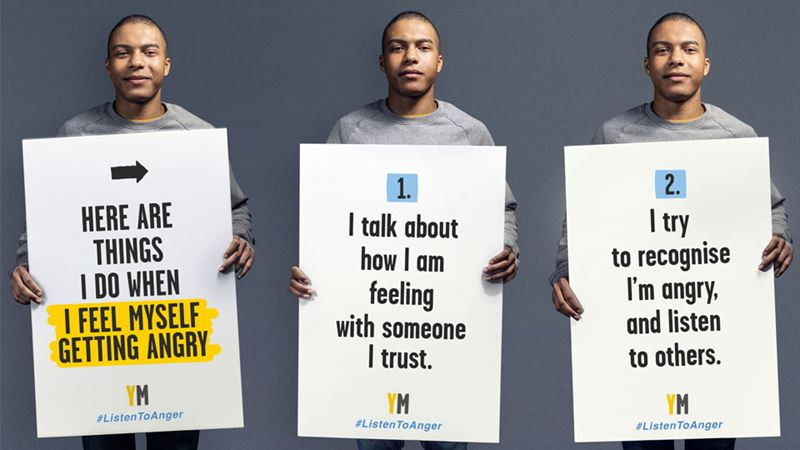
In the final part of this ‘trilogy’ of difficult conversations articles I want to look at anger. Firstly, it’s worth saying that this may not just be the anger of the other person it may be your sense of anger. That feeling that you are becoming angry. That feeling that you are becoming frustrated. Anger often occurs in accelerating cycles both within an individual and between people. So once one person gets angry both people get angry.

First principle when in doubt get out. Sometimes it’s simply better to end a conversation or move the conversation onto something different before returning to it at a later time.

As Groucho Marx once quipped speak when you’re angry and you will make the best speech you will ever regret.

We become angry when there is someone trying to interfere in the space between us and what we intend to do – someone between us and our peace. When we believe that interference is deliberate the impact is stronger. And I think it’s fairly safe to say that the people we work with consider our interference in their worlds to often be deliberate and unwelcome.

What can you do to stop feeling angry or what can you do to stop the other person feeling angry? This is a good question – because of how quickly we react neurologically when someone displays their anger something has already gone badly wrong. Something is not beginning to escalate something has already escalated.

This shows the reality that anger is an innate capacity. It’s required from an evolutionary point of view for self-protection. So, when we feel threatened, we get angry. Anger signals intent. The person is getting angry to protect themselves

Sometimes it’s a behaviour learned culturally. Some observe growing up that getting angry is something people do when they’re trying to assert themselves. Sometimes becoming angry elevates a person’s status – they are listened to. So, it can be experience driven behaviour – a way to cope. Anger is the manifestation of your own nervous system.

Anger blinds you and derails conversation. Anger limits your ability to remain civil. This emotion limits how you access and process information. Once someone us angry, they are not listening or responding rationally they are responding angrily. It’s almost pointless to continue – we need to build those golden bridges from the second article. This is a way to de-escalate the anger and help the other person not feel as though there backing down in some way – not losing face. The things we’ve already talked about – the relationship that you have – the use of the words we and us – will all help to do this.

Do’s and don’ts

  • don’t meet anger with anger
  • don’t blame – discuss
  • don’t make negative assumptions about the other persons intentions or motivations or the source of their anger
  • do monitor closely yourself and the other person for signs of anger
  • do change the subject
  • do reframe the conversation
  • do pause – take a breath. The goal of pausing in the heat of the moment is to disconnect the automatic link between emotion and action – it serves to slow it down – slow down. When you slow down you calm down
  • do bite your tongue- do not counterattack- particularly important here is keeping control of your facial expressions and body language
  • listen listen listen
  • do not deny the situation is tense. In many circumstances acknowledging the tension or the negative feelings or the frustrations is helpful. Denying these things is seldom helpful
  • after a tense moment do try to make an empathy statement. This helps foster deeper connexion. For example – I hear you – this must be hard
  • ultimately make your safety a priority – walk away if you have to

When you think about anger think not only about the other persons but also yours

This is the third in a series of 3 articles

The others are at the links below

Difficult Conversations – some initial thoughts

Difficult Conversations – Advanced Skills

Anger | NottAlone

Difficult Conversations – Advanced Skills

In the previous article we considered some initial thoughts about what to bear in mind when approaching a difficult conversation. Always be mindful as I said that good relationships are the foundation of what we’re trying to do. These good relationships, these meaningful relationships hinge on factors like dependability, kindness, honesty, empathy, authenticity, and the apparent obvious valuing of the relationship.

So firstly, simply offering a listening ear I feel is an advanced skill. Because often when we’re busy we forget how to sit quietly and simply listen. Doing this gives the opportunity for people to share their words and their feelings and it develops trust. And here is the first thing to think of. If the person says something you don’t understand or flies in the face of the logical progression in your head place that lack of understanding on yourself. So, phrases here to use would be things like, “can you explain that a little further to me”,  “I want to be able to understand clearly what it is that you’re telling me”. And let the person talk again while you listen.

What we’re trying to do here is what Boghossian and Lindsay call, in their book “How To Have Impossible Conversations”, building golden bridges. The first part of building a golden bridge is to understand what the other person is saying. Secondly, if this is the case, gently point out discrepancies in what they might be seeing. Get them to think about those discrepancies and articulate them to you in the way that they want to. A golden bridge offers them the opportunity to change what they’re saying, on reflection, without being socially embarrassed by what they have said. I’m sure you’re aware that people engage better with decisions when they feel as though it is them who have made the decision. This is where your effective communication, counselling, and negotiation skills are essential. More on negotiation here. What we’re doing here is trying to head off the conflict before the conflict emerges even when the conversation is difficult. Remember people don’t knowingly desire bad things. People don’t knowingly desire to make decisions that compromise themselves or others. They genuinely think – for whatever reason – they are making a good decision.

Collaborative language

What we’re trying to establish with these advanced skills is that we are in this together within the interaction that is taking place. And the application of this technique is quite simple to describe but often quite difficult to implement.

Start by using the words ‘we’ and ‘us’.

Weinstein and Deutschberger two sociologists said that we is one of the most seductive of English words. Its inclusion in what you say forms a relationship structured in terms of mutuality and interdependence. So, try to replace ‘you’ or ‘I’ with ‘we’.

Also, in the same vein the use of the word ‘us’ is important. “it would be great for us if we could figure out how to move forward on this issue”. “How can we see if that will work”. “How can we give that a go so everybody is safe”.

This next idea also relies on really listening but also on restating the other persons position as well or better than they did.

You should do this before you openly disagree with anything. What this does, at the very least, is show the person that they have been heard, that their voice is important, and that you have accurately heard what they had to say. It also gives them a chance to correct you if that is required. Inevitably you may need to propose a different plan but if they know they’ve been heard they may be more receptive to listening to the alternative.

Taking this approach eliminates the ‘yes but’ statement. When you disagree with something someone has said it’s quite easy to fall into the ‘yes but’ trap. ‘Yes but’ encourages anger and I think it’s worth noting at this point that when someone states a position, they are often stating that position in good faith because for whatever reason, in their position, from their subjective perspective, they think that’s the best thing they can do.

Now they might think that’s the best thing to do because it’s easy or because it doesn’t challenge their world. Or maybe it gets you off their back, but they will authentically think that that’s the best thing to do for them in this moment. Why might that be so?

One of the problems may be cognitive bandwidth. People who have problematic lives, who were often living in poverty, who are often not heard have limited ‘bandwidth’ to consider future options and tend to live in the short term. If their concern in the short-term is to pay the rent or put food on the table, they may not have the cognitive ‘space’ to consider future options. So, if a solution appears to work to them in the short term, or it maintains the life they have so that they are not challenged to change, then they will genuinely believe that that is the best thing to do. When people don’t have a great deal of cognitive bandwidth it’s doubly hard for them to engage in change related tasks. Just imagine for yourself when you are trying to facilitate a change – think of something basic like maybe losing weight or getting fit – if that was the only thing you had to do – if that was the only thing you had to worry about you might be able to give it a good go – you might even start well – but once you have a rough day at the office, or an argument with your partner, or an invite out for a Friday night, how easily the momentum to make the change disappears. And the people we often work with have many many challenges in their lives – you being there maybe being one of them

Rapaport’s rules

Rappoport was a Russian born American game theorist who contemplated a list of rules for offering disagreement or criticism in conversations and we can learn a little something from what he had to say.

Here are his rules….

Rule #1 – expressing the persons position shows that you have made a sincere attempt to understand their position.

Rule #2 – shows that you actually have things in common in relation to the issue despite maybe coming to different conclusions.

Rule 3 – demonstrates mutual learning and respect by showing the person that what they said was informative and valuable. This gets called in a lot of the literature pro social modelling. You are behaving in the way that you want the other person to behave.

So, build Golden Bridges – give people a way out or they may become entrenched in a position even if you’ve convinced them otherwise

Use ‘We’ and ‘Us’ to engender a spirit of ‘in it together’.

Be aware that people in difficult circumstances may have limited cognitive ‘bandwidth’ to consider future options

Apply Rapaport’s rules

This is the second of 3 articles in this series

The others are here

Difficult Conversations – Some initial thoughts

Difficult Conversations – Dealing with anger

Difficult Conversations – some initial thoughts

When it comes to conversations in Social Work practice, particularly difficult ones, we have to start with the question “What are we trying to achieve?” What is the problem we are trying to overcome? Often, I’d suggest, it’s the (almost) impossible. We are trying to have enlightening, helpful conversations, often with difficult messages to deliver, with people who may be in denial about their world and the world out there. In this environment we’re meant to try and do this without aggravating anyone! Without making the conversation difficult and challenging.

So, let’s start by cutting ourselves some slack and acknowledging that sometimes when things go wrong there’s often not a lot we could have done. As I say frequently, the Stoic Philosophers say we can’t control everything so we shouldn’t set our happiness and our view of how well we did on such things. But we must try to predict as much as we can… because conflict – and difficult conversations – are stress inducing – for us and for the other people involved. Best avoided if possible. If not avoidable then managed well.

And it’s not just with service users, parents, or children. It’s sometimes with other professionals and sometimes with our own colleagues in our own teams.

We are involved in deliberate conversations. We need to involve ourselves in listening – but when tense maybe we don’t listen effectively.

Why is Rumi the best-selling poet in the US? - BBC Culture

There is a way between voice and presence

where information flows.

In disciplined silence it opens.

With wandering talk it closes.

RUMI (13th-century Persian poet)

What’s going on when we are involved in dialogue, conflict, and difficulty? What are the underpinning things that help us avoid this in the first place or navigate through it? Because while the best form of defence is to avoid the conflict in the first place, we have to acknowledge that conflict is, at some point, inevitable.

Some things to bear in mind

Aristotle's Contributions in Mathematics – StudiousGuy

There’s always a philosopher, often Greek, that we can turn to and in this instance, I turn to Aristotle’s ‘Modes of Persuasion’. Often in our conversations we are trying to persuade – or at least put forward a position that we want the other person to consider – and Aristotle says there are three crucial things to engage…. Ethos, Pathos and Logos

Ethos

Ethos – your ethics. The question here in the mind of the other person is can you be trusted.  The starting point for the individual might be that you can’t be. The reality is that difficult conversations are easier when there is a relationship of trust there. You need to start by building that relationship. It sounds obvious really but in busy practice may be difficult and may not get the attention it deserves.

Trust isn’t about liking each other or what each other is saying it’s about a functional relationship that permits disagreement or conflicting opinion. It also needs to allow, particularly for Social Workers, given the perceived (if not real) position of power we often find ourselves in – balance. Balance of power

A social contract is established in the very early parts of an interaction based on previous knowledge of each other if we have it, or ideas about each other if we don’t have specific knowledge. If you don’t have a relationship with the person, you are likely to be having the relationship the previous Social Worker had. You need to ask, ‘What’s your relationship like with the person – where are you at with them?’ ‘What’s the relationship of the person with social work?’ Overcoming any obstacles that this places in our way by how we communicate is the cornerstone, I’d argue, of social work practice. There is nothing more important. So whatever we discover in thinking about those two questions demands we do something about it – at least have an awareness

Listening is crucial. Nobody cares how much you know until they know how much you care – so the famous saying goes. Build rapport. Assume the other person will be nervous or apprehensive about you being there. Having a ‘professional’ involved in your life brings up all sorts of fears and tensions – don’t add to them. Being honest about difficult things is important – but we need to think about how we frame what we have to say.

Pathos

Pathos is the emotional content of any conversation or relationship we find ourselves in. There is always an emotional content to what we do. Emotional Intelligence is key. We must exhibit emotional control. It’s our responsibility to do so and not expect the same in return. We must manage the emotions of others and that starts with managing our own.

Managing our emotions successfully stifle’s impulsiveness – so it mediates our response – and helps us perform effectively. Recognising emotions in others and knowing how to manage them is a fundamental skill. The problem with this skill is it’s usually forged in the ‘heat of the fire’ rather than been thought about and reflected on before action and after action. What is going to trigger the persons emotions? What emotion? What will I do about it to avoid it or manage it?

Never forget emotions are contagious and easily escalate.

Logos

Finally, Logos – Logic. What we are saying needs to be logical. We need to engage our thinking brain. This relies on us managing our emotional brain (see above!). We need to articulate this logic in a way that the other person can understand. Think clearly before, and during, and after the conversation. Empathise. Persuade. Any conversation is two people in a dialogue trying to find the truth – an agreed truth. A logical truth. Only then can things move forward.

The conversation must connect to how people understand things. We must find the other persons understanding of the thing, know ours, and connect the two. Often when you do this you find people are more ‘movable’ (as you’ve acknowledged their truth) and the ‘truths’ are not as far apart as they appear. There will be some commonality.

Often when we are discussing ‘truths’ like this in practice we need to keep people talking (and we need to keep reflecting) because then we can Develop Discrepancies (there’s or ours).

Developing discrepancies (a feature of motivational interviewing – read about it here) creates a gap between where the person has been (or currently is) and where they want to be. We can use The Columbo Method here. It’s a simple yet clever and cunning way to handle a potential contradiction in what you are being told. Remember the television show Columbo, starring Peter Falk? The fictional Columbo was a detective who solved murder mysteries – hugely popular in the 1970’s. He was a humble and unassuming character who had the ability to get anyone to tell him anything, despite their initial resistance – very disarming. When someone said something to Columbo that was conflicting or inconsistent, he would rub his head and say, “I noticed yesterday you said one thing, and now you are saying something else. I’m confused.” He would say things like, “Could you clarify this?” or “Help me understand.” Columbo did not accuse those he was questioning. By taking the responsibility for his confusion, he disarmed the other person — who then would slowly feel comfortable telling him the things he needed to know to solve the crime. The Columbo Method is to present the facts that appear to conflict, give the person the benefit of the doubt, and then ask questions for clarification. We need to look in this ‘mirror’ ourselves as well. Are we making assumptions that contradict what we are trying to achieve or that are at odds with our professional values.

Ethos – Pathos – Logos

Ethics – Emotions – Logic

Real discussion creates understanding rather than division.

This is the first of 3 articles in this series

The others are at these links

Difficult Conversations – Advanced Skills

Difficult Conversations – Dealing with anger

Language and Power in Social Work, a fresh perspective from the Philosophy of Ludwig Wittgenstein

Social work can be seen as an endeavour of attempting to grasp at another person’s reality. We assess people and families striving to be as faithful as possible.  In this article I will discuss how Austrian philosopher Ludwig Wittgenstein may assist in providing some warnings and possibly a map of where the limits lie in attempting to describe another human’s existence.

Wittgenstein is often seen as a totally impenetrable and unnecessarily difficult thinker, whose tomes are the jealous property of grey faced professors at posh Universities.  I aim to hopefully present some straightforward uses for his philosophy on language and how it can help social work practice.

Life and Times

Wittgenstein’s life story would not fit into one film! Don’t believe me? Here goes!

He was born into a large super wealthy Jewish family in Austria with their wealth matched only by the Rothschild’s (them of the Illuminati). He went to primary school with Adolf Hitler.  As a toddler he made machines out of scrap discarded items in his home, he designed a new method to heal wounds after car accidents, he invented the corner radiator, created a precursor to the jet engine and liked a pint round Jesmond when working in the RVI.  Despite this list he was the least famous member of his family. One his brothers was the best concert pianist in the world which he did playing only with one hand (strangely there is an episode of MASH based on his life).

Despite his wealth he left the 7 palaces and even more grand pianos (his siblings had one each) and served in the first World War with him single handily diverting machine gun fire on the Russian front and being awarded medals for bravery. During this time on one of the most brutal campaigns in WW1 he wrote one of the greatest works of philosophy the Tractatus.

However the true genius of Wittgenstein is that he is two philosophers in one as his later work comes to re-meet and reinvent (or more accurately decimate) his earlier work, with this hinging on language being variously limited, meaningless and redundant.

Our Language Affects What We See - Scientific American

Language according to Wittgenstein is best seen, and perhaps can only be seen, in the context of a game, with a game being described as an activity where participants have a pre-understanding of some commonly held rules. The important point here is the meaning is held only between the active participants. To an outsider it is meaningless.

This chimes exactly with a recent Radio 4 documentary about a young parent’s experiences of the family court where their children are removed. One quote in particular about the barristers and the social worker struck me – “it was like a play where everyone but me had a script and knew their lines but me(sic)”.

This highlights a true Kafkaesque nightmare. This parent does not understand the very language that is being used to deny her of her most basic right to be a mother to her child.  How do we, in the most caring of professions, engage in such a cruel language game?

It is highly likely that the barrister, the judge and the solicitors have never seen one second of the parent being a parent yet they are able to make complex arguments, statements and decisions on that very matter.  Their Jargon is as removed from the reality as their experience is.  ­­­­The below attempts to formalise this picture.

This frames language as being the main agent of oppressive practice. Power is held by those whose professional and remote jargon trumps real experience every single time.  This reminds me of an old thought I had at my first Section 47 strategy meeting when I realised (despite being a newly qualified worker), I was the only person in the room to have seen the family, but everyone else’s perception held much more sway and influence.  What a strange set of affairs! It’s all a bit like reviewing a film without seeing it. At best you will only offer a derivative generic version of what’s come before, which is shorthand for terrible social work practice, “I don’t need to visit the family I have worked with neglect etc for over twenty years” is surely the defence of the team manager.  Do we overvalue an argument from career experience at the expense of the view from the practitioner who has seen the “whites of the family’s eyes” and visited their home? If good social work aims to get to the essence or the true nature of a child and their family’s life this cannot be done from a remote place. You’ve got to be sat at the board to play the game.

Wittgenstein provides a good example that chimes well with social workers, that of the family resemblance.  Look at the family picture below:

It is clear that they are all related and resemble each other; however their quality cannot be pinned down to a few simple elements. It is a collective range of positive and negative features that create a very real but fuzzy concept.  This feels familiar. As social workers we often have to describe things like the mood in the house or the relationship between individuals, how close are we getting to the real picture, especially when we only demonstrate our evidence through written assessments.

Indeed, as social workers we must be cautious that whilst we strive to understand the context of the child and the parent, our language can only grasp at their reality fleetingly. To say we have fully captured (the language of a bounty hunter??) the child in our assessment is to crush their experience into oblivion. ‘I know better than you about your own experience’, is a disturbing thought in the extreme. Conceptually this can be seen as Naïve Realism (see poster). My world view is the solely correct one.

I’ll close on one of Wittgenstein’s most famous quotes, “If a Lion could talk, we could not understand him”

The message here hinges on a double meaning of understanding. Whilst we could understand the grammar, words and sentences if the lion spoke perfect English all of the common concepts would not be shared ones. Their lives as a lions are inaccessible to ours as humans with no common rules for the exchange.

Luckily as social workers we do not have such a chasm to cross, however, we must acknowledge there remains differences and fuzziness that cannot be fully held by our assessment and certainly cannot be got at remotely by professionals who have never met the family. So, tread carefully, meet families where they are (actually and figuratively) and be cautious of language’s exclusory and assumptive power.

You might also like the following from George and the Social Work Shorts Team talking more about Wittengstein’s Lion

https://anchor.fm/socialworkshorts/embed/episodes/Social-Work-Shorts-Episode-10-Presents-Beers-and-Ideas—Philosophy-and-Social-Work—Wittgensteins-Lion-e10sbfi

George talks about Poverty in this Social Work Shorts Podcast

https://anchor.fm/socialworkshorts/embed/episodes/Social-Work-Shorts-Episode-15-Insights-1—Poverty-and-Children-and-Families-Social-Work-e14i2k7

Or listen to George talk to Stephen about Risk

https://anchor.fm/socialworkshorts/embed/episodes/Social-Work-Shorts-Episode-25-Insights-8-Stephen-in-conversation-with-George-Bull-about-Risk-in-light-of-the-murder-of-Arthur-e1bfo48

About the writer…..

George Bull

George has been a social worker for 10 years working mainly in child protection and Early Help. He has lectured with Jamie Scorer at New College Durham, University of Sunderland and University of Northumbria in solution focused practice.

Motivational Interviewing – be like Columbo

Remember the television show Columbo starring Peter Falk?

The fictional Columbo was a detective who solved murder mysteries – hugely popular in the 1970’s. Having recently used this analogy with a group of second year undergraduate students on the social work programme I teach on I realise that some of my cultural references may be a little dated! But I’m going to go with it!

Columbo was a humble and unassuming character who had the ability to get anyone to tell him anything, despite their initial resistance – very disarming. When someone said something to Columbo that was conflicting or inconsistent, he would rub his head and say, “I noticed yesterday you said one thing, and now you are saying something else. I’m confused.” He would say things like, “Could you clarify this?” or “Help me understand.” Columbo did not accuse those he was questioning but rather by taking the responsibility for his confusion, he disarmed the other person who then would slowly feel comfortable telling him the things he needed to know to solve the crime. The Columbo Method is to present the facts that appear to conflict, give the person the benefit of the doubt, and then ask questions for clarification.

Miller and Rollnick in their 1991 book “Motivational Interviewing: Preparing People to Change Addictive Behavior” badge this as ‘developing discrepancies’, showing people that what they said at one point doesn’t correlate with what they are saying now, or what they say they are going to do doesn’t fit with what they say they will do. It’s the gap between where the person has been, or is, and where they want to be.  I am minded to talk about my dalliance into Slimming World but won’t because there is indeed a discrepancy between my ‘I must lose weight’ and ‘Oooo Pizza!’

Helping Clients develop discrepancy is “the active ingredient underlying motivational interviewing’s efficacy” say Miller and Rollnick, going on to state that “Motivational Interviewing is an effective, evidence – based approach to overcoming the ambivalence which stops people making desired changes in their lives”. The emphasis though – because of intrinsic motivation as a more effective method of motivation – is on personal choice and responsibility for the future.

Internal (or intrinsic) motivation is motivation that comes from within. Maybe things like ‘I want to feel healthy’, rather than, ‘I want to lose 2 stone’. The latter is an external marker, the former, an internal motivator. Intrinsic motivation is associated with greater long-term change. Research shows people with low internal motivation have worse outcomes and people with higher levels of both internal and external motivation have better outcomes. (Deci and Ryan, 1985, 1987, Curry et al 1991). So, ‘I want to lose 2 stone and I’m doing it because I want to feel healthy’, is perfect.

Motivational Interviewing was developed initially in response to working with client resistance in alcohol treatment in the late 1980’s but is now widely considered as been helpful in many areas where motivation to change is required. Most social work practice involves either supporting someone to consider change and initiate it, or supporting someone to readjust to a change thrust upon them, for example, an older person having a stroke or heart attack. It’s helpful as it can work in relatively ‘brief’ interventions and is a more helpful ‘stance’ in working with high levels of resistance in clients than a confrontational or coercive style.

Motivational interviewing builds on Carl Rogers’ optimistic and humanistic ideas that we all have the capacity to change and become the best version of ourselves – we just need to figure out how. It’s about people’s capabilities for exercising free choice and changing through a process that works towards self-actualization. Essentially, motivational interviewing activates the capability for beneficial change that everyone possesses. Once ‘activated’ some people can continue change on their own, while others require more formal treatment and support over the long journey of recovery or adjustment.

The therapeutic relationship for both Rogerian and motivational interviewers is a democratic partnership. Your goal in motivational interviewing is to elicit self-motivational statements and behavioural change from the client in addition to creating client ‘discrepancy’ (the Columbo Method) to enhance motivation for positive change.

The idea of developing discrepancies originated from cognitive dissonance theory which suggest that there can be an imbalance between the internal and the external values of the individual.  This causes a person to feel unbalanced. So, where there is incongruence between what a person feels and does this can cause a dissonance, an imbalance, or a feeling of not being true to oneself. Cognitive dissonance can make people feel uneasy and uncomfortable, particularly if the disparity between their beliefs and behaviours involves something that is central to their sense of self. For example, behaving in ways that are not aligned with their personal values which may result in feelings of discomfort. That uncomfortable feeling can be used positively to initiate motivation and therefore change.

We can ‘develop’ discrepancies by pointing them out sensitively and in doing so you create a gap between where the person has been (or currently is) and where they want to be. The individual can come to a realisation that their current behaviour is not leading them towards their goals, and they become more motivated and open to change. The goal is to resolve that the discrepancy by changing. In doing this you can offer and explore the positives and negatives of change and so ‘roll with resistance’.

The emphasis is on intervention and change not the issue which could lead us to ponder is change sustainable if an underlying problem is not dealt with successfully. Worthy of some reflection and consideration of this idea in relation to the individual you are working with.

This ‘Motivational Interviewing’ approach

  • Encourages positive engagement
  • Acknowledges and works with client resistance
  • Is collaborative, not collusive
  • Is a blend of different therapeutic approaches, inc. Person-Centred, Solution-Focused and cognitive-behavioural ideas with a process model of change.
  • It has a belief in the possibility of change
  • Shows respect for individuals
  • (Hopefully) achieves empowerment

What doesn’t work to motivate

Persuasion

It’s tempting to try to be helpful by persuading – you might want to draw the persons attention to the importance or urgency of the problem being addressed. Or maybe put to them the benefits of changing a behaviour. These strategies are likely to backfire because you are trying to motivate extrinsically – not intrinsically. It usually only increases client resistance and decreases the probability of change.

Righting reflex

Miller and Rollnick suggest as practitioners we sometimes use our corrective lens. We want to ‘put the client right’. We want to change their behaviour, so we argue or push back. This often simply leads to an impasse with the client standing their ground based on all the reasons not to change.

Strategies to use

  • Express empathy
  • Be Non-judgmental
  • Make sure that the client is being heard and understood.
  • Develop discrepancy – Help the client see the difference between their core values and their behaviour.
  • Define the most important goals.
  • Support self-efficacy – The Client’s must believe in their ability to change. I have a view that our role as social workers is to eradicate the need for social workers. We should work with people in such a way that they eventually don’t need us anymore because they have developed the skills or understanding they need. This is reminiscent of the strengths based approach in social work practice. It can be good to focus on such skills and strengths and on past successes because this….

….promotes self-esteem and builds confidence which moves the client in the direction of change.

The goal is to move the client to what is referred to as change talk rather than sustain talk. They talk about how they will change rather than how they wil

Getting to grips with theory: Transactional analysis

I honestly don’t know why but I’m a huge fan of ideas and theories that emerged in the late 50’s and 60’s. It was certainly a time when ideas about the importance of ‘self’ took hold with people like Rogers and Maslow exploring how to be our best selves – scaling the dizzy heights of self-actualisation! One such idea to come out of that same era was Transactional Analysis which is a way of examining the interactions between people.

It was developed by Eric Berne (1910-70) in the late 1950’s as a basis for understanding behavior through communication. Its origins are in groupwork where the transactions – the communication interactions – were analysed to develop understanding. It draws on a range of theoretical perspectives and considers ideas about the subconscious mind and its influence, so, is psychoanalytical. It is humanist in that sees the individual as important, and cognitive as it considers cognitive processes and seeks when necessary to attempt to adapt cognitive processes.

It can be used to explore the Individual, two person relationships and group interaction. Let’s explore its components.

Using Transactional Analysis in the Workplace - ReadyToManageStrokes

‘Strokes’ is a motivational concept where a ‘stroke’ is an act of recognition from one person to another. The communication of acceptance or ‘liking’, is referred to as positive stroking, whereas criticism and ‘discounting’ are negative stroking. There are parallels here with the concept of reinforcing in behaviorism and also ideas of affirmation and validation

Positive strokes would be things like praise, compliments, recognition, affection, rewards, sympathy, consolation, and even self-satisfaction from a job well done. Negative strokes would be put downs, criticism, ridicule, scolding, or punishment. Strokes can be ‘Conditional’ that is they relate to what you do and are not directly about you as a person – ‘you did  that task very  well’. Whereas unconditional strokes are not about what you do but are about you – ‘I really like you’. There is no condition just a statement.

Strokes can have ulterior motives where people say things to gain favor. I remember one student I taught used to say things like, ‘You’re looking good today Stephen – lovely shirt’, usually around assignment marking time!

Life positions - I'm okay, you're okay - GP-Training.netOk-ness

This idea refers to a basic attitude of acceptance towards self and others and states that people adopt one of four positions.

  • I’m Ok – You’re not Ok – this is rejection and belittling of the other. Maybe it’s ‘I don’t like you’ or ‘I don’t like what you represent’. It could be because the other person is constructively challenging and the person doesn’t like being challenged.
  • I’m Ok – You’re Ok – the preferred position – acceptance of self and others. This is the state we need to try and establish when working with people. Such a position can generate forward momentum.
  • I’m not Ok – You’re Ok – reflects avoidance of the other and maybe suggests things to be explored with the person. At least if the person thinks ‘you’re ok’ then this may give you a starting position as they may trust what you are saying.
  • I’m not Ok – You’re not Ok – Berne suggests reflects a depressive hopeless attitude to life. The question is how to create forward momentum and change in such a position.
A history of Eric Berne
Eric Berne

Ego states

Berne suggest there are three ego states – the parent, the adult, and the child. We can all, whether we are adults, parents or children adopt these ego states.

The Parent Ego state is when we adopt behaviours, thoughts and feelings copied from parents or parent figures so is a ‘taught’ ego state. The Adult Ego state is found in behaviours, thoughts and feelings which are a direct response to the here and now and are a ‘thought’ ego state. The Child Ego state is where we replay behaviours, thoughts, and feelings from childhood and is a ‘felt’ state.

Parent (“exteropsyche”): is a state in which people behave, feel, and think in response to an unconscious mimicking of how their parents (or other parental figures) acted, or how they interpreted their parent’s actions. For example, a person may shout at someone out of frustration because they witnessed that as a response, a way of being, in a parent or important person.

Adult (“neopsyche”): a state of the ego, which is very pragmatic and practical, thinking things through logically to make predictions and maybe absent of major emotions that could affect success. Learning to strengthen the Adult is a goal of Transactional Analysis. While a person is in the Adult ego state, they are directed towards an objective appraisal of reality. This resonates so much with me in terms of my writing about productivity and being organised. Developing this ego state means we can relate to people and events in a structured way. Not lacking emotions necessarily but being in control of them.

Child (“archaeopsyche”): a state in which people behave, feel and think similarly to how they did in childhood. The Child is the source of emotions, creation, recreation, spontaneity and intimacy. We need to spend some time in this state I’d argue but it needs to be carefully managed.

Transactions that are complimentary sustain and lead to smooth conversation

So, Adult to Adult could result in solving a problem, whereas Parent to Parent could lead to critical gossip (something lots of people enjoy! We are only human!). Child to Child or Parent to Child could be about playing together.

Banning Small Talk From Your Conversations Makes You Happier, Says Science  (Ask Any of These 12 Questions for a Change) | Inc.com

Crossed transactions cause communication to be broken and give us what is sometimes referred to as ‘a bumpy conversation ride’. Where the stimulus in the conversation originates in Adult and is directed to Adult but the respondent returns conversation from say Child directing it to Parent, or equally, Parent to Child, we may see a problem. I’m wanting to have a serious productive conversation, but I get a petulant child response, or a critical parent response and I’m left on the back foot not knowing quite what happened. Or indeed I’m after a bit of jovial childlike banter and I make a joke that falls flat on its face when someone responds from Adult and I’m left deflated. This happens a lot with my jokes…I need to think about that…. 😉

Within each of these ego states are subdivisions. Parental figures are often either more nurturing or more criticising. Childhood behaviours are either more natural (free) or more adapted to others. These subdivisions categorise individuals’ patterns of behaviour, feelings, and ways of thinking, that can be functional, beneficial, and positive, or dysfunctional, counterproductive, and negative.

Critical Parent can be lecturing or judging – all about what you should do or shouldn’t do. Remember this is not just ‘real’ parent to ‘real’ child – you can be ‘in’ Critical Parent in adult conversations. ‘I don’t know what you do with your time. I need the report now!’

Nurturing Parent on the other hand is sympathetic, advising, and takes care. ‘You seem to be missing deadlines can we talk about what we can maybe do to help?’

In the same problem above Adult may be objective, rational, and problem solving. ‘Let’s reach an agreement on giving you a little longer but it must be done by then. Let’s see what work we can take off you to give you time’.

The Adapted Child may then play the game (Berne loves game playing ideas) and may manipulate the situation trying to drive Adult into Nurturing Parent. ‘I’ve just found everything so hard lately’. Or maybe will be submissive and conform to Adult expectations. ‘Yes, whatever you want me to do’.

The Natural Child might be playful or impulsive and may rebel. ‘Sorry but I can’t I’m taking today off – nobody bothers about the dates things are due anyway!’

Strengths-based conversations: quick tips for practiceHow is this relevant to SW?

  • It helps us understand the other person
  • It gives us opportunity to consider how to respond in a helpful way to build rapport.
  • It helps communication by trying to shift the other persons ego state to Adult to establish an Adult to Adult conversation.
  • TA tells us you can have considerable impact on modifying behaviour by how you communicate. The Adult ego state seeks to ‘control’ the other ego states.

Using TA for effective communication

For effective communication you need to keep the transaction complementary i.e. focus on sender to receiver and receiver to sender where the message is sent to the ego state from which you expect a reply. Using ego states we can look at how others communicate and how we communicate with others.  It’s possible to identify which ego state we are in and which ego state we are expecting a reply from.

We can also use TA to help us plan transactions. For example, we can identify which ego state would be most valuable for us to send the message from and which ego state it would be better for it to be received by. If we receive a reply from the wrong (non expected) ego state then we can either try to shift the other person’s ego state or if we cannot do this it may be better to stop the communication and try again another time when the person may be in a different ego state.

We can listen to people’s communication to identify if they are habitually in one ego state and then decide if communication to that ego state would be appropriate or not. TA therefore can be used to elicit the reactions you want from other people (and this will happen consciously or unconsciously).  We are trying to achieve Adult to Adult

We can help communication if we need to by trying to shift the other person’s ego state by inviting people to move into a different ego state. They may not always move into it though, particularly if someone is habitually in one ego state. Do this by acknowledging their current ego state (by the appropriate message or response) and then invite them into another ego state by the words (and body language) which you use.

Transactional Analysis implies that you can have considerable impact by the way you communicate with others.

You can use your Adult ego state to think about what behaviour is appropriate and then engage in that way to facilitate helpful conversations. 

Dr Dan Siegel’s Hand Model of the Brain

George Bull, Social Worker at the Connected Carers Team South Tyneside, explores Dr. Dan Siegal’s hand model of the brain and its use in social work practice.

In the Solution Focussed Therapy model of social work practice the core goal is to nurture the innate self-capacity for change and repair in individuals and families.  I strongly believe unless this is achieved the people we support are vulnerable to our repeat involvement as they perceive that their problems (which often perhaps inevitably recur in some way) can only be solved alongside the practitioner.

I’ll give you an analogy. Think of a car owner who does not know how to change a windscreen wiper blade. They will either struggle on with a wiper blade that leaves the screen murky or go to a garage and professionals will entirely repair and replace the wiper blade. They will do this for every car they own.  The other option is that at some point the car owner tries themselves to change the blade or is shown how to do it by another car owner who knows how to do it. They can then do it themselves forever!

The DIY job we seek to do as social workers is supporting people to change the patterns of behaviour that have led to the issue becoming fixed and other wise immovable.  Quite simply patterns of behaviour are cemented by the human brain that seeks to develop the best strategy available for survival. The optimal option being to seek to replay past successful strategies over and over.

A previously traumatized child or adult’s brain will recognize that it survived the traumatic experience and that the behaviours of shutting down, running away, or fighting worked. Survival is so paramount the brain cares not if the lifestyle and relationships for the person are severely impaired due to this strategy.

How can this hard-wiring be addressed?

Daniel Siegel the author of Mind Sight and the Child Brian has developed a simple and massively accessible model to support this “The Hand Brian Model”. (video at the bottom of the article)

This model offers social workers a very tactile and easy way to demonstrate to children and adults why and how their brain is responding with negative automatic behaviours like hitting out, shutting down, and addiction.

Siegal explains that the two competing areas are the downstairs (limbic system) and the upstairs (frontal cortex). By explaining this to an individual the social worker has lifted the bonnet of the car and is letting the person look beneath it perhaps for the first time.   This is the opposite of dumbing down. This is explaining neuroscience to children and adults to increase their understanding of their own bodies and behaviours.

This specific point of looking under the bonnet or inside their brain is where a small important change can happen, looking at your behaviours from the lens of being one step removed creates a transformative perspective namely meta cognition which is highly linked to healthy attachment and positive mental health and lifestyle.

The key point to stress is that limbic system fires first automatically and leads the person to damaging behaviours that will continue the issues they are struggling with. This is represented in the model by the thumb (see the video below). Only by slowing down and engaging the fingers, which represent the frontal cortex, by wrapping them around the thumb, can this powerful part of the brain be challenged and potential for change created.

By demonstrating the functions of the brain and by the using the body an instant and memorable connection is made increasing the chances of the model being used again after the session.   Just like a joke or an anecdote it is immediately accessible, social and totally memorable.

This I feel sets this model apart from many others I have seen. Children and carers remember and continue to use this over extended periods, and indeed explain and teach others about the model.

Social care professionals rarely use any brain science in their work as they feel they are not expert enough.  By keeping it simple and being confident in the basics social workers should aim to build this knowledge with children and families. After all its about their brains.

So, give it a try watch the video, put the model in your practice locker and I bet in the next few weeks of practice the opportunity will arise where it will be relevant.  At this point just remember don’t be like the garage! Do better by building knowledge, building capacity and revealing what is going on under the bonnet.

George Bull

George is Social Worker at the Connected Carers Team South Tyneside. He has been a social worker for 10 years working mainly in child protection and Early Help. He has lectured with Jamie Scorer at New College Durham, University of Sunderland and University of Northumbria in solution focused practice.

Stop talking, start listening!

listen-picAs social workers and social work students we understand, I suspect, the importance of effective communication and spend a lot of time thinking about what we should say and how we should say it. We think about what signals we send through our tone of voice and our body language. But, do we give enough time to listening and thinking about how to listen?

Listening is a physical and cerebral act. We need to engage our ears and our brains. As we physically hear we should be working through what is being said, why it’s being said, and just what does it all mean. All the time thinking about direction for the conversation. Keep all of your plates spinning at once springs to mind! So our brains need to be engaged in the activity and we need to appear present, not distracted, while all of this is going on. Exposure to doing this is really the only way you learn. I work with students from time to time on communication and they tend to leap straight to problem solving before finding out enough. There’s an urgency to intervene, to offer a solution, when often people just want to be heard. Simple? Not really!

Listening attentively is part of demonstrating empathy (but not the whole story!) We are trying to understand what a person means by understanding their position. We are trying to understand how they feel – something I feel we often miss at the expense of trying to get to the facts (I think evidence based practice has kicked intuition into touch at times). We are trying to ‘feel’ with the other person what their experience of reality is and try to show our understanding by feeding some of it back to them to confirm or develop our understanding. You can also show this non verbally through your facial expressions and body language.

You can never fully understand how the person feels and what they are experiencing but you must try to get close. As I once read somewhere (and I wish I could find where – if you know tell me!) – empathy is walking in the other persons shoes but with your own socks on! 

As practitioners we can’t always rely purely on our empathetic listening – there’s a tension between empathy and actually generating a direction – we are not simply in conversation – we are in a conversation with a purpose. We need to think, while ‘in action’ how to help a person move forward or we risk reinforcing the persons position having had them ‘tell all’ and simply leave them there. That’s not good! We have to deal, as far as we can, with what we are told. All of this builds up a working alliance, understanding, and trust. ‘Here is someone who is listening and is trying to help’.


The tension at times can be that we also need to listen objectively with a certain level of detachment. I don’t like that word but I still think it’s the right word. You have to be there in the moment, in the persons shoes (but with your socks on!) but also outside of the moment to offer that objective view that is also required just as much as the subjective view – or how would we ever get anywhere?

We need to be cautious that our objective view is not fuelled by our own value base and therefore imposes, through any power we may have, or be perceived to have, our way forward. To do this then we need to practice in a certain way. We need to engage in a equal conversation. Avoid phrases, or imparting knowledge that shows a power imbalance. Don’t interrupt but rather wait patiently giving supportive non verbal cues. We need to seek to understand both thoughts and feelings from the other persons perspective guarding against ‘expectant listening where you hear what it is you want to hear filtering out the bits of the message that don’t fit with where you want to take a situation. Don’t filter out things you believe to be untrue or irrelevant but hear them and consider them fully. If someone is telling you something that is not the truth – then why? When working with people with some sort of impairment or disturbance of mind their response may seem irrelevant in terms of what you’ve just asked but may be very relevant in terms of something they are trying to tell you. In these circumstances and others explore what you hear both literally and for underlying messages.

Also, attend carefully to messages the person sends about themselves and how they view themselves. Stereotypes exist not only in our minds but also in the minds of the people who the stereotype is deemed to fit. The media is a powerful thing and people will be acutely aware of how people in their position are portrayed and may well buy into that portrayal. In the way we talk and present we tell others, and feedback to ourselves, just what we think about ourselves. You may well need to unpick stereotypes that are influencing people in how they think about themselves.

So communication is physical and cerebral. We need to engage in both empathetic and objective listening. Most of all, for me, we need to show that we are alongside people and not there to simply ‘do to them’. Talking and listening are both powerful tools!

Communication – The Impact of Context

artfofconvCommunication is absolutely fundamental to social work practice. As well as communication taking place between individuals it also takes place within specific contexts. This is about environment but also the contextual framework in which the communication act takes place. Let’s have a look at a range of contextual factors

The Physical Context

This is firstly about the local environment in which the communication act is taking place. So , as social workers this may be in a range of settings. Primarily the majority of face to face communication is going to take place in people’s homes or in an office environment. The advantage of a person’s home is clearly that they are more likely to feel comfortable to an extent. It is their usual environment. Your presence is going to change the impact of that depending on how they perceive you. For example, do they perceive you as a threat to their autonomy, or do they perceive you as an ally. How you approach the initial stages of your dialogue will have an influence here (more on that in a later blog). The physical context can come with some obstacles. The environment may be noisy, other people may be close by which may not help in having personal conversation, it may be very warm or cold. All of these things will have an impact. Try to minimise noise. Ask politely for the television or the radio to be turned off. Suggest moving to the kitchen or returning at a different time for example. From time to time if service users were attending other locations, for example, a day centre, I would suggest meeting them there rather than at home. This may not be as comfortable for the individual in terms of it not being ‘their space’ but may have the benefit of being able to secure a private space for open conversation.

There are other sorts of ‘noise’ that may encroach on the physical context. The person may be unwell, or may have just taken medication that makes them drowsy. The may therefore not be as engaged. People may be hearing and responding to voices which will impact in their focus. The ‘noise’ that comes with the power they may perceive you as having may mean they don’t readily open up to you and only reveal limited information. (I intend to expand on this in a later blog).

Office visits, for me, should be avoided whenever possible. Obviously where risk to your personal safety is an issue then having a service user visit you where personal risk is managed is essential. But where there are safe alternatives office visits, I find, are often not productive. The power balance is shifted very much to you and the organisation and, I feel, people are less likely to relax and engage fully. There is also a lot to be said for seeing people in their own environment. Doing this will give you valuable information and you can use cues around the person to stimulate conversation. Asking about people in photographs was always a great opportunity for me, when working with older people, to find out more about their history and their family.

The Cultural Context

Cultural perceptions of power, position and authority also have an impact on how you communicate with people. I don’t know about you, but I communicate very differently when out for a drink with friends compared to when I’m work. We communicate differently in different settings based on what is expected of us culturally. For example, think of the hushed tones we often find ourselves speaking in when in a church, or the boisterous language used when in the pub. There is a language with goes with different cultural environments. There are colloquial turns of phrase that need to be understood and interpreted, and maybe unpicked, to make sure of understanding. If you are communicating with people in different locations they may expect different things from you or perceive you differently. In a care home, for example, someone may feel they have limited choice as to whether they speak to you or not so may readily agree when really they may not want to, while in their own home, they may well ask you to ‘come back later’. People may feel less empowered to make their own decisions when in the cultural context of the care home where they may feel their personal autonomy is eroded.

The Social-psychological Context

As I’ve already alluded there is a social and psychological status to us as individuals. As a social worker you have a real, and also a perceived, position in society and therefore in the minds of the people you may want to communicate with. Some of this may come with negative perceptions of you based on your position. We assume different roles with different gravity as practitioners. That of social worker, Best Interest Assessor (BIA), Approved Mental Health Practitioner (AMHP) to name a few. And all of them come with different levels of power. BIA’s and AMHP’s have considerable power while social workers may actually be perceived as having more power than they actually have. This can create a barrier if not managed effectively. So, the words you use to introduce yourself, and the manner in which you do so, may help to overcome some of this. Those initial few minutes (some would argue seconds!) are crucial in establishing a level of rapport.

The Temporal Context

This is the communication event’s position within a sequence of other events. “It’s not all about you”, as people are fond of telling me! The conversation you are about to have has been preceded by events for you and will be followed by events for you that you are already aware of. Don’t forget this is the same for the person you are talking to. They may have just had a great morning and be on top of the world or they may have had an anxious few hours waiting for your visit. They may have just received good or bad news, or just had a lovely, or fractious, visit from a family member. You will probably have no knowledge of this so how you initially approach your conversation should bear this in mind and should aim to establish emotionally and psychological how the person is and therefore how you may need to tailor the conversation to their requirements. Also, they will have things happening after your conversation, as will you. This may lead to someone wanting to prolong the conversation or cut it short and both of these things can have a direct impact on the quality of the interaction. No doubt you will have prepared for the conversation but will the other person? You will find you therefore can’t simply launch into your agenda at your pace but will have to effectively judge how to approach the other person.

So, be conscious of how you can best ‘shape’ the physical environment, be aware of any cultural norms that may be having an impact, and be mindful of the place the conversation is within yours, and the person’s, day.

coming soon
‘Noise’ and its impact on communication
The importance of conversational ‘openers’