Strengths based practice – Verbs and Powerlifting meet social work.

Verbs

As a solution focused social worker, I am interested in supporting sustainable positive change.

However precisely what activity (in the broadest sense) do we offer as professionals to achieve this. 

To describe our activity we use a set of transitive verbs (a verb that requires a direct object to implement an action) that have barely crawled out of the wishy washy swamp – Support, Refer, Talk, Visit, Advise, Signpost, Engage…………………….

Oh the insipid horror………………………

Our profession is distinct from say teaching that has its own patron saint Bloom of the verb, who passed down from education paradise the demonstrable language of, Analyse, Memorize, Classify, Measure, and Recall (amongst a list of dozens). Teachers plan lessons with activities that achieve Blooms outcomes. For example, if the lesson plan says the learners need to memorise and then recall the formula, that is explicitly what they must do.  In social work our verbs fall short, what does support look like, how can we say X (support, engagement etc) has happened or not, how much variation in practice between workers should we tolerate?  Social workers seem to do far less planning than teachers for their core activities, but then we do far more writing up of outcomes and case notes.

One cynical interpretation here is that we can only justify our roles within chaotic settings with a large dollop of hindsight.  Walk in a room and most of us would recognize when “teaching” was taking place, but I would defy most none professionally qualified to identify a social work session from observing its activity. It would look 90 % similar to the activity of the housing worker, the therapist, the probation worker or the mental health nurse.

Fit for practice, how can  the world of strength training help Social work.

Allow me to introduce the gruff, acerbic Texan Mark Rippertoe or Rip for short.

Rippertoe is an author, gym owner, podcaster, and ex powerlifter. His books offer the definitive guide to barbell or weight training. There are no flabby terms. Each element is articulated precisely and scientifically. For example, his opus work Starting Strength (basic barbell training) takes 66 pages to describe the mechanics of the squat, his empirical approach echoes Betrand Russel’s 360 page effort on showing how 1 + 2 = 3.  Russel and Rippertoe’s approach is to build an encompassing method that rests on precisely defined key terms, which allows for a successive accumulation of confidence for the trainee.

Betrand Russel

Two terms that Rippertoe defines and differentiates (thanks Bloom) are Training and Exercise.   Exercise is the verb that happens when you walk into a gym or lace up your trainers with no plan in mind, no time limit, no body part focus. Exercise’s only goal is to Exercise.

Training is a verb that happens only when it is planned in advance, through progressive overload. Through the performing of effective exercises the athlete gets faster, stronger or more powerful (whichever is their specific and defined target). 

Any improvements that are achieved through exercise (even if performed with significant effort and intensity) will be short lived and will quickly plateau. Most runners are not getting faster most folk in the gym are not getting stronger as they are only exercising.

As social workers our activity is so ill defined, we suffer a risk of “exercising” with our clients due to very little planning, a low willingness to tackle resistance and no forensic measuring of outcomes.  This malaise is linked to repeated referrals, disguised compliance, high levels of staff turnover and a lack of public and professional confidence.  The families we work with will mostly only experience short term change as there has been no depth to the work, no professional triangulation of the issues. Families have been ‘Visited’ and little more.   Being explicit, children or vulnerable adults are not made safe by being ‘Visited’ but by the resultant safeguarding actions, ringing the police, physically removing the risk and asking the revealing question.  This “exercising” offers only a corporate cloak of risk management. Serious case reviews often focus on the bean counting – how many visits? In what time period? They focus less on the modality of the intervention or its efficacy.

Canadian psychiatrist Eric Berne, aka the god father of transactional analysis, offers up the term of “pass-timing” to describe the discussion of activities without any meaningful actions or purpose. Pass-timing can be a meandering discussion of the weather or past events that serves little direction or purpose to either side of a relationship with this shielding them from the experience of true intimacy and honesty. As social workers on visits we must be aware of the proportion of our time we spend going over past events, discussing minor matters, or in idle conversation with the families we help.

As social work practitioners we perhaps have more freedom than any other profession to direct an intervention a certain way. This freedom can lead to “exercising or passtiming” or it can lead to tremendous insights and breakthroughs through creative practice. This creative practice may seem like some ephemeral fire that we can catch just for a brief moment in a session, however it is only available to those who have done the hard yards of learning, being mentored and getting it wrong. Just like an amazing feature of strength (like the picture at the opening of this article) quality social work practice only comes after a series of planned and measurable steps where the complexity and depth increase incrementally.

To sum up, social work activity, just like walking into a gym, will not be productive unless it is planned for. And significant positive results require many ingredients –

Clarity on the activity and its purpose

Access to a mentor (shortcutting mastery)

Some form of measurement (or how can you say progress has been made)

Any pass-timing should be done mindfully and not as a means to avoid the harder more demanding and rewarding actions.

Forming our views; Rishi, social workers, and primates.

In the caring professions our experiences are the cornerstone of our practice, setting our moral compass and future decision-making processes (heuristics). Despite each individual experience being important our brains are designed to weight and recall some experiences, including our practice ones, more readily than others, such as ones that trigger powerful emotions like fear, disgust, and anger.  Practice ‘stories’ can be filed in our brain inside a red binder with ‘MUST RECALL REGULARY’ in bold marker. Out of a plethora of old cases we may remember only a handful in five to ten years’ time. Put simply, as professionals, we may only use a small proportion of our past experiences to develop a way of working with all future cases – a potentially skewed schema.

To give a simple example let’s say you go fishing off a pier and you know there are only cod and mackerel in the sea. What you don’t know is that cod are ten times more common.  On the first day you catch 4 fish; 3 mackerel and 1 cod, then on the second day only 1 fish – a mackerel. If Captain Birdseye asks you about this fishing spot you will say that there are loads of mackerel and hardly any cod, having no perspective on how rare your catches were. Similarly, we would lambast a scientist for not having a large enough sample size to support their research conclusions, or for not correcting for some statistical selection bias. So, equally, we should ask ourselves, “are we asking ourselves enough questions about how our practice views and how they stack up into a working model?”

It does not take too much of a salmon leap to switch to the Social Work context here.

Let’s say in all your past experiences of working with single fathers in relation to child protection they have all been difficult to engage and show signs of physical abuse. When allocated your next similar case your past experiences will undoubtedly skew your future expectations. The question is, “how many similar cases will it take to cause a permanent belief system switch (conscious or unconscious)?”   

One particularly influential belief system is the one held by our current PM (at time of writing Mr Sunak). His family settled in East Africa from India, with this community becoming an economically dominant force in both Kenya and Uganda. Roughly Asians where 2% of the population but they owned 66% of all the wealth.

When these African countries achieved independence from the British Empire the vast majority of Asians left with many using British passports to come to enter the UK. Sunak’s family did just that with his parents settling in Southampton. His mother was a pharmacist and his father a GP.  Sunak’s parents had three children, one is our prime minister, one is the head of strategy at the UN and the other a psychologist.  Sunak when interviewed always points out that nothing was handed to his family on a plate, but it was all achieved through hard work and sacrifice.

Sunak therefore believes that the government should support and not restrict hard working families as they could achieve outcomes similar to the Sunak’s.  To use the earlier fishing analogy Sunak’s family were successful in catching some of the rarest fish in the ocean. Now their son, the prime minister, hands out rods for others expecting them to do the same.  To illustrate this point, look out for the many stories about children from poor backgrounds getting straight A’s and going to Oxbridge…… You won’t find many. The success stories that there are have the perverse effect of keeping the lid firmly on the social mobility box. A few plucky stories block out the reality that there are a majority of hard-working families who barely make ends meet.

Why could a smart man like Sunak make such an error in assuming his specific experience can be generalized to the entire population. Well, like us Sunak has a brain that is hardwired to hold a finite number of peoples’ tales. This was famously proven by Dunbar’s work on monkeys and group size. His work demonstrated a link between neo cortex size and how many individuals could be in a primate’s social group. The larger the cortex the greater the potential group size. Even though humans have a larger brain than other primates there is still a hard limit to social group size Dunbar’s work suggests. We can only integrate so much social context and so many stories when we function in such a group. Our brains are ultimately finite. Whilst modern critics have latterly ganged up on Dunbar’s work for being statistically flawed, I feel there remains some truth in the general conclusion for us humans and our relationships. The relationship as found below in the graph is made more significant when you consider that the majority of us humans live in highly selective groups – rich alongside rich, or poor alongside poor, older people, young people, or selection around race or sex. In other words, we are limited both by absolute number and by variety. Can social workers hold in mind only a finite number of case stories that are highly likely to have some selection bias in terms of their characteristics?  

Much of what we do as social workers involves hypothesising about situations based, often, on limited information. We start to build a hypothesis at the earliest point of contact. In fact, maybe even before the first physical contact. We maybe start to make assumptions from case recording or referral information. Daniel Kahneman, author of the wonderful ‘Thinking Fast and Slow’, has concluded we have two aspects to our brains. We can let our automatic brain – or ‘System 1’ as he refers to it – run riot, jumping to conclusions! This automatic system is like being on autopilot. This part of our brain likes routine things and easy solutions. It relies, when thinking about people, on stereotypes that have been constructed for us and that we have added to. Ideas that sit in our subconscious mind. He says that we don’t like using ‘System 2’, our ‘deliberate’ brain, because it’s hard work. It takes effort to get this part of our brain going so that we can consciously and logically think things through. So, his idea goes, why would we not use a ready-made ‘model’ from our automatic brain like ‘all fathers in child protection cases are like ‘this’ or ‘that’’.

This can lead to bias in our hypothesising that we might not even spot. Confirmation bias is an operational mode where we select information from that which is available to ‘confirm’ the position we want it to. We form a view early on and then select information that supports that idea. When we fall into this trap gathering more information doesn’t necessarily yield a better decision. In fact, more information means we simply have more to select from to confirm our bias. As practitioners it’s important we consider whether we are relying on archetypes we have constructed from past experiences, or whether we are seeing the reality of the situation as it truly is.

Metal anchor near river on sunny day

We can also become anchored to a first impression – called the Anchoring Effect – which leads to that first impression becoming the only one relevant. Or, we anchor ourselves to a single factor as a root cause and miss others possible causes of the presenting circumstances. A famous experiment conducted by the magazine The Economist on MIT students gave an interesting insight into this. Initially they offered their publication as Web Only at $59 and Print & Web at $125. 68% of people went for web only version and 32% went for the Print + Web option. Wise MIT students! Same information, half the price! They offered their publication again, this time at three rates – Web Only $59, Print Only $125, and Print and Web $125. What happened? Well, no one went for the Print Only option. Why would you when you can have Print and Web for the same price. However! 84% chose the Print and Web option with the rest going for Web Only. This trick apparently is often used in marketing in a range of ways. People were anchored to the Print option thinking they were getting a fabulous deal – Print and Web for the same price as Print. Without this option in play most people went for the sensible Web only option. When we become anchored to a piece of information it exerts undue influence on us and clouds our judgment

With Sunak going to elite universities and Winchester college I wonder how diverse the ‘clan’ of 150 individuals housed in his brain is. How skewed is his idea of how the world operates. Is he anchored to a particular idea born out of his emotional attachments, role models and major life events. Does he have a ‘confirmation bias’ toward things that he will share (to a significant percentage) with the striding elite class who are a tiny majority of the population but constitute the votes Sunak needs to win a General Election in two years’ time.

As social workers we work at the total opposite end of the social mobility scale. We encounter the most disadvantaged and the most vulnerable. Whilst the families we support are a growing proportion of society they still represent a minority. 95% of children do not have involvement from social care.  As social workers do we have two world views? One which is narrow based on possible biases rooted in a ‘professional world’ view and one for the people we come across in day-to-day life where we pause and suspend judgment before deciding anything about them?

The Social Work superhero skill here is reflection.

Reflection is crucial to avoid the bias trap. Critical reflective thinking is essential in relation to each family, service user, or child to avoid falling into automatic thinking. Critical thinking is deliberate thinking. Critical thinking is disciplined thinking. It needs to happen before action so we can identify any potential for bias. Then, in action, so that we don’t seek out only the information to justify a predetermined decision. And finally after action to ensure our decisions are rooted in a solid rationale devoid of bias.

This article was written by George Bull and Stephen J Mordue

George has been a social worker for 10 years working mainly in child protection and Early Help. He has lectured with Jamie Scorer at New College Durham, University of Sunderland and University of Northumbria in solution focused practice.

Stephen J. Mordue Stephen is a lecturer in social work at the University of Sunderland, in the North East of England. He was a social work practitioner for 12 years working on an Older Persons team. His particular areas of interest are communication, how organisations function, and the application of the Mental Capacity Act and Deprivation of Liberty Safeguards. He is passionate about being organised, productivity and self care – ask him about diary management and spreadsheets! 

Social Work Change, Priti Patel and Gauss Linear and non-linear Problems

Written by George Bull….

Thousands of words, column inches and twitter feeds have been spilled out by our profession paining over what is going wrong; poverty, a ‘crowbarred in’ care review and profit in the sector to name just 3.   Strikingly there is very little conflict over what the problems are…………… what to do about them however is a question in a different cosmos.

This brings us to Priti Patel and her maniacal perma-grin.

Patel (the Foreign Secretary) last month pointed out that those who decried her plan to process asylum seekers in Rwanda could offer no real solutions to the immigration crisis.   The next sentence is one I thought I would never write, or any social worker would write for that matter……………………………………… Piri Patel may have a point!!!!! We are too often stuck in the ‘complaining and explaining quicksand’ with no vision for workable improvements or solutions.

The problems Social Work face are similar in nature to immigration with there being linear (straight forward) and non-linear (not straightforward) elements.

To list a few more examples from the ‘problems’ menu.

COVID
Linear – millions of people need vaccines – solution buy loads of vaccines and line loads of arms up to jab them.
Non-Linear – long covid is multi-faceted across the age range, combing mental, physical and social aspects. I for one have heard almost no credible solution or ideas on this.

Foster care
Linear – need more foster carers and more placements
Non-Linear – How do we promote, retain, train, support and develop foster carers locally and how do we remove increasing profit from sector at a time of restrained supply. How much should a foster carer be paid, should they have second jobs etc.

Safeguarding
Linear – support families at the right time with the right service and take decisive action in the cases where children’s lives are going to be threatened by their carers
Non-Linear – how do we decide between families that can make the changes or ones where the chances of harm will just increase, how do we enhance time spent with families and away from paperwork and how do we revitalize and add respect back to our profession.

To move the debate and our profession on I argue we desperately need to hone our skills in conceptualizing non-linear problems.

To assist us we need the help of an 18th century maths genius Johann Carl Friedrich Gauss.

Gauss was born to a poor family in Lower Saxony. His mother was illiterate (Gauss had to calculate his own birthday). Very early on Gauss’s genius for problem solving and mathematics was spotted, and he added greatly to many fields and – most usefully for our discussion – non-linear geometry.  For two-thousand years maths only recognised shapes that could be drawn by a ruler and a compass. That was it!!!! That was the complete set of things. An entirely linear world with no external frame of reference. Gauss however refused to accept something that was the fundamental bedrock of mathematics since Plato was a lad. He established a world of curves and parabolas (think triangles or hexagons on a football – see picture). In short, he opened the world up to a different reality. If there was no Gauss then there was no general relativity, no GPS, no chaos theory (see below) the list goes on and on. 

Lorentz butterfly effect – sensitivity to initial conditions creates significantly different outcomes.

As much as I like writing about long dead mathematicians, it is a fair question to ask what does this have to do with social work etc?   The answer comes from Gauss and how he offered a totally different perspective on established fundamental problems. As social workers I feel we fall foul of not having many of our own theories and, not being a core theoretical field like mathematics, this causes us often to struggle to think outside of our borrowed theoretical world. Could this be why we get everyone from judges, McAlister/teacher types and a whole host of non-social workers being so pivotal to our future.  Equally we can ask which other professions seek our perspective. Do psychologists, doctors and others regularly seek our opinions outside of the confines of our field, sadly I think almost never.

We need to go on a journey of reconstituting and reimagining our core position…. Anyway… back to Gauss……….

Whilst sat in primary school Gauss’s  teacher, wanting to distract the class for 10 minutes, asked the young children to add up all the numbers from 1 to 100. The other children set about this linear question by just adding all the numbers up one by one – 1+2+3 etc. with the problem solved by two ingredients time and effort.

Gauss however conceptualized the problem in a different way to his school chums. He looked like all good social workers do for nonlinear connections and solutions. Young Gauss figured that 1 has a pair in 99, 2 with 98 , 3 with 97 and that there would be 50 of these pairs and 50 paring with 0, so all he need to do was 50 X 100 + the spare 50…. equals 5050.

Gauss must have looked across at his classmates at the chalk plume from the frantic calculations just as Piri Patel looked at the twitter comments and column inches regaling against her Rwanda asylum policy. The commonalty is responses without insightful solutions.  My point is our profession has flogged the dead horse of talking about the problems and now we need to set our collective minds to creative solutions instead. The caterwauling status quo will only offer social work the same old outcomes whilst rocking all over the world with matchstick men (see what I did there!? – status quo… Status Quo!?).

How do we begin this re-imaging endeavour? Well, I would suggest we need to free ourselves of the following thought traps….

  • A baby P case could happen to me as a social worker, and I need to be mindful of that whilst dealing with every Child Protection case. Instead think… Baby P cases are rare events. I need to be thorough in my assessment but not be frozen by the thought that such extreme things are inevitable
  • Is the 1989 Children Act fit for purpose at 30 years old (many hold it in blind reverence)? Do we need more radical and critical social work that explores the application of legislation?
  • How many children should my Local Authority be removing? We should understand that there is no number, there are only individuals whose situations are assessed.
  • Are Local Authorities authorities with £80K paid Directors of Children’s Services much better than Ltd companies who provide social care services. They may be, they may not be. We need to be open to options.
  • Do our meetings satisfy a narrow professional interest or that of the family? We need to root ourselves in ‘why’ we are doing what we are doing, not in ‘how’. ‘Our’ meeting is not the important thing.
  • Do we ask too much of parents in too narrow a time-scale? To explore this one try working on more than one deeply personal issue at a time (you will struggle).
  • Do we as social workers do what we think is right or merely do we do what our mangers think is right within a Local Authority context. If we do not agree to a plan say to place a 16 year old in unregulated accommodation what action should we take as a professional? Do we show our dissent? Are we willing to? Is there a roll for radical and critical social work
  • Do we as social workers ever think much outside the narrow lanes of Child Protection, Child in Need and Looked After Children. Are we putting process before values.
  • Are our efforts as social workers redundant if austerity is levelling a far greater downside to any potential upside we can muster. Do a small but significant minority of our families just need more cash not a visit from a social worker ?
  • Why do the more experienced social workers stop working with families just because managerial and corporate positions are better paid. The best surgeons still operate, the best stockbrokers still invest. Why do the most experienced social workers stop visiting homes and providing assistance. Do we need a different career structure model?
  • Is social work best situated in local authorities? As a good friend says they are good at only emptying bins and sometimes they can’t do that. Does the bureaucratic environment of a local authority align well with a profession that should be responsive to individuals rather than process driven?
  • Would I work for a national fostering agency, or Child Protection agency? Do my morals only matter outside of the frame of reference where I am offered a job? Surely, we can carry our ethics to where ever we work?
  • Are schools increasingly taking over the Early Help and Child in Need role? Does our flimsy involvement with children and families pale into insignificance against the daily fraternal nature of school? Is that not where social workers should be located.

INSERT YOUR OWN SOCIAL WORK THOUGHT TRAP HERE………

Just like Gauss if we seek to pose tough non-linear questions like those above we have already stopped complaining and started reimaging.  Only if we unshackle ourselves from the confines of local authority groupthink and our borrowed theories can we question fundamental truths in our profession. Whilst anybody with an ounce of humanity feels Patel’s Rwanda plan is abhorrent it is no doubt radical. How do we as social workers reclaim our Radical nature but also dance the realist tight rope of costs, political will and long term implementation.  If we don’t get our act together a steamroller driven by McAlister, pseudo corporations and neo-conservatives are heading our way. Steamrollers take no heed of non-linearity they will crush all of our professional nuance and creativity in a moment.

Rare picture of the  IRCSS 540 PPMcAlister Steam roller

About the writer…..

George Bull

George has been a social worker for 10 years working mainly in child protection and Early Help. He has lectured with Jamie Scorer at New College Durham, University of Sunderland and University of Northumbria in solution focused practice.

Churning the Soil, caring professions (health, teaching and social care) and Madonna.

agraph

Last month I enjoyed the lecture of Durham University’s new social work lead Professor Carlene Firmin, on contextual safeguarding. I was particularly energized by the language of “spaces” and shifting the risk assessment paradigm from a myopic focus on families to variously friendship groups, streets and parks, or entire school years, and as investigative social workers exploring these rich untapped veins for solutions and real dangers for children.

Whilst energized however a second thought came over me like a groaning wave, (one familiar to all key workers) – PLEASE NOT ANOTHER…. new idea, review, reinvention, piece of legislation, policy, procedure, theory, research says, academic says, think tanks says, the news says, Daily Mail headline, in country X they, in local authority Y they, new computer system, new head of service, serious case review, act of parliament, DFE says………………………………..

Children’s social care is currently going through a major review, led amazingly by a non-social worker (Josh McAlister) whose current agenda has been developed variously through rehashing either ideas he had ten years ago, or elite teacher training models, whilst staring through a pair of Tory blue Etonian binoculars. Like many confidence tricks however the solution or outcome must be seen to be the idea of the “mark”, the “mark’ being the victim of the con. Josh has achieved this through the cynical way he has used people with lived experience from care experience in a similar way that McDonalds uses salad and its grassroots football sponsorship to promote itself as part of a healthy diet.

Josh and the Conservatives will seek to implement this review and once again our profession will be asked to march unquestioningly in a new direction.

However, is there any energy or resources left in our professions to turn from caterpillar to butterfly or do a Madonna (Like a Prayer-Dick Tracy-Frozen). Do we need to stand still and reflect, or must we lunge forward, must we radically change over and over and over? And in doing so what is the impact?

Whilst this link to relentless change in social work or other caring professions may seem loose, perhaps this strangely prescient quote from the material girl makes the case;

“49% of the time I was crying, usually from over-exhaustion. But there’s something about pushing yourself out there when it’s pouring rain or you’re freezing cold or you don’t feel well or something really crazy happened in the world like Hurricane Sandy.”

As teachers, carers and social workers we can’t solider for long or we slowly surrender our essence, our life force (I’m using the word ‘soldier’ here both in the army sense and the scientific management sense of Talyorism). There is a cruel juxtaposition of being drained, burnt out and chewed up while doing the job (the human part) we adore and helping people we are committed to and love working with. Every few months, or for bigger changes each few years, we are meant to leap on board an entirely new way of teaching, or safeguarding or treating, because someone sat well away from the classroom, frontline or ward says we should.

Each time we change direction and re focus we are giving up even more of our already depleted resources (however well-intentioned the changes are)

We are collectively the soil of our professions. (Nothing will grow without us)

  • Time for some amazing Soil facts.
  • It is essential for 95% of our food
  • It stores ten times more carbon than the worlds trees
  • It’s a living complex and sophisticated system passing nutrients
  • Darwin heralded the earth worm as the most important creature on earth.
  • It takes thousands of years to make an inch of new soil

How do we treat this most vital resource and what’s the link to our professions?

  • We over work the soil (overcropping) – (High caseloads, large classrooms, workload)
  • We spray chemicals (privatization, outsiders coming in to tell us how to do it better. Soil does not need much more than not to be harmed)
  • Man made floods rip it from the land, (Regular external threats tip the balance further against us – COVID, Austerity)
  • Two thirds of the worlds soil is lost. (High turnover rate in the caring professions, most don’t last more than 5 years with one third quitting (this example from teaching))
  • Global vampire capitalists own vast sways of farmland firms like Monsanto or McDonalds (Care Tech, Credit Suisse, KPMG all involved in the review and the ££care££sector££)

History tells us that the decline of the Roman, Aztec and Mesopotamian (fertile crescent) empires can be put down to exhausting soils nutrients through war and over and mono cropping. I feel the caring professions are in a similar set of dire straits. The main culprits who deplete our professions soil being OFSTED, the government, and the media.

Endless Change = Endless Depletion

As we are cajoled and pressured by the likes of OFSTED or the care review, our resources are drained and the quality of the soil is derogated, simply ask too much too often of soil and the crops will start to fail and fail permanently.

However how do we survive this agricultural abuse as practitioners because many of us strive to do so?

I would suggest there are 4 main damaging positions we occupy in the caring professions

These positions are extremes but many of you will have seen countless examples of them partly or fully formed in colleagues across the years. They are understandable hiding places we seek to occupy as we are repeatedly damaged by external factors in our professions.

My warning is that unless our professions resources are seen as a key part of any review or change from government inevitably it will just be another act of strip farming with our capacity depleted further and further.

To get the most out of the Soil we must allow the farmers who work and care for the land to be in charge. Left alone they will prosper. Interference from those far from the field who seek profit and success over partnership with the land will be ultimately catastrophic.

About the writer…..

Bull

George has been a social worker for 10 years working mainly in child protection and Early Help. He has lectured with Jamie Scorer at New College Durham, University of Sunderland and University of Northumbria in solution focused practice.

Language and Power in Social Work, a fresh perspective from the Philosophy of Ludwig Wittgenstein

Social work can be seen as an endeavour of attempting to grasp at another person’s reality. We assess people and families striving to be as faithful as possible.  In this article I will discuss how Austrian philosopher Ludwig Wittgenstein may assist in providing some warnings and possibly a map of where the limits lie in attempting to describe another human’s existence.

Wittgenstein is often seen as a totally impenetrable and unnecessarily difficult thinker, whose tomes are the jealous property of grey faced professors at posh Universities.  I aim to hopefully present some straightforward uses for his philosophy on language and how it can help social work practice.

Life and Times

Wittgenstein’s life story would not fit into one film! Don’t believe me? Here goes!

He was born into a large super wealthy Jewish family in Austria with their wealth matched only by the Rothschild’s (them of the Illuminati). He went to primary school with Adolf Hitler.  As a toddler he made machines out of scrap discarded items in his home, he designed a new method to heal wounds after car accidents, he invented the corner radiator, created a precursor to the jet engine and liked a pint round Jesmond when working in the RVI.  Despite this list he was the least famous member of his family. One his brothers was the best concert pianist in the world which he did playing only with one hand (strangely there is an episode of MASH based on his life).

Despite his wealth he left the 7 palaces and even more grand pianos (his siblings had one each) and served in the first World War with him single handily diverting machine gun fire on the Russian front and being awarded medals for bravery. During this time on one of the most brutal campaigns in WW1 he wrote one of the greatest works of philosophy the Tractatus.

However the true genius of Wittgenstein is that he is two philosophers in one as his later work comes to re-meet and reinvent (or more accurately decimate) his earlier work, with this hinging on language being variously limited, meaningless and redundant.

Our Language Affects What We See - Scientific American

Language according to Wittgenstein is best seen, and perhaps can only be seen, in the context of a game, with a game being described as an activity where participants have a pre-understanding of some commonly held rules. The important point here is the meaning is held only between the active participants. To an outsider it is meaningless.

This chimes exactly with a recent Radio 4 documentary about a young parent’s experiences of the family court where their children are removed. One quote in particular about the barristers and the social worker struck me – “it was like a play where everyone but me had a script and knew their lines but me(sic)”.

This highlights a true Kafkaesque nightmare. This parent does not understand the very language that is being used to deny her of her most basic right to be a mother to her child.  How do we, in the most caring of professions, engage in such a cruel language game?

It is highly likely that the barrister, the judge and the solicitors have never seen one second of the parent being a parent yet they are able to make complex arguments, statements and decisions on that very matter.  Their Jargon is as removed from the reality as their experience is.  ­­­­The below attempts to formalise this picture.

This frames language as being the main agent of oppressive practice. Power is held by those whose professional and remote jargon trumps real experience every single time.  This reminds me of an old thought I had at my first Section 47 strategy meeting when I realised (despite being a newly qualified worker), I was the only person in the room to have seen the family, but everyone else’s perception held much more sway and influence.  What a strange set of affairs! It’s all a bit like reviewing a film without seeing it. At best you will only offer a derivative generic version of what’s come before, which is shorthand for terrible social work practice, “I don’t need to visit the family I have worked with neglect etc for over twenty years” is surely the defence of the team manager.  Do we overvalue an argument from career experience at the expense of the view from the practitioner who has seen the “whites of the family’s eyes” and visited their home? If good social work aims to get to the essence or the true nature of a child and their family’s life this cannot be done from a remote place. You’ve got to be sat at the board to play the game.

Wittgenstein provides a good example that chimes well with social workers, that of the family resemblance.  Look at the family picture below:

It is clear that they are all related and resemble each other; however their quality cannot be pinned down to a few simple elements. It is a collective range of positive and negative features that create a very real but fuzzy concept.  This feels familiar. As social workers we often have to describe things like the mood in the house or the relationship between individuals, how close are we getting to the real picture, especially when we only demonstrate our evidence through written assessments.

Indeed, as social workers we must be cautious that whilst we strive to understand the context of the child and the parent, our language can only grasp at their reality fleetingly. To say we have fully captured (the language of a bounty hunter??) the child in our assessment is to crush their experience into oblivion. ‘I know better than you about your own experience’, is a disturbing thought in the extreme. Conceptually this can be seen as Naïve Realism (see poster). My world view is the solely correct one.

I’ll close on one of Wittgenstein’s most famous quotes, “If a Lion could talk, we could not understand him”

The message here hinges on a double meaning of understanding. Whilst we could understand the grammar, words and sentences if the lion spoke perfect English all of the common concepts would not be shared ones. Their lives as a lions are inaccessible to ours as humans with no common rules for the exchange.

Luckily as social workers we do not have such a chasm to cross, however, we must acknowledge there remains differences and fuzziness that cannot be fully held by our assessment and certainly cannot be got at remotely by professionals who have never met the family. So, tread carefully, meet families where they are (actually and figuratively) and be cautious of language’s exclusory and assumptive power.

You might also like the following from George and the Social Work Shorts Team talking more about Wittengstein’s Lion

https://anchor.fm/socialworkshorts/embed/episodes/Social-Work-Shorts-Episode-10-Presents-Beers-and-Ideas—Philosophy-and-Social-Work—Wittgensteins-Lion-e10sbfi

George talks about Poverty in this Social Work Shorts Podcast

https://anchor.fm/socialworkshorts/embed/episodes/Social-Work-Shorts-Episode-15-Insights-1—Poverty-and-Children-and-Families-Social-Work-e14i2k7

Or listen to George talk to Stephen about Risk

https://anchor.fm/socialworkshorts/embed/episodes/Social-Work-Shorts-Episode-25-Insights-8-Stephen-in-conversation-with-George-Bull-about-Risk-in-light-of-the-murder-of-Arthur-e1bfo48

About the writer…..

George Bull

George has been a social worker for 10 years working mainly in child protection and Early Help. He has lectured with Jamie Scorer at New College Durham, University of Sunderland and University of Northumbria in solution focused practice.

Podcast Show Notes: Stephen talks to George Bull about risk in light of the murder of Arthur

Social Work Shorts (Episode 25): Insights #8

In the latest episode of the Social Work Podcast Insights series Stephen and George talk about risk in light of the murder of Arthur and the media response to the Social Work Profession.

Here is the podcast – click this link

We acknowledge this is a difficult topic and that there may be a range of views. It would be good to have a discussion over on our Discord
Server which you can link to at this link Social Works Shorts brings you Social Work UK on Discord
You will need to download the app and/or create an account

Below are show notes. You need to listen to the podcast and use these notes in conjunction with each other.

Risky terms

Risk – the probability of a FUTURE event.

Uncertainty – future events that  cannot be assigned a probability.

Now – if it’s happening ‘now’ there is no Risk it is happening 100%

Likelihood – the probability of a past event occurring in a specific way – i.e The likelihood of the father causing the injury (in the past)

Irreducible uncertainty/risk – the element in any assessment that cannot be captured despite endless time and infinite resources. (Stephen Webb)

Hardboiled social work

Assuming your instinct and practice experience are enough , with absence of best evidence and professional theory etc.

The Chart

In the chart the curves can be thought of as the group of all children who don’t need a social worker and those that do (in red)

Since life is complex and messy no test could ever separate these groups totally , even when there is a scientific /clinical test we cannot e.g CoviD-19. So, in a test based on opinion and judgement this zone of ambiguity will likely be much higher. In setting our thresholds we only have the following choices –

a – reduce the number of children we miss (false negatives) to as low as possible. This increases the number of unneeded interventions.

b – reduce the number of children we remove or assess but don’t need to (false positives) this would increase the number of children who will suffer harm as they have missed social work intervention (false negatives)

c – attempt to reduce the red area – for example Leeds Councils model of early help that has reduced Looked After Children numbers. This reduces the whole red section i.e. both false positive and false negatives. #Landscape shift.

The numbers on the chart

1 – this point in the chart is where False positives are very high as we set the threshold very low for intervention removal.

2 – is a mid way point with a proportion of false positives and false negatives , but also true negative and positives

3 – is where we only remove or become involved with children who need Social Work involvement and no children that don’t. Highly specific, however we miss some children who need Social Work (false negatives)

Example Airports want their security to be highly sensitive. They want to double check every shampoo bottle or phone battery is not a bomb for example.  So they set the test level to be low when scanning bags thus incurring  a lot of unneeded checks.

How many children is it worth removing (that don’t need to be) to prevent another tragic death?  A very challenging ethical question

Queens Professor of Risk Sir David Spiegelhalter and Brian “it’s amazing” Cox discuss risk and Bayes.

Link to the Community Care article mentioned

Zahawi: take children into care when ‘any inkling of harm’

Academic referencing: Durham’s Moon, Nuclear Weapons, Avengers and middle aged man returns to University.

After a 13 year break I have returned to University to complete an Education Masters at Sunderland.   This week I have been writing my first essay and returned to the business of academic referencing.

My  inner free child has been screaming variously, “why bother” “don’t the lecturers already know all this”. Then my adult subliminal voice replies, “it’s just the academic game just play along like a good boy”.

So is there real value to this referencing malarkey? I’ve got two stories that may persuade you that there is.

On Saturday all the family visited the Moon at Durham Cathedral. I would recommend people go and see and enjoy the beautiful stark but strangely fitting scene of the moon floating about at the front of the cathedral. In a brief conversation with my son about the weight of the Moon (yes I meant mass science nerds) I was roused by a thought about who was buried at the back of the church and the importance to this massive lunar bauble.

As you enter the church the moon, you can’t miss it, is to the left, but to the right is buried one of England’s and the North’s true heroes St Bede the venerable.

Born in Jarra entering the monastery at 12, he is known as the father of English history, a poet, scientist, mathematician, astronomer, statesman and more or less he is the reason why the year is 2021 today and we celebrate Easter when we do.

Bede like all good scientists took the data from previous works , made clear his sources, then verified, improved and reevaluated at each step his findings all with an open and critical mind.

Whilst calculating the dates of the moveable feast that is Easter Bede made a stunning connection,

It is as if [the ocean] were dragged forwards against its will by certain exhalations of the Moon, and when her power ceases, it is poured back again into his proper measure. (Wallis 1999)

Durham is a really small city and it must have more classists, historians and religious thinkers per head than anywhere else in England.

So how have they honoured this amazing connection between Bede who is buried at one side of its cathedral and a massive moon at the other. Well nothing…. no mention no reference no link. Does Bede’s legacy not deserve even a mention? I often wonder if he lived 300/400 years later and studied in Oxford would he be seen on a similar footing to Newton or Darwin, both similarly motivated by religious views of the universe in their works.

To put right  this injustice we just need a reference……………

Apart from getting angry about moons and long dead saints this week I also enjoyed an episode of Melvin Bragg’s podcast In Our Time. Quite simply if you’re interested in a topic and you don’t start here you have made a wrong turn.

The episode I listened to was the about the Manhattan project (Bragg, M 2021) , the amazing story of how the nuclear bomb was built, with the most incredible part being that the first experimental paper was wrote in the University of Manchester only in 1939 (Meitner, Lise; Frisch, O. R. (1939)) (detailing the potential of a uranium reaction causing an explosion) and the bomb was built tested and dropped in 1945 (a mere 6 years). No scientific endeavour has ever moved at a faster pace, conflict leading to creation then destruction.

To create the bomb the US army assembled the equivalent of the Avengers of scientists to work secretly in the New Mexico desert (ala Breaking Bad, both near hot dog jumping frog Alberquere, Prefab sprout 1988);

Oppenheimier, The American Prometheus,( Kai Bird and Martin Sherwin (2005)), 
Feynman , The Raconteur, surely your joking Mr Feynman, Feynman (1985 )
Bohr, Master of the Atom
Fermi, The pope of physics, The last man who knew everything,Schwart D, }(2017)
Schwartz, David. (2017). The Last Man Who Knew Everything: The Life and Times of Enrico Fermi, Father of the Nuclear Age. Basic Books, December 2017.

N.B The person who formed the ‘Avengers’ despite not actually joining up with them in the research was a certain Albert Einstein, I guess he was somewhere between Dr Strange and Charles Xavier .

However it is not with these amazing characters  that the next vignette focuses on its another forgotten hero (like Bede) this unassuming fella Georgy Florov. Never heard of him (I hadn’t) well he may possibly saved us all from a nuclear holocaust.

Georgy was part of the soviet airforce in WW2 and despite them fighting against the Nazi’s along with the Americans they were highly suspicious of their capitalist frenemies and endeavoured to match them step for step in every possible endeavour (the space race to the moon being an example).

Georgy prior to entering the airforce was a scientist in the emerging field of atomic reactions and energy. He left his studies for the war effort at a time of great development in the subject. In 1942 he was summoned for a guest lecture in Kazan.  Georgy’s  scientific curiosity lead him almost straight to the library after his lecturer to discover how his field had progressed whilst he had been away at his military outpost.

Once in the  library he looked for journals and references over the past few years in particle physics, strangely he could find nothing. Not a scrap was published from any of the ‘Avengers’ that I listed above, i.e the greatest minds and experimenters in their field.

How could this fertile rapidly emerging field not produce any papers or any new references in the past few years especially from all these big hitters in the prime of their academic lives. Georgy moved the chess pieces in is head and came to the conclusion that the academic silence meant that the Americans where developing the bomb and they had pulled all the top minds into a secret operation.

Georgy wrote to Stalin in the clearest possible terms,

“We must immediately build the uranium bomb without delay”

Thus began the soviet nuclear programme and the cold war.

Without paining too much over the game theory Hawk v Hawk explanation of how Georgy may of saved us all here  is a causal explanation.

  1. Nazi’s surrender may 1945, never developing a nuclear bomb
  2. USA develop the bomb and use it at Hirsohima and Nagaskai August 1945
  3. Eisenhower considers using bomb again in Korean war of 1953 against communist China.
  4. USA decides against using bomb as Communist USSR may retaliate.
  5. In the Cold war and subsequent wars nuclear bombs are not used. MAD (mutually assured destruction) becomes the logical position if super powers use their weapons against one another.

…….. no Georgy no MAD.

So be like Bede and Georgy and not like Durham Cathedral, value the references – the work that has come before. Scaffold your own work on what has come before, pay your academic dues. If you don’t you might also miss something as obvious as a giant 23ft floating Moon right next to the burial site of Bede.

This mature student tried his best in his first essay in 15 years ……..

As a fun task how many of the people mentioned in this essay have chemical elements named after them.

Bibliogrpahy

Bragg, M. (2021) In Our Time: Manhattan project. [Podcast]. 01 November. Available at: [Podcast]. 01 November 2021. Available at: https://www.bbc.co.uk/programmes/m00108h11 November

FEYNMAN, . (1985). “Surely you’re joking, Mr. Feynman!”: adventures of a curious character. New York, W.W. Norton

Kai Bird and Martin Sherwin (2005), American Prometheus: The Triumph and Tragedy of J. Robert Oppenheimer. Alfred A. Knopf, 2005

Meitner, Lise; Frisch, O. R. (1939). “Disintegration of Uranium by Neutrons: a New Type of Nuclear Reaction”. Nature. 143 (3615): 239–

Prefab Sprout (1988) “King of Rock and Roll, Album from Langley to Memphis”,  Label KitchenWare

Schwartz, David. (2017). The Last Man Who Knew Everything: The Life and Times of Enrico Fermi, Father of the Nuclear Age. Basic Books, December 2017.

Wallis, Faith (1999). Bede: The Reckoning of Time. Liverpool University Press. ISBN 0853236933.

Efficiency, Slack and Social Work – Featuring Pareto, Cost Co and Privatisation.

There is a war raging in UK social work presently.  To name a few of the various battle fronts – the COVID recovery, rising inequality, the lurking shadow of increased privatization and increased levels of professional disaffection.

Sometimes as social workers we feel we are not doing enough of the right work with the right people and families. How do we provide good services within a turgid economic background, even with a sizable expansion in spending demand on our services will outstrip what we can ‘produce’.

Luckily our government have hired the wise Josh MacAlister to sweep away these issues….. And they all lived happily ever after etc.

To provide a different slant on the challenges I would like to consider the economic concept of Efficiency, (as I type I feel the combined vampiric recoil like I have just brandished a wooden crucifix or clove of garlic)

Efficiency and business speak is the bane of many of the caring professions, but I hope to offer a fresh context and embolden social workers strengthening their hand with some economic battle armour.

Economics can be looked at as the science of scarcity, how to maximize impact from a limited set of existing resources.  Imagine you are the head of Social Care at a local authority, you have a budget normally in the £100’s of millions. How do you best allocate these resources to maximize their impact, across adults, education, mental health and childrens’ services?

Well, this question only leads to a further question – what impact is desirable ,what specific moral choice should we work towards.?

As social workers surely, we are looking to maximize positive lasting change.

The easy place to start our exploration of the history of efficiency is Scottish economist Adam Smith (he of the ‘wealth of nations’ 1776). His famous example was the producing of pins. Smith visited a pin factory that employed ten men each given one or two tasks out of a set of 18 (the total number of steps to make a pin). By specializing and using the correct tools they could produce 48,000 per day, if each worker made a pin from start to finish they would produce only 1-3 pins maximum each.

If only social work was as simple as the pin making production line, I would not have much to write about…..

There are 4 models of efficiency I feel worthy of exploration out of which I’ll attempt to squeeze something useful for Social Work.

Efficiency No.1 – Pareto Efficiency.

You think we have a hard job as social workers? Try founding data led economic and social sciences in Mussolini’s Italy, or further still being the El Duche’s Lecturer and growing one of the best hipster beards around! I give you Vilfredo Pareto.

Pareto’s take on efficiency focuses our minds on the marginal decision i.e., the impact of the next £1. If I had an extra £1 to spend as head of service, I would not spend it (rationally) on service X if I can get better impact with service Y (even if the difference is slight). If every pound is spent to this rule we have reached an efficient outcome. The imaginary local authority could not get a better outcome with any other spending configuration.

This is known as a Pareto optimal outcome. If the head of service changes the spending plan there would be a winner and a loser, a service or a family would gain, and one would lose out.  If I take funds from leaving care and divert them to disabilities, leaving care will suffer and disabilities will gain, for example.

Pareto efficiency, or Pareto optimality, is an economic state where resources cannot be reallocated to make one individual better off without making at least one individual worse off.

Such a perfect situation exists only in economic text books, however I feel it is useful as a Occam’s razor type rule regarding resource allocation,  the effective sharing of resources between Early Help and Child Protection being one prime example.

Efficiency No.2 – Social Work Management Speak (MS) efficiency.

(This is my made-up efficiency)

At this point it is important to highlight that when we hear of efficiency typically in our industry it only means costs savings – Cuts.

I feel a fair definition could be….

Social Work Efficiency (MS). The reduction of costs without a perceived reduction in statutory service delivery.

Perhaps more cynically how far can you reduce costs without OFSTED cottoning on – or more dramatically being put into special measures and possibly being taken over by an arms-length private provider.

The danger of looking only at costs savings above all else will never end well. Paradoxically in this case it will end up in inefficiency and ultimate failure, which in our industry can destroy people and families lives. Cost savings and their impact could be easily managed in Adams Smiths pin factory, with staff turnover and the daily number of pins produced likely to be the only considerations. Social care is far more complex with endless unintended consequences for families and communities. A golden rule is a measure i.e. cost saving cannot become a surrogate for running a good and efficient service  (Goodharts Law)

Efficiency No.3 X- Efficiency and Privatization.

When tenders become available (for example to run a children’s home), firms will compete to win the bid which in the current climate will be the offering the lowest possible price whilst providing an acceptable standard in relation to statutory duties (MS efficiency)

The biggest firms will be able to bid the lowest and still make profits as their costs (HR department’s, management pay etc) will be spread across more contracts than a much smaller company. This process leads only to, bigger winners winning bigger and bigger, so the care system could end up like the UK supermarket industry with a few big players and thousands of tiny corner shops. Already ½ of all Independent Fostering Agency placements nationally are offered by just 6 providers. This has created obvious monopolistic concerns.

X efficiency is where, due to lack of competition or collusion of pricing or non-aggressively battling through contracts, firms can artificially increase their price and not offer creative solutions. Simply why would a dominant firm with a slick pitch team and a slew of attractive national contracts seek to innovate with risky new practices and look to reduce its prices

Josh MacAlisterhas in his part of the care view asked these providers to reduce their costs. I wonder if kind words will win or  the Darwinian truism of hawks relentlessly eating up the doves till there are no doves left be the victor – I’ll hold my breath.

Boring chart lovers behold…….

Efficiency has an Evil Twin (as seen by managers) Slack.

Slack I feel can offer a further useful analysis for social care.

Let’s start this story like all good stories in the aisle of “stack ‘em high sell ‘em cheap” warehouse store CostCo.

Imagine walking round in CostCo not being able to find what you were looking for, faced with long queues and miserable unhelpful staff, other customers wandering around aimlessly , not buying as much as they once did . This was the case 15 years ago with the giant retailer due to management suits demanding it be as efficient or as Lean as possible. Staffing was cut to an absolute minimum, wages as low as possible to pump up its profits and the share price higher and higher.

Well, turns out the Jack Sprat (no fat) school of economics just leaves unhappy customers and staff feeling undervalued, underpaid, and over worked.

Costco turned this situation around through the leadership of their now CEO Craig Jelinek.

Craig’s CV is a short one, he started at CostCo in 1984, over the next 40 years working in nearly every position he became the heartbeat of their culture.  When he got the reins at the top, he increased staffing (number of workers) and wages to $16 per hour (US min is $7.64). He kept the famous loss making $1.5 hot dog and soda deal and in short introduced “slack” in the system.

Slack in this sense meant paying more and having more staff on the shop floor way more than traditional efficiency would say was optimal. The outcome was a WIN for the markets and profits, the lowest staff turnover of any retailer in America (7% compared to industry average of 60%) and happy customers who keep coming back.

In Short Slack created success, the extra bits outside the boring economic charts or profit projections. Jelinek took an economic risk albeit based on 40 years of grinding hard work and getting to know every dusty corner of the business.

It is in the SLACK that us social workers do our best work, whilst record keeping, and timely assessments are a part of the story (despite what management say it is not 100% of the story).

NO Service user has ever said,

“It was when the IRO explained point 13 on the CP plan that the penny dropped and I made the changes I need to make for my family”

Slack sits outside bureaucracy and measurement and on the other side professional procrastination and laziness.  This sweet spot, after we have completed our quota of recordings and assessments to a reasonable level, is where the social work gold dust happens.  The extra human connection, the turn of phrase, the creative idea and that positive risk that was taken – this is social work. If social work services are cut to the minimum in the spirt of efficiency we will pay the cost.

If CostCo can do it bloody hell – so can we! Let’s arm ourselves with this jargon, challenge the glib smoke screen of efficiency savings, ask questions about private providers. If they are charging more ask why where is the additional value?

CostCo’s good example came from embracing their culture and a leader who has walked in every employee’s shoes, there are no short cuts to these type of wins that’s why there aren’t many examples in the business world.

For efficiency’s sake here are some take away messages

  1. Efficiency comes in many forms not just cost cutting.
  2. Economics must come into play when we have scare resources and competing demands.
  3. Slack is the space where we do our best work as Social workers and is therefore the antithesis of privatization and Management speak.
  4. Whilst SLACK can be championed by private companies like CostCo there are no shortcuts – the wisdom is hard and long won.  Private providers in our industry I feel are bereft of this thoughtful culture.
  5. The danger of bigger winners winning bigger and bigger is creeping nearer to social workers. We need to gear our thinking up to slay this beast, so don’t be frightened to learn a little ‘Biz’ jargon to fight for what you believe in.

About the writer…..

George Bull

George has been a social worker for 10 years working mainly in child protection and Early Help. He has lectured with Jamie Scorer at New College Durham, University of Sunderland and University of Northumbria in solution focused practice.

Social Work and Poverty Echoes through Time, Stewart, Sterling and Situated Choice

1895 London, Mary Stewart walks into work in her new role as hospital almoner (churchy term for some one that gives out charity/alms to poor). With this the profession of social work was born.

Mary, made referrals, conducted home visits, trained aspiring social workers, battled against bureaucracy, worked with drug and alcohol misuse, mental health problems and child abuse.

Sound familiar?

Mary’s work had a laser focus on poverty, with her work based on hospital patients that were too poor to afford treatment (the NHS coming 60 years later).  She saw poverty as a major causal factor, heavily linked to health and wellbeing and the safety of children.

It seems after hiring the services of the Third Sector ‘007’ Josh McAllister and this week the publishing of Kingston upon Hull University’ findings we have amazingly come to the same conclusion as the first social worker 125 years ago.  The Hull report found that Children in the poorest areas are 14 times more likely to be referred to social care than children in the richest areas.  Simply, its not who your parents or family are its your postcode.

Can social work be boiled done to the simplest equation?

POVERTY = bad outcomes for children and families + Social Care intervention.

Mary’s work chronicled the lives of London’s poor in her own recording system, The Almoner’s Handbook. It highlighted poor living conditions, lack of funds to purchase quality nutritious food and a lack of social and employment opportunities.

Imagine Mary working solo in one of the biggest cities in the world, on a daily basis observing the relentless anguish caused by poverty but being powerless to change the labour market, housing, the price of alcohol or the availability of fresh fruit and vegetables.

Are we equally stuck in 2021 as social workers, merely typing up the misery of people’s lives into computers with no leverage to hack at the root causes of poverty? 

Despite being a trailblazer Mary was still a product of her time and the discrimination of the deserving and undeserving poor was evident throughout her work.

In one example she refused to assist a Lady who was found to be “gossiping in the street”, whilst another who was extremely grateful to speak to Mary received a waterbed, free GP visits, and a trip to the seaside. However, let’s not pretend as social workers we don’t find it easier to advocate for families that we have a better connection with or are in some way fond of.

Or should we ask our selves a harder question? Is sexual abuse, emotional harm and domestic violence evenly spread in households regardless of income.  For example, the middle-class professional father who enacts such violence on his wife and children and then often himself, is strangely never regarded as a social care issue.

Are there any answers?

Our Assessments

There is now an extensive evidence base in the UK around the impact of poverty including, life expectancy decline, limited healthy life expectancy, poor health outcomes for children, problematic mental health, and poor social mobility. 

Yet do we own this evidence in our assessments? Do we in our analysis place the responsibility solely on parents, when our Child Protection caseloads are often situated (the vast majority of the time) on a select few estates in our Local Authorities rather than spread equally or randomly.

To call this out I feel we need to be brave and start using sentences such as the following in our assessments,

Whilst these parents have made negative choices and are responsible for the consequences these have had on their children, the impact of poverty and poor access to mental health services and improved work prospects have had a demonstrable negative impact on this vulnerable family.

Whilst the interventions offered have improved some aspects of parenting capacity, the lack of good schooling, positive local role models and access to pro social activities are likely to play a far greater role in the long term outcomes for this family.

As Kingston upon hull (2021) have evidenced this families poor financial circumstances have increased their prospects of being involved with social care and having concerns investigated irrespective of any individual features or characteristics.

Whilst this feels a radical step, if it’s true and evidenced based, are we not duty bound in terms of our professional standards to seek to include this in our work? Or, we are just playing a professional version of the Emperor’s New Clothes fable. Or even worse are we playing Mary Stewarts game of feeling that the families we work with are somehow bad or undeserving of good outcomes.

Situated choice

Micheal Blastland’s book the Hidden Half, raises a potential area that social workers can seek to explore to offer a ladder out of the poverty trap, using the lens of escaping a life of crime.The Hidden Half discusses the Shared Beginnings, Divergent Lives study. The study offered a longitudinal investigation over a 70 year period, with the focus being on following up life outcomes for boys in borstals in the Boston area in the 1940’s.

The basic question was who continued to offend and who turned their lives around despite the bad start. The crucial question, however, was what made the difference in those that turned their back on a life of crime.

Did Mary Stewart wonder about her families that she visited, comparing the ones who did slightly better or managed to get out of the slums with the ones who lived short harsh miserable lives (as the majority did). Possibly like social work Mary never got to see the success stories as they would naturally not be in need of her services as much due to their improved lives.

Micheal Blasland points out that the team, when looking at the data, could find no statistically significant correlation between any variable (education level, zip code, marital status or type of offence).  It seemed it was just the roulette wheel of life – RED or BLACK – return to prison or a happy and long family life.

The researches were totally stuck until they started visiting the 70 year old men by physically tracking them down (no mobile numbers in the 1940’s etc). What they quickly discovered was that the men who never returned to crime each had a story about a ‘Sliding Doors’ moment when they made a clear life choice.

One example was a man returned home to his wife after a hard day at the saw mill –
“I hate this job I could make ten times back in the gang”
To which his wife replied, 
“Quit the job and I quit this marriage”
From that point on the guy stayed in work and was never arrested again.

Others talked about solemn moments where they considered joining the army and made a life changing positive decision for themselves, or hard work and chance encounters offering up opportunities that they grasped with both hands.

In short, they all recalled making life changing situated choices that set them on a different life trajectory.

To give a current example the England forward Raheem Sterling’s success can be tracked down to two situated choices. One, his mother making the decision to leave the family home in a poor and violent area of Jamaica to live in the UK when Raheem was 4 and the other when Raheem’s behaviour was unmanageable at home and a youth worker in a residential project had the idea of a football match in the local park. Should he ask Raheem, could Raheem be bothered to go to the park, are the questions that would of swirled around their heads. The rest is history, Raheem made a positive situated choice when he very easily could have refused.

So, what has this got to do with social work?

I feel the issues we address such as child abuse, alcohol abuse, domestic violence and mental health can often lead to a narrow focus which only serves to narrow the opportunities for positive change. People are never single issues solutions and interventions should not make this mistake.

I would suggest we consider this. When a case is allocated look at how many assessments have predated yours. How many times has the traditional Children Act led intervention been meted out with no or little lasting change?

For example, would the father who has been suffering from depression benefit from an engaging employment skills course or clearing his debt. Are these actions more achievable and more beneficial than a long NHS waiting list and short course of CBT?  Or would a young mother who is socially isolated and struggling with their child’s schooling not benefit from volunteering a few days a week at the child’s school.

Do our interventions open doors up to families or do they just seek to close the Child in Need or Child Protection door behind them when they scrape through our artificial risk threshold. Whilst any intervention we offer can end up in a dead end, should we not seek the ones that would maximize the potential of the individual and their families, supporting situated choices.

Crucially I am not denigrating mental health support and traditional services, I am just suggesting that if we don’t support an expanding of horizons and options for families we are doing no better than Mary Stewart visiting the same poor families to offer help that are living in conditions they have no means to escape from.

As social workers we must believe that all families are deserving of enhanced life options. We need to be willing to explore creative options and take a chance to jointly develop a map out of their current circumstance and hopefully that may create at least some lasting change.

About the writer…..

George Bull

George has been a social worker for 10 years working mainly in child protection and Early Help. He has lectured with Jamie Scorer at New College Durham, University of Sunderland and University of Northumbria in solution focused practice.

Invisible: Two Presidents, Catwoman and Social Work Reviews

Last month the government announced a wide scoping investigation into childrens’ social work and the care system with Frontline boss Josh MacAlister appointed as the head honcho.

Josh is a rising star of private sector social work, he’s the brainchild of Frontline a programme that seeks to fast track top students hopefully from Universities that have rowing and lacrosse teams to be social workers putting the profession on an even footing with legal careers. It offers a short 5-week intensive summer school before entering practice and placement, with a clear trajectory of management and beyond. Why should social work not get the best and smartest kids from University is the rhetorical question it seems? For nearly ten years he has received funding and been a go to man for the conservative government, in short, he is the archetypical Govian innovator (Michael Gove himself in the care system for 4 months as a child).

Enter Catwoman

I hate to bore you all with yet another Catwoman and social work story, but I think there is a surprising link found in the biography of Ertha Kitt.

Ertha was born in 1927 on a cotton planation as a consequence of a rape by a white doctor. Her mother (who was half African American and half Cherokee) was forced to give Ertha up to another family as her then new partner could not abide her “yellow” mixed race skin. Her new family raped and abused her and set her to work as a slave in their home leaving her to be tormented by their own children. Her route to stardom is one of the most remarkable stories in modern American history.

The indefatigable Ertha became a sultry actor (batman, mission impossible, Disney, Miami Vice), singer (Santa Baby) and performer (too many stage plays to mention). One of many big breaks came when she got a once in a lifetime role as Catwoman in the ultra kitch 60’s Batman TV series! KAPOW!!!!. 

During this time Orson Wells described her as “the most exciting women in world” 

50 years before The Black Panther movie one year before MLK got assassinated there was Eartha holding a gun to the head of the Joker, seducing Batman and generally stealing every single scene. Catwoman’s role would be to upset the status quo make villain and hero feel uneasy and unsure about what they have previously assumed and the positions they occupied.

During this exact period President Johnson’s wife, the extraordinarily named Ladybird Johnson, held a meeting at the White House to discuss why the youth of America had become so disaffected. There was rising crime, broken homes, drugs and gangs, all of which were major concerns. All this set against the disastrous Vietnam War Johnson had started, a war that was a bad idea executed badly that costs millions of lives.

To crack the problem Ladybird assembled a white crowd of socially clambering Stepford Wives and to quietly sit in the corner and to provide ‘faux’ racial balance, Eartha. With the pristinely ironed and noxiously perfumed beige mob assembled, speaker after speaker, talked about the tidy highways, excellent school system and really nothing to do with disaffected youth let alone any offer any solutions. Towards the end Eartha raised her hand and summed up the mood for the youth of America thus,

“Boys I know across the nation feel it doesn’t pay to be a good guy,”. “They figure with a record they don’t have to go off to Vietnam. You send the best of this country off to be shot and maimed”.

Hearing this Ladybird Johnson bursts into tears and was furious with Eartha. A little later her husband the president walks in and Eartha again unprompted starts questioning him about the war, motherhood and the root of the problem. The body language in the picture below explains how he responded to her.

TRUTH TO POWER!!!!!

Eartha did not care one jot for upsetting the room or the ultimate decision maker the president, she cared more for the children than her own standing.  Her reward for upsetting Ladybird and the president was the CIA basically shut her career down with her not working for over 15 years in the US again.

I am 10000% confident the review by Mr MacAlister will not dim his lights in the hearts of the senior Tories or his bank balance, he will not risk his career one jot so his suggestions will be palatable to his pay masters.

However is Eartha’s position a foolish one to occupy. The economist in me would suggest an outcome that optimizes the probability of something being accepted or achieved and the impact of the expected outcome, even if your right implementation is important. What value in making a suggestion that you know will never be put in place, or if it is watered down. For example Munro’s review (as she acknowledges) got universal nods of approval but little policy or actual change.

The Trade off being

MacAlister – High chance of acceptance + Low potential impact
v.
Ertha – Low chance of acceptance  + High potential Impact

Tony Robbins

Another maverick who spoke to a president is the I Am Not Your Guru documentary maker and motivational zillionaire Tony Robbins. He was invited with another group of the politically harmless to speak with Obama in early 2014 about his health care bill.

Whilst Tony agreed with Obama’s policies, he made a point that stunned the room. Tony explained to the president that the error that he is making is that his policy on issues such as health care are based primarily on Obama being the smart and him feeling his policies are the best ones, however for policy to work this is simply not enough. It’s about relationships and if you don’t take the other half of America with you and your party will pay a price (and look how that turned out insert Trump MAGA emoji here).

The message here is even if you have a good, or even the best idea it has to be gripped and accepted by the populous for its implementation to be successful. Johnson and Obama could not be further apart politically, but they fell on the same trap that is looming over MacAlister’s Review. The first sign of this came when MacAlister jettisoned many voices and tarnished thousands of potential relationships with the people he seeks to aid, namely care leavers and other stakeholders. 1000 care experienced people applied, 40 were successful of which about 10-15 will form part of the review board.  (You stand a better chance getting into Oxford or Cambridge with this offering a poignant Irony to the type of student McAllister wants to have on his Frontline programme.)
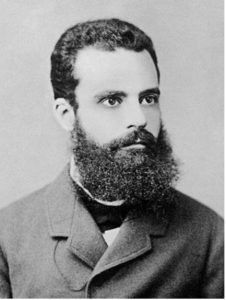
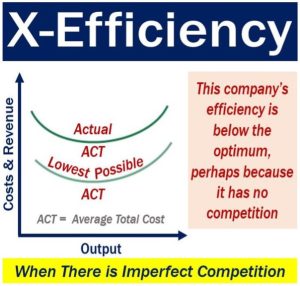
Imagine for a second a care leaver whose life story is a series of assessments, letters, and case notes on a computer, being asked to help but just getting another generic “no thanks” response to your ideas.

Ex piano tuner Alison Moyet I feel comes close to an accurate description in her 80’s hit Invisible,

You’ve got me so confused and there’s words I could use
But I’m afraid to say them
I feel I’ve been had and I’m boiling mad

You don’t have the time and you won’t spend a dime
Not even to call me
You don’t know I exist and I wouldn’t be missed
If I had the nerve to quit you

Invisible – I feel like I’m invisible
You treat me like I’m not really there
And you don’t really care

I wonder if Josh Mccalister is a Moyet fan?

Earlier this month I attended a conference that Mr Mcallister spoke at concerning Connected/Kinship Care.

At one point an experienced Carer/advocate raised the issue of several disparities between work/leave entitlement between kinship care and adoption and the post code lottery of levels of support and financial assistance to carers. MacAlister responded that he will look into theses issues and address them were possible. His unique cocktail of suave confident good looks, positivity and engagement really convinced me and likely many others in the conference. He on the face of it did better than Obama and Johnson.

However, after a day’s contemplation I realised the scale of ironing out these inequalities in just one small corner (kinship care) of his vast review. The following would have to be re-aligned.

  • Employment law, The Paternity and Adoption Leave Regulations 2002
  • Children (leaving Care Act) 2002
  • SGO support regulation
  • Local Authority financing

The scale of this task is tremendous and the votes in parliaments, debates and implementation would need to go on for many years beyond the publishing of Mr MacAlister’s review. Potentially Mr MacAlister is naive, and we can’t expect him to know the ins and outs of every area, but each of his recommendations I feel should be separated between easy wins and herculean legislative labours. Any one can provide a wish list, the real magic is in high quality and lasting implementation.

I wish MacAlister all the best with his review, but would urge him to be the Eartha and Tony Robbins in the room and don’t fall into Obama and Johnsons trap in leaving the Invisible people behind just because you think you’re the smartest.

Links

Munro’s review

Frontline website

Moyet singing

Eartha Kitt meets president