Myron’s Maxims – this weeks discovery

I came across this concept last week – Myron’s Maxims – and thought I’d have a delve into it and do some thinking!

Myron Rogers is an expert in organisational development and systems thinking, known for his work in helping organisations manage change and complexity. He is particularly recognised for his application of systems theory to organisational leadership and change processes. He explores  the importance of understanding organisations as complex systems and looks at how change emerges from the interactions and relationships within systems.

He is best known for articulating Myron’s Maxims, a set of principles that guide organisational change and leadership but also tell us a lot about life – and for this article – social work! Here they are….

– People own what they help create

– Real change happens in real work

– Those who do the work, do the change

– Connect the system to more of itself

– Start anywhere, follow everywhere

– The process you use to get to the future is the future you get.

Let’s look at them….

People own what they help create

Here he emphasises the importance of participation and co-creation in achieving lasting change. This resonates for me in life and social work practice. We know co-creation of strategies for change or care planning lead to better outcomes for people and they engage better with self-created options. And we know that in life in general we do better when we do things with other people – or at least doing things with other people is an important component of our well-being. The other being time on our own!?

Real change happens in real work

This suggests that transformation comes from actual, hands-on practice, not from abstract plans. Christine, my wife, is always saying to me, ‘ok then – just do it!’. And she’s right I often procrastinate in the thinking stage. There comes a point where you have done enough thinking and know enough so you then must do something. That’s where the real change takes place. Eileen Munro made this same point in her review of children’s services – you need to figure out when you know enough and then actually do something. I’m not saying that’s easy, but it is essential.

Those who do the work, do the change

This reinforces the idea that people directly involved in the work are best positioned to create meaningful change. We can’t have someone else go to the gym for us. We must go. We can’t do the work for people we are working with. They must do the work. That’s the only way to make true change happen.

Connect the system to more of itself

You need to be focusing on leveraging existing networks and relationships within a system to foster change. The idea is that systems (whether an organisation, community, or even an individual’s life) are made up of interconnected elements. When you strengthen these connections, you enable better communication, collaboration, and shared understanding, which ultimately leads to more sustainable and effective outcomes. In social work, consider a case where a client is facing homelessness, unemployment, and mental health challenges. Instead of addressing each issue in isolation, the social worker connects the client to a network of services—housing support, employment counselling, mental health services, and peer support groups. By linking these different services (parts of the system) and encouraging them to collaborate, the client receives more comprehensive support. This holistic approach, which “connects the system to more of itself,” ensures that the various agencies don’t work in silos but come together to address the client’s needs in a coordinated and integrated manner, leading to better outcomes.

Start anywhere, follow everywhere

This maxim encourages a flexible approach to change, allowing it to emerge from any point within the system. Making a starts the hardest part I’m fond of saying but simply doing something creates momentum and motivation. And then follow where the momentum takes you. Consider a case where a family is referred to a social worker due to concerns about a child’s behaviour at school. The referral might initially focus on helping the child with behavioural interventions. However, as the social worker engages with the family, they might uncover other underlying issues—such as financial stress, parental conflict, or untreated mental health challenges in one of the parents. Rather than rigidly sticking to the initial issue (the child’s behaviour), the social worker “follows everywhere” by addressing the broader context, helping the family with financial resources, referring parents to counselling, and working with school staff to support the child holistically.

The process you use to get to the future is the future you get

This highlights the importance of the methods and processes used in shaping the desired outcome. You fall to the level of your systems rather than rise to the level of your goals. Systems, planning, and routine are everything. What you look for you see. Be careful what you look for and always have a system or plan.

Myron’s Maxims and Living a Good Life

Myron’s Maxims emphasise the importance of ownership, process, and interconnectedness, all of which are key to living a fulfilled and meaningful life. The principles acknowledging that people own what they help create and that real change happens in real work. They highlight the value of personal involvement in shaping your own path. A good life is not just about outcomes but also about the processes we engage in daily—the relationships we build, the systems we connect with, and the ways we contribute. The idea that the process you use to get to the future is the future you get underscores that living intentionally, fostering positive connections, and remaining flexible in adapting to life’s challenges are essential for achieving long-term satisfaction and purpose.

Myron’s Maxims in Social Work Practice

In social work, Myron’s Maxims align perfectly with empowering individuals and communities. People own what they help create speaks directly to participatory practice in social work, where service users are active partners in decision-making, helping them take ownership of their lives and outcomes. Real change happens in real work resonates with the importance of practical, hands-on interventions and ongoing reflection. The maxim those who do the work, do the change highlights that transformation in clients’ lives occurs when they are deeply involved in the process, rather than simply being passive recipients of support. Finally, connecting the system to more of itself and starting anywhere, following everywhere encourage social workers to view their interventions holistically, understanding the client as part of a wider system and recognising that change can begin from any point in a client’s journey. Ethical, collaborative, and systemic. Thanks Myron!

Professional Identity – defining the box.

Professional identity in social work is complex and multifaceted, encompassing more than just desired traits or competence. It reflects not only the personal sense of self that a practitioner develops through experience and growth, but also a collective identity shared within the profession. This collective identity binds social workers together through common values, ethics, and professional expectations. The process of shaping this identity is ongoing and evolving as individuals navigate the challenges and responsibilities of the field. Given its depth and fluid nature, professional identity in social work is difficult to define, as it is more than simple characteristics and involves the integration of personal, professional, and societal dimensions.

This article looks at this through the lens of the Fran Wiles journal article from 2013 ‘Not Easily Put into a Box’: Constructing Professional Identity, which appeared in Social Work Education: The International Journal

Personal and professional identities differ in several key ways. Personal identity is shaped by an individual’s unique experiences, values, beliefs, and personality traits, which are influenced by factors such as family, culture, and personal history. It represents how a person sees themselves outside of formal roles and in various aspects of life, reflecting their sense of self, relationships, and personal goals.

In contrast, professional identity is the sense of self that is constructed within the context of a profession. It is shaped by the norms, values, ethics, and expectations of a particular field, in this case social work, and reflects how individuals view themselves in their professional role. Professional identity also involves adopting the standards, skills, and competencies necessary for success and credibility in the workplace.

While personal identity is rooted in individuality and personal history, professional identity is shaped by external structures and collective expectations. The two identities can overlap, especially in professions like social work, where personal values often align with professional ethics. However, they do remain distinct, with professional identity being more defined by the responsibilities and behaviours required in a work setting, while personal identity reflects your core self across various contexts – your whole life.

In social work practice, being part of the profession inherently brings an individual’s personal identity and behaviour under scrutiny. This is because social work operates within a framework of high ethical standards, values, and responsibilities that require practitioners to align both their personal and professional identities with the core principles of the field. Social workers are expected to embody qualities such as empathy, integrity, and social justice not only in their professional tasks but also in their personal conduct. This expectation places a spotlight on how personal beliefs, values, and actions intersect with professional responsibilities.

Given the nature of social work, where relationships, trust, and ethical decision-making are central, a social worker’s behaviour in both the personal and professional is continuously evaluated. How we manage our biases, boundaries, and emotional responses can significantly impact our effectiveness in practice. Social work practice often involves complex human interactions, where personal values may come into conflict with professional codes of ethics. In such instances, practitioners are expected to prioritise the values and standards of the profession, ensuring that their behaviour aligns with ethical guidelines.

Being a social worker means accepting that your actions, decisions, and even personal beliefs may be examined to ensure they do not compromise your role or the welfare of service users. This scrutiny underscores the need for ongoing reflection and self-awareness to navigate the complexities of integrating personal identity with professional expectations.

In the article Wiles states that their ‘analysis showed students constructing their professional identity in relation to desired traits, or through developing a sense of shared identity with other social workers; alternatively, it was portrayed as a process of individual development’.  Some main themes emerge.

Complexity of Professional Identity

Wiles emphasises that professional identity is not a fixed trait but a dynamic process that evolves throughout an individual’s career. It involves a combination of desired traits, collective identity within the profession, and personal development as a social worker.

Reflection and Identity Work

The article highlights the importance of reflection in the construction of professional identity. Wiles notes that social work students engage in identity work, particularly during their final stages of study, where they reflect on their professional development and prepare for practice.

Support Mechanisms for Development

Wiles suggests that social work educators should provide support mechanisms for students to continue developing their professional identities after qualification. This includes professional supervision, team collaboration, and opportunities for continuing professional development.

Cultural Understandings

Wiles explores how students’ conceptualisations of professional identity reflect broader cultural understandings within the social work community and society, showing that these identities are influenced by various social discourses.

It is evident then that developing a strong professional identity in social work requires cultivating several key traits. Adherence to professional standards, such as those outlined by Social Work England and the Professional Capabilities Framework, is fundamental to ensuring competent and ethical practice. A solid foundation of theoretical knowledge and expertise is essential, enabling social workers to make informed decisions and apply effective interventions. Additionally, a genuine commitment to serving others – maybe grounded in altruism – forms the ethical core of the profession, driving practitioners to prioritise the welfare of individuals and communities. Social workers also enjoy a high degree of autonomy, allowing them to exercise judgment and flexibility in their roles, while being guided by a code of ethics. The use of research and the ability to engage in critical thinking are vital, as they enable professionals to stay informed about best practices and continuously improve their skills.

A shared professional identity in social work is both collective and shaped by the specific settings and specialisms within the field. Social workers have a common professional foundation, but distinct identities can form around specialisms such as child protection, mental health, or adult services. These specialisms allow practitioners to develop expertise and tailor their approach to specific areas of practice while maintaining the core principles of social work. However, working within multidisciplinary teams can sometimes challenge or erode professional identity, as the distinct role of the social worker may become blurred when collaborating with other professionals.

Drawing on Goffman’s ideas of identity work, becoming a social work professional involves a significant transformation of one’s personal identity. Experiences from personal life are reshaped and reframed through education and professional training, as individuals learn to navigate the complexities of social work practice. A key component of this transformation is the “use of self,” where practitioners integrate their personal experiences and qualities with professional skills in a reflective and intentional manner. This process of becoming a social worker requires not only the mastery of theoretical knowledge and practical skills but also the internalisation of a professional identity that aligns with the values, ethics, and standards of the field. Goffman’s concept of identity work underscores the fluid and ongoing nature of this process, as social workers must continually balance their personal identity with the expectations of the profession. As a result, professional identity not only shapes how you perform in the role but also impacts how you view yourself personally. For students, this identity work is critical—they must evolve from learners to professionals by integrating knowledge and embodying the core principles of social work in their practice.

Students need reflective space to actively explore and rehearse their emerging professional identities as social workers. This reflective practice is essential for allowing them to integrate theoretical knowledge with real-world experiences, critically evaluate their actions, and align their personal values with the ethical standards of the profession. In these spaces, which are for the most part their practice placements, students can safely explore different approaches, receive feedback, and refine their understanding of their role within the social work field. Reflective space also helps students navigate the complexities of their identity work, as they process the emotional, intellectual, and ethical challenges they encounter. By engaging in regular reflection, they become more self-aware and better prepared to handle the nuanced demands of social work practice, ultimately shaping a stronger, more confident professional identity.

Strengths based practice – Verbs and Powerlifting meet social work.

Verbs

As a solution focused social worker, I am interested in supporting sustainable positive change.

However precisely what activity (in the broadest sense) do we offer as professionals to achieve this. 

To describe our activity we use a set of transitive verbs (a verb that requires a direct object to implement an action) that have barely crawled out of the wishy washy swamp – Support, Refer, Talk, Visit, Advise, Signpost, Engage…………………….

Oh the insipid horror………………………

Our profession is distinct from say teaching that has its own patron saint Bloom of the verb, who passed down from education paradise the demonstrable language of, Analyse, Memorize, Classify, Measure, and Recall (amongst a list of dozens). Teachers plan lessons with activities that achieve Blooms outcomes. For example, if the lesson plan says the learners need to memorise and then recall the formula, that is explicitly what they must do.  In social work our verbs fall short, what does support look like, how can we say X (support, engagement etc) has happened or not, how much variation in practice between workers should we tolerate?  Social workers seem to do far less planning than teachers for their core activities, but then we do far more writing up of outcomes and case notes.

One cynical interpretation here is that we can only justify our roles within chaotic settings with a large dollop of hindsight.  Walk in a room and most of us would recognize when “teaching” was taking place, but I would defy most none professionally qualified to identify a social work session from observing its activity. It would look 90 % similar to the activity of the housing worker, the therapist, the probation worker or the mental health nurse.

Fit for practice, how can  the world of strength training help Social work.

Allow me to introduce the gruff, acerbic Texan Mark Rippertoe or Rip for short.

Rippertoe is an author, gym owner, podcaster, and ex powerlifter. His books offer the definitive guide to barbell or weight training. There are no flabby terms. Each element is articulated precisely and scientifically. For example, his opus work Starting Strength (basic barbell training) takes 66 pages to describe the mechanics of the squat, his empirical approach echoes Betrand Russel’s 360 page effort on showing how 1 + 2 = 3.  Russel and Rippertoe’s approach is to build an encompassing method that rests on precisely defined key terms, which allows for a successive accumulation of confidence for the trainee.

Betrand Russel

Two terms that Rippertoe defines and differentiates (thanks Bloom) are Training and Exercise.   Exercise is the verb that happens when you walk into a gym or lace up your trainers with no plan in mind, no time limit, no body part focus. Exercise’s only goal is to Exercise.

Training is a verb that happens only when it is planned in advance, through progressive overload. Through the performing of effective exercises the athlete gets faster, stronger or more powerful (whichever is their specific and defined target). 

Any improvements that are achieved through exercise (even if performed with significant effort and intensity) will be short lived and will quickly plateau. Most runners are not getting faster most folk in the gym are not getting stronger as they are only exercising.

As social workers our activity is so ill defined, we suffer a risk of “exercising” with our clients due to very little planning, a low willingness to tackle resistance and no forensic measuring of outcomes.  This malaise is linked to repeated referrals, disguised compliance, high levels of staff turnover and a lack of public and professional confidence.  The families we work with will mostly only experience short term change as there has been no depth to the work, no professional triangulation of the issues. Families have been ‘Visited’ and little more.   Being explicit, children or vulnerable adults are not made safe by being ‘Visited’ but by the resultant safeguarding actions, ringing the police, physically removing the risk and asking the revealing question.  This “exercising” offers only a corporate cloak of risk management. Serious case reviews often focus on the bean counting – how many visits? In what time period? They focus less on the modality of the intervention or its efficacy.

Canadian psychiatrist Eric Berne, aka the god father of transactional analysis, offers up the term of “pass-timing” to describe the discussion of activities without any meaningful actions or purpose. Pass-timing can be a meandering discussion of the weather or past events that serves little direction or purpose to either side of a relationship with this shielding them from the experience of true intimacy and honesty. As social workers on visits we must be aware of the proportion of our time we spend going over past events, discussing minor matters, or in idle conversation with the families we help.

As social work practitioners we perhaps have more freedom than any other profession to direct an intervention a certain way. This freedom can lead to “exercising or passtiming” or it can lead to tremendous insights and breakthroughs through creative practice. This creative practice may seem like some ephemeral fire that we can catch just for a brief moment in a session, however it is only available to those who have done the hard yards of learning, being mentored and getting it wrong. Just like an amazing feature of strength (like the picture at the opening of this article) quality social work practice only comes after a series of planned and measurable steps where the complexity and depth increase incrementally.

To sum up, social work activity, just like walking into a gym, will not be productive unless it is planned for. And significant positive results require many ingredients –

Clarity on the activity and its purpose

Access to a mentor (shortcutting mastery)

Some form of measurement (or how can you say progress has been made)

Any pass-timing should be done mindfully and not as a means to avoid the harder more demanding and rewarding actions.

Forming our views; Rishi, social workers, and primates.

In the caring professions our experiences are the cornerstone of our practice, setting our moral compass and future decision-making processes (heuristics). Despite each individual experience being important our brains are designed to weight and recall some experiences, including our practice ones, more readily than others, such as ones that trigger powerful emotions like fear, disgust, and anger.  Practice ‘stories’ can be filed in our brain inside a red binder with ‘MUST RECALL REGULARY’ in bold marker. Out of a plethora of old cases we may remember only a handful in five to ten years’ time. Put simply, as professionals, we may only use a small proportion of our past experiences to develop a way of working with all future cases – a potentially skewed schema.

To give a simple example let’s say you go fishing off a pier and you know there are only cod and mackerel in the sea. What you don’t know is that cod are ten times more common.  On the first day you catch 4 fish; 3 mackerel and 1 cod, then on the second day only 1 fish – a mackerel. If Captain Birdseye asks you about this fishing spot you will say that there are loads of mackerel and hardly any cod, having no perspective on how rare your catches were. Similarly, we would lambast a scientist for not having a large enough sample size to support their research conclusions, or for not correcting for some statistical selection bias. So, equally, we should ask ourselves, “are we asking ourselves enough questions about how our practice views and how they stack up into a working model?”

It does not take too much of a salmon leap to switch to the Social Work context here.

Let’s say in all your past experiences of working with single fathers in relation to child protection they have all been difficult to engage and show signs of physical abuse. When allocated your next similar case your past experiences will undoubtedly skew your future expectations. The question is, “how many similar cases will it take to cause a permanent belief system switch (conscious or unconscious)?”   

One particularly influential belief system is the one held by our current PM (at time of writing Mr Sunak). His family settled in East Africa from India, with this community becoming an economically dominant force in both Kenya and Uganda. Roughly Asians where 2% of the population but they owned 66% of all the wealth.

When these African countries achieved independence from the British Empire the vast majority of Asians left with many using British passports to come to enter the UK. Sunak’s family did just that with his parents settling in Southampton. His mother was a pharmacist and his father a GP.  Sunak’s parents had three children, one is our prime minister, one is the head of strategy at the UN and the other a psychologist.  Sunak when interviewed always points out that nothing was handed to his family on a plate, but it was all achieved through hard work and sacrifice.

Sunak therefore believes that the government should support and not restrict hard working families as they could achieve outcomes similar to the Sunak’s.  To use the earlier fishing analogy Sunak’s family were successful in catching some of the rarest fish in the ocean. Now their son, the prime minister, hands out rods for others expecting them to do the same.  To illustrate this point, look out for the many stories about children from poor backgrounds getting straight A’s and going to Oxbridge…… You won’t find many. The success stories that there are have the perverse effect of keeping the lid firmly on the social mobility box. A few plucky stories block out the reality that there are a majority of hard-working families who barely make ends meet.

Why could a smart man like Sunak make such an error in assuming his specific experience can be generalized to the entire population. Well, like us Sunak has a brain that is hardwired to hold a finite number of peoples’ tales. This was famously proven by Dunbar’s work on monkeys and group size. His work demonstrated a link between neo cortex size and how many individuals could be in a primate’s social group. The larger the cortex the greater the potential group size. Even though humans have a larger brain than other primates there is still a hard limit to social group size Dunbar’s work suggests. We can only integrate so much social context and so many stories when we function in such a group. Our brains are ultimately finite. Whilst modern critics have latterly ganged up on Dunbar’s work for being statistically flawed, I feel there remains some truth in the general conclusion for us humans and our relationships. The relationship as found below in the graph is made more significant when you consider that the majority of us humans live in highly selective groups – rich alongside rich, or poor alongside poor, older people, young people, or selection around race or sex. In other words, we are limited both by absolute number and by variety. Can social workers hold in mind only a finite number of case stories that are highly likely to have some selection bias in terms of their characteristics?  

Much of what we do as social workers involves hypothesising about situations based, often, on limited information. We start to build a hypothesis at the earliest point of contact. In fact, maybe even before the first physical contact. We maybe start to make assumptions from case recording or referral information. Daniel Kahneman, author of the wonderful ‘Thinking Fast and Slow’, has concluded we have two aspects to our brains. We can let our automatic brain – or ‘System 1’ as he refers to it – run riot, jumping to conclusions! This automatic system is like being on autopilot. This part of our brain likes routine things and easy solutions. It relies, when thinking about people, on stereotypes that have been constructed for us and that we have added to. Ideas that sit in our subconscious mind. He says that we don’t like using ‘System 2’, our ‘deliberate’ brain, because it’s hard work. It takes effort to get this part of our brain going so that we can consciously and logically think things through. So, his idea goes, why would we not use a ready-made ‘model’ from our automatic brain like ‘all fathers in child protection cases are like ‘this’ or ‘that’’.

This can lead to bias in our hypothesising that we might not even spot. Confirmation bias is an operational mode where we select information from that which is available to ‘confirm’ the position we want it to. We form a view early on and then select information that supports that idea. When we fall into this trap gathering more information doesn’t necessarily yield a better decision. In fact, more information means we simply have more to select from to confirm our bias. As practitioners it’s important we consider whether we are relying on archetypes we have constructed from past experiences, or whether we are seeing the reality of the situation as it truly is.

Metal anchor near river on sunny day

We can also become anchored to a first impression – called the Anchoring Effect – which leads to that first impression becoming the only one relevant. Or, we anchor ourselves to a single factor as a root cause and miss others possible causes of the presenting circumstances. A famous experiment conducted by the magazine The Economist on MIT students gave an interesting insight into this. Initially they offered their publication as Web Only at $59 and Print & Web at $125. 68% of people went for web only version and 32% went for the Print + Web option. Wise MIT students! Same information, half the price! They offered their publication again, this time at three rates – Web Only $59, Print Only $125, and Print and Web $125. What happened? Well, no one went for the Print Only option. Why would you when you can have Print and Web for the same price. However! 84% chose the Print and Web option with the rest going for Web Only. This trick apparently is often used in marketing in a range of ways. People were anchored to the Print option thinking they were getting a fabulous deal – Print and Web for the same price as Print. Without this option in play most people went for the sensible Web only option. When we become anchored to a piece of information it exerts undue influence on us and clouds our judgment

With Sunak going to elite universities and Winchester college I wonder how diverse the ‘clan’ of 150 individuals housed in his brain is. How skewed is his idea of how the world operates. Is he anchored to a particular idea born out of his emotional attachments, role models and major life events. Does he have a ‘confirmation bias’ toward things that he will share (to a significant percentage) with the striding elite class who are a tiny majority of the population but constitute the votes Sunak needs to win a General Election in two years’ time.

As social workers we work at the total opposite end of the social mobility scale. We encounter the most disadvantaged and the most vulnerable. Whilst the families we support are a growing proportion of society they still represent a minority. 95% of children do not have involvement from social care.  As social workers do we have two world views? One which is narrow based on possible biases rooted in a ‘professional world’ view and one for the people we come across in day-to-day life where we pause and suspend judgment before deciding anything about them?

The Social Work superhero skill here is reflection.

Reflection is crucial to avoid the bias trap. Critical reflective thinking is essential in relation to each family, service user, or child to avoid falling into automatic thinking. Critical thinking is deliberate thinking. Critical thinking is disciplined thinking. It needs to happen before action so we can identify any potential for bias. Then, in action, so that we don’t seek out only the information to justify a predetermined decision. And finally after action to ensure our decisions are rooted in a solid rationale devoid of bias.

This article was written by George Bull and Stephen J Mordue

George has been a social worker for 10 years working mainly in child protection and Early Help. He has lectured with Jamie Scorer at New College Durham, University of Sunderland and University of Northumbria in solution focused practice.

Stephen J. Mordue Stephen is a lecturer in social work at the University of Sunderland, in the North East of England. He was a social work practitioner for 12 years working on an Older Persons team. His particular areas of interest are communication, how organisations function, and the application of the Mental Capacity Act and Deprivation of Liberty Safeguards. He is passionate about being organised, productivity and self care – ask him about diary management and spreadsheets! 

Difficult Conversations – Dealing with anger

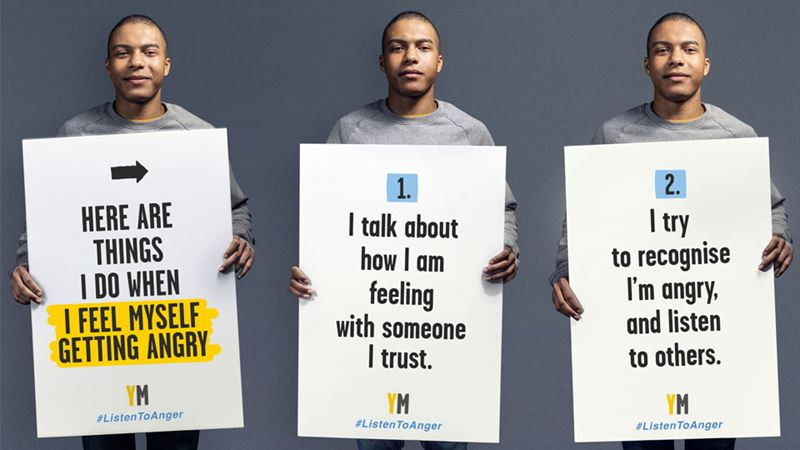
In the final part of this ‘trilogy’ of difficult conversations articles I want to look at anger. Firstly, it’s worth saying that this may not just be the anger of the other person it may be your sense of anger. That feeling that you are becoming angry. That feeling that you are becoming frustrated. Anger often occurs in accelerating cycles both within an individual and between people. So once one person gets angry both people get angry.

First principle when in doubt get out. Sometimes it’s simply better to end a conversation or move the conversation onto something different before returning to it at a later time.

As Groucho Marx once quipped speak when you’re angry and you will make the best speech you will ever regret.

We become angry when there is someone trying to interfere in the space between us and what we intend to do – someone between us and our peace. When we believe that interference is deliberate the impact is stronger. And I think it’s fairly safe to say that the people we work with consider our interference in their worlds to often be deliberate and unwelcome.

What can you do to stop feeling angry or what can you do to stop the other person feeling angry? This is a good question – because of how quickly we react neurologically when someone displays their anger something has already gone badly wrong. Something is not beginning to escalate something has already escalated.

This shows the reality that anger is an innate capacity. It’s required from an evolutionary point of view for self-protection. So, when we feel threatened, we get angry. Anger signals intent. The person is getting angry to protect themselves

Sometimes it’s a behaviour learned culturally. Some observe growing up that getting angry is something people do when they’re trying to assert themselves. Sometimes becoming angry elevates a person’s status – they are listened to. So, it can be experience driven behaviour – a way to cope. Anger is the manifestation of your own nervous system.

Anger blinds you and derails conversation. Anger limits your ability to remain civil. This emotion limits how you access and process information. Once someone us angry, they are not listening or responding rationally they are responding angrily. It’s almost pointless to continue – we need to build those golden bridges from the second article. This is a way to de-escalate the anger and help the other person not feel as though there backing down in some way – not losing face. The things we’ve already talked about – the relationship that you have – the use of the words we and us – will all help to do this.

Do’s and don’ts

  • don’t meet anger with anger
  • don’t blame – discuss
  • don’t make negative assumptions about the other persons intentions or motivations or the source of their anger
  • do monitor closely yourself and the other person for signs of anger
  • do change the subject
  • do reframe the conversation
  • do pause – take a breath. The goal of pausing in the heat of the moment is to disconnect the automatic link between emotion and action – it serves to slow it down – slow down. When you slow down you calm down
  • do bite your tongue- do not counterattack- particularly important here is keeping control of your facial expressions and body language
  • listen listen listen
  • do not deny the situation is tense. In many circumstances acknowledging the tension or the negative feelings or the frustrations is helpful. Denying these things is seldom helpful
  • after a tense moment do try to make an empathy statement. This helps foster deeper connexion. For example – I hear you – this must be hard
  • ultimately make your safety a priority – walk away if you have to

When you think about anger think not only about the other persons but also yours

This is the third in a series of 3 articles

The others are at the links below

Difficult Conversations – some initial thoughts

Difficult Conversations – Advanced Skills

Anger | NottAlone

Difficult Conversations – Advanced Skills

In the previous article we considered some initial thoughts about what to bear in mind when approaching a difficult conversation. Always be mindful as I said that good relationships are the foundation of what we’re trying to do. These good relationships, these meaningful relationships hinge on factors like dependability, kindness, honesty, empathy, authenticity, and the apparent obvious valuing of the relationship.

So firstly, simply offering a listening ear I feel is an advanced skill. Because often when we’re busy we forget how to sit quietly and simply listen. Doing this gives the opportunity for people to share their words and their feelings and it develops trust. And here is the first thing to think of. If the person says something you don’t understand or flies in the face of the logical progression in your head place that lack of understanding on yourself. So, phrases here to use would be things like, “can you explain that a little further to me”,  “I want to be able to understand clearly what it is that you’re telling me”. And let the person talk again while you listen.

What we’re trying to do here is what Boghossian and Lindsay call, in their book “How To Have Impossible Conversations”, building golden bridges. The first part of building a golden bridge is to understand what the other person is saying. Secondly, if this is the case, gently point out discrepancies in what they might be seeing. Get them to think about those discrepancies and articulate them to you in the way that they want to. A golden bridge offers them the opportunity to change what they’re saying, on reflection, without being socially embarrassed by what they have said. I’m sure you’re aware that people engage better with decisions when they feel as though it is them who have made the decision. This is where your effective communication, counselling, and negotiation skills are essential. More on negotiation here. What we’re doing here is trying to head off the conflict before the conflict emerges even when the conversation is difficult. Remember people don’t knowingly desire bad things. People don’t knowingly desire to make decisions that compromise themselves or others. They genuinely think – for whatever reason – they are making a good decision.

Collaborative language

What we’re trying to establish with these advanced skills is that we are in this together within the interaction that is taking place. And the application of this technique is quite simple to describe but often quite difficult to implement.

Start by using the words ‘we’ and ‘us’.

Weinstein and Deutschberger two sociologists said that we is one of the most seductive of English words. Its inclusion in what you say forms a relationship structured in terms of mutuality and interdependence. So, try to replace ‘you’ or ‘I’ with ‘we’.

Also, in the same vein the use of the word ‘us’ is important. “it would be great for us if we could figure out how to move forward on this issue”. “How can we see if that will work”. “How can we give that a go so everybody is safe”.

This next idea also relies on really listening but also on restating the other persons position as well or better than they did.

You should do this before you openly disagree with anything. What this does, at the very least, is show the person that they have been heard, that their voice is important, and that you have accurately heard what they had to say. It also gives them a chance to correct you if that is required. Inevitably you may need to propose a different plan but if they know they’ve been heard they may be more receptive to listening to the alternative.

Taking this approach eliminates the ‘yes but’ statement. When you disagree with something someone has said it’s quite easy to fall into the ‘yes but’ trap. ‘Yes but’ encourages anger and I think it’s worth noting at this point that when someone states a position, they are often stating that position in good faith because for whatever reason, in their position, from their subjective perspective, they think that’s the best thing they can do.

Now they might think that’s the best thing to do because it’s easy or because it doesn’t challenge their world. Or maybe it gets you off their back, but they will authentically think that that’s the best thing to do for them in this moment. Why might that be so?

One of the problems may be cognitive bandwidth. People who have problematic lives, who were often living in poverty, who are often not heard have limited ‘bandwidth’ to consider future options and tend to live in the short term. If their concern in the short-term is to pay the rent or put food on the table, they may not have the cognitive ‘space’ to consider future options. So, if a solution appears to work to them in the short term, or it maintains the life they have so that they are not challenged to change, then they will genuinely believe that that is the best thing to do. When people don’t have a great deal of cognitive bandwidth it’s doubly hard for them to engage in change related tasks. Just imagine for yourself when you are trying to facilitate a change – think of something basic like maybe losing weight or getting fit – if that was the only thing you had to do – if that was the only thing you had to worry about you might be able to give it a good go – you might even start well – but once you have a rough day at the office, or an argument with your partner, or an invite out for a Friday night, how easily the momentum to make the change disappears. And the people we often work with have many many challenges in their lives – you being there maybe being one of them

Rapaport’s rules

Rappoport was a Russian born American game theorist who contemplated a list of rules for offering disagreement or criticism in conversations and we can learn a little something from what he had to say.

Here are his rules….

Rule #1 – expressing the persons position shows that you have made a sincere attempt to understand their position.

Rule #2 – shows that you actually have things in common in relation to the issue despite maybe coming to different conclusions.

Rule 3 – demonstrates mutual learning and respect by showing the person that what they said was informative and valuable. This gets called in a lot of the literature pro social modelling. You are behaving in the way that you want the other person to behave.

So, build Golden Bridges – give people a way out or they may become entrenched in a position even if you’ve convinced them otherwise

Use ‘We’ and ‘Us’ to engender a spirit of ‘in it together’.

Be aware that people in difficult circumstances may have limited cognitive ‘bandwidth’ to consider future options

Apply Rapaport’s rules

This is the second of 3 articles in this series

The others are here

Difficult Conversations – Some initial thoughts

Difficult Conversations – Dealing with anger

Difficult Conversations – some initial thoughts

When it comes to conversations in Social Work practice, particularly difficult ones, we have to start with the question “What are we trying to achieve?” What is the problem we are trying to overcome? Often, I’d suggest, it’s the (almost) impossible. We are trying to have enlightening, helpful conversations, often with difficult messages to deliver, with people who may be in denial about their world and the world out there. In this environment we’re meant to try and do this without aggravating anyone! Without making the conversation difficult and challenging.

So, let’s start by cutting ourselves some slack and acknowledging that sometimes when things go wrong there’s often not a lot we could have done. As I say frequently, the Stoic Philosophers say we can’t control everything so we shouldn’t set our happiness and our view of how well we did on such things. But we must try to predict as much as we can… because conflict – and difficult conversations – are stress inducing – for us and for the other people involved. Best avoided if possible. If not avoidable then managed well.

And it’s not just with service users, parents, or children. It’s sometimes with other professionals and sometimes with our own colleagues in our own teams.

We are involved in deliberate conversations. We need to involve ourselves in listening – but when tense maybe we don’t listen effectively.

Why is Rumi the best-selling poet in the US? - BBC Culture

There is a way between voice and presence

where information flows.

In disciplined silence it opens.

With wandering talk it closes.

RUMI (13th-century Persian poet)

What’s going on when we are involved in dialogue, conflict, and difficulty? What are the underpinning things that help us avoid this in the first place or navigate through it? Because while the best form of defence is to avoid the conflict in the first place, we have to acknowledge that conflict is, at some point, inevitable.

Some things to bear in mind

Aristotle's Contributions in Mathematics – StudiousGuy

There’s always a philosopher, often Greek, that we can turn to and in this instance, I turn to Aristotle’s ‘Modes of Persuasion’. Often in our conversations we are trying to persuade – or at least put forward a position that we want the other person to consider – and Aristotle says there are three crucial things to engage…. Ethos, Pathos and Logos

Ethos

Ethos – your ethics. The question here in the mind of the other person is can you be trusted.  The starting point for the individual might be that you can’t be. The reality is that difficult conversations are easier when there is a relationship of trust there. You need to start by building that relationship. It sounds obvious really but in busy practice may be difficult and may not get the attention it deserves.

Trust isn’t about liking each other or what each other is saying it’s about a functional relationship that permits disagreement or conflicting opinion. It also needs to allow, particularly for Social Workers, given the perceived (if not real) position of power we often find ourselves in – balance. Balance of power

A social contract is established in the very early parts of an interaction based on previous knowledge of each other if we have it, or ideas about each other if we don’t have specific knowledge. If you don’t have a relationship with the person, you are likely to be having the relationship the previous Social Worker had. You need to ask, ‘What’s your relationship like with the person – where are you at with them?’ ‘What’s the relationship of the person with social work?’ Overcoming any obstacles that this places in our way by how we communicate is the cornerstone, I’d argue, of social work practice. There is nothing more important. So whatever we discover in thinking about those two questions demands we do something about it – at least have an awareness

Listening is crucial. Nobody cares how much you know until they know how much you care – so the famous saying goes. Build rapport. Assume the other person will be nervous or apprehensive about you being there. Having a ‘professional’ involved in your life brings up all sorts of fears and tensions – don’t add to them. Being honest about difficult things is important – but we need to think about how we frame what we have to say.

Pathos

Pathos is the emotional content of any conversation or relationship we find ourselves in. There is always an emotional content to what we do. Emotional Intelligence is key. We must exhibit emotional control. It’s our responsibility to do so and not expect the same in return. We must manage the emotions of others and that starts with managing our own.

Managing our emotions successfully stifle’s impulsiveness – so it mediates our response – and helps us perform effectively. Recognising emotions in others and knowing how to manage them is a fundamental skill. The problem with this skill is it’s usually forged in the ‘heat of the fire’ rather than been thought about and reflected on before action and after action. What is going to trigger the persons emotions? What emotion? What will I do about it to avoid it or manage it?

Never forget emotions are contagious and easily escalate.

Logos

Finally, Logos – Logic. What we are saying needs to be logical. We need to engage our thinking brain. This relies on us managing our emotional brain (see above!). We need to articulate this logic in a way that the other person can understand. Think clearly before, and during, and after the conversation. Empathise. Persuade. Any conversation is two people in a dialogue trying to find the truth – an agreed truth. A logical truth. Only then can things move forward.

The conversation must connect to how people understand things. We must find the other persons understanding of the thing, know ours, and connect the two. Often when you do this you find people are more ‘movable’ (as you’ve acknowledged their truth) and the ‘truths’ are not as far apart as they appear. There will be some commonality.

Often when we are discussing ‘truths’ like this in practice we need to keep people talking (and we need to keep reflecting) because then we can Develop Discrepancies (there’s or ours).

Developing discrepancies (a feature of motivational interviewing – read about it here) creates a gap between where the person has been (or currently is) and where they want to be. We can use The Columbo Method here. It’s a simple yet clever and cunning way to handle a potential contradiction in what you are being told. Remember the television show Columbo, starring Peter Falk? The fictional Columbo was a detective who solved murder mysteries – hugely popular in the 1970’s. He was a humble and unassuming character who had the ability to get anyone to tell him anything, despite their initial resistance – very disarming. When someone said something to Columbo that was conflicting or inconsistent, he would rub his head and say, “I noticed yesterday you said one thing, and now you are saying something else. I’m confused.” He would say things like, “Could you clarify this?” or “Help me understand.” Columbo did not accuse those he was questioning. By taking the responsibility for his confusion, he disarmed the other person — who then would slowly feel comfortable telling him the things he needed to know to solve the crime. The Columbo Method is to present the facts that appear to conflict, give the person the benefit of the doubt, and then ask questions for clarification. We need to look in this ‘mirror’ ourselves as well. Are we making assumptions that contradict what we are trying to achieve or that are at odds with our professional values.

Ethos – Pathos – Logos

Ethics – Emotions – Logic

Real discussion creates understanding rather than division.

This is the first of 3 articles in this series

The others are at these links

Difficult Conversations – Advanced Skills

Difficult Conversations – Dealing with anger

Social Work Change, Priti Patel and Gauss Linear and non-linear Problems

Written by George Bull….

Thousands of words, column inches and twitter feeds have been spilled out by our profession paining over what is going wrong; poverty, a ‘crowbarred in’ care review and profit in the sector to name just 3.   Strikingly there is very little conflict over what the problems are…………… what to do about them however is a question in a different cosmos.

This brings us to Priti Patel and her maniacal perma-grin.

Patel (the Foreign Secretary) last month pointed out that those who decried her plan to process asylum seekers in Rwanda could offer no real solutions to the immigration crisis.   The next sentence is one I thought I would never write, or any social worker would write for that matter……………………………………… Piri Patel may have a point!!!!! We are too often stuck in the ‘complaining and explaining quicksand’ with no vision for workable improvements or solutions.

The problems Social Work face are similar in nature to immigration with there being linear (straight forward) and non-linear (not straightforward) elements.

To list a few more examples from the ‘problems’ menu.

COVID
Linear – millions of people need vaccines – solution buy loads of vaccines and line loads of arms up to jab them.
Non-Linear – long covid is multi-faceted across the age range, combing mental, physical and social aspects. I for one have heard almost no credible solution or ideas on this.

Foster care
Linear – need more foster carers and more placements
Non-Linear – How do we promote, retain, train, support and develop foster carers locally and how do we remove increasing profit from sector at a time of restrained supply. How much should a foster carer be paid, should they have second jobs etc.

Safeguarding
Linear – support families at the right time with the right service and take decisive action in the cases where children’s lives are going to be threatened by their carers
Non-Linear – how do we decide between families that can make the changes or ones where the chances of harm will just increase, how do we enhance time spent with families and away from paperwork and how do we revitalize and add respect back to our profession.

To move the debate and our profession on I argue we desperately need to hone our skills in conceptualizing non-linear problems.

To assist us we need the help of an 18th century maths genius Johann Carl Friedrich Gauss.

Gauss was born to a poor family in Lower Saxony. His mother was illiterate (Gauss had to calculate his own birthday). Very early on Gauss’s genius for problem solving and mathematics was spotted, and he added greatly to many fields and – most usefully for our discussion – non-linear geometry.  For two-thousand years maths only recognised shapes that could be drawn by a ruler and a compass. That was it!!!! That was the complete set of things. An entirely linear world with no external frame of reference. Gauss however refused to accept something that was the fundamental bedrock of mathematics since Plato was a lad. He established a world of curves and parabolas (think triangles or hexagons on a football – see picture). In short, he opened the world up to a different reality. If there was no Gauss then there was no general relativity, no GPS, no chaos theory (see below) the list goes on and on. 

Lorentz butterfly effect – sensitivity to initial conditions creates significantly different outcomes.

As much as I like writing about long dead mathematicians, it is a fair question to ask what does this have to do with social work etc?   The answer comes from Gauss and how he offered a totally different perspective on established fundamental problems. As social workers I feel we fall foul of not having many of our own theories and, not being a core theoretical field like mathematics, this causes us often to struggle to think outside of our borrowed theoretical world. Could this be why we get everyone from judges, McAlister/teacher types and a whole host of non-social workers being so pivotal to our future.  Equally we can ask which other professions seek our perspective. Do psychologists, doctors and others regularly seek our opinions outside of the confines of our field, sadly I think almost never.

We need to go on a journey of reconstituting and reimagining our core position…. Anyway… back to Gauss……….

Whilst sat in primary school Gauss’s  teacher, wanting to distract the class for 10 minutes, asked the young children to add up all the numbers from 1 to 100. The other children set about this linear question by just adding all the numbers up one by one – 1+2+3 etc. with the problem solved by two ingredients time and effort.

Gauss however conceptualized the problem in a different way to his school chums. He looked like all good social workers do for nonlinear connections and solutions. Young Gauss figured that 1 has a pair in 99, 2 with 98 , 3 with 97 and that there would be 50 of these pairs and 50 paring with 0, so all he need to do was 50 X 100 + the spare 50…. equals 5050.

Gauss must have looked across at his classmates at the chalk plume from the frantic calculations just as Piri Patel looked at the twitter comments and column inches regaling against her Rwanda asylum policy. The commonalty is responses without insightful solutions.  My point is our profession has flogged the dead horse of talking about the problems and now we need to set our collective minds to creative solutions instead. The caterwauling status quo will only offer social work the same old outcomes whilst rocking all over the world with matchstick men (see what I did there!? – status quo… Status Quo!?).

How do we begin this re-imaging endeavour? Well, I would suggest we need to free ourselves of the following thought traps….

  • A baby P case could happen to me as a social worker, and I need to be mindful of that whilst dealing with every Child Protection case. Instead think… Baby P cases are rare events. I need to be thorough in my assessment but not be frozen by the thought that such extreme things are inevitable
  • Is the 1989 Children Act fit for purpose at 30 years old (many hold it in blind reverence)? Do we need more radical and critical social work that explores the application of legislation?
  • How many children should my Local Authority be removing? We should understand that there is no number, there are only individuals whose situations are assessed.
  • Are Local Authorities authorities with £80K paid Directors of Children’s Services much better than Ltd companies who provide social care services. They may be, they may not be. We need to be open to options.
  • Do our meetings satisfy a narrow professional interest or that of the family? We need to root ourselves in ‘why’ we are doing what we are doing, not in ‘how’. ‘Our’ meeting is not the important thing.
  • Do we ask too much of parents in too narrow a time-scale? To explore this one try working on more than one deeply personal issue at a time (you will struggle).
  • Do we as social workers do what we think is right or merely do we do what our mangers think is right within a Local Authority context. If we do not agree to a plan say to place a 16 year old in unregulated accommodation what action should we take as a professional? Do we show our dissent? Are we willing to? Is there a roll for radical and critical social work
  • Do we as social workers ever think much outside the narrow lanes of Child Protection, Child in Need and Looked After Children. Are we putting process before values.
  • Are our efforts as social workers redundant if austerity is levelling a far greater downside to any potential upside we can muster. Do a small but significant minority of our families just need more cash not a visit from a social worker ?
  • Why do the more experienced social workers stop working with families just because managerial and corporate positions are better paid. The best surgeons still operate, the best stockbrokers still invest. Why do the most experienced social workers stop visiting homes and providing assistance. Do we need a different career structure model?
  • Is social work best situated in local authorities? As a good friend says they are good at only emptying bins and sometimes they can’t do that. Does the bureaucratic environment of a local authority align well with a profession that should be responsive to individuals rather than process driven?
  • Would I work for a national fostering agency, or Child Protection agency? Do my morals only matter outside of the frame of reference where I am offered a job? Surely, we can carry our ethics to where ever we work?
  • Are schools increasingly taking over the Early Help and Child in Need role? Does our flimsy involvement with children and families pale into insignificance against the daily fraternal nature of school? Is that not where social workers should be located.

INSERT YOUR OWN SOCIAL WORK THOUGHT TRAP HERE………

Just like Gauss if we seek to pose tough non-linear questions like those above we have already stopped complaining and started reimaging.  Only if we unshackle ourselves from the confines of local authority groupthink and our borrowed theories can we question fundamental truths in our profession. Whilst anybody with an ounce of humanity feels Patel’s Rwanda plan is abhorrent it is no doubt radical. How do we as social workers reclaim our Radical nature but also dance the realist tight rope of costs, political will and long term implementation.  If we don’t get our act together a steamroller driven by McAlister, pseudo corporations and neo-conservatives are heading our way. Steamrollers take no heed of non-linearity they will crush all of our professional nuance and creativity in a moment.

Rare picture of the  IRCSS 540 PPMcAlister Steam roller

About the writer…..

George Bull

George has been a social worker for 10 years working mainly in child protection and Early Help. He has lectured with Jamie Scorer at New College Durham, University of Sunderland and University of Northumbria in solution focused practice.

Social work and Toy Story 4 – Bowlby and Attachment

Paragraph

Is Disney and Pixar telling a tale of about children in the care system and showing us how social work should be done? In doing so they provide us with a beautiful near perfect example of Bowlby’s attachment theory.  A bold statement I hear you ask or is this writer ridiculous? perhaps both are true but before you dismiss this let’s as they say in through the keyhole look at the evidence.

At the beginning of the film we are introduced to Woody, for those who have lived in a cave for 20 years Woody is a toy, a stuffed cowboy, and the once favourite toy of the previous owner Andy. In Toy Story Three Andy grew up and passed his toys to a new owner Bonnie.  In Toy Story Four we are re-introduced to Woody, who, for once appears to be struggling, as he is no longer a favourite toy and as a direct consequence of this, he appears to be constantly looking for positive approval.

This is our first introduction to Bowlby’s attachment theory in this film and there are many more which I will endeavour to explore. Before I go on this may be a good point to point out the basic principles from Bowlby’s attachment theory.

Bowlby’s attachment theory

Attachment is an emotional bond with another person.

  • Bonds formed by children directly with their parents impacts on them throughout their life. Attachment serves to keep the child close to the parent, therefore increasing the child’s survival chances. (harder to be eaten by a sabre tooth tiger if with mam)
  • Children have an instinctual drive to form attachments with parents.
  • Natural selection (had to throw a bit of Charles Darwin in here) increases the chance of survival of the genes of those children who bonded with their parents as they survived to have children of their own, those children who could not make that bond were less likely to reach adult hood. Therefore, those who could form attachments had a much-increased chance of passing their attachment genes on to the next generation.

It could be fair to argue that, for many children, this idea is a little bit obvious. Of course children attach to their parents anyone who has been a child is aware of this? Bowlby’s research, looked at the impact of when this attachment has been damaged, and the effects that can have on the child and the later adult.

Back to Toy Story Four

Woody had a strong attachment to Andy he felt loved and as a result felt he had an important role with the other toys. Woody had made his attachment to his parent figure Andy. He had developed an identity of himself. He was dependable, trustworthy and he felt secure and confident in his affections from Andy. This was despite a few wobbles with the introduction of Buzz light year, the space ranger. In the context of social work we can comfortably say that the introduction of Buzz was representative of an impressive new sibling coming into the household.

So, the Woody we find at the beginning of the Toy Story 4 is a Woody that has lost his family home and he, along with his siblings (the other toys) has been fostered to a new family. Woody is not mistreated or neglected in any way, but he has lost his role as the main toy. Bowlby would then suggest that Woody demonstrates classic behaviour by attempting to form another parental attachment to Bonnie. However, to Bonnie, he is one toy of many, and not a special toy, which is a big contrast to his relationship with his previous owner or ‘parent’ Andy. Woody appears to be able to rationalise this as he appears to be an older ‘child’ and at an age where he is finding his way in world but still needing that parent he attached to. In some ways in the movie, you could say his behaviour is attention seeking and he appears desperate to please and replicate the attachment he had with Andy. Now, put yourself in Woody’s shoes (or cowboy boots!), once loved and doted on, and then rejected and ‘fostered’ out to a new family. Woody is obviously struggling and desperately needs to regain the attachment that he once had.

This leads us to the monumental efforts Woody will go to replicate this attachment. He is unable to lose his previous image of himself and looks to reaffirm this self-view by over increasing his role in this family structure with the vain hope of finding the same attachment that he had with Andy as this is all he has ever known and it has been removed from him. When Bonnie Is anxious about her first day in nursery school Woody grabs an opportunity to justify to himself that he deserves this attachment and he smuggles his way into her backpack. He actually goes a step further to justifies his actions and, as she is feeling low, he gives Bonny rubbish out of the rubbish bin, and she puts some plastic and pipe cleaners together along with other caste away items and creates a toy.  This Toy becomes self-aware and Disney introduce us to a fascinating character called Forky (as he is made out of a fork, genius!)

Forky represents a child that is the opposite to Woody in the care system. Woody is fostered to a new family and was loved and well cared for. Forky appears to be have been from a family who would have multiple social problems as he defines himself as ‘rubbish’ and from ‘rubbish’. He is suddenly thrust into a world of shine and Disney sparkle, and, to top it off, he is unconditionally loved by Bonny. Forky has only made an attachment to his lived experience which is cleverly represented here as ‘rubbish’. His attachment is to ‘rubbish’ which is so different to all this wonderful shiny new world where he is loved in only a way Disney can portray. Forky has no attachment to this and his brain is saying to him ‘this ain’t your world mate we have lived all our life in the rubbish and that’s where we are safe.’

Let’s take a step out here and consider how this fits into Bowlby’s theory.

Forky like every child has formed an attachment. This bond is strong and remember, this bond is so strong because it was used as his only way to survive as a baby. If he didn’t create this bond his brain is convinced he is sabre tooth tiger bait. For some reason this bond has been separated.  He is thrust into a world where his life, from our perspective, is so much better because he is loved unconditionally. The attachment he has created is in the primitive part of his brain and according to his brain his survival depends on this. So why should we be surprised when he rejects this perfect world that has been created for him? Let’s think about this in the context of social work.

Before I venture further and give you a demonstration of brilliant social work by Disney (that’s a sentence I never thought I would write)

Let’s compare the theory to the two main characters I have written about,

WoodyForky
Attachment  formedYesYes
Attachment removedYesYes
LovedYesUnclear
NeglectedNoYes
Looking to reaffirm
the attachment lost
YesYes

Both characters are behaving in way directly as a response to the loss of their attachment. For Woody it is not a great stretch to form an attachment to the new child Bonnie as the conditions are very similar. Forky comes from a very different background and his new world is alien to him. Forming an attachment in this environment is a very difficult step. So, what does Forky do? Every available opportunity he attempts to run away and back to his old way of being. By doing this he is placing himself in very series danger. He is throwing himself out of moving vehicles and trying all he can to return to how things were. Woody tries to contain him and even restrain him however the more he does this the more Forky fights against this and tries to run away, does this sounds familiar to how we practice. However what other choice do we have, we need to keep the child safe.

This is where Disney shows us what good social work is. When he finally throws himself out of a moving car Woody does not say to his manager, ‘we tried everything, we give him the perfect life and he threw it in our faces, residential care system for this guy, we cannot place him.’ No! Woody did not do this. What he did is talk to him and worked with him and stuck with him. Woody realised that you cannot affect change in this primal part of the brain that has formed an attachment overnight. This work can be intensive, and yes, Woody was continually rejected in his social work role by Forky. However, he kept at it and eventually was able to help Forky and ‘avoid residential care’.

Let’s say Forky was not a toy. Let’s say he was real, taken from his home as a result of serious neglect. He was placed in a world he did not know, he had adults loving him who he had not attached with, he was given everything. However, what was his brain saying to him? “You’re in danger! We do not know situation! Get back to who you attached to and the lifestyle you attached to.” He was shown this sparkly world and when he thinks of his past what does he think? He thinks that this past is him. It is how he identifies himself and this fluffy clean world makes him feel bad about himself. So, he rejects it. He continually runs away and spurns the love he is shown.

As social workers do we say placement breakdown? Or do we stick with him? If we stop the work we are doing and close our involvement what have we done? Reaffirmed to Forky that he is ‘rubbish’ and made him more resilient to the next social worker. And where does this stop when he is in his 40’s perhaps and he has found something that meets the need we have failed to meet? When he has found something he can finally successfully attach too that sadly mat be negative, such as drugs or alcohol and then adult social work is continually rejected by him, because rejection is all he has ever known. Do we stick with him when he is a child and make the difference that Disney showed us?

Jamie Scorer

Jamie has worked in social care for 30 years. He is a qualified social worker, and worked in a local authority as a senior social worker in a MCA/DoLS team. Jamie is now a lecturer at Sunderland University.

Churning the Soil, caring professions (health, teaching and social care) and Madonna.

agraph

Last month I enjoyed the lecture of Durham University’s new social work lead Professor Carlene Firmin, on contextual safeguarding. I was particularly energized by the language of “spaces” and shifting the risk assessment paradigm from a myopic focus on families to variously friendship groups, streets and parks, or entire school years, and as investigative social workers exploring these rich untapped veins for solutions and real dangers for children.

Whilst energized however a second thought came over me like a groaning wave, (one familiar to all key workers) – PLEASE NOT ANOTHER…. new idea, review, reinvention, piece of legislation, policy, procedure, theory, research says, academic says, think tanks says, the news says, Daily Mail headline, in country X they, in local authority Y they, new computer system, new head of service, serious case review, act of parliament, DFE says………………………………..

Children’s social care is currently going through a major review, led amazingly by a non-social worker (Josh McAlister) whose current agenda has been developed variously through rehashing either ideas he had ten years ago, or elite teacher training models, whilst staring through a pair of Tory blue Etonian binoculars. Like many confidence tricks however the solution or outcome must be seen to be the idea of the “mark”, the “mark’ being the victim of the con. Josh has achieved this through the cynical way he has used people with lived experience from care experience in a similar way that McDonalds uses salad and its grassroots football sponsorship to promote itself as part of a healthy diet.

Josh and the Conservatives will seek to implement this review and once again our profession will be asked to march unquestioningly in a new direction.

However, is there any energy or resources left in our professions to turn from caterpillar to butterfly or do a Madonna (Like a Prayer-Dick Tracy-Frozen). Do we need to stand still and reflect, or must we lunge forward, must we radically change over and over and over? And in doing so what is the impact?

Whilst this link to relentless change in social work or other caring professions may seem loose, perhaps this strangely prescient quote from the material girl makes the case;

“49% of the time I was crying, usually from over-exhaustion. But there’s something about pushing yourself out there when it’s pouring rain or you’re freezing cold or you don’t feel well or something really crazy happened in the world like Hurricane Sandy.”

As teachers, carers and social workers we can’t solider for long or we slowly surrender our essence, our life force (I’m using the word ‘soldier’ here both in the army sense and the scientific management sense of Talyorism). There is a cruel juxtaposition of being drained, burnt out and chewed up while doing the job (the human part) we adore and helping people we are committed to and love working with. Every few months, or for bigger changes each few years, we are meant to leap on board an entirely new way of teaching, or safeguarding or treating, because someone sat well away from the classroom, frontline or ward says we should.

Each time we change direction and re focus we are giving up even more of our already depleted resources (however well-intentioned the changes are)

We are collectively the soil of our professions. (Nothing will grow without us)

  • Time for some amazing Soil facts.
  • It is essential for 95% of our food
  • It stores ten times more carbon than the worlds trees
  • It’s a living complex and sophisticated system passing nutrients
  • Darwin heralded the earth worm as the most important creature on earth.
  • It takes thousands of years to make an inch of new soil

How do we treat this most vital resource and what’s the link to our professions?

  • We over work the soil (overcropping) – (High caseloads, large classrooms, workload)
  • We spray chemicals (privatization, outsiders coming in to tell us how to do it better. Soil does not need much more than not to be harmed)
  • Man made floods rip it from the land, (Regular external threats tip the balance further against us – COVID, Austerity)
  • Two thirds of the worlds soil is lost. (High turnover rate in the caring professions, most don’t last more than 5 years with one third quitting (this example from teaching))
  • Global vampire capitalists own vast sways of farmland firms like Monsanto or McDonalds (Care Tech, Credit Suisse, KPMG all involved in the review and the ££care££sector££)

History tells us that the decline of the Roman, Aztec and Mesopotamian (fertile crescent) empires can be put down to exhausting soils nutrients through war and over and mono cropping. I feel the caring professions are in a similar set of dire straits. The main culprits who deplete our professions soil being OFSTED, the government, and the media.

Endless Change = Endless Depletion

As we are cajoled and pressured by the likes of OFSTED or the care review, our resources are drained and the quality of the soil is derogated, simply ask too much too often of soil and the crops will start to fail and fail permanently.

However how do we survive this agricultural abuse as practitioners because many of us strive to do so?

I would suggest there are 4 main damaging positions we occupy in the caring professions

These positions are extremes but many of you will have seen countless examples of them partly or fully formed in colleagues across the years. They are understandable hiding places we seek to occupy as we are repeatedly damaged by external factors in our professions.

My warning is that unless our professions resources are seen as a key part of any review or change from government inevitably it will just be another act of strip farming with our capacity depleted further and further.

To get the most out of the Soil we must allow the farmers who work and care for the land to be in charge. Left alone they will prosper. Interference from those far from the field who seek profit and success over partnership with the land will be ultimately catastrophic.

About the writer…..

Bull

George has been a social worker for 10 years working mainly in child protection and Early Help. He has lectured with Jamie Scorer at New College Durham, University of Sunderland and University of Northumbria in solution focused practice.