Social work and Toy Story 4 – Bowlby and Attachment

Paragraph

Is Disney and Pixar telling a tale of about children in the care system and showing us how social work should be done? In doing so they provide us with a beautiful near perfect example of Bowlby’s attachment theory.  A bold statement I hear you ask or is this writer ridiculous? perhaps both are true but before you dismiss this let’s as they say in through the keyhole look at the evidence.

At the beginning of the film we are introduced to Woody, for those who have lived in a cave for 20 years Woody is a toy, a stuffed cowboy, and the once favourite toy of the previous owner Andy. In Toy Story Three Andy grew up and passed his toys to a new owner Bonnie.  In Toy Story Four we are re-introduced to Woody, who, for once appears to be struggling, as he is no longer a favourite toy and as a direct consequence of this, he appears to be constantly looking for positive approval.

This is our first introduction to Bowlby’s attachment theory in this film and there are many more which I will endeavour to explore. Before I go on this may be a good point to point out the basic principles from Bowlby’s attachment theory.

Bowlby’s attachment theory

Attachment is an emotional bond with another person.

  • Bonds formed by children directly with their parents impacts on them throughout their life. Attachment serves to keep the child close to the parent, therefore increasing the child’s survival chances. (harder to be eaten by a sabre tooth tiger if with mam)
  • Children have an instinctual drive to form attachments with parents.
  • Natural selection (had to throw a bit of Charles Darwin in here) increases the chance of survival of the genes of those children who bonded with their parents as they survived to have children of their own, those children who could not make that bond were less likely to reach adult hood. Therefore, those who could form attachments had a much-increased chance of passing their attachment genes on to the next generation.

It could be fair to argue that, for many children, this idea is a little bit obvious. Of course children attach to their parents anyone who has been a child is aware of this? Bowlby’s research, looked at the impact of when this attachment has been damaged, and the effects that can have on the child and the later adult.

Back to Toy Story Four

Woody had a strong attachment to Andy he felt loved and as a result felt he had an important role with the other toys. Woody had made his attachment to his parent figure Andy. He had developed an identity of himself. He was dependable, trustworthy and he felt secure and confident in his affections from Andy. This was despite a few wobbles with the introduction of Buzz light year, the space ranger. In the context of social work we can comfortably say that the introduction of Buzz was representative of an impressive new sibling coming into the household.

So, the Woody we find at the beginning of the Toy Story 4 is a Woody that has lost his family home and he, along with his siblings (the other toys) has been fostered to a new family. Woody is not mistreated or neglected in any way, but he has lost his role as the main toy. Bowlby would then suggest that Woody demonstrates classic behaviour by attempting to form another parental attachment to Bonnie. However, to Bonnie, he is one toy of many, and not a special toy, which is a big contrast to his relationship with his previous owner or ‘parent’ Andy. Woody appears to be able to rationalise this as he appears to be an older ‘child’ and at an age where he is finding his way in world but still needing that parent he attached to. In some ways in the movie, you could say his behaviour is attention seeking and he appears desperate to please and replicate the attachment he had with Andy. Now, put yourself in Woody’s shoes (or cowboy boots!), once loved and doted on, and then rejected and ‘fostered’ out to a new family. Woody is obviously struggling and desperately needs to regain the attachment that he once had.

This leads us to the monumental efforts Woody will go to replicate this attachment. He is unable to lose his previous image of himself and looks to reaffirm this self-view by over increasing his role in this family structure with the vain hope of finding the same attachment that he had with Andy as this is all he has ever known and it has been removed from him. When Bonnie Is anxious about her first day in nursery school Woody grabs an opportunity to justify to himself that he deserves this attachment and he smuggles his way into her backpack. He actually goes a step further to justifies his actions and, as she is feeling low, he gives Bonny rubbish out of the rubbish bin, and she puts some plastic and pipe cleaners together along with other caste away items and creates a toy.  This Toy becomes self-aware and Disney introduce us to a fascinating character called Forky (as he is made out of a fork, genius!)

Forky represents a child that is the opposite to Woody in the care system. Woody is fostered to a new family and was loved and well cared for. Forky appears to be have been from a family who would have multiple social problems as he defines himself as ‘rubbish’ and from ‘rubbish’. He is suddenly thrust into a world of shine and Disney sparkle, and, to top it off, he is unconditionally loved by Bonny. Forky has only made an attachment to his lived experience which is cleverly represented here as ‘rubbish’. His attachment is to ‘rubbish’ which is so different to all this wonderful shiny new world where he is loved in only a way Disney can portray. Forky has no attachment to this and his brain is saying to him ‘this ain’t your world mate we have lived all our life in the rubbish and that’s where we are safe.’

Let’s take a step out here and consider how this fits into Bowlby’s theory.

Forky like every child has formed an attachment. This bond is strong and remember, this bond is so strong because it was used as his only way to survive as a baby. If he didn’t create this bond his brain is convinced he is sabre tooth tiger bait. For some reason this bond has been separated.  He is thrust into a world where his life, from our perspective, is so much better because he is loved unconditionally. The attachment he has created is in the primitive part of his brain and according to his brain his survival depends on this. So why should we be surprised when he rejects this perfect world that has been created for him? Let’s think about this in the context of social work.

Before I venture further and give you a demonstration of brilliant social work by Disney (that’s a sentence I never thought I would write)

Let’s compare the theory to the two main characters I have written about,

WoodyForky
Attachment  formedYesYes
Attachment removedYesYes
LovedYesUnclear
NeglectedNoYes
Looking to reaffirm
the attachment lost
YesYes

Both characters are behaving in way directly as a response to the loss of their attachment. For Woody it is not a great stretch to form an attachment to the new child Bonnie as the conditions are very similar. Forky comes from a very different background and his new world is alien to him. Forming an attachment in this environment is a very difficult step. So, what does Forky do? Every available opportunity he attempts to run away and back to his old way of being. By doing this he is placing himself in very series danger. He is throwing himself out of moving vehicles and trying all he can to return to how things were. Woody tries to contain him and even restrain him however the more he does this the more Forky fights against this and tries to run away, does this sounds familiar to how we practice. However what other choice do we have, we need to keep the child safe.

This is where Disney shows us what good social work is. When he finally throws himself out of a moving car Woody does not say to his manager, ‘we tried everything, we give him the perfect life and he threw it in our faces, residential care system for this guy, we cannot place him.’ No! Woody did not do this. What he did is talk to him and worked with him and stuck with him. Woody realised that you cannot affect change in this primal part of the brain that has formed an attachment overnight. This work can be intensive, and yes, Woody was continually rejected in his social work role by Forky. However, he kept at it and eventually was able to help Forky and ‘avoid residential care’.

Let’s say Forky was not a toy. Let’s say he was real, taken from his home as a result of serious neglect. He was placed in a world he did not know, he had adults loving him who he had not attached with, he was given everything. However, what was his brain saying to him? “You’re in danger! We do not know situation! Get back to who you attached to and the lifestyle you attached to.” He was shown this sparkly world and when he thinks of his past what does he think? He thinks that this past is him. It is how he identifies himself and this fluffy clean world makes him feel bad about himself. So, he rejects it. He continually runs away and spurns the love he is shown.

As social workers do we say placement breakdown? Or do we stick with him? If we stop the work we are doing and close our involvement what have we done? Reaffirmed to Forky that he is ‘rubbish’ and made him more resilient to the next social worker. And where does this stop when he is in his 40’s perhaps and he has found something that meets the need we have failed to meet? When he has found something he can finally successfully attach too that sadly mat be negative, such as drugs or alcohol and then adult social work is continually rejected by him, because rejection is all he has ever known. Do we stick with him when he is a child and make the difference that Disney showed us?

Jamie Scorer

Jamie has worked in social care for 30 years. He is a qualified social worker, and worked in a local authority as a senior social worker in a MCA/DoLS team. Jamie is now a lecturer at Sunderland University.

The Merchant of Venice and Critical Thinking

Was Shylock in Shakespeare’s Merchant of Venice making a critical decision that was necessary and proportionate, when he was demanding his pound of flesh?

Let me give you a brief rundown on how Shylock found himself in a position where he was able to demand a pound of flesh from the poor Antonio.

Shakespeare sets out his stall telling us how Bassanio wants money so he can impress his bride to be Portia (we will meet Portia later). Bassanio asks his friend Antonio to lend him the money, however all of his friend’s cash is invested in merchant ships. When his ships come in he will have a canny penny (that’s my Geordie twang not Shakespearian English!) and be able to lend Antonio the cash to impress Portia. Bassanio decides to lend money from Shylock for Antonio. Shylock sets up a contract with Antonio which states that if Antonio does not honour his debt, he will forfeit a pound of his flesh. A bit extreme however I doubt Shakespeare writings would have been so successful if the forfeit was he had to shave of his hair!!

Surprise of surprises he is told that the ships have sank. Antonio is unable to pay his dept to Shylock and Shylock has him arrested and takes him to court demanding his forfeit. Antonio’s friend offers to pay double his debt, however Shylock demands the forfeit to be met.

This sets everything up for a dramatic court room scene more dramatic than Judge Rinder. Let’s look at where Shylock may be, with his thinking. Shylock is Jewish and tells us of the discrimination he faces in his brilliant heart felt stanza

To bait fish withal;

if it will feed nothing else, it will feed my revenge. 

He hath disgraced me, and hindered me half a million,

laughed at my losses, mocked at my gains,

scorned my nation,

thwarted my bargains,

cooled my friends,

 heated mine enemies –

and what’s his reason? I am a Jew.

Hath not a Jew eyes?

Hath not a Jew hands, organs, dimensions, senses, affections, passions?

Fed with the same food,

hurt with the same weapons,

subject to the same diseases,

healed by the same means,

warmed and cooled by the same winter and summer as a Christian is?

 If you prick us, do we not bleed?

If you tickle us, do we not laugh?

If you poison us, do we not die?

And if you wrong us, shall we not revenge?

If we are like you in the rest, we will resemble you in that.

 If a Jew wrong a Christian, what is his humility? Revenge.

If a Christian wrong a Jew, what should his sufferance be by Christian example?

Why, revenge!

The villainy you teach me,

 I will execute, and it shall go hard but I will better the instruction.

What we also learn is that Shylocks daughter has married a Christian and converted to Christianity. Shylock appears to be using his contract to seek justice and revenge for the racism he has been clearly subjected too, and with his daughter choosing to convert to Christianity he clearly feels that he has is justified to seek his revenge by demanding his pound of flesh.

So lets put this into some social work content, The Liberty Protection Safeguards have replaced DoLS and if as social workers we are planning on depriving a person of their liberty we now have a legal duty to ensure that the proposed deprivation is necessary and proportionate and this needs to be evidenced. Shylock is proposing a course of action by taking a pound of flesh from a person and we can understand his reasons for vengeance. He has clearly been a victim of racism and he has been treated horribly. Antonio entered into his contract willingly so should forsake his pound of flesh?

If we are planning to deprive a person of their liberty I do not think it is too much of a stretch to say the magnitude of a decision to place a person into care potentially against their will can be as dramatic and serious as Shylock’s decision to exercise his right to uphold Antonio to his contract.

Let’s apply the necessary and proportionate test to Shylocks decision to take a pound of flesh from Antonio. Firstly, is it necessary to? Questionably there is a legal contract that all parties willingly signed up to. Although we as readers would seriously question the necessity of placing a pound of our flesh as collateral to a financial loan. Now, like most, I am not a rich man and I have needed to rely on bank loans and overdrafts throughout my adult life, however I have never read the small print in the terms and conditions. I however do hope that a pound of my flesh was not used as collateral against any loan!

Was it necessary for Antonio to enter the loan, I would have said no. Let’s apply some critical thinking to this, clearly something that is lacking from the love struck Bassionio. What Antonio failed to recognise was that his thinking was heavily influenced by the matters of his friends heart, which blinded him into considering the risks into entering into this contact. If he had applied critical thinking, he would have calculated what the facts of the transactions were. Was the risk worth taking? Did he need to enter into the contract, and more critically how were his emotions impacting on his decision-making ability. How much was his desire to support his friend to marry Portia blinding his ability to critically evaluate the contract. And for our poor Shylock he is clearly influenced by the prejudice he has received, not to mention his perceptions of his abandonment from his daughter. Did he critically evaluate, ‘I have years of pent of vengeance brewing in my thoughts, so I need to be careful not to allow those into thinking when drawing up his contract’. I suspect not.

So, we can establish that the lack of critical thinking from all parties has resulted in a great difficulty in establishing if honouring the contract was necessary and proportionate. The legality of the contract was not in doubt here, however, if they did apply critical thinking at the time of drawing up the contract, we could seriously argue that the contract was not necessary and proportionate.

Firstly, he wanted the money for his friend who did not really need it. So, his loans were not necessary. Secondly, giving up his pound of flesh and potentially his life was not proportionate to him having extra cash for Bassiono to impress the lovely Portia.

Was the contract necessary and proportionate for poor Shylock? The short answer is no. He was hell bent on seeking his revenge and his revenge is something we can understand. It would appear this man was persecuted and subjected to horrendous racism, which resulted in him wanting his pound of flesh. Spoiler alert this became his downfall. If he had approached this contract and was aware of his own feelings and desires for justice, he could have reflected through this and applied a more sensible and less dramatic penalty for non-payment of debt.

So legally the pound of flesh is necessary as that was the terms of the contract, however is it proportionate? Again, although we would say that a pound of our flesh is not worth any financial gain, especially if we live in a time without anaesthetic and the removal of a pound of flesh would have a significant risk to life.

Let’s once again apply ‘necessary and proportionate’ to assessments in social work and in this context we are talking about a ‘contract’ which will deprive a person of their liberty. In order to avoid making emotional decisions as did Shylock and Antonio the social worker needs to navigate their way through emotions that could be just as powerful as Shylock and Antonio’s, such as family members strong opinion that there relative would be safer in care. This can be a powerful motivator and their views should and do influence the decision of the social worker, however, heed the warning from Shakespeare here. A family member who wants to place their relative into care, may have very emotive reasons for their decisions such as they believe it is the safest option for the person. Take a moment to think about that, if you believe that one of your loved ones is not safe and their life is at risk and you firmly believe that they would be safer in a care home your views and opinions will be very set and vigorous. They may believe the person cannot make the decision themselves and they may become angry at social services as they believe social services are more concerned about not making payments for residential care. It’s up to the social worker to critically analyse all the available data. This is not easy as not only is it right to gain the views of loved ones, there is also a legal obligation to do so if the person lacks capacity to make that decision themselves under the Mental Capacity Act. So how do we apply critical thinking here that would lead us to be able to apply a professional ‘necessary and proportionate’ assessment.

Firstly, the facts need to be established. What happened? When did it happen? What were the contributing factors? Secondly those facts need to be robustly questioned and picked apart to explore where is, and how we can gain, evidence. We then need to consider the persons views when we relay those facts to them as well as the options of their loved ones. So, at this point we have applied critical thinking and we have been able to establish opinions from facts. The social worker then needs to evaluate the evidence of the options available to the person, i.e. the risks and benefits associated with living in residential care, such as risks associated with living with others who are experiencing difficulties, risk of abuse, risk of falls, and risks associated with loosing your home and potential liberty. Once all this data has been critically collated it needs to be given in an unbiased way to the person that needs to make the decision. Which of course is not the family member but the person themselves.

If the person is not able to make a decision through lack of capacity, which needs to be established via a mental capacity assessment. Then the social worker, providing there is no lasting power of attorney, needs to make a best interest decision and a subsequent necessary and proportionate assessment.   First of all the social worker needs to establish if the deprivation is proportionate to the needs of the person and if it is proportionate, could these needs be met in a less restrictive way? Providing that due process has been carried out and the evidence has been critically evaluated then the assessment should not be too onerous.

If critical thinking has not been applied this area could be fraught as Shylocks and Antonio’s was and you could reach this stage in decision making with opinions and facts not appropriately established. What the social worker needs to be aware of is why the family member has their opinion, what the views are of the actual person and weigh these up against the evidence by carefully establishing what are facts and possible outcomes are. The danger with such emotive decisions is that the emotion takes over the critical thinking and a decision is made on a person’s liberty based on fear and not on evidence. The social worker needs also to reflect on what they are bringing to the table and what are their fears? What are there past experiences and how do they influence their ability to make a decision?

So what happened to poor Shylock? Unfortunately for him someone was applying some critical thinking and cast a critical eye over the contract and asked him to honour his contract and  ensure he produced a pound of flesh only. He could not take any more or any less and not spill a drop of blood. If he did not honour the contract in such a specific way his life would be forfeit, subsequently he could not do this as he would spill blood which was not in the contract. The process of taking his pound of flesh would result in the death of the defendant which was illegal in Venice and resulted in charges against Shylock. He was ordered to be a Christian!!! (I’m not sure how you can enforce that one) and share half of his wealth to Antonio and the other half to the state. His lack of critical thinking when drawing up the contract has truly bit him on his backside. Antonio had a somewhat happier ending and his ships had not sank and they had actually come in. Hurrah!

Such a tragedy for poor Shylock and a turn of luck for Antonio. And there lies the risk that is taken here, such important decisions that are made on the back of human emotions and not on critical thinking can lead to absolute disaster or triumph, and this is not the approach we should be taking when considering a depriving someone of their liberty. As the reality is, a wrong decision can contribute to a premature death of a person and the consequences could be far greater than those which Shylock was made to endure. Or they could result in a positive change in someone’s live, or more probable somewhere in between. What Shakespeare has showed us in his play The Merchant of Venice is it is the critical thinker that reduces the chance of an unhappy ending. As in this case the Doctor in Law was none other than Portia in disguise supporting Antonio. The fact that she committed fraud and claimed to be a Doctor in Law and a man seemed to go unnoticed by Shylock.

The key message here is to ensure that as a social worker you critically evaluate the information you have gathered and have sought evidence when it is required.

Jamie Scorer

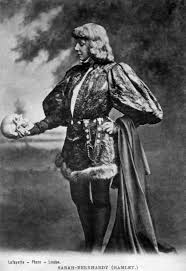
To be or not to be? Did Hamlet have the Mental Capacity to make that decision?

If the Mental Capacity Act was law in Denmark in the fourteen hundred’s would poor Hamlet have been able to make the decision, to be or not to be?

Let’s explore the troubles and musings of poor Hamlet, as scribed by Mr. William Shakespeare.

In the most famous speech from the play Hamlet is quoted as asking “To be or not to be that is the question?”

It is a question indeed! However, had the great Bard been following the Mental Capacity Act Code of Practice in an attempt to elicit an answer from Hamlet he could have phrased it a little more directly. Although he would not have been as poetic if he had!

If this question was posed in a Mental Capacity assessment it should surely read, “to live or die”, perhaps?

No! Still not useful enough I’d argue. It does not explain the decision that Hamlet needs to make. To live or die is a little bit too vague for the Mental Capacity Act. What does to live or die mean, to contract typhoid or not? To die in battle or live in the castle? To live or die does not describe the choice that is available.

No, we need to be specific about the decision Hamlet is being asked to make.

Let’s look at the what is involved in the questions as it stands – ‘to be or not to be’. Hamlet is pondering his life and death however the decision he is really pondering, for those who don’t know the story is, does he remain quiet about his belief that his uncle killed his father, or does he confront his uncle. Consulting his uncle will likely result in his death. That’s how they rolled back in those days!

So, the true decision that we are assessing Hamlet’s ability to make is, does Hamlet confront his uncle or not?

Just like in the real world of social work practice it takes us time to establish just what decision Hamlet is attempting to make. Sometimes it’s not as obvious as it first seems.

But let’s take a step back. Do we have a legal right to carry out an assessment in the first place? Remember the first principle of the Mental Capacity Act states that a person must be assumed to have capacity unless it is established that they lack it. Do we have any right to step in here and assess Hamlets capacity to make this decision? What right has the state to interfere in Hamlets decision making.

Let’s think about the Diagnostic Test. First, we must ask is there an impairment or disturbance in Hamlets mind or brain? This is the first part of the diagnostic test. There are two possible answers to this question. Shakespeare can maybe help us with some evidence. He tells us Hamlet saw and talked to his dead father who explained to Hamlet that his brother (Hamlets uncle) murdered him and then took his place on his throne and in his bed with his wife (Hamlets mother). I would imagine Hamlet has had easier conversations in his life!! So, either Hamlet was communicating with his dead father or he was suffering from stress induced psychosis and the first part of the diagnostic test is met. Now, from a cultural perspective we cannot rule out that Hamlet could feel able to communicate with his dead father but realistically this is unlikely. Based on the balance of probabilities (which is what the test demands) Hamlet was suffering from an impairment or disturbance in the mind or brain. The MCA relies on the legal test of the balance of probabilities and not on the criminal law test of beyond reasonable doubt. If it was the later we would be required to do some detective work about the existence of ghosts in the 15th century. Now, I’m not a psychiatrist, but, considering Hamlet lived some time ago and the events documented in Shakespeare’s play are more than likely fictional, I think I’m safe from any prosecution, so, I’m going to stick my neck on the line and say that I believe that on the balance of probabilities (and beyond reasonable doubt to be honest!) that poor Hamlet is suffering from stress induced psychosis.

Poor Hamlet has still though left us with a dilemma because there’s a second step to the diagnostic test. We are asking, has he got mental capacity to make the decision, to confront his uncle, or not? We can safely say he has an impairment of the mind or brain, however, does this meet the second stage of the diagnostic testis met? Namely, does his impairment effect his ability to make the decision?

The fact that he believes his dead father is visiting him and telling him to avenge his murder, and his murderer is his uncle who is now king of Norway and has illicit bedroom romps with poor Hamlets mother, is worthy of consideration. We are saying that the visions are a result of psychosis and he is troubled by them to such an extent that he is considering embarking on a course of action which he believes could end his life. The answer to the second question of the diagnostic test, does the impairment effect his ability to make this decision is surely yes. On the balance of probabilities, the impairment of his mind or brain is affecting his ability to make the decision to confront his uncle or not.

Diagnostic test met!

So now if we follow the Code of Practice we must move on to the functional test.  However, we need to pause before we rush into assessing poor Hamlet. How can we assess him if we have yet to establish what the relevant information pertaining to this decision is? If you’re thinking this is simply to live or die, you have not seen the play! Hamlet identifies many pieces of relevant information during his musing. Let’s break these down into the pertinent and relevant points that the law demands us do.

If we take a leaf out of Shakespeare’s book and write the relevant points in the form of a sonnet, we would be really overcomplicating the relevant points and making it harder for poor Hamlet to make a decision. We are applying the second principle here; A person is not to be treated as unable to make a decision unless all practicable steps to help him to do so have been taken without success.

A practicable step would be to break down the relevant points, so they are as clear and concise as possible, therefore giving Hamlet the best opportunity to make the decision. Let’s break down Hamlets famous speech into the key relevant points.

Hamlet states;

To be or not to be, whether ’tis nobler in the mind to suffer the slings and arrows of outrageous fortune, or to take Arms against a Sea of troubles,

Hamlet is really saying: should I say nothing and brood for a while or take action against the murder of my father

And by opposing end them: to die, to sleep No more; and by a sleep, to say we end
The heart-ache, and the thousand natural shocks That Flesh is heir to?

Hamlet is really saying: Any action against my uncle will end in my death.

 ‘Tis a consummation Devoutly to be wished. To die, to sleep,
perchance to Dream; aye, there’s the rub,
For in that sleep of death, what dreams may come,
When we have shuffled off this mortal coil,
Must give us pause. There’s the respect
That makes Calamity of so long life:
For who would bear the Whips and Scorns of time,
The Oppressor’s wrong, the proud man’s Contumely,
The pangs of disprized Love, the Law’s delay,
The insolence of Office, and the spurns
That patient merit of the unworthy takes,
When he himself might his Quietus make
With a bare Bodkin? Who would Fardels bear,
To grunt and sweat under a weary life,
But that the dread of something after death,
The undiscovered country, from whose bourn
No traveller returns, puzzles the will,
And makes us rather bear those ills we have,
Than fly to others that we know not of.
Thus conscience doth make cowards of us all,
And thus the native hue of Resolution
Is sicklied o’er, with the pale cast of Thought,
And enterprises of great pitch and moment,
With this regard their Currents turn awry,
And lose the name of Action.

Hamlet is really saying: is there life after death?

If we used Shakespeare’s language to try and explore this most of us, I’d imagine, may be presumed not to have the mental capacity to make this decision as, I bet there are very few readers who understand all that Shakespearian narrative. There’ll be even fewer who can retain it all long enough to make a decision by weighing it all up. So, after a lot of poetic warbling from a self-obsessed man in his thirties we are left with the following relevant pieces of information that Hamlet needs to be able to understand retain and weigh, if he is able to make this decision

  • Hamlet believes, he will suffer if he takes no action,
  • If he takes action against his uncle he will likely die.
  • His views on life after death?
  • He may be experiencing a psychotic episode.

So, we now have our question – should he confront his Uncle or not? We have completed the diagnostic test and we have identified the relevant information. The question we need to ask now is can Hamlet understand the relevant information. And this brings us onto the next stage of the Mental Capacity test – a person is not to be treated as unable to make a decision unless all practicable steps to help him to do so have been taken without success.

Can Hamlet understand the relevant points?

Based on his musing I am fairly confident that he understands the first three relevant points and there is further evidence from the play that he understands the concept of psychosis. Based on the balance of probabilities I would imagine anyone reading this would reach the same conclusion namely that Hamlet can understand the four relevant points in order to make his decision.

Can Hamlet retain the relevant points?

We did not identify anything in the second part of the diagnostic test that would suggest that Hamlet has any difficulty retaining information. Also, he went beyond retaining the relevant points when he retained an eloquent speech Shakespeare gave him which I cannot do despite years of attempts!! Based on the balance of probabilities Hamlet is able to retain the information long enough to make a decision.

Can Hamlet use or weigh up the relevant information

Clearly Hamlet could use the information and weigh up the first three points. He uses the English language to such beautiful effect to describe his weighing up. He is clearly weighing up the differences between living and dying, that is not in doubt. However, Hamlet is not taking into account his psychosis and therefore he is not taking into consideration the impact of this when making a decision about a course of action that will likely result in his death.  Therefore, based on the balance of probability he cannot use or weigh up the relevant information when making this decision. There’s the rub!

Can Hamlet communicate his decision?

Hamlet does later in the play, although not simply or directly, however, he eventually makes a decision after much procrastination and decides to confront his uncle. Therefore, based on the balance of probability Hamlet could communicate his decision.

Overall, I’d suggest, based on the balance of probability Hamlet was unable to make a capacitated decision regarding whether to confront his uncle, or not. Hamlet did confront his uncle, and [spoiler alert] after watching the play it could be argued this was not the best course of action. If we did apply the Mental Capacity Act to Hamlet the best interest decision would definitely not be to support him to confront his uncle in the way that he did. I believe a best interest decision would be for him to receive support from mental health services and possibly some family group work may have been in his best interests!

There’s one thing we haven’t yet considered. Was the decision he made to confront his uncle a wise or unwise decision and was he exercising the third principle – A person is not to be treated as unable to make a decision merely because he makes an unwise decision?

The answer is of course no. He did not have capacity to make the decision so it could not be an unwise decision. Hamlet made an incapacitated decision not an unwise one. If he had capacity and confronted his uncle, given the possible ramifications, it could be argued that his decision was unwise.

[Spoiler Alert!] Hamlet and almost everyone else in the play die in an horrendous tragedy. If the Mental Capacity Act had been around in Denmark in the 14th century it could have been a different story and we would not have had the play Hamlet or the Disney movie The Lion King, which had a somewhat happier ending. After writing this and spending far too long thinking about applying modern English law to a fictitious situation in mediaeval Denmark, I have come to the conclusion that further analysis is required! Would the Mental Capacity Act be the appropriate legislation for the situation? If it were would a best interest decision lead us to Deprivation of Liberty with Hamlet locked up in a tower!? That discussion is for another time! Surely though the Mental Health Act should have been used in this situation, don’t do you think?

Jamie Scorer
Jamie has worked in social care for 30 years. He is a qualified social worker, and currently works in a local authority as a senior social worker in a MCA/DoLS team. Jamie also works as a visiting lecturer with local universities