It’s really difficult to figure out where to buy things for the best. Companies sometimes aren’t what they seem. How do you factor in all of the costs for a product? How do you figure out if a product is ethical or the company that produces it is ethical? And why am I talking about this on my self-care page?
Well, I think that self-care is rooted in values. Self-care is not selfish. Looking after yourself first is important but once you have that sorted then you need to think about looking after other people and things. The planet is high up on the list of things I want to look after. So as self-care, I feel, is about living a life that aligns to your values I want to do what I can to align what I can to my values as closely as I can. This is not going to be perfect and is a work in progress… so before you start with ‘ah but, yes but….’ bear that in mind. I still eat avocados. But have it under review while I figure what, if anything, I can do. They are really good for you (and lush) – so what do you do?
As ever my maximum is small steps over a long period of time have big impacts. So far I’ve started having my milk and eggs delivered by a local producer rather than buying from the supermarket… and a few other things. Let me tell you
My strategy is this. Buy local from independent retailers or producers. Then, buy from national independent retailers and producers. Then, buy local from larger organisations. Then buy national from larger organisations. Then global if ya gotta!
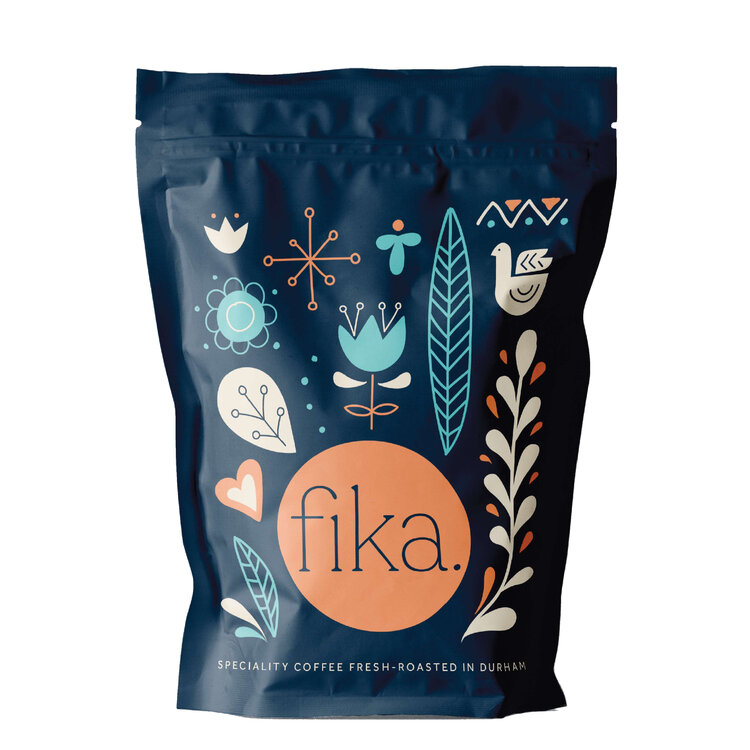
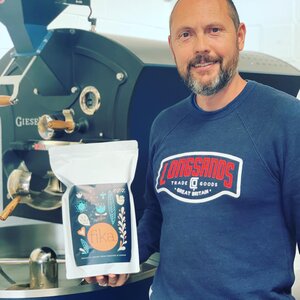
This lead me to discover a coffee roaster in a little village close to where I live. Fika! Matt and Lynn are the founders of the company because… as they put it…..
“we’re mad about coffee.”
They also go on to say “We also have great respect for the land and the people that farm it to bring the best quality speciality coffee to the UK. Fika means a social break in Swedish and our brand is inspired by Swedish folk art but our love for coffee actually originated from a six-year stint in Melbourne. We’re based in the fine cathedral city of Durham and are super excited to open the city’s first speciality coffee roastery so if you’re ever in town, please drop by or call in advance for a special sneak peek into the wonderful world of coffee roasting.”
And I’m currently trying the Fika East Timor – Cristo Liuria – which is devine. Click the link to find out more about East Timor and it’s coffee growers. It’s the kind of information that Fika provide alongside selling me coffee that I love as I can find out where my coffee is coming from and the positive impact (however small) my purchase may be having.
There’s also some great advice on the Fika blog about making your brew. Try this – To plunge or not to plunge?
So while I’m not exactly buying local – in the sense the coffee comes from Brazil and East Timor – I’m buying from a local company that strikes me as being interested in the growers with an ethical eye. My purchase is also stimulating the local economy rather than lining the pockets of some corporate giant. That makes be feel pretty good. Oh… and Matt and Lynn seem to be lovely people! That helps as well!
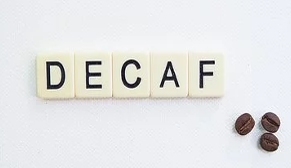
One of the first things I do on a morning is make myself a cup of coffee. A well-known brand of instant coffee granules and splash of skimmed milk, then I settle in my armchair to debate the morning’s news. It helps me wake up and enables me to face the day ahead, especially during the week, when the day ahead entails doing good deeds! It dawns on me that I’m using caffeine to kick start my day, but would de-caf coffee do the same? Is there any difference between fully caffeinated or de-caf? Which is better for you? Lets take a closer look.
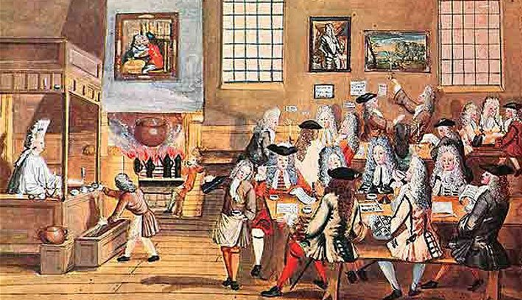
Background to Coffee in The
UK
The first coffee house to open in
the UK, was in Oxford, England AD 1652. Later the same year one opened in
London and from there onwards, they became fashionable places to meet, conduct
business, and ‘see and be seen’.
A cup of coffee cost a ‘penny’
and coffee houses soon became known as ‘penny universities’. In London alone,
by 1739, there were over 550 coffeehouses, however by the end of the same
century tea became the new fashion and coffee became less popular.
London Coffee House in the 1700’s
The Temperance Movement during
the reign of Queen Victoria brought back to life coffeehouses as a suitable
alternative to public houses for working class people to meet and socialise and
so coffee regained popularity. It was not until the late 20th century that
coffee houses took on the status we know today with the rise of companies such
as Costa, Starbucks and Coffee Republic, (info taken from Ben Johnson, Historic
UK).
The British Coffee Association
states in the UK, we consume approximately a whopping 95 million cups of coffee
a day (I think I drink about half of those Lol! – Stephen). 80% of UK
households buy instant coffee for in-home consumption, whilst 80% of people
visit coffee shops at least once a week and 16% visiting them daily.
Background to De-caf
That’s a lot of coffee! Coffee beans that have had at least 97% of
their caffeine removed is referred to as decaffeinated. The first known
de-caffeination process is known to have been invented by Ludwig Roselius, a German coffee merchant in 1903 with
him patenting the process in 1906.
“The Roselius Process” involved rinsing coffee
beans with a water / salt solution, (brine) and Benzene. Benzene is no longer
used as it is highly toxic and known to be carcinogenic. There are 4 main decaf processes, all of which
continue to use water.
Direct
Solvent Based Decaffeination Process involves steaming unroasted
coffee beans before rinsing them in a solvent, usually either methylene dichloride or ethyl acetate extracting the caffeine
whilst leaving the other ingredients unharmed. The process is repeated until
the desired amount of caffeine remains to meet the required standards to enable
the product to be named de-caff (Ramalakshmi and Raghavan, 1999). In Europe,
soluble/instant coffee must contain a maximum of 0.3% caffeine to enable it to
be labelled as de-caf.
Indirect
Solvent Based Decaffeination Process involves
soaking coffee beans in hot water for several hours to extract
as much of the caffeine from the beans as possible. The beans are then removed from
the water before Methylene Chloride solvent is added to the liquid in order to bond
with the caffeine which form a compound which is skimmed from the surface of
the mixture. The coffee beans are re-introduced to absorb the de-cafeinated
liquid, (Kencaf, 2016).
Swiss
Water Process involves combining
green coffee extract, (GCE a solution containing the
water-soluble components of green coffee which has had the caffeine removed)
and caffeine rich green coffee. Gradient pressure forces caffeine molecules to
migrate from the caffeinated coffee to the green coffee extract.
Once
the green coffee extract is caffeine rich, carbon absorbers are used for percolation
in order to attract the caffeine molecule from the GCE. Once GCE is once again
lean of caffeine it is then used to remove additional caffeine from the green
coffee and the whole process is repeated with a new batch. The process takes
around 8-10 hours, (Emden, 2014)
Carbon Dioxide Decaffeination Process involves steaming green coffee
beans. The beans are then added to a high-pressure vessel that is sealed and
liquid Carbon Dioxide, (Co2) forced into the coffee at pressures of 1,000
pounds per square inch to extract the caffeine, (Lorenzo 2014).
Carbon dioxide aids the dissolving of caffeine
drawn from the beans. The caffeine laden CO2 is then transferred to another
container where the pressure is released and the CO2 returns to its gaseous
state, leaving the caffeine behind. The caffeine free CO2 gas is pumped back
into a pressurized container for reuse (Ramalakshmi and Raghavan, 1999).
Caffeine is it good or bad for you?
Kick starting the day with a large cup of
coffee is not just a hug in mug, it literally does help wake us up. Caffeine
helps open our airways allowing increased blood flow to muscles which tighten
in readiness for action. Caffeine also increases our blood pressure, the liver
releases sugar into the bloodstream thus giving us a surge of energy. In a
complex physiological process, caffeine helps the body prepare for upcoming
activity, pretty similar to the way the body responds to “fight or
flight” response to danger.
Cappelletti, et al (2015) claim after water,
coffee worldwide, is the most consumed beverage with people drinking approximately 1.6 billion
cups a day.
Some benefits of caffeine include:
Improved Mood, reaction time, memory and mental
function (Nehlig, et al 1992)
Increased metabolic rate and fat burning,
(Bracco et al, 1995)
Enhanced athletic performance, (Doherty and
Smith, 2004).
Benefits of De-caf
In the west, coffee is the largest source of antioxidants
according to Liang and Kitts (2014). One of the things to understand is de-caf
is not 100% caffeine free, however, generally it tends to be milder in taste
and smell than regular coffee. Despite its reduced caffeine content, Buscemi et
al (2010) claim de-caf coffee still contains similar amounts of antioxidants,
albeit slightly lower in volume.
Antioxidants
Antioxidants help combat free radicals which are
basically waste products from physiological chemical reactions within the body,
when these reactions build up on the bodies’ cells, it can lead to oxidative
damage. Oxidative damage has been linked with health conditions such as heart
disease, cancer and type 2 diabetes. (Healthy Options, 2019)
Is there much difference healthwise between the
two?
Studies seem to indicate both caffeinated and
de-caf coffee may have similar health benefits when it comes to health
conditions such as Type 2 Diabetes, Liver Function Aging and Neurodegenerative
Diseases, whilst decaf is noted as being more beneficial with reducing reflux
acid and risks associated with rectal cancer, (Bjarnadottir, 2017).
Does Caffeine have the edge?
Whilst de-caf has a massively reduced caffeine
content, it is only natural the benefits of caffeine will be more prevalent in
fully caffeinated products. But then again there has been more research done
around the health benefits of caffeine over de-caf !
Some people’s central nervous system can become
overwhelmed with too much caffeine, thus experience anxiety, restlessness or heart
arrhythmia, so those with chronic heart disease should probably tend to limit
caffeine intake, (McCusker et al, 2006)
Conclusion
There is simply no denying coffee is a firm
favourite with the nation and will continue to be so for the foreseeable future.
From what I can see in reality I don’t seem to think either de-caf or
caffeinated coffee have much difference to them in terms of health benefits. I
can always remember years ago watching a documentary showing the process for
stripping caffeine from coffee beans and thinking probably safer to just drink
normal coffee!!
Although I must admit doing the research for this blog has given me a better understanding of the de-caf process and I will look towards the de-caf variety again moving forward. But for now, I’m going to pop the kettle on and make a cuppa whilst I ponder further. Care to join me?
There are lots more interesting coffee facts here from our good friends at Happy Barista
By Lisa Watson, Co-author of, How to Thrive in Professional Practice: A Self-care Handbook – click here
Bjarnadottir, A, (2017),Decaf
Coffee: Good or Bad? https://www.healthline.com/nutrition/decaf-coffee-good-or-bad
accessed 19.03.2020
Bracco, D, Ferrarra,
J.M., Arnaud,
M.J.,Jéquier, E and Schutz, Y
(1995) Effects Of Caffeine On Energy Metabolism, Heart Rate, And
Methylxanthine Metabolism In Lean And Obese Women in The American Journal of Physiology 1995
Oct;269 https://www.ncbi.nlm.nih.gov/pubmed/7485480
Buscemi, S., Batsis, J.A., Arcoleo, G. and Verga, S. (2010) Coffee And
Endothelial Function: A Battle Between Caffeine And Antioxidants? in
European Journal of Clinical Nutrition. 2010 Oct;64(10):1242-3.https://www.ncbi.nlm.nih.gov/pubmed/20664622
accessed
23.03.2020
Doherty, M. and Smith, P.M. (2004) Effects Of Caffeine Ingestion
On Exercise Testing: A Meta-Analysis in International Journal of Sports
Nutrition and Exercise Metabolism 2004 Dec;14(6):626-46.https://www.ncbi.nlm.nih.gov/pubmed/15657469/
accessed 23.03.2020
Emden,
Lorenzo. “Decaffeination 101: Four Ways to Decaffeinate Coffee”
Coffee Confidential. Retrieved 29
October 2014.
Liang,
N. and Kitts, D.D.(2014) Antioxidant Property Of Coffee Components: Assessment
Of Methods That Define Mechanisms Of Action in Molecules. 2014 Nov 19;19(11):19180-208.
https://www.ncbi.nlm.nih.gov/pubmed/25415479
McCusker, R.R., Fuehrlein, B.,
Goldberger, B.A., Gold, M.S. and Cone, E.J. (2006) Caffeine Content
Of Decaffeinated Coffee in Journal of Analytical Toxicology (2006)
Oct;30(8):611-3.
Nehlig,
A., Daval, J.L and Debry, G. (1992) Caffeine And The Central Nervous System:
Mechanisms Of Action, Biochemical, Metabolic And Psychostimulant Effects in
Brain Research Brain Research Reviews. 1992 May-Aug;17(2):139-70 https://www.ncbi.nlm.nih.gov/pubmed/1356551 accessed 23.03.2020
Ramalakshmi,
K. and Raghavan, B. (1999). “Caffeine in Coffee: Its Removal. Why and
How?” in Critical Reviews in Food Science and Nutrition. 39 (5):
441–56.