Procrastination!

My favourite meme that I have seen about procrastination is that it is ‘The art of ruining your life for no apparent reason!’ Whenever I say when I’m speaking to people about being organised it always raises a smile. It’s one of those statements that resonates with us all! But why do we procrastinate when we know it’s so unhelpful!? There are a number of reasons.

The Job Looks Too Big

If a task looks too big we are unlikely to have a single slot in out busy lives in which to undertake the task. If we can’t find a slot we put it off until we absolutely can’t put it off any longer and then we have to work late or pull an all-nighter. This is not a good approach! The secret is to break the task down into its constituent and smaller parts. The steps you will need to take to complete the big task. This makes it easier to slot each step into a pocket of time when we’re planning – allocating time to task. This means we chip away at the big task by doing each steps and this fuels motivation because we really feel then that we are getting somewhere.

The Job Looks Too Difficult

Sometimes we don’t have (or feel we have) the skills or the knowledge to do the task – or there’s ambiguity in the instructions. We put off asking for advice or acquiring the knowledge because we don’t want to look like we don’t know what we’re doing – then eventually – we look like we don’t know what we’re doing because the task didn’t get done! Always seek advice. That’s a much better strategy than putting the task off.

The thing we need to do is not causing us ‘imminence pressure’

“Oh that thing! That’s ages off yet!” Bet you’ve said that! We all have. And then all of sudden ‘ages off’ is tomorrow!

Planning brings the future into the present so we can do something with it and consider the enormity of the task at hand. We can then break it down into its parts and diary the parts. Sometimes we underestimate how long something will take – we do this a lot with big tasks the psychologists tell us – and then when we have to do it at the last minute we find we haven’t got enough time. Going through the process of breaking the task down helps us work out just how much time we actually need.

We don’t have what we need to get started

When this happens it’s usually because we’ve not planned effectively. The point at which you set about starting the task is not the time to make sure you have everything. You need to plan and organise so that you have what you need available to you at the point in time set aside to do the task.

You can’t plan and do at the same time – they require different sets of mental skills – time spent in planning is paid back when we get to the doing.

Tim S Grover in his book Relentless says this that seems to resonate with peopl…… Do the work. Every day you have to do something you don’t want to do. Every day. Challenge yourself to be uncomfortable, push past the apathy and laziness and fear. Otherwise, the next day you’re going to have two things you don’t want to do, then three and four and five, and pretty soon, you can’t even get back to the first thing. And then all you can do is beat yourself up for the mess you’ve created, and now you’ve got a mental barrier to go along with the physical barriers.

Those who can achieve flow procrastinate less

Those who plan overcome procrastination. They have less ‘Boundary Moments’ – the point at which a decision is required. You’ve made the decisions in advance so can get to the doing of the next task without thinking ‘what next’. The less obstacles we put in our way – the fewer times we have to make a decision about what to do next – the less likely we are to procrastinate.

Right Gear, Right Place, Right Task

Croytec Land Rover: Puma Gear and Transfer Stick Assemblies

The key skill I advocate for people to engage with for being productive – and by that I mean living your best life (not just work!) – is planning. You will consistently fail to put yourself in the right place at the right time for the right task if you don’t plan meticulously.

Planning means that you are where you need to be when you need to be there and in the right gear for the task. Being in the right gear also helps you to relate effectively to those around you. As well as knowing the ‘what to do’ and ‘why to do it’ of self-care we need to think about the when and where of self-care. We also need to be mindful of the impact we have on the self-care of others – both positive and negative. Remember, when I say self-care I don’t just mean the stuff you do to rest and recover. I also mean the self-care you engage in by being ready for tasks. In the right frame of mind and in the right place. Free from distractions if that’s what you need!

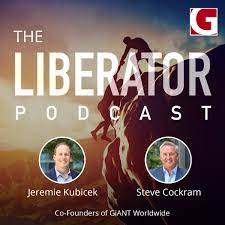
I keep mentioning gears – so let me tell you about this model that I heard about from….theGiANT Liberator Podcast hosted by Jeremie Kubicek and Steve Cockram. Find it here.

The Gears idea is not my idea. It is there’s. Although I’ve modified it slightly as I didn’t quite agree with a couple of points (despite their worldwide success!)

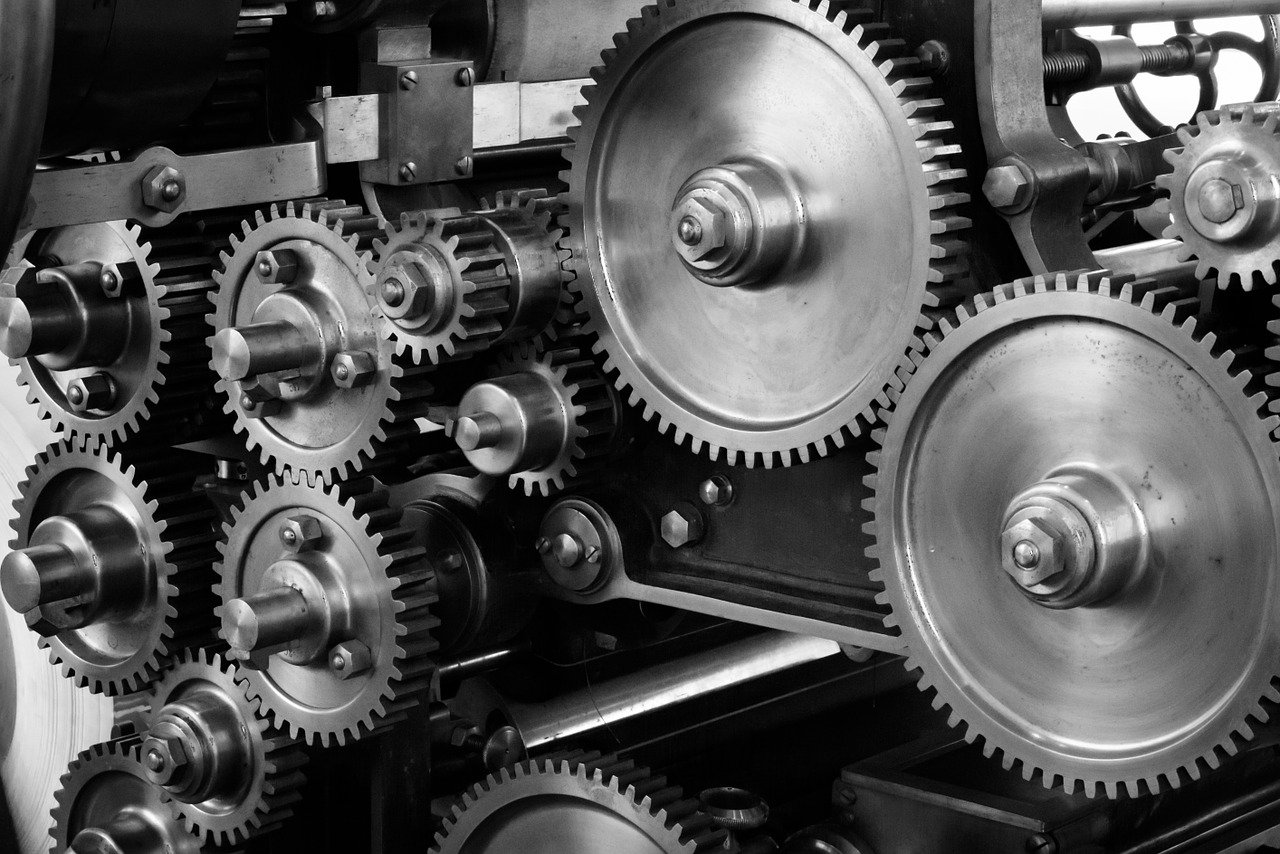
They suggest we spend our time in one of 5 gears – like the gears in a car. And it’s crucial to be in the right gear at the right time and in the same gear as those around us. So let’s have a look at what they say about the gears – slightly interpreted by me!

Take rest, to work better

1st Gear: Rest and recuperation

In a car first gear gets you going from a stationery position. First gear helps you get started. Going into first gear will also slow you down (ask anyone who has gone to change into 3rd gear in a car and hit first instead!) And first gear give you lots of control. When you want to do a tricky manoeuvre you need to be in first gear. So this is the gear to be in to get started or to move into to slow down to rest and recover.

It’s so important not to see self care as a ‘fall out’ option – it’s not something we need to do when we’ve ran out of energy, resolve, or personal resources. It’s something we do to maintain those things as best we can and we have to go to it before we hit problems – it’s a whole life thing. So getting into first gear regularly is very important.

We need to rest physically and mentally as good rest restores our attention to task. The problem with rest is we don’t do it often enough. Caroline Webb suggests we need a pit-stop strategy. We need micro pit-stops – a few minutes here and there for a quick recharge. Then a medium size pit strategy maybe at lunch time to replenish resources for the afternoon. And then a macro pit strategy for evenings and weekends. What are you going to do when you have a pit-stop to recharge?

Being outdoors is good for beating stress. Research has shown that from a psychological perspective it can be more effective than indoor exercise particularly around managing every day hassles and feeling mentally well balanced. Being outdoors in the early morning sunlight primes the process for sleep at the end of the day. Walking for 30 minutes beats stress and means you’ve already had some great physical exercise without barely trying. Walking mindfully, and deep breathing, is good for you. Research with social workers who engaged in mindfulness showed a reduction in sickness and stress levels…. suck in that fresh air!

The Lessons Being a Childless Woman Has Taught Me About Families

2nd Gear: Family and friend’s time

How we spend our time resting can be both a solo activity and an activity with others – rest is sometimes about actively engaging (trips out, going for a walk with others) as well as taking yourself away (journaling, meditation, walking on your own). Spending time with family is so important for our well-being and relationships. Been in 2nd gear when you’re with your family and they are in 2nd gear is essential.

In 2017 researchers Izenstark and Ebata wanted to see if time outdoors led to better attention on tasks and a strengthened a family bond. They selected mother-daughter pairs where the daughter was between 10 and 12 years old. Firstly, they were tasked with going for a walk outside or around shopping centre. Their ability to attend to a task was tested before and after the walk and then they were asked to play a game together that required teamwork.

Those who benefited the most were the mother-daughter pairs who had walked in the natural setting rather than in the shops. Positive interactions between mother and daughter improved after the outdoors walk. Attention was improved for the mothers during the nature walk and during both walks for the daughter. The nature walk created a positive impact on both cohesion and closeness. The mothers and daughters were unanimous – the nature setting was more relaxing or as psychologists call it – Softly Fascinating.

How to get on with your work colleagues - Lincoln College

3rd Gear: Social Connections (Friends Family & Colleagues)

I’m thinking here of the time you spend with colleagues particularly, not doing the work but socialising. Time spent socialising in work settings or during breaks at work is really important. The relationships we have at work have an impact on overall quality of life but also on the psychological safety we feel in those places. That’s the ability to feel comfortable enough with a group of people that you bring your authentic self to the work you do. You feel comfortable sharing all of your ideas and are part of the team. That chat making coffee or at the water cooler is so important.

The connections we share beyond our most intimate family and with our friends are also important for our well being. The secret in the workplace is to not let people in 3rd gear get in the way of you when you are in gears 4 and 5.

Sitting in Front of the TV May Be Worse for Your Heart Than Sitting at a  Desk | Live Science

4th Gear: Work Tasks

The ‘Work Tasks’ I’m thinking of here for 4th Gear are all of those things that you need to do that maybe connect you to other people or get things organised for the day. Your planning time, quick conversations with colleagues or your manager to check things out, emails, phone calls. Short tasks that you need to do to get things moving forward or to keep things moving forward. But not your ‘Deep Work’ tasks. They are for 5th Gear. You should start your day in planning mode – visualising you day, checking you have all the things you need to hand for all of your tasks, and at the end of the day making sure all is in order for tomorrow. This helps you connect at the start of the day with tasks you need to do and then disconnect from work at the end of the day – so you can leave it behind.

7 ways to stay focused at work

5th Gear: Deep Work

Deep Work is the work that needs your absolute focussed attention to the elimination of all distractions. Work that requires you to be in ‘flow’. Crucial here is right place and right time for the right task. You can’t do Deep Work if you are wondering whether everything is sorted for later or tomorrow or tonight or if there are unmanaged emails – that’s why you have to move through the gears in order. You can’t do Deep Work effectively if you are constantly being interrupted.

Gear Problems

Our relationships with people and tasks work best when we are in the right gear at the right time for the right task – and in the same gear as those around us and when in social environments or communal environments (workspaces or with family friends and colleagues) we are in the same gear.

Imagine you’re in 4th Gear – working on your planning or short tasks or 5th Gear Deep Work. Maybe you’re writing a report or you’re deep in reading something – getting stuff done – and someone enters your workspace in 3rd Gear (Social Connections). ‘How was your night’ ‘Did you see that thing on the TV’ ‘You’ll never guess what happened to me on the way in’ ‘do you want a coffee’. You have a choice – either stay in 4th or 5th gear and try your best to stay focussed (difficult!) or you change down to 3rd gear and match them causing you to stop work. Now – there are positives and negatives in every situation – I don’t knock work based conversations for beating stress – but there is an impact. This is particularly difficult in organisations that allow us to work flexibly. I’m a 7.30/8 person for getting into work – so by the time some of my colleagues arrive at 9/9.30 I’m at least in Gear 4 or even Gear 5. They are in Gear 3 hell bent on getting me to engage. The problem with human nature is that we don’t like to ignore people, so we change down and stop what we are doing – this means we take a productivity hit because of the actions of someone else. We need to be mindful of this.

Later in the day….. Imagine you need to be in 5th Gear because you’ve got some deep work to do – that report to write – and the chatter keeps dragging you back to 4th Gear or 3rd Gear. The irony is it’s often someone off-loading – often about how much they have to do and how they wonder how they are even going to get it done! They are not getting on with their task and now they’ve stopped you! Right place for right task! If you need quiet find quiet. My hope, as one of the consequences of this last year is that organisations can see that people do get stuff done when in other places. Deep work needs quiet. For some quiet is at home. Or maybe we need some sort of isolation booth in the office for people to deep work in. One thing is for certain, noisy open plan office environments are not good for deep work. They are good though for collaboration and idea exchange and professional support – so I’m not knocking them…. Right place for the right job.

Another example….. you get home and everyone else is in 2nd gear – family time – and your head is still at work in 4th gear – working mentally on all of those unfinished and unmanaged tasks – collision course! Right place for the right task – this is your time and your family and friends time. Maybe you’re at home and you feel the need to check your work emails dragging yourself into 4th Gear when you should be in 2nd gear or 1st. We need to think carefully about the message this sends to the people around us.

So, we need to move through the gears

You start the day coming out of a period of rest – you will have been asleep (Gear 1) – you may even do some Gear 1 activities when you start your day – quiet cup of coffee, or read a book, maybe some yoga. You may well then move into Gear 2 and connect with those around you before heading off to work where you will hit Gear 3 and maybe pass the time of day with colleagues. You will then need to move into Gear 4 – planning, emails, short tasks and then eventually you will settle down into Gear 5 Deep Work. You will move between 4th and 5th Gear throughout the day and slip into 3rd Gear for lunch. At the end of the day you will come down to Gear 4 and deal with short tasks that have accumulated while you have been Deep Working. You will change to Gear 3 as you bring your working day to an end, then into Gear 2 as you connect with family and friends and then Gear 1 as you rest. You might, on an evening or a weekend, drift between Gears 1, 2, and 3, but what is crucial is right gear for the right ‘job’. Right gear allocated to the right time, and being conscious of the gear those around you are in.

Structure is everything to generate flow. Flow is the art of being in the moment to the exclusion of everything else – with your family totally, with your colleagues totally, one your own totally for deep work or for rest. Planning and routine are the dominant forces in this area

Right gear – right environment – for the right task – at the right time

That takes planning

Set your Intention for the gear you are in – Pay Attention – Rest – Repeat

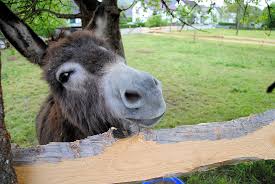
Don’t be a procrastinating donkey!

There’s a parable of sorts, a metaphor maybe, about a donkey. The donkey in the tale is stuck. He is both ravaged with thirst and famished with hunger and he is equidistant between the water trough and the hay bale. The donkey in this tale of woe was proposed by Jean de Buridan, and is indeed named after him – the Buridan Donkey. He proposes that, disabled by indecision, the donkey becomes stuck and doesn’t know whether to satiate his hunger or quench his thirst. As a consequence, he dies. Stuck between a rock and a hard place!

It has amazed me, in a really positive way, how during lockdown many people have taken up exercise. The streets around where we live are positively strewn with people who I’ve never seen out running, cycling, or walking before. We walk the dog several times a day and I run regularly so you get used to the faces and lots of these faces are new. Turns out all it took was a pandemic, a lock down, and a suggestion from the Prime Minister (…well he has to be good for something!) to motivate people to get out and exercise. It’s great! If only someone had nudged the donkey one way or the other (probably towards the water first!) the donkey would still be alive. (Disclaimer: to my knowledge no real donkeys were harmed during this thought experiment!)

How many times is it like that for us? We want to get on with something, yet we don’t, we procrastinate. We find other things to do. Easier things. We talk about this in our recently published book How to Thrive in Professional Practice. Here’s an excerpt that talks about this idea from the chapter on motivation:

Steel (in Levitin, 2015 ) says we procrastinate because, in the moment, we have a low tolerance for frustration – so if something appears difficult, we will tend to put it off. When we do initiate a task, we tend to choose the easiest tasks rather than the ones that will give us the greatest reward in the long term. He suggests that there are two problems with the human mind. First, we think life should be easy, so we have a tendency to put off difficult things and, second, our self- worth is bound up in our success. If something looks like it is going to be difficult and there’s a risk we might not do it well then we put off doing it. There’s an obvious link here to Deci and Ryan’s idea of mastery that we’ve just considered.
(Mordue et al, 2020, pg. 127)
…..always wanted to do that! First time I have! Yay!

Picking up where that paragraph leaves off Deci and Ryan are talking about achieving flow, and the three things they say we need to achieve flow are Mastery, Autonomy, and Purpose. When we don’t have these things we may not be able to get into flow or even get started with the task to hand and will procrastinate and put the task off. “You may delay, but time will not”, as Benjamin Franklin is reported to have said.

So, what can you do….

There’s more in the book 😉 [Buy your copy here!]

The key points are:

If Mastery is the issue, if you feel unable to complete the task then seek advice. Don’t put off. Go to someone who can help you. It seems simple but we don’t do it because we don’t want to look incapable. But how more incapable do we look when we do a poor job. Go and ask someone. Then, be in control of your development. Explore what you need to do with others, ask for help, and figure out if you need some training.

If Autonomy is the problem, then explore where you do have control. Some things are outside of our control, but we still need to do them (more below under Purpose). Some things are completely under our control – do I do this now or later (see the same bit below under Purpose!). Some things are not fully under our control, but we have influence. The influence is where we have control. “Do I have to do this now or can I make a case that it would be better done at another time?” (See the same bit below under Purpose!!!) The secret, Stoic philosophy would tell us, is to focus on the bit you can control and as Massimo Pigliucci (in video presentation I watched recently on iai.tv) said “bet your happiness on those things”. We have no choice other than to take the stuff we don’t control just as it comes, because, well, we can’t control it. (Note: This doesn’t mean we shouldn’t challenge the status quo…. That would fall under the category using our influence which is completely under our control… but it might not get you anywhere…. But don’t stop trying… in the meantime you have to accept it….)

If Purpose is the problem, then be aware it’s often a problem for us all. So, don’t beat yourself up. Our lazy brains (see Chapter 8 in the book for a layman’s summary, or ‘Thinking, Fast and Slow’ by Daniel Kahneman for a comprehensive view from the master!) like easy things so we don’t see the advantage of doing something right now that’s difficult that doesn’t need to be done right now. We prefer to do something easy. The problem is that if we don’t do those things that are due in the future, they eventually become due today, and we’re left manning the panic stations and feeling stressed. You need to accept that long term gains are more important that short term gains. Imagine it’s Monday and something is due on Friday, and you do it on Monday, and on Thursday your boss says, “don’t forget I need that report tomorrow”. And you say “yes, no problem”, because it’s done!! Of course, you don’t tell them it’s done… you play the office game. Because if you tell them it’s done then they’ll start giving you shorter timescales…. Ssshhhh just saying 😉

So, if you have the time, do it now.

Don’t put it off simply because it’s not due for a while. This, for me, is where I really started feeling in control of my work. If I had a due date, I set myself my own due date which was before the actual date and I aimed for that. And once I started getting things done in that way not much ever crept up on me.

There are other things you can do to help!

The “How to Eat an Elephant” idea of breaking down big tasks into smaller tasks

The 2-minute rule that gets small tasks done

….and others, that, you guessed it, we cover in the book 😉

Recommended Reading:

Daniel Kahneman Thinking, Fast and Slow

Massimo Pigliucci How to be a Stoic

Daniel Levitin The Organised Mind

And obviously!

Mordue, Watson, and Hunter How to Thrive in Professional Practice

Game plan!

Image result for rugby world cup 2019

One of the commentators said, after the terrific England win over New Zealand in the Rugby World Cup Semi-Final (Saturday 26th October) “Game plan executed to perfection”. This comment and some other things about the game tell us a lot about being productive and getting results.

Firstly, like the commentator said, they had a plan, and once they had a plan they got on an executed their plan. No doubt they adjusted it here and there as they played but they had a plan. To be productive you must have a plan. David Allen, productivity guru, says you can’t plan and do at the same time. The England team didn’t take the field thinking “tell you what, we’ll just work it out as we go”. No they figured it out before hand. Figured out what they were up against. Figured out what to do about it. And then did.

Figure out what you need to do.
Plan how to do it.
Then, and only then, do it.

Image result for fail to plan plan to fail

Mihaly Csikszentmihalyi classic book ‘Flow’ develops the idea of being in the moment to the exclusion of all other things. Being prepared and focussed on the environment you are in and the job at hand so that you do your best work. In Drive by Daniel Pink, Pink builds on this idea talking about the key components that promote flow.

Mastery –
You have to be a master of what you are doing. The England team are among the best rugby players in the world. They are masters. And you will be a master (or developing master at least) of what you do. Learning about, reading about, and engaging in what you do will create mastery. Immerse yourself in the knowledge in your field.

Autonomy – each player on the pitch was acting as an individual making their own decisions about whether to pass, or kick, or tackle. They are part of a team and they have the interest of the team at heart but they act with autonomy. You may work in a role where you feel you don’t have much decision making autonomy but you do have autonomy over how you work, how you structure your tasks, and your day. Figure out the autonomy you have and work with it. With autonomy comes responsibility. Responsibility to be organised and ready to do your job to the best of your ability. Just like the rugby players.

Purpose –
What drives you? What motivates you? For the rugby players it’s winning the game, playing well for the team. For you it may well be doing a good job. It equally could be getting organised to get stuff done so that you can leave on time to spend time with your family. What we know is things like that – motivation that comes from within – is much more effective at motivating you than external, top down, motivation – for example just doing it because the boss told you, or working to a deadline. What motivates you from inside? Figure that out and you will be more motivated because you will have purpose.

Connectedness –
You need to be connected to whatever you need to be connected to in oder to make things work. You will probably need to be connected to others. This is good for you. Working together, having others support you with what you need, and supporting others is all good for productivity and well-being. But also you need to be connected to your environment. Aware of everything yet focussed exclusively on the one thing you are doing now. The rugby players were focussed in the moment on a single task. Getting into position, passing he ball, forming the scrum. But with an awareness of the bigger picture. What was the game plan? What was the next move? What were the options? Connected to the big picture but being productive in the individual moment is essential to productivity.

So get your Game Plan on –
Get Organised –
Plan it and then do it