10 things to make 2023 great!

2023 is set to be a great year don’t you think! There are some things that I need to absolutely focus on! There are some things I need to do better and there are some things I could do with doing a little less! Now though is a good time for me to embarking on a mission of self improvement. Things are settled. We’re in our new house and have managed to get done some of the things that needed doing and this will hopefully free up some time, some enthusiasm and some psychological capacity to achieve more. Here are the things I’m going to do and I’d urge you to do!

Get outside more
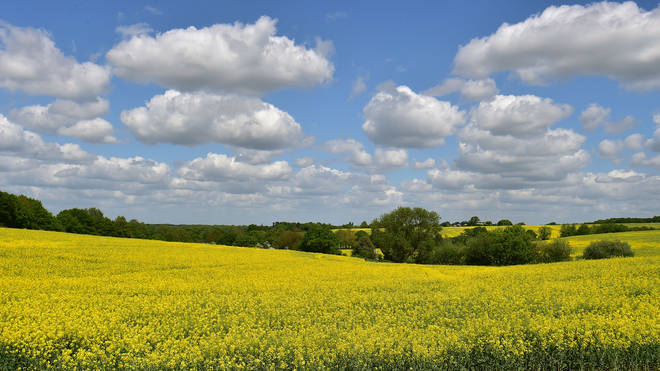
I love to run and cycle. I enjoy a good walk. Over the last couple of months I’ve started going to more gym classes so, while this is not a bad thing, it’s meant less outside time. And I love outside time! What are the benefits of being outside..

  • You will experience a great sense of well-being. Breathing in fresh air, embracing the space around you, feeling the cold upon your cheek. Even at this time of year getting wrapped up and going out for a walk will give you a boast.
  • And you’ll burn some calories! And let’s be honest we’re probably about to have too many of them in the next week or so! For those a little fitter get your running shoes on, on get your bike out and go out and get breathless and feel that cool refreshing air in your lung. Outdoor workouts are better than indoor ones. For example, running. Outdoors you are contending with different terrains or you are running against the wind… all better for you than the treadmill I feel!
  • Green exercise – or exercise in a natural environment – has been shown to boost self esteem and mood and you’ll get a well needed, at this time of year, boost in vitamin D which is reported to be good for your immune system – Now that’s got to be good!

Get lost in the moment
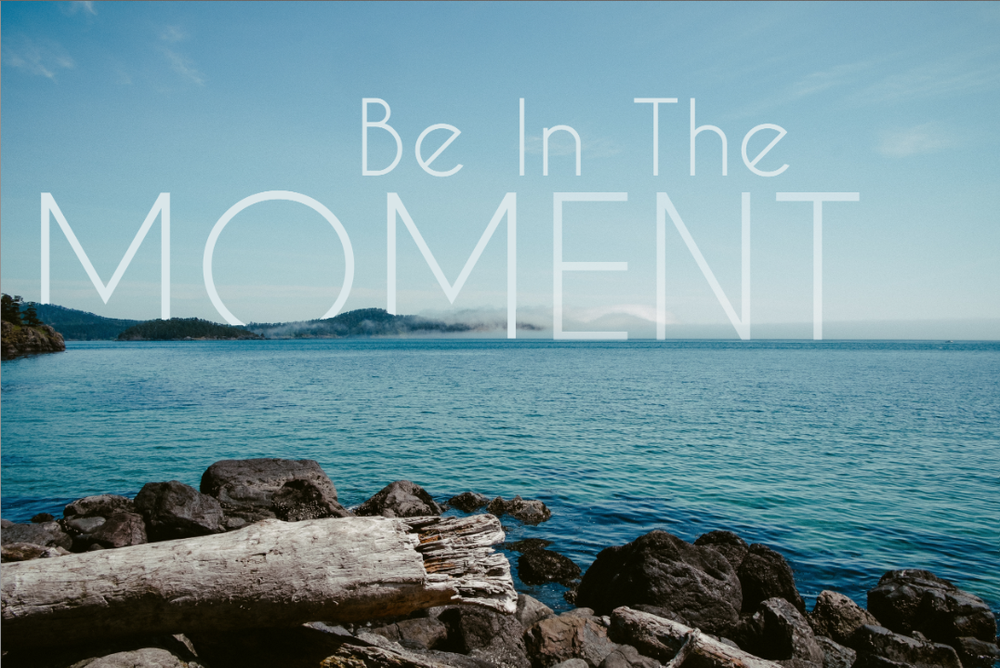
This one is simple. Just experience what is currently happening to you. The water on your skin in the shower, the air passing into and out of your lungs, the taste of the food in your mouth, the song on the radio….. Do any of these things or any others to the exclusion of other thoughts and distractions. The benefits of simply taking some time out to be mindful of a particular thing will reap benefits. Before you know where you are at you might find yourself wanting to try meditation! You never know!

Get myself (more!) organised

Being organised gives you a great sense of control and fuels your well being. As I’m fond of saying – if you don’t control it then it will control you. Try applying the two minute rule or grab a copy of David Allen’s book ‘Getting Things Done’. I can tell you, hand on heart, at work and at home my life is so much better for getting myself organised. I can do it better though, especially at home, to make sure I make the most productive use of the time I have. For me time is the most precious commodity we have and we waste it at our peril.

Drink more water

This one should be easy to do surely! How hard can it be to go to the tap and fill a glass up and just drink it! I know!! So why don’t I do it! I even have my phone remind me to drink water every few hours and still I don’t drink enough! Water is refreshing, calorie free, and it’s absolutely crucial for you body to function effectively. So come on! Flush those kidneys and feel great. More on this here.

Drink less coffee and alcohol

I don’t know how this one is going to go for me! I love coffee! And I do like the odd tipple on an evening. I read somewhere drinking coffee borrows time from later in the day…. You will crash later and be less productive. And drinking alcohol borrows time from tomorrow as it will affect your sleep and therefore your feeling of well being the next day. Must try harder!

Read for 15 minutes a day

I read every day. Knowledge is life improving, how could it not be! Reading for 15 minutes a day at an average speed of a page a minute will get you through a 300 page book in 20 days. That will get you through at least 15 books a year. Not a bad start to enhancing your knowledge! And I bet if you get the habit you’ll read more! Add the next thing on the list in and you’ll be amassing information at a fair rate of knots!

Embrace audio books

Time is the most precious of commodities and I want to put as much of it as I can to good use. It takes me 40 minutes to drive to work and the same to get back home or 30 minutes to walk the dog. Sometimes I listen to music – that’s a good thing. Sometimes I listen to the news on Radio 4….. but now mostly I listen to audio books and they are great! I get mine through Audible. They download to my iphone and play through the car stereo seamlessly! The books are anything from 4 to 7 hours long and one lasts me through most of the month when interspersed with other things…. And that’s another 12 books in a year… done! Sorted!

Set small achievable goals

How do you eat an elephant? One bite at a time! Several books I’ve read talk about setting achievable goals and some of the models I talk about in some workshops show that breaking down big tasks into smaller steps achieve progress. Problems or projects seem daunting when you just think of the end goal. But if you think of the many small steps and tackle them one at a time you stand more chance of achieving success! My goal for this year is weight loss – more about the steps I’m taking later. I’m read Mini Habits: Smaller Habits, Bigger Results by Stephen Guise where he talks about setting himself the target of doing one sit up a day… that was all! Just one! And he explores where that got him! Worth a read!

Sit quietly from time to time

This is a bit like ‘getting lost in a moment’ but slightly different. Getting lost in a moment can be about getting engrossed in an activity. But sometimes we need to just sit quietly. It could be, but doesn’t need to be, meditation. It could be sitting quietly while clearing your mind but, for me, more than this, sitting quietly can be a time for you to think things though in a calm, focussed way. In the rushing about of modern life our responses are, dare I say, reactionary rather than well thought through often. I’m going to sit and experience time just passing in a quiet state from time to time, maybe first thing on a morning…. Now that’s good use of time!

Once a month mix it up

Don’t get into a rut. For all the things above keep mixing it up. Been out running a lot this month? Then next month go out walking! Been spending quiet time on a morning? Then, for the next month do it on your lunch break… you get the idea. From an exercise point of view your body gets used to what you ask it to do so mixing it up challenges it to ‘re-think’. As for your mind, giving yourself space at different or being in the moment for different experiences will help you understand yourself and what works for you and what will, hopefully, lead you to a greater sense of well-being, a greater sense of inner-peace.

I’m going to try all of these things and I’ll let you know how I get on. Let me know what you get up to!

Stick to the process

John Deere Tractors - Tractor Hire Uk | Tractor Trailer Hire | Specialist  Agricultural Vehicles

Stick to the process even if you need to replan. Sticking to the process and having a plan are two different things. The process is the order in which you do things, the plan is how you are going to do those things in the order that is required.

My youngest son works on a farm. When it comes to farming there is indeed a process. It would be no good simply deciding to plant crops whenever you fancied. Or getting the ploughing, seeding, and fertilising in the wrong order. You have to do what you have to do in the order you have to do it at a particular time.

Understanding Manufacturing Process Controls in Your Factory -  QualityInspection.org

The first thing is to establish what the process is. This is where you you take the task, the goal, and break it down into all of the steps that it will take to achieve the goal. Now you have a process. In many of the jobs we do there will be processes mapped out. Remember this and get someone to tell you the process if they haven’t already and this will save you a huge amount of time. As a friend said to me recently, “It’s so time consuming not knowing what you are doing”. Unless you are a trailblazer doing something completely unique someone will already know the process. Find that person. Get them to tell you.

Then make a plan. The farm my son works on has a plan and sometimes the plan works and sometimes it rains. When it rains they have to replan the plan. This is fine. One of the benefits of having a plan is that replanning a plan is fairly easy because you have a plan. If you don’t have a plan then you have nothing to replan because you have no idea what you were meant to be doing in the first place. You were just drifting about like a rudderless ship just going wherever the wind and sea takes you. You need to grab the rudder and steer the ship.

When it rains on the farm they can’t work the land. This means that they have to do other things, they can’t just go home! They then plough or seed or fertilise twice as much land tomorrow, working late, or work an extra day. This is how life is.

More Days of Heavy Rain - Conservation in a Changing Climate

The crucial part is having a plan. Have you got a plan?
What came to mind when I asked that question? That’s probably the thing you need to start with. ‘You tend to mention what has your attention’ (or you tend to ‘think of’ in this example). That thing is eating away at your psychological energy to get that thing and other things done. Having a plan helps you settle the thing that is not yet complete in your head and in your system. Then if that’s the thing you need to do you can get on with it. If you don’t need to do that thing yet – then you have freed up psychological capacity to do other things because you’ve sorted the attention seeking task out.

Unmanaged, incomplete tasks drain psychological energy.
Managed, incomplete tasks don’t drain psychological energy (or at least not as much)

Planning is the cornerstone of a productive less stressful life.

Procrastination!

My favourite meme that I have seen about procrastination is that it is ‘The art of ruining your life for no apparent reason!’ Whenever I say when I’m speaking to people about being organised it always raises a smile. It’s one of those statements that resonates with us all! But why do we procrastinate when we know it’s so unhelpful!? There are a number of reasons.

The Job Looks Too Big

If a task looks too big we are unlikely to have a single slot in out busy lives in which to undertake the task. If we can’t find a slot we put it off until we absolutely can’t put it off any longer and then we have to work late or pull an all-nighter. This is not a good approach! The secret is to break the task down into its constituent and smaller parts. The steps you will need to take to complete the big task. This makes it easier to slot each step into a pocket of time when we’re planning – allocating time to task. This means we chip away at the big task by doing each steps and this fuels motivation because we really feel then that we are getting somewhere.

The Job Looks Too Difficult

Sometimes we don’t have (or feel we have) the skills or the knowledge to do the task – or there’s ambiguity in the instructions. We put off asking for advice or acquiring the knowledge because we don’t want to look like we don’t know what we’re doing – then eventually – we look like we don’t know what we’re doing because the task didn’t get done! Always seek advice. That’s a much better strategy than putting the task off.

The thing we need to do is not causing us ‘imminence pressure’

“Oh that thing! That’s ages off yet!” Bet you’ve said that! We all have. And then all of sudden ‘ages off’ is tomorrow!

Planning brings the future into the present so we can do something with it and consider the enormity of the task at hand. We can then break it down into its parts and diary the parts. Sometimes we underestimate how long something will take – we do this a lot with big tasks the psychologists tell us – and then when we have to do it at the last minute we find we haven’t got enough time. Going through the process of breaking the task down helps us work out just how much time we actually need.

We don’t have what we need to get started

When this happens it’s usually because we’ve not planned effectively. The point at which you set about starting the task is not the time to make sure you have everything. You need to plan and organise so that you have what you need available to you at the point in time set aside to do the task.

You can’t plan and do at the same time – they require different sets of mental skills – time spent in planning is paid back when we get to the doing.

Tim S Grover in his book Relentless says this that seems to resonate with peopl…… Do the work. Every day you have to do something you don’t want to do. Every day. Challenge yourself to be uncomfortable, push past the apathy and laziness and fear. Otherwise, the next day you’re going to have two things you don’t want to do, then three and four and five, and pretty soon, you can’t even get back to the first thing. And then all you can do is beat yourself up for the mess you’ve created, and now you’ve got a mental barrier to go along with the physical barriers.

Those who can achieve flow procrastinate less

Those who plan overcome procrastination. They have less ‘Boundary Moments’ – the point at which a decision is required. You’ve made the decisions in advance so can get to the doing of the next task without thinking ‘what next’. The less obstacles we put in our way – the fewer times we have to make a decision about what to do next – the less likely we are to procrastinate.

Set your mind to the planning

I’ve got into the habit when talking to people about self-care of finding myself often saying, “all we are doing here is playing psychological tricks on ourselves to get the best out of ourselves so ‘ourselves’ stop getting in the way”.

There’s a funny thing goes on in my head when I go for a run. Sometimes I head off and run a big loop but sometimes I run laps close to home. I have a route that is ‘near as damn it’ exactly a mile long and I have another route that is ‘as near as damn it’ one and a half miles long. If I want to run three miles I find it easier to run the longer route than the shorter one because I only have to do two loops and I’m done! On the shorter one I have to do 3 loops and that, psychologically, seems so much harder. Which is daft really because either way, it’s 3 miles! But it’s a very real thing. In fact, sometimes (like today) when I get to the end of the 3 miles on the 2-lap route, I think, well I might as do another lap because I usually have to! What’s that all about!

Everything we do has a psychological element to it that we can either let get in the way, make work for us, or use to trick us into convincing ourselves that something is a good idea.

Lockdown is difficult for a lot of us. Many people I sense are finding it hard to motivate themselves to do things they would usually just get on and do. Exercise is a good example of this. Lots of people seem to be finding it harder to motivate themselves to do what they know already is good for them.

How can we overcome that moment of inertia when, at the end of a busy day we know we should take some exercise but we just don’t feel like it.

Firstly, let’s give ourselves a break and in some ways identify the problem. When you are feeling stressed you don’t feel like exercising. This is a fact – well researched – well established. An American study from Yale University tested this out and found that levels of stress are a predictor for low physical activity. But it’s a double bind because exercise is a great stress buster. Indeed the same Yale University study showed that those who managed 30 minutes of exercise during the day experienced a reduction in stress.

There are lots of reasons why this might be and all have been researched. Which it is for you is probably down to your own uniqueness! For some the exercise simply takes their attention away from the thing that’s causing them stress and gives them a break from it so they can return to it refreshed.

For others it could the rush of feel good endorphins, the ‘runners high’ you might have heard of. It could be that our stress response, the fight or flight adrenaline and cortisol rush, readies us for physical activity, so in doing something physical we ‘burn off’ these chemicals and we return our body to a state of calm. We in effect ‘took flight’.

So, given exercise is good for us, how do we get past our inertia?

We need to plan for our future self – arrange what it is our future self needs to do. Then, trust our past self to have arranged things that are good for us. The just do them at the moment our past self planned them, safe in the knowledge that our future self will thank us for doing what we planned!

When we try to imagine our future we are strongly influenced by how we are feeling in the present moment. So if you try to imagine what something later in the week will be like when you are experiencing a tiring Thursday and you are just a tad grumpy and ‘down-in-the-mouth’ you are likely to think about the future event negatively. ‘That run will be hard work’, ‘Getting my gear on to do the online workout will be sooooo time consuming!’ And the same works the other way – if you are in a good place then you will think positively about the future. (See Daniel Gilbert’s book ‘Stumbling on Happiness’ for more – Professor Gilbert has spent his life studying the psychology of happiness – he knows his stuff!)

So, how do we make this psychological quirk work for us. Let’s keep going with the exercise example. When on a weekend are you feeling in a good place? I find I have a sweet spot that usually occurs early afternoon on a Sunday. I’m feeling rested and I’m not yet grumpy because it’s nearly time for work again. In this sweet spot I plan my exercise for the week because I’m feeling at the top of my game in terms of motivation. I still keep my planning realistic. I bring the future into the present so I can do something with it. I plan what I will do. I remind myself that about 20 minutes a day is sufficient and if I can do more great!

Then, my week starts. And, as we know, motivation wanes as the week goes on and stress rises. So when I spot at 5.30 on Wednesday evening that my diary says ‘3-mile run’ I trust my past self, when I was in a good place to have thought, ‘I’m going to need something to pick me up by Wednesday and I’ll feel great after a run. Clear headed, invigorated, and if I get some exercise I’ll probably sleep well’. Had I left my planning for exercise on Wednesday until I got home at 5.30 I would probably have said, ‘I can’t be bothered, stuff it, where’s the wine’. Familiar?

In that moment when you think, ‘I can’t be bothered with this running thing in my diary’, you have to trust your past self to have done the right thing for your future self and thought, when in a good place, he’s going to NEED a run by Wednesday. On Wednesday his future self will thank his past self for insisting he went for a run!

There is great power in planning. And there is great power in trusting what you have planned. David Allen (productivity guru of the highest order) says you can’t plan and do at the same time and this is why. The feelings of past self, present self, and future self will get all confused. Our ‘selves’ need to find a good positive moment and plan for our future selves so when we hit that ‘present’ moment we can be fully in that present moment knowing that this must be the best thing that can be done right now or why would I have planned it so!?

Plan.
Then deliver on the plan.
You’ll thank your past self in the future for knowing what will be good for you.

Moving a mountain

I was reminded recently of this Chinese proverb – “The man who moved a mountain was the one who began carrying away small stones.” 

This resonates with me so much. I’m often put off getting started with big tasks because they just seem, well, too big! What reminded me of the Chinese proverb was Nassim Nicholas Talib writing in his great book Antifragile about the the analogy of asking someone to move a one ton rock or one ton of pebbles. One person alone can not move a one ton rock but can move a ton of pebbles, over time, by chipping away at the task.

This is how we need to approach mammoth things that confront us. Procrastination is fuelled by feeling things are too big for us to achieve. The power of small wins – a psychological concept – relies on us breaking big tasks down into smaller constituent parts. I was recently saying to someone that success is sometimes about using our brain chemistry to our advantage and tricking ourselves into better ways of thinking or doing. So, what we know is every time we tick something off our ‘to do’ list we get a little dopamine hit that drives us onto the next step. If completion of the task is only ever ‘ticked off’ when the whole task is complete we only get the one ‘hit’. If we break it down into lots of tasks we get lots of hits! Win!!

What’s even better is if you have the right tools for the job! Shifting that ton of pebbles is going to be so much easier if you have a shovel and a wheel-barrow. If all you have is your hands, you’ll get it done, but it will be painful and slow. Before you start any task ask yourself, “do I have the right tools for this task”. ‘Tools’ can be many things. Simple things like pen and paper, information things likes names and phone numbers, or bigger things like the right software or equipment. With the right stuff around us things get done.

The crucial technique for this is planning. Plan every day. Think – “what am I doing tomorrow”, and, “do I have what I need?” Prepare what you need, or check you have it in the right place and accessible. Plan big on your last working day before a break (for most of us a Friday before the the weekend). Plan all of next week – get your ducks in a row. Check before you leave that you have everything you need for next week. If you haven’t, find it, buy it, email someone about it. If there’s no chance of you getting it for next week can you move the task. If you can’t how will you get around the lack of the right thing. Planning is everything!

Planning brings the future into the present so you can do something about it (Alan Lakein). I have a little planning session daily (usually just checking stuff is where it should be because…) I have a big plan every week, and a massive plan every 3 months, usually going up to six months ahead to see what I need, including, crucially, how much time do I need.

Control it or it will control you, says David Allen.

In a recent on line conference I was asked, “what are your 3 key messages to help people with their well-being and productivity. I pinched an idea from the property world and said….

“Plan, plan, plan”

Think big, start small, begin now…

Recently I got to wondering when I started setting myself big long term goals and I realised I’ve probably always done it. Most productivity commentators will tell you that you should have at least a 5 year plan. Personally I think you need a life plan! What is it you want to do, next week, next month, next year, the rest of your life!? Planning stuff and writing it down has been shown to make it more likely to happen. If you have a plan written down it sets it in your mind. You can refer back to it and when you’re ready break your plan down into manageable steps.

Let’s get excited!

Starting with think big – what is that you want to achieve. I remember my first day at college studying social work, listening to my first lecture, and thinking about her, “I want to to do what you’re doing.” And 13 years later I found myself doing just that thing. When I started being a lecturer I decided I wanted to write and here I am 7 years later writing regularly about social work and a book in the pipeline! It’s important to have a growth mind set. In her book Mindset, Dr. Carol S. Dweck tells us that people fall into two categories – those with a fixed mindset and those with growth mindset. If you have a fixed mindset you think that talent and ability is inherent. It’s something you either have or you don’t have. You think that you’re either intelligent or you not. But what Dweck shows in her book is that we can all do whatever we set our minds to. What it takes is hard work and dedication. Things aren’t easy but things are achievable if you have a plan and you apply yourself to that plan. Broadly speaking we all have the same potential, it’s our mindset that dictates what we do with that potential. So you need to think big! What do you want to achieve?

Then you break it down into small steps. Because, if you had to eat a whole elephant, the only way to do it would be one bite at a time! Those steps need to be small and achievable. By breaking things down into little steps you draw on the psychological power of small wins. Every time you complete a step you get a psychological buzz! A feel-good boost. If you don’t break things down into small tasks, firstly you won’t know where to start or what to do next. And secondly, you will only get to feel that buzz when you achieve the final goal. Write down the goal, break it down into smalls steps and write those small steps down and then start…..

And start you must! Breaking things down into small manageable steps will help you beat procrastination. But the thing when starting something is to simply do that – start it! Do something. Even if what you have to do is break down your first step into micro steps to fit into the time you have available then do that. But do something!

Make a start!

As i’m fond of saying – making a start is the hardest part! Because it is… but the reality is that once you do start you will keep going!

So here we go..…

Write down your long term or life goals
Think about which of them you want to tackle first
Break it down into manageable steps
Write these steps down (I’d put them in my electronic calendar)
And then… do the first thing.

Photos from www.goodfreephotos.com