Working from home: Are you a segmentor or an integrator? It could make a difference.

When it comes to thinking about working from home the psychology literature would suggest there are broadly two types of people.

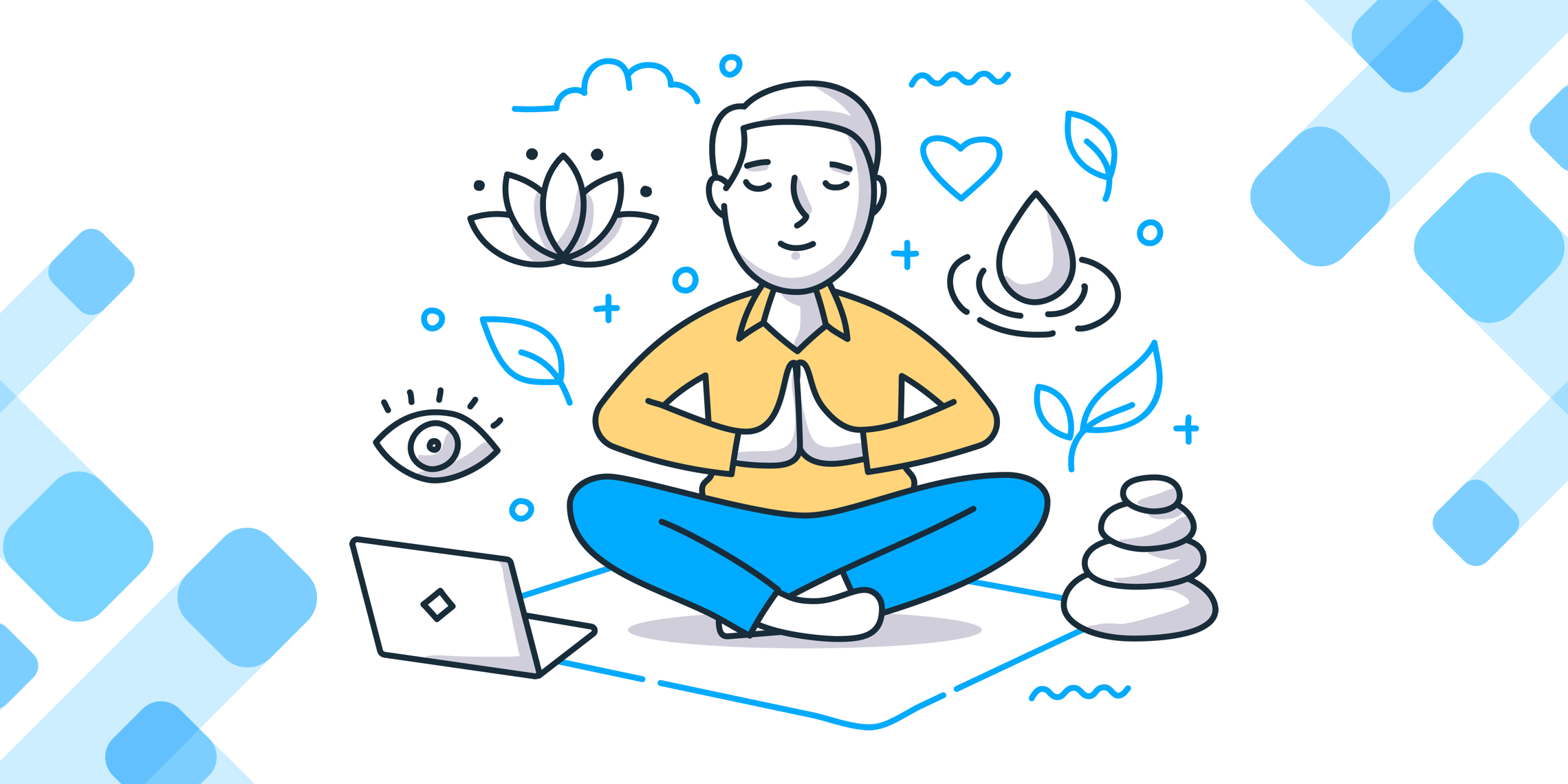
Some of us are Segmentors. We prefer to keep work and non-work separate so may struggle with them being in the same place. Segmentors may find it difficult to strike a balance. Sometimes this is to do with work role. So, some of these things are job as well as person specific. Some jobs have weak role boundaries while some maybe can offer more flexibility. Maybe there is significant overlap between personal interests and professional ones. Possibly the job allows for a great deal of autonomous work. These things may make it difficult for some to keep things separate when working and living in the same space. Some jobs have strict role boundaries so may be easier to segment even at home especially if you are a segmentor.

Some people are Integrators. Such people prefer (or are happy to) integrate work and non-work. Alternatively, where a job has weak role boundaries it may be inevitable that the two merge. Integrators might therefore struggle at home with a job that has strong role boundaries and maybe such jobs are less suitable for home working.

My job as an example.
For most of my working days each week I work for a university. This job drifts between days when role boundaries are weak. For example, I may have the opportunity to read a lot, and I often read for pleasure the sort of books I need to read for my job. There is no boundary between the two. I browse the web, take notes, connect ideas, and spend time thinking. I do this for work, and I do this for myself for pleasure. On days like these it can be difficult to see whether a particular activity is work related or not. Some days though I need to deliver lectures and seminars. There are strong role boundaries on those days, and even when I was delivering things from home during the pandemic, I had to be in a certain place at a certain time to do a certain thing with little flexibility. I work freelance some of the week and on those days it’s often difficult across a whole day to see any delineation. I’m definitely a natural integrator which is probably why I love home working but I’m happy to be a segmentor when the tasks of the day require it.

Our well-being when it comes to our whole lives is an interaction between person – role – and environment.

What sort of person are you?
What sort of roles do you have at work and outside of works?
What is the environment like you have to operate in? Does it help or hinder?

Are you a segmentor or an integrator?

Resilience – dirty word?

It sometimes feels like resilience is a dirty word. Whispered in hushed tones in corridors in case over heard. Or spoken out loud as a rallying call to try harder and be stronger. It shouldn’t be this way. Resilience is crucial to a productive life but in social work it is in danger of being shouted down as a take over bid by mangers to make staff do more with less.

The claim I hear most is just that. Managers want to individualise the problem to the social worker, make them be more resilient, and therefore be able to give them more work. I don’t find this to be the case. At worst managers clutch at the straw offered by resilience as a way of keeping their teams well and intact. At best they see it as a real opportunity to develop a confident, satisfied workforce, comfortable with being at work.

Resilience isn’t a silver bullet to fix all of the problems in social work, or indeed to ensure everyone stays well – we all have our point at which resilience gives out. But, by enhancing people’s ability to cope with the rigours of life we do enhance their resilience and they have a better, but maybe not perfect, time of it at home and at work. You can’t separate the two. Stress created at work is carried home and stress created at home is carried to work. We need to embrace the challenge of being resilient everywhere and not artificially separate the two.

It’s about more than emotions. While emotional resilience is important it is underpinned by,and functions alongside, practical and physical resilience.  These are what I describe as the three pillars of resilience:

Physical
Practical
Emotional

And I place them in that order deliberately because that’s how I see them operating. 

Physical
You must be sleeping well, eating well and being physically active. If you are going to focus on one thing first you must get your sleep right. You can read more HERE and HERE. Then you can work on nutrition and exercise. Without getting sleep right you are unlikely to have the motivation to get these other things on track. The social work office can be a minefield when it comes to eating well and I share some tips HERE. We also can’t overlook the reality of the connection between our gut and our brain MORE HERE. Finally you need to move some, or more, depending on how much you are moving already. Research has shown that regular exercise (in the study it was three 40 minute power walks a week for a year) causes growth in your hippocampus. This is part of your brain that is key in memory, emotional regulation and more. It can be referred to as the brake to your amygdala which is the part of your brain that is largely responsible for your fight or flight response to stress. You can read more HERE 

Image result for resilience

Practical
You are not going to be able to fit everything in to your time without being organised. Clinically organised I’d suggest! How you manage your diary, how you allocate your time and how you keep track of all of the things you do is crucial. Have a look through the PRODUCTIVITY section of this web site. Or the BEING ORGANISED section of our sister web site Self Care Shorts.

What you will find in the links above is that all of these things promote our ability to manage our emotional responses to what we are confronted with in all areas of our lives.

Small steps repeated over time lead to big changes.

None of these things in isolation will make a great deal of difference but add lots of small changes together and you will bring down what I refer to as ‘base line’ stress – the stress we carry with is all of the time. The good stress that motivates us. By bringing this level down through implementing strategies in relation to our physical well-being and our productivity we will have more headroom to ride the challenges without hitting our stress ceiling and becoming unwell. Long before we become unwell we become demotivated and prone to procrastination and that simply makes matters worse.

“Control it or it will control you”, as David Allen says.

Stephen

Stephen is the co-author of ‘How to Thrive in Professional Practice”
Available for pre-order from https://www.criticalpublishing.com/how-to-thrive-in-professional-practice for publication in early May

Who IS to blame….?

The Guardian this morning (August 1st 2019) reports that social workers are being blamed for their own stress and burnout. You can read the article here.There are some very damning statistics in there about how social workers are feeling about this and how they are maybe being made to feel by employers. Indeed, the HCPC standards of proficiency include things about developing resilience and utilising self care (although not exactly in those words).

In the world of ‘things’ resilience is defined as the ability to resist stress (think of an iron girder), or the ability to spring back into shape. In the social work worlds resilience is defined as the ability to bounce back from the emotional trauma of practice. But I’m not convinced that is exactly all it is. The Guardian points out that there is a lack of an agreed definition or even a sense of what it exactly is but it does seem that the word resilience, more often than not, is prefixed by the word ’emotional’ as though that is the only, or primary, form of resilience.

I think resilience is multi-faceted. And I do think there is a personal responsibility element to it. I am not going to argue here against the very clear fact that workloads for social workers are too high and available resources are too low but I am going to argue that that is not the only factor. This is based on my observation that some people are coping well, some are doing ok, and some are not doing well at all, in very similar environments. So, I do think there is more to it than too many cases and not enough time. Although I am keen to stress that I think that is probably one of the more significant factors. And I think it’s worth saying here that workloads in most professions are too high – it’s not just social work…

Emphasising the personal responsibility element of resilience plays right into the hands of the dominant neo-liberal agenda endemic in the political stand point but nevertheless there are some things that can be done to enhance resilience that can only be personal. Let me explain. Resilience is not just about the ‘bounce-back’ from emotional trauma – it is about other things. We need to be physically resilient, not just for our work life but also for our life outside of work. We try and compartmentalise ‘work’ and ‘life’ in pursuit of ‘work-life balance’ when really what we should be doing is creating one balanced life that includes the things we get paid to do, the things we don’t get paid to do, and our rest and recuperation. Physical resilience helps us cope with all manner of things. This is why exercise is so important in managing stress. It has been shown that moderate levels of exercise (a brisk 20 minute walk) reduces feelings of stress (as well as reducing levels of cortisol and adrenaline in our bodies – the physical manifestation of stress). So, if you are exercising you will be more physically resilient. What you eat is equally important. The science of ‘the second brain’, as many researchers are referring to our gut, is young, but there are clear signs that what you eat has an impact on your gut biome and in turn on how you feel and how you cope with stress. How you sleep has a huge impact on your productivity and how productive you are, or are not, and therefore has a huge impact on stress. It is in this element – self care – where it is clear that personal responsibility is required in order to achieve physical resilience. No one can make you go for a walk, eat well, or go to bed at a reasonable time – only you can do that. This physical resilience has a direct impact on our emotions, our ability to manage them, and therefore on how we respond to stressful situations in all areas of our lives.

There is also another element to resilience. The ‘Organised’ element. If you have control of what you can control – if you have some sort of system that records and manages all of that for you – then when something throws your world into chaos you will have the capacity to deal with it better. David Allen (Author of Getting Things Done) talks about having a mind like water. When a rock is thrown into a still pond it creates ripple and these ripples eventually dissipate and then the pond is returned to calm. This is how your mind should be. This relies on what he calls a trusted system that contains everything that needs to be done, everything in your ‘sphere of responsibility’ as I like to call it. There is a lot of your life, at work and at home, that you can control and structure so that you can leave it safely alone while you deal with the crisis that will inevitably manifest itself at some point. By being organised and controlling what you can you will be more psychologically resilient. Research into the Getting Things Done methodology that Allen proposes has shown that by having everything you need to do, or may want to do in the future, recorded in a trusted system, feelings of overwhelm and stress are reduced. It doesn’t get the things done but it stops you trying to remember everything, gives you a sense of control and order, and frees up psychological capacity to do whatever needs doing right now.

There’s no denying that the emotional impact of working with people has an impact and that impact needs to managed somehow. By dealing with the things we can deal with ourselves, exercise, nutrition, sleep, and being organised, we can free up more of our capacity to deal with the emotions and demands of the job. I say again, I am absolutely not saying that we have no problems in social work with case loads and resources, but taking some care of yourself and having a system to be organised have been shown to help. Fact.

So, the government have some responsibility in terms of funding, the regulator has some responsibility in terms of advocating for the profession, senior managers in local authorities have a responsibility to engage in the local political agenda around funding and resources, but you also have a role in making sure you are ready for the task. You can make a contribution, you can make a difference. Why would you not want to look after you!? Why would you not want to do at least something? There is clear evidence it helps. It won’t make the problem go away but it might help you manage some of the fall out. You are too important to leave it to others. That’s the personal responsibility bit. That’s why you need to do something because you are too important not too.

Self care is an essential, not a luxury in any profession.

How to start your day!

Start right!

we are going to be productive throughout the day how we start our day is crucial in setting ourselves up with the right frame of mind. Too simple? Well, neuroscience tells us that the impact can be quite dramatic!

Visualise

Thinking about our day, visualising what we want it to look like and what our objective is, has been shown to have a significant impact in how it actually turns out. This is particularly true when we consider our emotions.

Impact of emotions

The emotions we express are contagious. The emotions we express have a psychological impact on ourselves and remarkably on others. If someone smiles, we smile back. If they grimace, we do likewise. We need to think of emotions operating from the outside in rather than from the inside out. Not only do we smile when we feel happy inside but, merely the act of smiling can influence positively how we feel inside. This emotional contagion means that simply by smiling you can make yourself feel happy! Equally if you exhibit sadness then you are likely to reinforce a sad feeling. In an experiment undertaken by Friesen and Levenson they took two groups of volunteers and had one group call to mind a stressful experience that caused them sadness, anger or fear and had a second group merely make the facial expressions of these emotions without recalling anything. They discovered that the physiological responses in both groups were the same! Merely making a sad face had the same impact physiologically as actually recalling a sad event!

Faking it!

So research show us that the emotions we display have an impact on well being and on how we approach the day even if we are faking it. Even if we are just thinking about the emotions we want to feel during the day. If we start with a negative approach this will permeate our minds – our subconscious, if not our conscious mind – and will influence how we engage with our day. If we start the day thinking it’s all going to be a mess and out of control then it probably will be. If we start the day thinking we are going to be stressed and being able to cope then there’s a good chance that’s how we’ll feel.

Kick it like Jonny Wilkinson

Kick it like Jonny Wilkinson

So, as we are products of our thoughts then we should start the day with some positive visualisation. When we visualise ourselves being in control and getting things done we prime the neural connections in our brains preparing us to make it happen. Watch the rugby player Jonny Wilkinson visualising the penalty kick going through the posts. He is visualising a successful kick… and more often than not he achieved it! Visualise your productive self getting on with tasks in a calm and collected way and your productivity will improve. Your minds eye rehearsal will improve your chances of success.

That’s it – Step one!

There’s more in the Social Work Shorts Podcasts
Click here

10 things to make 2023 great!

2023 is set to be a great year don’t you think! There are some things that I need to absolutely focus on! There are some things I need to do better and there are some things I could do with doing a little less! Now though is a good time for me to embarking on a mission of self improvement. Things are settled. We’re in our new house and have managed to get done some of the things that needed doing and this will hopefully free up some time, some enthusiasm and some psychological capacity to achieve more. Here are the things I’m going to do and I’d urge you to do!

Get outside more

I love to run and cycle. I enjoy a good walk. Over the last couple of months I’ve started going to more gym classes so, while this is not a bad thing, it’s meant less outside time. And I love outside time! What are the benefits of being outside..

  • You will experience a great sense of well-being. Breathing in fresh air, embracing the space around you, feeling the cold upon your cheek. Even at this time of year getting wrapped up and going out for a walk will give you a boast.
  • And you’ll burn some calories! And let’s be honest we’re probably about to have too many of them in the next week or so! For those a little fitter get your running shoes on, on get your bike out and go out and get breathless and feel that cool refreshing air in your lung. Outdoor workouts are better than indoor ones. For example, running. Outdoors you are contending with different terrains or you are running against the wind… all better for you than the treadmill I feel!
  • Green exercise – or exercise in a natural environment – has been shown to boost self esteem and mood and you’ll get a well needed, at this time of year, boost in vitamin D which is reported to be good for your immune system – Now that’s got to be good!

Get lost in the moment

This one is simple. Just experience what is currently happening to you. The water on your skin in the shower, the air passing into and out of your lungs, the taste of the food in your mouth, the song on the radio….. Do any of these things or any others to the exclusion of other thoughts and distractions. The benefits of simply taking some time out to be mindful of a particular thing will reap benefits. Before you know where you are at you might find yourself wanting to try meditation! You never know!

Get myself (more!) organised

Being organised gives you a great sense of control and fuels your well being. As I’m fond of saying – if you don’t control it then it will control you. Try applying the two minute rule or grab a copy of David Allen’s book ‘Getting Things Done’. I can tell you, hand on heart, at work and at home my life is so much better for getting myself organised. I can do it better though, especially at home, to make sure I make the most productive use of the time I have. For me time is the most precious commodity we have and we waste it at our peril.

Drink more water

This one should be easy to do surely! How hard can it be to go to the tap and fill a glass up and just drink it! I know!! So why don’t I do it! I even have my phone remind me to drink water every few hours and still I don’t drink enough! Water is refreshing, calorie free, and it’s absolutely crucial for you body to function effectively. So come on! Flush those kidneys and feel great. More on this here.

Drink less coffee and alcohol

I don’t know how this one is going to go for me! I love coffee! And I do like the odd tipple on an evening. I read somewhere drinking coffee borrows time from later in the day…. You will crash later and be less productive. And drinking alcohol borrows time from tomorrow as it will affect your sleep and therefore your feeling of well being the next day. Must try harder!

Read for 15 minutes a day

I read every day. Knowledge is life improving, how could it not be! Reading for 15 minutes a day at an average speed of a page a minute will get you through a 300 page book in 20 days. That will get you through at least 15 books a year. Not a bad start to enhancing your knowledge! And I bet if you get the habit you’ll read more! Add the next thing on the list in and you’ll be amassing information at a fair rate of knots!

Embrace audio books

Time is the most precious of commodities and I want to put as much of it as I can to good use. It takes me 40 minutes to drive to work and the same to get back home or 30 minutes to walk the dog. Sometimes I listen to music – that’s a good thing. Sometimes I listen to the news on Radio 4….. but now mostly I listen to audio books and they are great! I get mine through Audible. They download to my iphone and play through the car stereo seamlessly! The books are anything from 4 to 7 hours long and one lasts me through most of the month when interspersed with other things…. And that’s another 12 books in a year… done! Sorted!

Set small achievable goals

How do you eat an elephant? One bite at a time! Several books I’ve read talk about setting achievable goals and some of the models I talk about in some workshops show that breaking down big tasks into smaller steps achieve progress. Problems or projects seem daunting when you just think of the end goal. But if you think of the many small steps and tackle them one at a time you stand more chance of achieving success! My goal for this year is weight loss – more about the steps I’m taking later. I’m read Mini Habits: Smaller Habits, Bigger Results by Stephen Guise where he talks about setting himself the target of doing one sit up a day… that was all! Just one! And he explores where that got him! Worth a read!

Sit quietly from time to time

This is a bit like ‘getting lost in a moment’ but slightly different. Getting lost in a moment can be about getting engrossed in an activity. But sometimes we need to just sit quietly. It could be, but doesn’t need to be, meditation. It could be sitting quietly while clearing your mind but, for me, more than this, sitting quietly can be a time for you to think things though in a calm, focussed way. In the rushing about of modern life our responses are, dare I say, reactionary rather than well thought through often. I’m going to sit and experience time just passing in a quiet state from time to time, maybe first thing on a morning…. Now that’s good use of time!

Once a month mix it up

Don’t get into a rut. For all the things above keep mixing it up. Been out running a lot this month? Then next month go out walking! Been spending quiet time on a morning? Then, for the next month do it on your lunch break… you get the idea. From an exercise point of view your body gets used to what you ask it to do so mixing it up challenges it to ‘re-think’. As for your mind, giving yourself space at different or being in the moment for different experiences will help you understand yourself and what works for you and what will, hopefully, lead you to a greater sense of well-being, a greater sense of inner-peace.

I’m going to try all of these things and I’ll let you know how I get on. Let me know what you get up to!

Working at home…. with the children!

It always sparks my interest when I’m delivering presentations about productivity and someone asks me a question that causes me to fumble for an ineffective answer! This happened just this week when someone asked me if I had any tips for working from home when you also have your children around. In my head I thought, ‘Hmmm no not really’! When you’re presenting you have to come up with something, so i did… and I have no idea what I said! So I thought… time to delve into the literature and she what people think in terms of tips for working at home when the children are around.

Obviously the first thing to say is that I suppose it depends largely on the age of the children. Younger children I imagine are more of a challenge than older children who, quite frankly, I’d think will be over the moon that you are distracted with work, which means you leave them alone! My ‘children’ are now adults so I have no idea. But thinking about them as teenagers, as long as they were fed and watered and the x-box was fully operational they probably wouldn’t have cared. Anyway! Apply these tips as you see fit!

Create a schedule

Now, as you can imagine I love this one! Create a schedule – well yes – you should have a schedule for everything, so it’s not a big leap to create a schedule for the whole family. Be clear about when it’s work time and when it’s time for ‘family’. I’d imagine with younger children you’ll need to have short time frames here so that they get to regularly check in with you. Children I find love routine so i can see how this idea might work.

How about organising what you are all doing on a timer so they can watch the countdown. This would make it fun and give children a visible cue. Hint: this works for us as adults as well in terms of focus and productivity (after all adults are just bigger children with responsibilities!) The schedule needs to be realistic.

Maintain the schedule

Its no good having a schedule if you don’t stick to it. I imagine as adults we are just as bad at this as our children are. So be clear and then deliver. You might need to work on this with colleagues and managers and colleagues and managers will need to on board. They need to be helpful as they are going to get the best out of you if they understand you, the demands on you, and how you are managing those demands – this includes what you need from them. So agree with them to switch off alerts during deep work and family time. You have to do your bit by being available consistently when you say you will be as well – balance is key here.

Here’s the other thing with your schedule. You might want to throw out 9 to 5. Again you need employer buy-in but it might be better for you to work in blocks with big gaps. Maybe starting earlier in the day might help. Crucially create pockets of time to work in that are engineered around the child’s concentration span not yours.

What about this….
6 – 7.30 Work
7.30 to 9 Family
9 to 11 Work
11 to 1 Family
1 to 3.30 Work
3.30 to 6 Family
6 to 7.30 Work
Now… this won’t work for everyone but shows how you can chuck out 9 to 5 and work differently

Start the day off right

I’m a big believer in us all starting the day off right! I’ve written about this here. Maybe get up earlier. This means going to bed earlier! But I guarantee that hour 6 till 7 in the morning is worth more to you than that hour 10 till 11 sat in front of another Netflix episode. Get out of those pj’s and get dressed – everyone – including the children. This signals that it’s time for something else. Have a morning routine that includes some dedicated family time so that the children have had your undivided attention before clearly indicating ‘time for work’ time to go with the schedule.

Designate work and play areas

Having a dedicated workspace is really important of you can. A separate study or office room is best but I appreciate not always achievable. You should not though be trying to work in the same room as the children. Obviously if they are young you will need to be close by but… not in the same room. You may be able to close the door (depending on the age of children again) and that should be a clearly explained signal that is ‘do not disturb’. You could enlist the help of the children to make signs for the door (even if the door can’t be closed) that signals ‘do not disturb’ or ‘come on in’. Enlisting the children in making these signs makes them feel part of what is going on.

Create a drinks and snacks station that the children know can be accessed without asking. Healthy snacks and drinks obviously! You use it as well so they see it as a family thing.

Have patience and make concessions

…and this is not just aimed at the worker but at the organisation as well.

As the parent be attentive to your child no matter what. Take a breath and listen, don’t be dismissive. I know you know this makes sense but I also know this is very difficult. I have to work on this even when an adult interrupts me when I’m right in the middle of something. But what I know is that getting irritated by the interruption only fuels stress, and stress fuels lack of focus and procrastination. Stop, attend, resolve, and move on.

Mangers and organisations…. plan further ahead – especially when you have people working at home with children. It’s a modern work place problem that we don’t plan far enough ahead. It’s not acceptable to crash into someones day. We know the importance of focus and concentration when we’re in deep work and how being interrupted creates low productivity. So, it’s a good habit anyway that you plan ahead as much as you can. Plan the conversations you need to have and plan when to have them so both you and others know what is expected and feel as much in control as possible. If you are constantly asking for last minute meetings you need to think about your workflow and planning. We have to start to think not just about what we need but about how the way we operate impacts on others. If we don’t do this we will never make hybrid working work effectively. Obviously sometimes there are things that you can’t predict and you have to interrupt people but that shouldn’t be the norm.

The key here is good communication in all directions. Be clear about what you are trying to achieve in your day and how you are going to balance things. Be clear about when you are available (or as a manager – when you need someone to available). No last minute surprises from anyone that are avoidable. Over inform rather than under inform.

….oh and you might want to relax your ‘screen time’ rules for your children 😉

Stick to the process

John Deere Tractors - Tractor Hire Uk | Tractor Trailer Hire | Specialist  Agricultural Vehicles

Stick to the process even if you need to replan. Sticking to the process and having a plan are two different things. The process is the order in which you do things, the plan is how you are going to do those things in the order that is required.

My youngest son works on a farm. When it comes to farming there is indeed a process. It would be no good simply deciding to plant crops whenever you fancied. Or getting the ploughing, seeding, and fertilising in the wrong order. You have to do what you have to do in the order you have to do it at a particular time.

Understanding Manufacturing Process Controls in Your Factory -  QualityInspection.org

The first thing is to establish what the process is. This is where you you take the task, the goal, and break it down into all of the steps that it will take to achieve the goal. Now you have a process. In many of the jobs we do there will be processes mapped out. Remember this and get someone to tell you the process if they haven’t already and this will save you a huge amount of time. As a friend said to me recently, “It’s so time consuming not knowing what you are doing”. Unless you are a trailblazer doing something completely unique someone will already know the process. Find that person. Get them to tell you.

Then make a plan. The farm my son works on has a plan and sometimes the plan works and sometimes it rains. When it rains they have to replan the plan. This is fine. One of the benefits of having a plan is that replanning a plan is fairly easy because you have a plan. If you don’t have a plan then you have nothing to replan because you have no idea what you were meant to be doing in the first place. You were just drifting about like a rudderless ship just going wherever the wind and sea takes you. You need to grab the rudder and steer the ship.

When it rains on the farm they can’t work the land. This means that they have to do other things, they can’t just go home! They then plough or seed or fertilise twice as much land tomorrow, working late, or work an extra day. This is how life is.

More Days of Heavy Rain - Conservation in a Changing Climate

The crucial part is having a plan. Have you got a plan?
What came to mind when I asked that question? That’s probably the thing you need to start with. ‘You tend to mention what has your attention’ (or you tend to ‘think of’ in this example). That thing is eating away at your psychological energy to get that thing and other things done. Having a plan helps you settle the thing that is not yet complete in your head and in your system. Then if that’s the thing you need to do you can get on with it. If you don’t need to do that thing yet – then you have freed up psychological capacity to do other things because you’ve sorted the attention seeking task out.

Unmanaged, incomplete tasks drain psychological energy.
Managed, incomplete tasks don’t drain psychological energy (or at least not as much)

Planning is the cornerstone of a productive less stressful life.

Procrastination!

My favourite meme that I have seen about procrastination is that it is ‘The art of ruining your life for no apparent reason!’ Whenever I say when I’m speaking to people about being organised it always raises a smile. It’s one of those statements that resonates with us all! But why do we procrastinate when we know it’s so unhelpful!? There are a number of reasons.

The Job Looks Too Big

If a task looks too big we are unlikely to have a single slot in out busy lives in which to undertake the task. If we can’t find a slot we put it off until we absolutely can’t put it off any longer and then we have to work late or pull an all-nighter. This is not a good approach! The secret is to break the task down into its constituent and smaller parts. The steps you will need to take to complete the big task. This makes it easier to slot each step into a pocket of time when we’re planning – allocating time to task. This means we chip away at the big task by doing each steps and this fuels motivation because we really feel then that we are getting somewhere.

The Job Looks Too Difficult

Sometimes we don’t have (or feel we have) the skills or the knowledge to do the task – or there’s ambiguity in the instructions. We put off asking for advice or acquiring the knowledge because we don’t want to look like we don’t know what we’re doing – then eventually – we look like we don’t know what we’re doing because the task didn’t get done! Always seek advice. That’s a much better strategy than putting the task off.

The thing we need to do is not causing us ‘imminence pressure’

“Oh that thing! That’s ages off yet!” Bet you’ve said that! We all have. And then all of sudden ‘ages off’ is tomorrow!

Planning brings the future into the present so we can do something with it and consider the enormity of the task at hand. We can then break it down into its parts and diary the parts. Sometimes we underestimate how long something will take – we do this a lot with big tasks the psychologists tell us – and then when we have to do it at the last minute we find we haven’t got enough time. Going through the process of breaking the task down helps us work out just how much time we actually need.

We don’t have what we need to get started

When this happens it’s usually because we’ve not planned effectively. The point at which you set about starting the task is not the time to make sure you have everything. You need to plan and organise so that you have what you need available to you at the point in time set aside to do the task.

You can’t plan and do at the same time – they require different sets of mental skills – time spent in planning is paid back when we get to the doing.

Tim S Grover in his book Relentless says this that seems to resonate with peopl…… Do the work. Every day you have to do something you don’t want to do. Every day. Challenge yourself to be uncomfortable, push past the apathy and laziness and fear. Otherwise, the next day you’re going to have two things you don’t want to do, then three and four and five, and pretty soon, you can’t even get back to the first thing. And then all you can do is beat yourself up for the mess you’ve created, and now you’ve got a mental barrier to go along with the physical barriers.

Those who can achieve flow procrastinate less

Those who plan overcome procrastination. They have less ‘Boundary Moments’ – the point at which a decision is required. You’ve made the decisions in advance so can get to the doing of the next task without thinking ‘what next’. The less obstacles we put in our way – the fewer times we have to make a decision about what to do next – the less likely we are to procrastinate.

Right Gear, Right Place, Right Task

Croytec Land Rover: Puma Gear and Transfer Stick Assemblies

The key skill I advocate for people to engage with for being productive – and by that I mean living your best life (not just work!) – is planning. You will consistently fail to put yourself in the right place at the right time for the right task if you don’t plan meticulously.

Planning means that you are where you need to be when you need to be there and in the right gear for the task. Being in the right gear also helps you to relate effectively to those around you. As well as knowing the ‘what to do’ and ‘why to do it’ of self-care we need to think about the when and where of self-care. We also need to be mindful of the impact we have on the self-care of others – both positive and negative. Remember, when I say self-care I don’t just mean the stuff you do to rest and recover. I also mean the self-care you engage in by being ready for tasks. In the right frame of mind and in the right place. Free from distractions if that’s what you need!

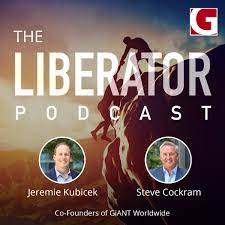
I keep mentioning gears – so let me tell you about this model that I heard about from….theGiANT Liberator Podcast hosted by Jeremie Kubicek and Steve Cockram. Find it here.

The Gears idea is not my idea. It is there’s. Although I’ve modified it slightly as I didn’t quite agree with a couple of points (despite their worldwide success!)

They suggest we spend our time in one of 5 gears – like the gears in a car. And it’s crucial to be in the right gear at the right time and in the same gear as those around us. So let’s have a look at what they say about the gears – slightly interpreted by me!

Take rest, to work better

1st Gear: Rest and recuperation

In a car first gear gets you going from a stationery position. First gear helps you get started. Going into first gear will also slow you down (ask anyone who has gone to change into 3rd gear in a car and hit first instead!) And first gear give you lots of control. When you want to do a tricky manoeuvre you need to be in first gear. So this is the gear to be in to get started or to move into to slow down to rest and recover.

It’s so important not to see self care as a ‘fall out’ option – it’s not something we need to do when we’ve ran out of energy, resolve, or personal resources. It’s something we do to maintain those things as best we can and we have to go to it before we hit problems – it’s a whole life thing. So getting into first gear regularly is very important.

We need to rest physically and mentally as good rest restores our attention to task. The problem with rest is we don’t do it often enough. Caroline Webb suggests we need a pit-stop strategy. We need micro pit-stops – a few minutes here and there for a quick recharge. Then a medium size pit strategy maybe at lunch time to replenish resources for the afternoon. And then a macro pit strategy for evenings and weekends. What are you going to do when you have a pit-stop to recharge?

Being outdoors is good for beating stress. Research has shown that from a psychological perspective it can be more effective than indoor exercise particularly around managing every day hassles and feeling mentally well balanced. Being outdoors in the early morning sunlight primes the process for sleep at the end of the day. Walking for 30 minutes beats stress and means you’ve already had some great physical exercise without barely trying. Walking mindfully, and deep breathing, is good for you. Research with social workers who engaged in mindfulness showed a reduction in sickness and stress levels…. suck in that fresh air!

The Lessons Being a Childless Woman Has Taught Me About Families

2nd Gear: Family and friend’s time

How we spend our time resting can be both a solo activity and an activity with others – rest is sometimes about actively engaging (trips out, going for a walk with others) as well as taking yourself away (journaling, meditation, walking on your own). Spending time with family is so important for our well-being and relationships. Been in 2nd gear when you’re with your family and they are in 2nd gear is essential.

In 2017 researchers Izenstark and Ebata wanted to see if time outdoors led to better attention on tasks and a strengthened a family bond. They selected mother-daughter pairs where the daughter was between 10 and 12 years old. Firstly, they were tasked with going for a walk outside or around shopping centre. Their ability to attend to a task was tested before and after the walk and then they were asked to play a game together that required teamwork.

Those who benefited the most were the mother-daughter pairs who had walked in the natural setting rather than in the shops. Positive interactions between mother and daughter improved after the outdoors walk. Attention was improved for the mothers during the nature walk and during both walks for the daughter. The nature walk created a positive impact on both cohesion and closeness. The mothers and daughters were unanimous – the nature setting was more relaxing or as psychologists call it – Softly Fascinating.

How to get on with your work colleagues - Lincoln College

3rd Gear: Social Connections (Friends Family & Colleagues)

I’m thinking here of the time you spend with colleagues particularly, not doing the work but socialising. Time spent socialising in work settings or during breaks at work is really important. The relationships we have at work have an impact on overall quality of life but also on the psychological safety we feel in those places. That’s the ability to feel comfortable enough with a group of people that you bring your authentic self to the work you do. You feel comfortable sharing all of your ideas and are part of the team. That chat making coffee or at the water cooler is so important.

The connections we share beyond our most intimate family and with our friends are also important for our well being. The secret in the workplace is to not let people in 3rd gear get in the way of you when you are in gears 4 and 5.

Sitting in Front of the TV May Be Worse for Your Heart Than Sitting at a  Desk | Live Science

4th Gear: Work Tasks

The ‘Work Tasks’ I’m thinking of here for 4th Gear are all of those things that you need to do that maybe connect you to other people or get things organised for the day. Your planning time, quick conversations with colleagues or your manager to check things out, emails, phone calls. Short tasks that you need to do to get things moving forward or to keep things moving forward. But not your ‘Deep Work’ tasks. They are for 5th Gear. You should start your day in planning mode – visualising you day, checking you have all the things you need to hand for all of your tasks, and at the end of the day making sure all is in order for tomorrow. This helps you connect at the start of the day with tasks you need to do and then disconnect from work at the end of the day – so you can leave it behind.

7 ways to stay focused at work

5th Gear: Deep Work

Deep Work is the work that needs your absolute focussed attention to the elimination of all distractions. Work that requires you to be in ‘flow’. Crucial here is right place and right time for the right task. You can’t do Deep Work if you are wondering whether everything is sorted for later or tomorrow or tonight or if there are unmanaged emails – that’s why you have to move through the gears in order. You can’t do Deep Work effectively if you are constantly being interrupted.

Gear Problems

Our relationships with people and tasks work best when we are in the right gear at the right time for the right task – and in the same gear as those around us and when in social environments or communal environments (workspaces or with family friends and colleagues) we are in the same gear.

Imagine you’re in 4th Gear – working on your planning or short tasks or 5th Gear Deep Work. Maybe you’re writing a report or you’re deep in reading something – getting stuff done – and someone enters your workspace in 3rd Gear (Social Connections). ‘How was your night’ ‘Did you see that thing on the TV’ ‘You’ll never guess what happened to me on the way in’ ‘do you want a coffee’. You have a choice – either stay in 4th or 5th gear and try your best to stay focussed (difficult!) or you change down to 3rd gear and match them causing you to stop work. Now – there are positives and negatives in every situation – I don’t knock work based conversations for beating stress – but there is an impact. This is particularly difficult in organisations that allow us to work flexibly. I’m a 7.30/8 person for getting into work – so by the time some of my colleagues arrive at 9/9.30 I’m at least in Gear 4 or even Gear 5. They are in Gear 3 hell bent on getting me to engage. The problem with human nature is that we don’t like to ignore people, so we change down and stop what we are doing – this means we take a productivity hit because of the actions of someone else. We need to be mindful of this.

Later in the day….. Imagine you need to be in 5th Gear because you’ve got some deep work to do – that report to write – and the chatter keeps dragging you back to 4th Gear or 3rd Gear. The irony is it’s often someone off-loading – often about how much they have to do and how they wonder how they are even going to get it done! They are not getting on with their task and now they’ve stopped you! Right place for right task! If you need quiet find quiet. My hope, as one of the consequences of this last year is that organisations can see that people do get stuff done when in other places. Deep work needs quiet. For some quiet is at home. Or maybe we need some sort of isolation booth in the office for people to deep work in. One thing is for certain, noisy open plan office environments are not good for deep work. They are good though for collaboration and idea exchange and professional support – so I’m not knocking them…. Right place for the right job.

Another example….. you get home and everyone else is in 2nd gear – family time – and your head is still at work in 4th gear – working mentally on all of those unfinished and unmanaged tasks – collision course! Right place for the right task – this is your time and your family and friends time. Maybe you’re at home and you feel the need to check your work emails dragging yourself into 4th Gear when you should be in 2nd gear or 1st. We need to think carefully about the message this sends to the people around us.

So, we need to move through the gears

You start the day coming out of a period of rest – you will have been asleep (Gear 1) – you may even do some Gear 1 activities when you start your day – quiet cup of coffee, or read a book, maybe some yoga. You may well then move into Gear 2 and connect with those around you before heading off to work where you will hit Gear 3 and maybe pass the time of day with colleagues. You will then need to move into Gear 4 – planning, emails, short tasks and then eventually you will settle down into Gear 5 Deep Work. You will move between 4th and 5th Gear throughout the day and slip into 3rd Gear for lunch. At the end of the day you will come down to Gear 4 and deal with short tasks that have accumulated while you have been Deep Working. You will change to Gear 3 as you bring your working day to an end, then into Gear 2 as you connect with family and friends and then Gear 1 as you rest. You might, on an evening or a weekend, drift between Gears 1, 2, and 3, but what is crucial is right gear for the right ‘job’. Right gear allocated to the right time, and being conscious of the gear those around you are in.

Structure is everything to generate flow. Flow is the art of being in the moment to the exclusion of everything else – with your family totally, with your colleagues totally, one your own totally for deep work or for rest. Planning and routine are the dominant forces in this area

Right gear – right environment – for the right task – at the right time

That takes planning

Set your Intention for the gear you are in – Pay Attention – Rest – Repeat

Stephen Covey’s 7 Habits for Highly Effective People

How to Form Better Habits as an Entrepreneur

The message that I’m going to give you here is a simple one….

Keep engaging in the same habits and you’ll get the same results
Engage in different habits you’ll get different results

Simple!

So if you are aceing all of your habits – good job! But maybe a little reflection on our habits at some point is good for us all. What are the things that are constantly getting in your way? What are the things you do that seem to keep throwing you off course? What might you want to change, what might you want to be different? What habits would make things better. Pick better habits and you’ll get better results.

When thinking about developing a habit – Think trajectory as well as goal

We set goals quite easily but we need to plan how to get there. Habits help us achieve things. Habits help us achieve our goals (or they get in the way!)
How you go about your business is more important than the goal (even though the goal is important). ‘I will run 3 miles’ is a goal – but you won’t ever do it unless you figure out what the process is to get there. You need to break the goal down into manageable steps and form habits to get you there. And if you engage in negative habits they’ll get in the way of running 3 miles.

Small changes over a period of time lead to big changes

Changes that are small and seem unimportant (going for a walk, eating well, drinking less caffeine) appear unimportant but compound over time – daily choices compound over time

Small – fairly inconsequential steps – lead to massive transformations. We needed to develop positive habits (and maybe hang onto one or two of the bad ones ;-)!) The problem is some of the ways we operate can have a negative impact on us overall.

Zoom out

The problem is when we’re stressed – when we’re up against it – we tend to have a narrow view of what’s going on – we focus on the single thing causing us stress. What we need to do is zoom out and look at the big picture. And when we stand back a clearer picture often emerges. When we stand back it allows us to think about a priority. It gives us the space to consider next steps. It gives us the chance to consider what we may need to change in our environment or in terms of our habits – what we need to change in ourselves. Looking at the bigger picture can help us overcome overwhelm as long as when we’re looking at the bigger picture we take what we find, break it down into what needs to be done, and then make a start.

Stop Setting Goals And Start Building Habits - Focus

Construct habits one step at a time – start small looking for small changes that will lead to transformation

So, what habits might we want to think about establishing – what things can we focus on that over time might transform how productive we are at life….

Stephen Covey’s 7 Habits

Proactive vs. Reactive: How Savvy Use of Analytics Helps Contact Centers  Navigate and Adapt to Uncertainty | NICE inContact

1. Be Proactive

The problem is that people are much more inclined to be reactive. Rather than plan, rather than control what they can, they just wait to see what happens and then react. One of the things we can do is bring the future into the present and consider it, so that we can, as far as possible, predict it. This has a fancy word. It’s called planning. ‘Control it or it will control you’ (David Allen – Getting things Done)

Visualize: Business Lesson #1 - International Image Institute

2. Begin with the end in mind

Where are you going and how are you going to get there. Visualise what you want to achieve this week, this month, this year… this life! This is rooted in your values. Covey talks about Personality Ethics – how you look from the outside – your image – your concern for how other people view you. He says that this is not what we should be rooted in but rather we should be rooted in character ethics – what we are inside. The fabric of our person, not what we look like to other people is what’s important. Values – your values – should drive your goals and your habits

First Things First - YouTube

3. Put first things first

There is a disconnect about how we talk about the things that we know are good for us – or the things that we want to do – and actually doing them. Most of know what we should eat and that we need to exercise but do we do these things effectively!? We procrastinate – which is the art of ruining your life for no apparent reason!


We allow ourselves to disconnect from the things that really matter
From activities, family, friends and rest.

You need to figure out what your first things are by ‘Beginning With The End In Mind’ and then by ‘Being Proactive’ in pursuing your first things first. The science and the research tells us what the first things should be. Rest and recovery, sleep, exercise, nutrition, connecting with others.

How to Create Marketing Win-Win Scenarios - Trade Press Services

4. Think Win-Win

Thinking win-win is about connecting things together (This is not quite how Covey talks about it – but similar). Combine things to encourage habits by connecting something you don’t like doing with something you do like doing – win – win. Instead of walking the dog on a morning – I run with the dog. The dog gets ‘walked’ and I get a run!

Or see planning as a productive process, not time wasted, but time invested
It will mean that you feel more in control of the tasks you have to do and then when you get to the task it will mean you should have everything you need in place. You’ll be in the right place at the right time for the task you are undertaking. So stopping and taking precious time out will be good for you and will mean you get to stand back and take stock and then be better organised – win – win

Research tells us that unmanaged – incomplete tasks drain psychological energy and capacity but managed tasks – even when still not completed -have less of a psychological drain. This allows you to focus on the task at hand while the other tasks wait patiently for their turn. So spending that precious time in planning means you can leave behind the things that are waiting to be done and get on with the next thing you need to do.

Journal Club: How much you think you understand depends on what you believe  others understand | National Academy of Sciences

5. Seek first to understand and then to be understood

By understanding the other person first, you will have taken time to build a relationship and you will be able to cooperate effectively in whatever you are doing. This will support a good working relationship or a good family relationship and will improve the emotional content of interactions.

Seeking to understand may be self reflection. You may be trying to know yourself better or understand what you may need to changed. Know yourself to lead yourself.

Use These 5 'Cogs' to Plan Lessons Like a Pro

6. Synergise

The whole is greater than the sum of the parts. In all the areas of self-care (physical, emotional, practical) small steps over time will lead to big changes and all of these things interact and support each other…..
– you eat better – you feel more like exercising – you exercise – you sleep better – you sleep better you work better – you work better (more efficiently) you feel more able to rest – you rest better you feel more able to look after your nutrition or you exercise – and so it goes.

Also, collaborate – synergise with others. Work with your family on meal prep, buddy up for exercise, make a pact to take a lunch break and lunch together with a colleague.

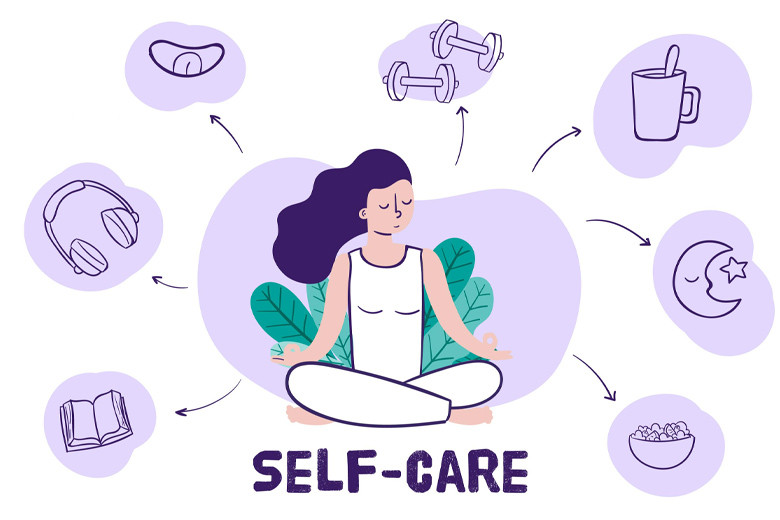
Self-care is very important. Here's why you need to invest in YOU! |  Goodhomes.co.in

7. Sharpen the saw

Self care is a necessity not a luxury. If you spend all of your time sawing down trees your saw will become blunt. If you don’t take time to sharpen your saw the trees will take longer and longer to cut down. We need to keep our minds sharp by resting and recovering effectively and by initiating good self-care.

Growing Healthy Habits - CrossFit Leyland

Keep engaging in the same habits and you’ll get the same results

Engage in different habits you’ll get different results