Sort out your morning first!

The establishing of a morning routine is vital to starting the day on the right foot (that’s the ‘correct’ foot not necessarily the ‘right’ one – you could start on the left one if you want!). Your first ‘steps’ into the day are crucial to how your day goes. Some advocates of this suggest creating a 30-60 minute routine to benefit yourself and start you off on the day right. (Although 30 to 60 minutes feel like a bit of an ask for most of us). This comes as no great surprise to me, but it is nice to have what you know affirmed. You want something that will physically and mentally prepare you for the day. Ideally it should involve a period of mindfulness or reflection. Visualising the day ahead had been shown to help.

It’s the start that stops most people

Thinking about our day, visualising what you want it to look like and what your objective is, has been shown to have a significant impact in how it actually turns out. Neuroscience has plenty of research to tell us it is so.

My morning routine has changed since we got a dog because she won’t wait for her walk until I’ve sorted myself out!! So my mindfulness and visualisation takes place while I’m in motion!

Morning Meditation

But it used to look something like this….. On waking I’d start with some deep breathing – this is before I’ve even got out of bed. Next, I’d press play on the music that is the backdrop to my yoga stretching the Om Mani Padme Hum (Ven. Dharma Nauka). I do sun salutation, downward and upward dog, pigeon pose (which I completely struggle with!), cat and cow pose and some additional stretches for good measure ….and it usually takes me the time of the full mantra to do this. I then sit on the floor for more deep breathing and some meditation – just for a few minutes. I still do this as often as I can… but now after the dog walk! She sometimes joins in and shows me how to do both downward and upward dog… and she’s much better at it than I am.

Hydrate!

Next – water. Then – coffee and settle down to read for quarter of an hour or so – something that’s currently intriguing me about the human condition ….and then I’m done ….and all ready for breakfast!

The reality is, for me anyway, is that I still fit all of these things in at various points but it has to be flexible. With a little planning I generally don’t have to miss too much.

And what are the benefits? For me (at my age!) I feel physically ready for the day. I feel aches and stiffness when I wake up – but if I get my stretching in early I feel none of it for the rest of the day. But more than this I feel energised and ready to face the day in a state of calm. It certainly benefits me as if I miss too much of this out I’m convinced I don’t have as good a day. If I do these things, including the dog walk, I feel I’ve activated my body, activated my mind, and started my day by achieving a great deal. And that’s before I start on the other things that are waiting for me.

Start your day well and your day will go well – I’m convinced of it!

How do you sleep?

It is estimated that 1 in 2 people are not getting sufficient sleep! Sleep is crucial to our wellbeing. Physically our body uses the time to recover and replenish and sleep has an essential role in the consolidation of memories. So, what advice is out there on getting to sleep!

Keep to a regular bedtime routine
As a parent I’ve said it myself and heard others say it. “Babies, they love a routine! Keeps them right!” It’s not just babies that need a routine it’s any human being. Much as we kick against it as adults we are creatures of habit and routine. Your body is programmed into a chemical routine that does its best to achieve sleep, rest, and waking. And what do we do!? We ignore it. We stop up late and wonder why we are tired the next day. We get up late and wonder why we then can’t get to sleep the next night. We self medicate with alcohol and caffeine to get that little bit more out of the day and out of our social life. And all we achieve is the disruption of our programmed chemical clock. And when we don’t attend to it for long enough the situation becomes chronic.

Sleep at regular times
Walker (2017) suggests that we need 7 to 8 hours of sleep a night and that we should be sleeping from about 10 to 10.30 until 6 to 6.30. These timings are in tune with our natural rhythm. So that’s your starting point. You should also maintain this 7 days a week.

Don’t go to bed hyped
While exercise is an important aspect of self care you should avoid it for 2 or 3 hours before bed time. A good way to wind down is to have a warm bath – again…. isn’t that part of the routine we give babies. This is a clever little trick to prepare your body for sleep. It’s not the heat on its own that creates the sleepy mood. It’s the impact of the heat on your core temperature. Do you feel cold when you are tired or when it’s late on a night? Part of your programmed sleep preparation is a drop in core body temperature. The hot bath draws the blood to the surface of your body and therefore reduces your core temperature. Clever body!

Do something that relaxes you
There are a huge range of yoga and relaxation CD’s and Apps out there that might help you. Anything that calms your mind and distracts you from your ‘racing’ thoughts. You could try audio books, or read a book, or maybe listen to the radio. You should try to avoid TV and smart phones as, not only do the stimulate, but the light they emit kids your brain into thinking it’s not dark out there!

Be comfortable and create a ‘clean’ environment
It sounds obvious I guess, but, have the best mattress and pillows you can afford. Try different numbers of pillows and different types. You may find a harder or softer pillow helps. You should keep your bedroom for sleep (and sex…. unlike most other vigorous activity sex makes you sleepy!) Avoid distractions like TV’s and ticking clocks and keep the room tidy. Make your bed when you first get up so when you eventually get to bed after that hard day it looks clean, tidy, and inviting. Your bedroom should be cool (between 18 and 24 centigrade – but go low) and dark. No glowing lights from inside or outside the bedroom.

and my favourite…. Write ‘to do‘ lists for tomorrow
One of the main things that keeps people awake is trying to remember things they need to do tomorrow. Before you go to bed (or ideally at the end of your working day) write down everything you need to do the next day, safely leaving them so you can find them when you need to, without having them going round and round in your head. Keep a note pad by your bed. If you think of something while in bed, write it down. There’s good evidence that externalising memories in this way can help us ‘put them to bed’ to help put us ‘to bed’!

What else…
Inevitably for some making such self care changes isn’t enough. These ideas are effective for many and you need to give them a good month or so to see what the impact is. But if you find that you are consistently trying these things and they are not working then you should seek medical advice. Walker (2017) has concern that this simply leads to the prescription pad and, in his view, drugs don’t work as they don’t achieve the right sort of sleep but are more of a sedative than good quality sleep. So, you feel you have been asleep, but have missed many of the benefits. Your GP should be able to refer you to sleep specialists. It would be useful while trying to make changes that you keep a sleep diary. This should detail what you have done during the day, how you have prepared for sleep, what it is that’s keeping you awake, how often do you wake – make sure you document as much as you can.

Try these things out… what have you got to lose?

[amazon_link asins=’B077XKJ3XJ’ template=’ProductCarousel’ store=’socworsho-21′ marketplace=’UK’ link_id=’a4ec8ac9-f0a7-11e8-a2ea-6d716a44f69f’]

Do you care!? The importance of looking after yourself

selfcare

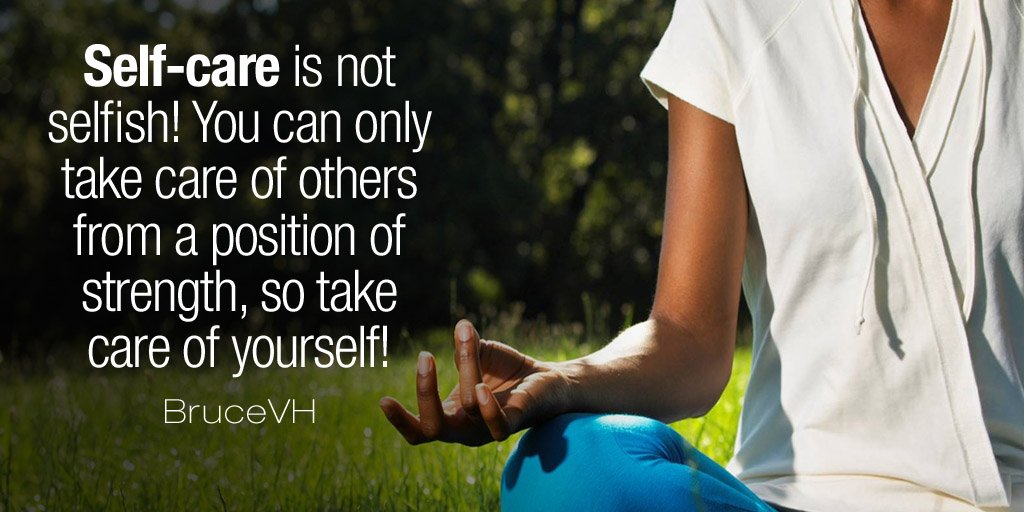
I saw this image above last night on a friends facebook feed and loved it. I think it’s absolutely right. How can you take care of others if you are not taking care of yourself. If you’re stressed and frazzled, feeling lethargic and tired, feeling snowed under with stuff to do, how on earth are you going to ‘be there’ ‘in the moment’ with the people you are trying to support? You will be distracted and you won’t be delivering the best service you can. And if left unattended this will lead to self doubt, anxiety and stress.

You need the tools to be able to do something about this. I’m not sure professional training programmes and employers adequately teach people how to self-care. Yes, I hear about some employers running a session on mindfulness from time to time but I don’t hear of trainers and employers routinely teaching students and staff how to self care.

And you know what…. it’s not rocket science! But…. it is science. Advances in how we can observe the brain in action have led us to understand much more effectively how we work and therefore what we can do about it. You will already know all of these things but may need reminding or may not be fully aware of the importance of them.

Here’s a flavour of a few things that help support your psychological capital so that you can be productive and do a good job. I’ll start with the thing that me posting the above image led to a conversation about…..

Take a break
I can’t stress enough the importance of taking a lunch break! Never mind your legal right to one (which you have!) the impact of not taking a lunch break is significant.  There is evidence that says that simply by taking a 20 minute break away from your desk at lunch time and eating something healthy or maybe going for a short work will improve your productivity in the afternoon. You will get back more than the 20 minutes you might feel you are losing in improved functioning and improved concentration. Also, you’ll be less irritable. This is a win, win, win! A win for you because you’ll get more done and feel a whole load better, a win for your employer because you’ll get more done and you will alleviate some of the symptoms of stress which may well lead to reduced sickness, and it’s a win for the service users you are working for because you’ll be more focussed on them either face to face or in the work you are doing on their behalf in the office. A report in the Telegraph states that those who are most productive take a short break about every hour!

Exercise
You can use your 20 minute lunch break to go for a walk! If you want to improve your well being through exercise you may be surprised at how very little achieve’s a great deal. I’m not talking about you becoming a gym bunny! I’m talking about some regular moderate exercise. Research has shown that one single 20 minute exercise session (and that could just be a brisk walk) leads (in the short term) to faster cognitive processing, more effective planning, better short term memory, and more effective self control. Bristol University research showed that some exercise before work or at lunch time boosted mood by 40% and the ability to deal with stress by 20%. These things are a ‘no brainer’. Short and regular maintenance improves your outcomes!

Self Management
Being organised makes you feel more in control. I use something I learnt on a speed awareness course as an analogy here (I know I know Speeding is bad! I’ve learnt my lesson). We were told on the course that the three things that cause car crashes are speed, space and surprises. [More on this here]. And I think we can use that to think about Person Crashes! If we are hurtling along at break neck speed without taking stock then we will eventually crash. Something will go undone, or a deadline will be missed. Having a routine that makes you look at what’s to do on a daily basis will help avoid this. We need space – and I’ve talked about that above. Space to switch off for a short period so we can recharge. Diary in the lunch break. Have a morning routine that gives you some space to prepare for the day. Schedule a coffee mid morning. Find space for you to recharge. And finally surprises! If you are in the right frame of mind because you’ve had space and if you have a trusted system that means you know everything that is to do you will find it easier to deal with the surprises life throws at you. If you are using your diary effectively you’ll be able to see where the space is and use it to deal with that surprise or move stuff into it to deal with the surprise now!

There’s more on this here.

There are other things that I’ll talk about soon – mindfulness, sleep, nutrition, emotional intelligence – to name a few. But… for now…. make a start! Schedule that lunch break! Go for that walk! Trust me! It will help