Who IS to blame….?

The Guardian this morning (August 1st 2019) reports that social workers are being blamed for their own stress and burnout. You can read the article here.There are some very damning statistics in there about how social workers are feeling about this and how they are maybe being made to feel by employers. Indeed, the HCPC standards of proficiency include things about developing resilience and utilising self care (although not exactly in those words).

In the world of ‘things’ resilience is defined as the ability to resist stress (think of an iron girder), or the ability to spring back into shape. In the social work worlds resilience is defined as the ability to bounce back from the emotional trauma of practice. But I’m not convinced that is exactly all it is. The Guardian points out that there is a lack of an agreed definition or even a sense of what it exactly is but it does seem that the word resilience, more often than not, is prefixed by the word ’emotional’ as though that is the only, or primary, form of resilience.

I think resilience is multi-faceted. And I do think there is a personal responsibility element to it. I am not going to argue here against the very clear fact that workloads for social workers are too high and available resources are too low but I am going to argue that that is not the only factor. This is based on my observation that some people are coping well, some are doing ok, and some are not doing well at all, in very similar environments. So, I do think there is more to it than too many cases and not enough time. Although I am keen to stress that I think that is probably one of the more significant factors. And I think it’s worth saying here that workloads in most professions are too high – it’s not just social work…
Emphasising the personal responsibility element of resilience plays right into the hands of the dominant neo-liberal agenda endemic in the political stand point but nevertheless there are some things that can be done to enhance resilience that can only be personal. Let me explain. Resilience is not just about the ‘bounce-back’ from emotional trauma – it is about other things. We need to be physically resilient, not just for our work life but also for our life outside of work. We try and compartmentalise ‘work’ and ‘life’ in pursuit of ‘work-life balance’ when really what we should be doing is creating one balanced life that includes the things we get paid to do, the things we don’t get paid to do, and our rest and recuperation. Physical resilience helps us cope with all manner of things. This is why exercise is so important in managing stress. It has been shown that moderate levels of exercise (a brisk 20 minute walk) reduces feelings of stress (as well as reducing levels of cortisol and adrenaline in our bodies – the physical manifestation of stress). So, if you are exercising you will be more physically resilient. What you eat is equally important. The science of ‘the second brain’, as many researchers are referring to our gut, is young, but there are clear signs that what you eat has an impact on your gut biome and in turn on how you feel and how you cope with stress. How you sleep has a huge impact on your productivity and how productive you are, or are not, and therefore has a huge impact on stress. It is in this element – self care – where it is clear that personal responsibility is required in order to achieve physical resilience. No one can make you go for a walk, eat well, or go to bed at a reasonable time – only you can do that. This physical resilience has a direct impact on our emotions, our ability to manage them, and therefore on how we respond to stressful situations in all areas of our lives.

There is also another element to resilience. The ‘Organised’ element. If you have control of what you can control – if you have some sort of system that records and manages all of that for you – then when something throws your world into chaos you will have the capacity to deal with it better. David Allen (Author of Getting Things Done) talks about having a mind like water. When a rock is thrown into a still pond it creates ripple and these ripples eventually dissipate and then the pond is returned to calm. This is how your mind should be. This relies on what he calls a trusted system that contains everything that needs to be done, everything in your ‘sphere of responsibility’ as I like to call it. There is a lot of your life, at work and at home, that you can control and structure so that you can leave it safely alone while you deal with the crisis that will inevitably manifest itself at some point. By being organised and controlling what you can you will be more psychologically resilient. Research into the Getting Things Done methodology that Allen proposes has shown that by having everything you need to do, or may want to do in the future, recorded in a trusted system, feelings of overwhelm and stress are reduced. It doesn’t get the things done but it stops you trying to remember everything, gives you a sense of control and order, and frees up psychological capacity to do whatever needs doing right now.

There’s no denying that the emotional impact of working with people has an impact and that impact needs to managed somehow. By dealing with the things we can deal with ourselves, exercise, nutrition, sleep, and being organised, we can free up more of our capacity to deal with the emotions and demands of the job. I say again, I am absolutely not saying that we have no problems in social work with case loads and resources, but taking some care of yourself and having a system to be organised have been shown to help. Fact.

So, the government have some responsibility in terms of funding, the regulator has some responsibility in terms of advocating for the profession, senior managers in local authorities have a responsibility to engage in the local political agenda around funding and resources, but you also have a role in making sure you are ready for the task. You can make a contribution, you can make a difference. Why would you not want to look after you!? Why would you not want to do at least something? There is clear evidence it helps. It won’t make the problem go away but it might help you manage some of the fall out. You are too important to leave it to others. That’s the personal responsibility bit. That’s why you need to do something because you are too important not too.

Self care is an essential, not a luxury in any profession.

Stephen Covey’s 7 Habits for Highly Effective People

How to Form Better Habits as an Entrepreneur

The message that I’m going to give you here is a simple one….

Keep engaging in the same habits and you’ll get the same results
Engage in different habits you’ll get different results

Simple!

So if you are aceing all of your habits – good job! But maybe a little reflection on our habits at some point is good for us all. What are the things that are constantly getting in your way? What are the things you do that seem to keep throwing you off course? What might you want to change, what might you want to be different? What habits would make things better. Pick better habits and you’ll get better results.

When thinking about developing a habit – Think trajectory as well as goal

We set goals quite easily but we need to plan how to get there. Habits help us achieve things. Habits help us achieve our goals (or they get in the way!)
How you go about your business is more important than the goal (even though the goal is important). ‘I will run 3 miles’ is a goal – but you won’t ever do it unless you figure out what the process is to get there. You need to break the goal down into manageable steps and form habits to get you there. And if you engage in negative habits they’ll get in the way of running 3 miles.

Small changes over a period of time lead to big changes

Changes that are small and seem unimportant (going for a walk, eating well, drinking less caffeine) appear unimportant but compound over time – daily choices compound over time

Small – fairly inconsequential steps – lead to massive transformations. We needed to develop positive habits (and maybe hang onto one or two of the bad ones ;-)!) The problem is some of the ways we operate can have a negative impact on us overall.

Zoom out

The problem is when we’re stressed – when we’re up against it – we tend to have a narrow view of what’s going on – we focus on the single thing causing us stress. What we need to do is zoom out and look at the big picture. And when we stand back a clearer picture often emerges. When we stand back it allows us to think about a priority. It gives us the space to consider next steps. It gives us the chance to consider what we may need to change in our environment or in terms of our habits – what we need to change in ourselves. Looking at the bigger picture can help us overcome overwhelm as long as when we’re looking at the bigger picture we take what we find, break it down into what needs to be done, and then make a start.

Stop Setting Goals And Start Building Habits - Focus

Construct habits one step at a time – start small looking for small changes that will lead to transformation

So, what habits might we want to think about establishing – what things can we focus on that over time might transform how productive we are at life….

Stephen Covey’s 7 Habits

Proactive vs. Reactive: How Savvy Use of Analytics Helps Contact Centers  Navigate and Adapt to Uncertainty | NICE inContact

1. Be Proactive

The problem is that people are much more inclined to be reactive. Rather than plan, rather than control what they can, they just wait to see what happens and then react. One of the things we can do is bring the future into the present and consider it, so that we can, as far as possible, predict it. This has a fancy word. It’s called planning. ‘Control it or it will control you’ (David Allen – Getting things Done)

Visualize: Business Lesson #1 - International Image Institute

2. Begin with the end in mind

Where are you going and how are you going to get there. Visualise what you want to achieve this week, this month, this year… this life! This is rooted in your values. Covey talks about Personality Ethics – how you look from the outside – your image – your concern for how other people view you. He says that this is not what we should be rooted in but rather we should be rooted in character ethics – what we are inside. The fabric of our person, not what we look like to other people is what’s important. Values – your values – should drive your goals and your habits

First Things First - YouTube

3. Put first things first

There is a disconnect about how we talk about the things that we know are good for us – or the things that we want to do – and actually doing them. Most of know what we should eat and that we need to exercise but do we do these things effectively!? We procrastinate – which is the art of ruining your life for no apparent reason!

We allow ourselves to disconnect from the things that really matter
From activities, family, friends and rest.

You need to figure out what your first things are by ‘Beginning With The End In Mind’ and then by ‘Being Proactive’ in pursuing your first things first. The science and the research tells us what the first things should be. Rest and recovery, sleep, exercise, nutrition, connecting with others.

How to Create Marketing Win-Win Scenarios - Trade Press Services

4. Think Win-Win

Thinking win-win is about connecting things together (This is not quite how Covey talks about it – but similar). Combine things to encourage habits by connecting something you don’t like doing with something you do like doing – win – win. Instead of walking the dog on a morning – I run with the dog. The dog gets ‘walked’ and I get a run!

Or see planning as a productive process, not time wasted, but time invested
It will mean that you feel more in control of the tasks you have to do and then when you get to the task it will mean you should have everything you need in place. You’ll be in the right place at the right time for the task you are undertaking. So stopping and taking precious time out will be good for you and will mean you get to stand back and take stock and then be better organised – win – win

Research tells us that unmanaged – incomplete tasks drain psychological energy and capacity but managed tasks – even when still not completed -have less of a psychological drain. This allows you to focus on the task at hand while the other tasks wait patiently for their turn. So spending that precious time in planning means you can leave behind the things that are waiting to be done and get on with the next thing you need to do.

Journal Club: How much you think you understand depends on what you believe  others understand | National Academy of Sciences

5. Seek first to understand and then to be understood

By understanding the other person first, you will have taken time to build a relationship and you will be able to cooperate effectively in whatever you are doing. This will support a good working relationship or a good family relationship and will improve the emotional content of interactions.

Seeking to understand may be self reflection. You may be trying to know yourself better or understand what you may need to changed. Know yourself to lead yourself.

Use These 5 'Cogs' to Plan Lessons Like a Pro

6. Synergise

The whole is greater than the sum of the parts. In all the areas of self-care (physical, emotional, practical) small steps over time will lead to big changes and all of these things interact and support each other…..
– you eat better – you feel more like exercising – you exercise – you sleep better – you sleep better you work better – you work better (more efficiently) you feel more able to rest – you rest better you feel more able to look after your nutrition or you exercise – and so it goes.

Also, collaborate – synergise with others. Work with your family on meal prep, buddy up for exercise, make a pact to take a lunch break and lunch together with a colleague.

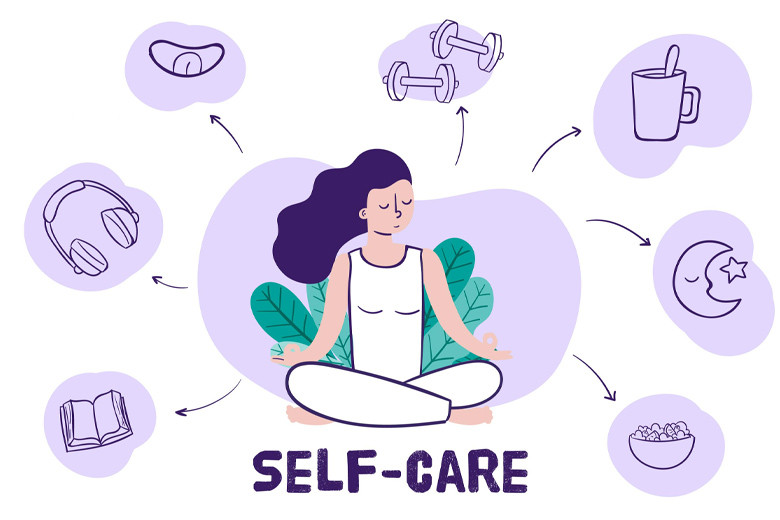
Self-care is very important. Here's why you need to invest in YOU! |  Goodhomes.co.in

7. Sharpen the saw

Self care is a necessity not a luxury. If you spend all of your time sawing down trees your saw will become blunt. If you don’t take time to sharpen your saw the trees will take longer and longer to cut down. We need to keep our minds sharp by resting and recovering effectively and by initiating good self-care.

Growing Healthy Habits - CrossFit Leyland

Keep engaging in the same habits and you’ll get the same results

Engage in different habits you’ll get different results

Hot Wax!

If you’ve heard me talk about self-care for well-being and productivity before you’ll have heard me say that self-care is about more than just bubble baths and candles…. Because it is! But…..

It sometimes is absolutely about bubble baths and candles!

I was overjoyed to find out about a new local venture in Newcastle – Hot Wax. So, I hooked up with them to have a look at their candles which are made of soy wax. What’s that you may ask!? All you probably need to know is – as you’d imagine – it’s made from soybean oil. There are ‘green’ benefits to using soy wax. It’s made from plants, it’s a renewable source, it is clean burning so doesn’t release toxins, and soy wax candles burn 40-50% slower than paraffin wax candles so they are good for your finances. Who would have thought!

Hot Wax sent me a Eucalyptus and Rosemary candle to try from their range of hand poured candles in a jar.

Eucalyptus is well known for its health benefits and is a prized fragrance of master perfumers all the world over. It has a fresh clean aroma which is sometimes described as minty, woody or citrusy. What’s not to like! And then you add in Rosemary! Magic. And it is. The candle smells great and fills the room with fragrance.

A study at Chulalongkorn University in Bangkok put some science behind the magic when they found that there were benefits to inhaling the gorgeous smell of Rosemary that produced beneficial effects on mood! Northumbria University in the UK found that Rosemary improved contentedness. Being in good mood and content is something we’d all like to strive for as an outcome of our self-care!

So, you see bubble baths and candles do have their place in your strategy! What better thing than on a Friday night lighting a candle, putting some quiet music on, and clearing you head ready for the weekend. (Or any other night, or time of day, for that matter!)

Give Hot Wax a try and indulge in an olfactory experience! Or put another way – light a candle and smell something awesome ….and drift away!

A little gem!

I came across this book referenced in another book and then did a little digging to find out more about Thomas Mitchell, Farmer. Because his book ‘Essays on Life’ written in the early part of the 20th Century is a little gem – full of words of wisdom.

[From: https://thomasmitchellfarmer.wordpress.com/]
Just before the First World War destroyed a generation and divided Europe for almost a century, a farmer in a remote part of Scotland sat down at the age of 43 to write his thoughts on how to live a good life. He records the values of his time and his own take on them. His is now a voice from the past that demands our attention, not necessarily to emulate it but to encourage us to consider what we have lost and gained.

He was Thomas Mitchell.

In the first essay in the book he illuminates us on the Art of Living. Because it is an art! I feel, and always have, that we are creative animals. Art is unique to us as a species and packed full of meaning for life. And life is embodied in art. Artistic endeavour and its output tells us so much about who we are. So there is an art to living.

Usefulness

Mitchell suggests that there are some key things. The first is usefulness. He says that we all have a purpose – something useful we can do that contributes not only towards our livelihood but also to our fellow ‘man’. Even when we do not choose the work we do he suggests we must do it to the best of our ability. If we carry the spirit of usefulness into daily work the this lends a dignity to work that imparts pleasure.

Happiness

The second element to the art of living is happiness. This is something of a current theme for me [more here] as I feel happiness in a particular form is liberating and forms the heart of a well lived life. But happiness is not to be found in things or in the excitement of ‘this or that’ but rather in the steady metre of life. The living of a good life day by day is one that resonates with values of humility, common good, and the joy of the current moment. There is a desperation that we cling onto that we hope will bring us happiness in living for future events rather than living now. Mitchell suggests that the secret of a happy life is ‘the art of extracting comfort and sweetness from every circumstance. The world is to us’, he says, ‘is pretty much what we make it.’ Are we a person of things rather than experiences. Are we a person of ‘it will be better tomorrow, it will be better when I’ve…..’ or are we a person of ‘what can I make of this moment.’

Take care of yourself reminder handwriting on an isolated sticky note

Character

Mitchell goes on to suggest that character, the distinctive mark that gives you your personality, is crucial. We are influenced he says by what we inherit but this only gives us a tendency towards a way of being and doesn’t define us. Our infancy and childhood shape us and the habits we form throughout life shape our essence. One element of character he points to is the ability to speak for yourself and think for yourself. Not to simply be buffeted around by the opinions of others. We should be tolerant of the opinions of others and reflect on them but ultimately make up our own minds on the right course of action. I am led back here to the roots we establish in the world by virtue of our values. They will give us our compass.

Self Control

The penultimate principle of his Art of Living is self control. Mastery of self and particularly of the emotional self I have always felt is crucial. This is something I talk about a lot and is Daniel Goleman’s idea that we can be competent and effective ‘pilots of our lives’ if we are emotionally intelligent and therefore exhibiting self control. Every pleasure, Mitchell observes, that is pursued to excess becomes harmful. And here we are in an age of far reaching mental unrest because, I feel, we can indulge ourselves in all manner of things thrown at us in the name of capitalism and consumerism. Pleasures, he goes on to say, are essential but if we exercise no self-control towards them they may produce ‘ill-health, misery, and weakness, in body or mind’. How true.

Self Respect

The final element is self respect. This to me taps into the foundation of self-care. You must have respect for yourself so that you want to take care of yourself. It is of little value if you show your respect for others and neglect your respect for yourself as, eventually, you will not be available to the other people, either physically or emotionally, to show them the respect they also deserve. This starts with self-respect not with respect for others – that comes second. Mitchell notes that self-respect is a regard for your own name and reputation. If we are to maintain our reputation we have to strive to do things at work, at home, or with friends, (or anywhere!) as well as we can and that starts with being ready for the task and being ready for the task starts with self-care.

You can buy the book here – Amazon
Or here through the publisher Vagabond Voices

No one else is going to do it for you so what are you are going to do… Self Care

As a social worker, albeit a one who now teaches social work rather than does it, I watch from the side lines and see people clearly stressed about the work they are doing, caught up in that Sunday night feeling of ‘what waits for me tomorrow’, and clearly feeling a sense of overwhelm.

I recently wrote an article on self care for Cache Alumni and started it like this….

“You can not see your reflection in running water”. I love this Taoist proverb as it reminds me that sometimes we have to slow down, take a break, and take stock. For me that’s the starting point of self care. Dodd (2007) says self care is “the practice of activities that individuals initiate and perform on their own behalf in maintaining life, health and well being” (Grafton and Coyne 2012).

I wonder what you do to ‘self care’

For me I do a range of things. I try to eat a healthy diet, I try to exercise daily, and I try to practice mindfulness and yoga. And most importantly I try to get a good nights sleep!

Did you know…
“Routinely sleeping less than six or seven hours a night demolishes your immune system, more than doubling your risk of cancer. Insufficient sleep is a key lifestyle factor determining whether or not you develop Alzheimer’s disease. Inadequate sleep – even moderate reduction for just one week – disrupts blood sugar levels so profoundly that you would be classified as pre-diabetic…” and the list goes on [from Matthew Walker’s ‘Why We Sleep’ (Page 3)]

I like to refer to sleep, nutrition and exercise as the holy trinity of self care. Read about it here. So, I ask you… What are you doing?


Nutrition

Here’s a few articles to have a look at:

https://www.selfcareshorts.com/2019/05/06/3-best-breakfasts/

https://www.selfcareshorts.com/2019/08/17/you-are-what-you-eat/

https://www.selfcareshorts.com/2019/08/26/kombucha-fizzy-goodness/

https://www.selfcareshorts.com/2020/01/26/take-it-with-a-pinch-of-salt/

Fitness

https://www.selfcareshorts.com/2019/07/30/gonna-make-you-sweat/

https://www.selfcareshorts.com/2019/09/03/discipline-lets-get-to-work/

https://www.selfcareshorts.com/2019/10/25/small-steps-end-in-big-results/


……make a start ….do something ….you owe it to yourself!