In order to explore Social Constructionism, I feel we need to take a step back and we’ll do that by having a think about how we know what we know.
Let’s start with positivism. Positivism is a Philosophical position about knowledge – the how we know what we know bit. It’s a belief that it is possible to establish ‘objective truths’ – facts – about things. In social sciences it would be an attempt to apply the same approach as you would to the ‘natural sciences’ and some would argue that that is not possible or even helpful. Positivism would search for concrete causes and causal links.
But maybe it’s not that easy to do such a thing after all nature (things like physics or chemistry for example) is a set of ‘impersonal forces’ but society involves a mixture of forces (e.g. the political, or culture etc). The decisions and actions that people carry out they, in some ways, make for themselves. How human beings interpret a situation is crucial which means there’s no one answer because we all may interpret things differently. Social sciences therefore are concerned with meanings and reasons rather than causes. You might argue that Positivism looks for certainties that are not there.

This takes us to postmodernism. Postmodernism is a school of thought that rejects the notion of objective truths and natural laws and ‘grand theories’ for explaining human behaviour and the world. It is also critical of the idea that developments in science and technology will inevitably lead to improvement (modernism). This is an interesting thing to think of when you have a moment or several! Are we better off as a consequence of the modern world? Alvin Toffler in his 1970 book Futureshock says that we as a human animal are colliding with the incessant change we see and that we are simply not biologically ready for the modern world – needing to be always switched on and always ready to go! Postmodernists feel there is no absolute understanding of society or reality and our sense of reality is shaped through social interactions and processes.
And this leads us to Social Constructionism. Social Constructionism is critical of the positivist approach to knowledge – that everything is knowable as an absolute fact. Our historical and cultural context is important, and knowledge and reality are constructed in our daily interactions and conversations which in turn shapes our knowledge of ‘how to go on’. Different constructions are maintained by patterns of action – ‘practices’ – the way we conduct ourselves in situations for example. There is a construction of lecturer – you expect certain things from me when I’m being one. And there is a construction of student – I expect things from you when you are being one. And others have a view on what ‘student’ is. What if my view and your view and their view are all different? Because they might be. I think you’re a vessel to be filled with knowledge. You think you’re a customer who demands what you need to know to pass the assignment. And others…. Well they could construct you and I in all manner of ways… and they do!
Language describes and defines things and as such has power. Harari in his book Sapiens explains that as the human animal we are the same, as a starting point at least, as other animals. We look at things from a subjective and objective point of view. Objectively we know that things are hard – like if we walk into them – or things are wet – if they are poured over us. We also have a subjective point of view – I’m afraid of heights! It makes me feal fear – and I have a physical reaction to it – my legs turn to jelly.
Harari goes on to say though that unlike animals we tell ourselves stories about things that are imposed on top of these objective and subjective realities. We tell ourselves stories called our family, or our culture, or my job. We tell ourselves stories about what ‘parent’ means or what ‘school’ means, or what ‘student’ means. We have an idea for ourselves sometimes, but that idea is born out of stories we have been told by others – maybe by our cultural position, or through what we have read, or the media. So those stories both describe and define something that will have some similarities with others but will also be nuanced – slightly different – and in some cases, possibly across culture for example, very different. Wetherell and Maybin (in Stevens – Understanding the Self 1996 Sage London) says that this also extends to feelings – quoting Rosaldo (1984) ‘Feelings are not substances to be discovered in our blood, but social practices organized by stories that we both enact and tell”
In terms of this construction of self the person and social context merge because the boundaries of both can’t be easily separated from each other. Psychology, it could be argued, seeks to switch off the social context and the influence of others so that the picture of an individual’s psychological make up is not complicated by such things. Social constructionists say this is simply not doable.
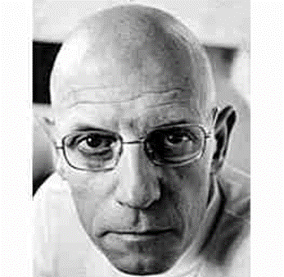
Language is not just a way of describing something that already exists. Words do things as well as having meaning. Language is not a mirror reflecting the objects in our world, but a tool that constructs our world. This brings us to the idea of discourse. Discourse, as defined by Foucault, refers to ways of constituting knowledge that together with the social practices, forms of subjectivity, and power relations, form more than ways of thinking but actually produce meaning.
So, discourse is a systematic ordering of language involving certain rules, terminology and conventions, such as the legal or medical discourse – or indeed social work. Social work has a whole language of its own – Assessment, Care Plan, Safeguarding, Capacity – all things that have very specific meetings within social work discourse and may have other meanings elsewhere. It is a group of statements which provide a language for talking about a particular kind of knowledge about a topic.
Knowledge is flexible, not necessarily concrete, it moves and shifts. The particular ‘common sense’ view of the world prevailing in a culture at any point in time is bound up with power- these are referred to as normalising truths – we normalise or accept as given a particular truth or version of something. Think about the construction of gender or ethnicity over the last 200 years where certain versions were accepted or tolerated by many. This leads to social practices or ‘sites of practice’ that perpetuate that view of the world and marginalise alternatives. It gives us a particular way to look at things that may prove hard to shift because they create opportunities for power that can be used to maintain a position. Powerful ‘knowledges’ keep us in order and get us to control ourselves through the acceptance of the status quo.
So how we construct our reality, the things around us, is influenced by others like family, friends, and colleagues, and by things like media and government. These constructs have a power that is found in them and in the language that describes and defines them.
Social Constructionism recognises ‘the importance of a much more fluid and artistic form of knowledge’. It also suggests that there are complex uncertainties which fits with what we know in social work. How we construct things is fluid and needs to be constantly refined, explored, and challenged I’d argue. Social Constructionism suggests that practices should resist accepted and powerful forms of knowledge.

Social Work is not merely the exercise of ‘technical rationality’. Technical Rationality uses measurements, and empirical research, applies theory, uses instruments and frameworks to collect information, and works towards a ‘truth’ about individual needs. It helps the worker, in the role of expert, generate the ‘right’ answers. As a contrast ‘Practice moral’ offers an interpretation of need based on values, empathy, and experience. It uses reasoning and accepts a variety of perceptions from within the service user’s life (Lishman 2014). It acknowledges that real world problems are ‘messy and indeterminate’ (Parton 2003 p2).
To develop understanding Service users and practitioners should emphasise the centrality of ‘talk’. This forges meanings and relationships. It underpins some key social work ideas like strengths-based approaches (seeing the world the way the service user does to draw on what they bring), and solution focused approaches which seek to achieve the same. A narrative approach helps social workers explore people lives through having them tell their story. The ideas of Social Constructionism suggest that engagement in conversations and interactions, and the patterns of practice these create offers the opportunity to generate new meanings – to become ‘poetic activists’ (Gergen, 1999 p.43 in Parton 2003)
Taking a such an approach from this theoretical position helps practitioners identify the significance of complexity, context, and process and considers where power is at play in those areas. It considers the notion of reflexivity – the ability to examine our own beliefs and practices and adjust them as we go. It emphasises and recognises a range of possibilities for understanding a situation and developing possible responses. It creates a collaborative approach to creating meanings.
There is a sense we are wanting to know ‘how’ rather than knowing ‘that’. We want to know how someone thinks about something rather than simply knowing that they simply think about it in a particular way – a search for meaning and its root, if you like. Such understanding is crucial so that we understand that people are constructing their own version of reality out of their experiences and that they are building and constructing their own world.

References
Burr, V. (2003) Social Constructionism 3rd Ed Sussex: Routledge
Gergen, K. (1999) An Invitation to Social Constructionism Sage
Parton, N. (2003 Rethinking Professional Practice: The contributions of Social Constructionism and the Feminist ‘Ethics of Care’ The British Journal of Social Work, Volume 33, Issue 1, 1 January 2003, Pages 1–16
Lishman, J., Yuill, C., Brannan, J. & Gibson, A. (2014 Social Work: An Introduction London: Sage (Paragraph on pg. 66 on Social Interactionism)
O’Brien, E.Z. (2020 Psychology, Human Growth and Development for Social Work (2nd ed.) London: Palgrave
Payne, M. (1997) Modern Social Work Theory London: Macmillan