
 Yesterday I pointed you to some blogs of mine about self care ….and today I’d like to point you to some blogs about being productive. It’s part of the modern workplace and indeed modern life that we have more to do. It’s a curse and a blessing I feel. It’s great that we have so many opportunities and it’s great that in our job as a social worker we can help many people. But that comes at a cost. And that cost is often our well being. Stress manifests itself and we feel overwhelmed. Stress is not necessarily a bad thing. A certain level of stress, often referred to as eustress (‘eu’ is a Greek language prefix for good) can motivate and stimulate. As you will know if you exercise putting your body under stress is good. You get those aches and pains but also you feel good. The stress had a positive impact.
Mental stress can also be a good thing. Our stress responses are rooted in our fight or flight response and this can motivate us to get on with things. Read about it here.
However when we are stressed all of the time, our body constantly on high alert, awash with adrenaline, this can have a negative impact on our emotional and mental well being.
 One of the things we can do to help in this area, both at work and at home is to be organised. By having a method that helps capture everything you need to do, for example, a comprehensive calendar, you can reduce some of those feelings of overwhelm. Yes, you will spot you still have a lot to do, but you won’t be worrying about forgetting things. So setting time aside to plan your diary and break your workload down into tasks at the start and the end of the day may feel counterintuitive… ‘I don’t have time to do what I have to do Stephen! And now you want me to set aside 20 minutes twice a day to plan!!!!’ Yes I do! There’s a Zen adage that says, “You should sit in mediation for 20 mins a day. Unless you’re too busy, then you should sit for 1 hour”.
And the same is true for planning. The more you have to do, and the less time you have to do it all, the more time you should spend planning what to do. Because then you will know exactly what it is that you need to do and what it is safe to do later. Doing this will stall procrastination in its tracks and you will just get on and ‘do’ – ticking things off your list as you go!
 There are some other things that might help….. And you can read about them in the following places…..
The Two Minutes rule – read about it here
Setting Goals – read about it here
And there’s some stuff here about diary management and tasks
And there’s some ideas below about being productive
https://www.selfcareshorts.com/2019/07/10/emails-the-modern-tool-or-the-modern-scourge/
https://www.selfcareshorts.com/2019/09/05/making-a-start-is-the-hardest-part/
https://www.selfcareshorts.com/2019/10/26/game-plan/
https://www.selfcareshorts.com/2020/01/25/autonomy-one-of-the-keys-to-success/
….oh no …another thing ….think about priority as a singular not a plural word. A priority is the thing you are going to work on right now…. so there can only ever be one priority. If you try to have more than one then you’ll try to multitask… and that diminishes your productivity. Trust me! It does. I’ll tell you more about that in a blog soon!
 I have a particular interest in social work organisations and management in those organisations so was delighted to review Organisations and Management in Social Work, 3rd edition by Mark Hughes and Michael Wearing for The British Journal of Social Work….


 I wonder what you do to ‘self care’
 I like to refer to sleep, nutrition and exercise as the holy trinity of self care.

 Collaboration and Teamwork
 Does it Matter?

 So – Does it Matter!?
 Handy identifies various cultures in organisations and the one that fits best with what we see in local authorities is the role culture. Role culture comes with the hierarchical structure that we all know so well with its need for ‘sign off’ and authorization by someone often detached from the actual work that took place. This leads to a formal and rigid chain of communication that can often slow down decision making to a virtual stop. There are rules and policies to guide how the organisation operates and functions leading to process driven work that sometimes just doesn’t fit with the specific style of the individual worker or the needs of the person you are working with. So while there appears to be flexible options at our finger tips to offer service users – like Direct Payments for example – these too are drowned in bureaucracy. The emphasis in this organisational culture is on written documentation…. Don’t we know it!

 Handy would suggest a task culture where work is task or project orientated, where groups of people come together to pool their expertise, and where groups can be formed and reformed depending on what is required, drawing on all of the transferable skills that come embodied in a professional worker. This would provide the flexibility to respond to change. Change at the level of working with an individual – a ‘what does this person need’ approach to shaping the work around them – and at an organisational level where responses to changes in the task environment can be adapted to quickly and effectively.
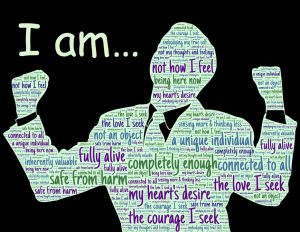 Humanistic and existentialist thinking might lead us to conclude that our sense of self is constructed from, among other things, being autonomous, being free thinking and being part of a community.
 So, existentialism underpins humanist ideas of self, about being free and autonomous but with responsibility. There is also a shared journey between us as social workers and the people we work with. There are some tensions created by the fact we work within often very inflexible, risk averse frameworks.


 Ongoing increase in outstanding assessments
 So to get the best out of people we need to be encouraging and helpful with our team or colleagues. Obvious really, but often not how it works in reality with unrealistic demands and a job done at any cost approach supersedes a job done while maintaining a positive psychological position for the worker.

 The other advantage of this approach is the psychological impact of the Power of Small Wins! Each time you check off a diary entry (I turn it from the usual blue colour in my electronic calendar to grey to signify completion) you get a psychological boast from achieving that small win. The goal now isn’t the final end of the project or assessment – the goal is now each small step – with the feeling of having completed something that goes with it! And that will lead to you feeling like you’ve had a good day! Result!