Working from home? Here’s how to start your day!

It might surprise you to find that I’m not going to tell you much about how to start work… although I will end up there. This is because what you do before you start your work day is so important no matter where you are working but at this time of ‘lockdown’ it feels doubly important to get the start of the day right. Like it or not having to work in a new way will bring additional anxiety and stress. So here we go..

Get up at the same time you normally would.
Keeping a regular bed time and a regular getting up time fuels good sleep. You should have a pattern that you sustain 7 days a week and should aim to go to bed between 10 and 10.30 and get up between 6 and 6.30. These times are in tune with your body’s natural rhythm. There’s a real risk that in avoiding the commute you use the time to sleep later. This isn’t good for you and there are some much better things you can do to set yourself up for the day.

Make your bed
Small wins are powerful motivators. Every small thing you achieve gives you a little dopamine hit (our feel good chemical) so starting your day by achieving making your bed gets you off to a good start. Also, when it comes to bed time and you go to climb into a nicely made bed it is a satisfying feeling. It will take you a couple of minutes and means you’ve started your day by completing your first task.

Avoid your phone
Don’t start your day with your devices. To be honest I wouldn’t normally say this. I usually have a check of facebook and twitter early in my day, but, at the moment, working from home, you are likely to be locked to tech all day in Teams meetings or replying to emails, and the like. Tech drains us. Eradicate unnecessary tech to avoid tired eyes and a tired brain. Set yourself a little time aside to indulge yourself in the latest meme at the end of the day.

Exercise
I know for definite that if I start the day with some light physical activity it sets me up for the day. I know that I feel more switched on, alert, and able to get into flow. It doesn’t have to be a great deal. I do two things on a morning. I go through a yoga stretching routine to wake my body up and then take the dog for a brisk walk. It will energise you. Also, getting outside on a morning, if you can do so safely at the minute, sets in motion a process that ends with a good nights sleep. The exposure to daylight early in the day sets off a biological process that ends with quality shut eye.

Eat and hydrate
Start with a good breakfast. If you’re having trouble fitting everything in make some overnight oats the night before and then all you do is grab them from the fridge and you’re sorted. But really how long does it take to make some toast or have some cereal. Start the day with something.

Try to get a glass of water in early as you dehydrate while you are asleep. I always have coffee early on a morning. Just go careful with how much you drink as you will have a coffee slump later on. Avoid managing the coffee slump with more coffee. I have two coffee slots first thing in the morning and early after lunch. Strategic coffee drinking! Outside of these times if I feel like reaching for a coffee I go for water and a quick walk – even just around the house. I find, if nothing else, it distracts me, and often hydrating with the water takes the craving away. It’s so important to keep hydrated during the day. Have a glass of water every hour or so or keep a bottle on your desk and sip it.

Get dressed
It’s so easy to slip into something comfortable working from home. Or even to stay in your PJ’s if you’ve got no video calls to make. Don’t. get showered and get ready. Routine is everything. We may be having to establish new routines but establish them we must! We thrive on routine. We give babies and children routine because we know it works. Here’s the thing… when those babies and children turn into adults they thrive on routine too! Getting dressed also signals ‘ready to work’. You will feel much better, you will feel professional, you’ll feel ready to go. I do have a compromise personally which is that I still wear my regulation v-neck black t-shirt, but, instead of my regulation black jeans I’m wearing a smart pair of joggers. I’m still getting ready but enjoying the comfort. And fella’s have a shave. There’s nothing worse than a video conference with some stubbly fella. And I mean you fella’s with beards as well…. nows your chance… shave it off… you do know these beards are going to be viewed in the same way as the mullet is in 20 years time don’t you 😉 …I digress ?

And now you’re ready to start work….

But before you do that – before you go near those emails – two things

Set your goals – Visualise your day

Open up your dairy and think about what you want to achieve today. Setting your intention promotes motivation and overcomes procrastination. Visualise what a successful day looks like. Experience yourself completing tasks and having effective video meetings. Picture yourself ticking things off your ‘to-do’s’. And watch yourself as you close your laptop and move away from work and embark on a lovely evening. There is real power in this – give it a go.

Now you can start work…….

Go get ’em!

Stephen’s book, written with Lisa Watson and Steph Hunter is due out in early May and is called “How to Thrive in Professional Practice”.

Available here https://www.criticalpublishing.com/how-to-thrive-in-professional-practice
for pre order (due out 5th May 2020)

The book is an engaging yet undemanding read, and pulls together the various individual strains of self-care, spirituality and common sense, housing them under one external literary jacket, in a ‘whole system’ approach. A one stop ‘bible’ to give social workers and other professionals an uncomplicated, easy to read, go to resource that empowers them to manage and maintain their wellbeing through personal responsibility and self-care.


Where did it all go wrong?

This is huge isn’t it? This thing that we’re going through at the moment. This huge transformation of how things work and how we go about our business. As someone who loves to write about how we can look after ourselves, how we can self-care, I have found myself at a loss to write anything. “What do I know?” is how I have felt.

Starting to read a new book this morning (Antifragile by Nassim Nicholas Taleb) I was struck by some things he said which resonated for me (and I’ve only read the prologue!!). Here they are:

“…ones personal experience gives the stamp of authenticity and sincerity of opinion” (p. 15). This is indeed true. If you haven’t lived it how can you write about it.

“I write with my scars, hence my thought is inseparable from autobiography” (p.18). So true. In explaining how things are, and how they might be, you have to weave them into your story. We have gone to great pains in our book to tell a story and offer advice that only includes things we have tried for ourselves when it comes to self-care, well-being, and emotional regulation. That’s why I’ve not written anything yet about ‘lockdown’ and how to thrive in it.

Also, there are too many variables. I am in very fortunate position of not being on the ‘frontline’ like lots of social workers and social work students I know, and have not lost my livelihood as a consequence of the current circumstances. I can largely do my job from home and my family are safe and well. I feel very lucky and humbled by the stories of those who must, and do, continue to go about their roles to maintain some semblance of order for the rest of us.

What do you write in such dire circumstances when you haven’t experienced the circumstances for yourself? I did what I usually do when there’s something I don’t know about; I turned to the books and read, while I experienced personally and vicariously what was going on to try and make sense of our predicament.

It’s strange what you are drawn to at such times. In the same way as ‘rubber-neckers’ can’t resist looking at the car crash I turned firstly to The Plague by philosopher and writer Albert Camus, and discovered by a quirk of fate the writings of Martha Gellhorn in her collection of articles The Face of War covering her time as a journalist from the Second World War to, and beyond, the Vietnam War, and what I discovered fascinated me.

I was delighted in Camus’ fictional narrative to see him write, “…one easily passes the time away when one has routine”. And there was my first indication of what I came to conclude about where we are now, namely, my insistence that routine is everything. What you do in the morning sets you up for the day, how productive you are during your day depends on how you have planned, and planning thrives on routine, and your evening should have routine, a rhythm if you prefer, that prepares you for sleep through activities of recuperation that in turn prepares you for the next day. Everything may well have changed in your environment but you still need to give yourself the security of a routine. That’s important.

The story in The Plague followed a familiar narrative as what unfolds followed what I had seen unfolding, to one degree or another, across the first month or so of the Covid19 experience. “Pestilence”, he says, “is very common, but we find it hard to believe in a pestilence when it descends upon us” (p.30), was reminiscent of those who said early on that this would all just ‘blow over’. The story unfolds of more deaths, of temporary morgues, and a long term ‘lockdown’. Startlingly similar to the true events of now.

I was also struck by the line, “It is at the moment of misfortune that one becomes accustomed to truth” (p.89). We find ourselves in an age of lies I feel. We lie to ourselves about where the true nature of humanity lies and are lied to, to fuel that, by capitalist advertising and a political ideology that thrives on capitalist and consumerist ideas. ‘You can buy yourself the dream!’ Except, as it turns out, you can’t. Because, as it turns out, there is something bigger than capitalism…. the unexpected. How quickly the pillars of the world we live in have fallen.

Alvin Tofler, in his book Futureshock, predicted that the change of pace he saw in 1970 would continue into the future (our present) and people wouldn’t be unable to keep pace with change. The future, he says, for many ,will have arrived to soon. The world we live in works well for those who have enough but lets down badly those who don’t. Unfortunately we get to personally define, based on what we see and on what we are ‘fed’, what enough is and the trend is that for lots of people they always want more. Enough is never enough. Because once you have what you thought was ‘enough’ it is not enough any more. You want the next enough to satisfy yourself. So those that don’t have and those that think they don’t have need (in the case of the former) and want (in the case of the later) more. And we get sold the dream of having more and when we don’t get it we can feel we’ve failed in some way. ‘Ordinary’ and ‘normal’ aren’t good enough in this world. Except they are. And there’s nothing wrong with either. In stopping trying to strive for more than we need we may find we have everything we need. That would be great and very privileged place to inhabit.

Gellhorn (p.95) says about the English, “when they are really up against it their negative qualities turn positive, in a glorious somersault. Slowness, understatement, complacency change into endurance, a refusal to panic, and pride, the begetter of self-discipline”. How much we need some of that war time transformation now! She is writing this during the Second World War and, for me, this transformation is so lacking in the panic buying of toilet rolls (of all things), in the ‘how am I going to survive not getting my nails done’, or, ‘how am I going to manage without getting to the pub’, mentality we have seen so early on.

The people Gellhorn is writing about have endured years of war, bombing, fear, and uncertainty. Yet, here we are, in the triumphant age of self, where what I want to do is more important than the need of the many, flailing about with a complete lack of fortitude only days and weeks into this set of circumstances. Where did it all go wrong? When did we become lacking in back bone and balanced thought?

When Camus says, and I repeat for you, “It is at the moment of misfortune that one becomes accustomed to truth”, it leads me to think, I hope that in these difficult times we have something of a reset where people reevaluate what is important to them, their truth. Because in doing so we can maybe reconnect with the reality of the human condition, begin to look after ourselves, our families, and our communities and off-set some of the damage done as a consequence of the 60’s ‘self revolution’ reinforced by the political ideology of the 80’s to the present day.

Taleb (p.20) defines 3 positions in which he suggest’s all things exist and into which I feel our emotional responses fit. He suggests things are either fragile, robust, or antifragile. ‘Fragile’ needs tranquility and certainty. The reality is there is little of that in the world at any time, and less now. The ‘robust’ position defines (in my interpretation) someone who is resilient. Someone who is able to cope with the ebb and flow of life, who is buffeted by the wind, and stays strong. The antifragile position that Taleb proposes moves beyond this and suggests that the antifragile actually grow in disorder and benefit from it and volatility. Resilience (again in my interpretation) is enhanced by being confronted by such uncertainty and the consequences of it.

This falls neatly in line, I feel, with Goleman’s triad of emotional styles (from Emotional Intelligence: Why it matters more than IQ). Taleb’s fragile correlates to Goleman’s ‘engulfed’. People who have an emotional style of ‘engulfed’ are easily swamped by their emotions and are helpless to escape them. They are emotionally fragile. Some people are ‘robust’ which aligns with Goleman’s style of ‘accepting’. Such people accept their emotions and are clear about what they are feeling but don’t try to change. They don’t try to move on and develop from their emotional reference points. Those who are ‘antifragile’ are those who align to ‘self-aware’ in Goleman’s model. They are aware of their emotions and have a sophisticated response to them. They understand their inner responses to the external vagaries of life and know how to manage them. Such people, Goleman says, are usually autonomous individuals who understand their boundaries, have a positive outlook on life and are in good psychological health.

I find that those people who are ‘self-aware’, competent pilots of their own lives, as Goleman puts it, tend to be those who take seriously self-care, reflection, and the development of their inner-selves through mindfulness and meditation. Self-care is about understanding the impact of sleep, what you eat, and exercise on your emotional, as well as your physical self. Reflection is about taking time out, journalling maybe, and considering what you have done, why you did it, and what you might want to do next. Not overthinking, not dwelling on things unnecessarily, but rather taking charge of your thinking about your actions and responses and dealing with how you feel about how you feel (or felt!)… and then moving on from it. Meditation can give you time out to aid recovery and there are many ways to meditate. I like to meditate ‘on’ something (more here). Put into my head an idea or a problem and spend some time with it, turning it over, examining it, trying to conclude something about it. This in many ways is mindfulness. Dedicating yourself to a task to the exclusion of everything else. Focussing on one thing at a time in an effort to get something done. People who do one thing at a time with focussed concentration tend to get things done.

Stay in control. Learn to take charge of your emotions.

Control them rather than have them control you.

That’s the starting point for navigating yourself through these current times whatever your personal position.

And as we seem to becoming fond of saying, and rightly so…. Stay safe.

Stephen’s book, written with Lisa Watson and Steph Hunter is due out in early May and is called “How to Thrive in Professional Practice”. The book is an engaging yet undemanding read, and pulls together the various individual strains of self-care, spirituality and common sense, housing them under one external literary jacket, in a ‘whole system’ approach. A one stop ‘bible’ to give social workers and other professionals an uncomplicated, easy to read, go to resource that empowers them to manage and maintain their wellbeing through personal responsibility and self-care.
Does The Moon Affect Human Behaviour?ï»ż

Since starting out on my spiritual journey, I have become much more aware of the moon, her cycles and how it impacts upon my sleep pattern and moods. I frequently find myself saying to people, “everything that happens up there, (space), affects us lot down here, (on earth)”.

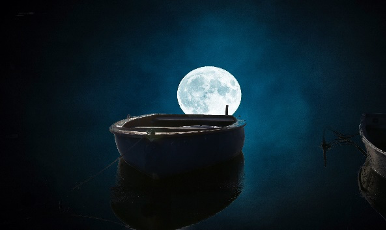
The Moon

Space Facts (2019) claims the moon is said to have been formed 4.6 billion years ago, approx. 30–50 million years after the formation of the solar system. The Moon is in synchronous rotation with Earth meaning the same side is always facing the Earth and is the earths only natural satellite, (Ibid).

The gravitational pull of the moon and earth is well known to be responsible for the rise and fall of the sea tides, (Byrd, 2019). The human body, depending upon sex and age is made up of between 50-75% water, (Helmenstine, 2019). So, when you think about it, if the moon can affect large bodies of water the size of oceans, rivers, lakes, then surely there is some truth in how we as humans can be affected also?

The Latin name for the moon is ‘Luna’. ‘Lunaticus’ means moon struck and is said to be the term associated with lunatic, the archaic name given to those who were seen to be mentally unstable, dangerous or foolish by those professing to be in the know. Folklore often have us believe the moon can make people shapeshift into a wolf on the night of a full moon following a bite or scratch from another werewolf.  

Moon and Criminality

A study in 1984 by Thakur and Sharma into whether the moon really does influence people’s moods, making them more aggressive, found criminality was ‘likely’ to increase on nights with a full moon. Another study by Calver et al in 2009 also suggests the full moon was responsible for a rise in violent and acute behavioural disturbance resulting in a 23% increase in admissions to psychiatric facilities. The same study suggests this is twice as many as other moon phases. This research is contradicted by Rahula et al in 2019 following their analysis of the data of 17,966 individuals treated at 15 different psychiatric wards over 10 years, which claims there is no evidence of increased aggression due to a full moon.

So, while aggressive or criminal behaviour is still very much open for debate, research by Wehr, (2018), claims to have discovered correlations between the moon’s orbital cycles and mood cycles of 17 patients with bipolar Disorder. Tung, (201) explains Psychiatrist Tom Wehr’s research is said to have stemmed as far back as the 1970’s when he was a young researcher at the National Institute of Mental Health. Wehr noticed patients with bipolar appeared to alternate between mania and depression in a rapid manner, with an almost bi-monthly shift between depression and mania.

Taking a longitudinal study approach across 20 research subjects, Wehr tracked biological variables such as; diet, sleep patterns, hormones, motor activity, bloodwork and moods. Wehr put forward various thoughts, but when his subject’s mania appeared to last for around 3-4 weeks with a switch to depression lasting the same length of time soon after, he began to take a closer look at a possible link between moon cycles and her gravitational pull on the earth’s oceans.

Spring and Neap Tides

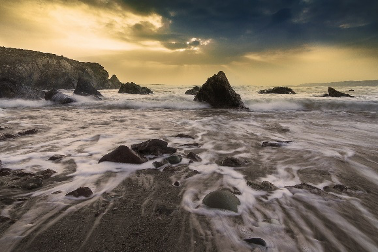
Time and Date.com (2020) explain tides follow a lunar day, said to be 24 hours and 50 mins with a move from high to low tide every half a lunar day. This means we have high and low tides twice daily. High and low tides differ depending upon whether the moon is new or full, as it is this point when they are simultaneously aligned with the tides created by the sun and Earth.

Together the gravitational forces of both solar and luna tides pull the ocean’s water in the same direction. Effectively these tides are stronger and are known as Spring Tides, (nothing to do with the season). The gravitational force of the lunar tide and solar tides are at their lowest around the half-moon point of the lunar cycle. Tides at this point are known as Neap Tides.

Conclusion

Wehr suggested the circadian rhythm of sleep, which is traditionally linked to the solar day, (24 hours) slowed down in his bi-polar subjects and they became more attuned to the luna day, (24 hours and 50mins). This moved their circadian rhythm of sleep from the solar to the luna day, meaning they became more in tune with luna tides than solar tides. In essence suggesting spring tides are the stronger celestial phenomena and can cause an increase in mania, whilst the neap tides are not as powerful resulting in a slump in mood.

Either way, I know I tend to feel more energised when the moon is close to earth, (new moon) and tend to have an energy slump around a full moon when the moon is furthest away from earth.

By Lisa Watson

References

Avery, D. H. and Wehr, T.A. (2018) Synchrony Of Sleep‐Wake Cycles With Lunar Tidal Cycles In A Rapid‐Cycling Bipolar Patient https://onlinelibrary.wiley.com/doi/abs/10.1111/bdi.12644

Byrd, D, (2019) Tides, And The Pull Of The Moon And Sun  https://earthsky.org/earth/tides-and-the-pull-of-the-moon-and-sun

Calver, L. A., Stokes, B. J. and Isbister, G. K. (2009) The Dark Side Of The Moon in Medical Journal of Australia, 2009; 191 (11): 692-694.  https://www.mja.com.au/journal/2009/191/11/dark-side-moon

Helmenstine, A. M. Ph.D. (2019), How Much Of Your Body Is Water? The Percentage Of Water In The Human Body Varies By Age And Gender     https://www.thoughtco.com/how-much-of-your-body-is-water-609406

Moon Facts, (2019)  https://space-facts.com/the-moon/

Rahula, G., Nolan, D.R., Bux, D.A. and Schneeberger A. R. (2019) Is It The Moon? Effects Of The Lunar Cycle On Psychiatric Admissions, Discharges And Length Of Stay in Swiss Medical Weekly.  2019;149: w20070    https://smw.ch/article/doi/smw.2019.20070/

Thakur, C.P and Sharma, D. (1984), Full Moon And Crime in British Medical Journal, 1984; 289(6460): 1789–1791.

The Moon’s Effect on Ocean Tides (2020) https://www.timeanddate.com/astronomy/moon/tides.html

Tung, L, (2019), Does the Mon affect Bipolar Disorder https://whyy.org/segments/could-the-moon-really-be-affecting-our-moods/

Wehr, T.A. (2018) Bipolar Mood Cycles And Lunar Tidal Cycles in Molecular Psychiatry, 2018 Apr; 23(4): 923–931.    https://www.ncbi.nlm.nih.gov/pmc/articles/PMC5524624/