Looking after your teeth…. and the controversy around Fluoride

Are you brushing your teeth twice a day? Are you changing your toothbrush every three or four months? This is what all of the guidance says we should be doing. I suspect most of us are brushing twice a day but wonder if we are all changing our toothbrush as regularly as we should? I know I’m not. It is also recommended that you use a fluoride toothpaste. There’s been a lot of discussion over the years about the inclusion of fluoride and whether it’s necessary. Lisa Watson explores the pros and cons.

Gum Disease, Tooth Decay and Why They are Harmful

Gum Disease is caused by the build-up of a sticky substance on the teeth called Plaque containing bacteria. Through lack of cleaning or not cleaning correctly, plaque can build up and irritate your gums. This leads to bleeding gums, swelling or soreness. Left untreated it can lead to Periodontitis, a condition that affects the ligaments and bones holding your teeth in place. Over time this results in receding gums and loosening of the teeth.

Tooth decay occurs when we eat or drink anything containing sugar. The sugar can react with the bacteria in plaque and form dental acids. These acids can attack the enamel, (the hard protective outer coating of the tooth) and soften the dentine which lies under the enamel of the teeth. This is why it is important we brush our teeth, as if left untreated, acid can create small holes in the enamel called a ‘cavity’.  We don’t always know we have tooth decay until we end up with toothache, or sensitivity to hot, cold or sweet things. Bad breath and an unpleasant taste in your mouth may also be indicators.  

Left untreated tooth decay can lead to bacteria entering the soft centre of the tooth, called the ‘pulp’. This is where our tooth nerves and blood vessels are contained. In a worst-case scenario, bacteria can enter the bloodstream and infect the heart valves. People with gum disease are more likely to have chronic life-threatening health issues such as high blood pressure and diabetes.

Fluoride?

There is controversy around the use of Fluoride these days, with some even suggesting it is added to our water as a means of keeping ‘us’ all submissive to the high powers that be such as our government. So, are we all being poisoned by governing bodies? Not sure! Tell me what you think! Let’s have a debate!! But here’s the facts….

According to Hefferman and Edwards-Lunn, (2018) Fluorine is the element from which Fluoride is derived. Fluorine is found occurring naturally in the air and in water. In addition, Fluorine compounds can be found in everyday products such as non-stick frying pans, dental floss and Prozac. Cafasso, (2018) states Fluoride is also found in cleaning agents and pesticides.

 So, why Do We Need Fluoride?

So why on earth do we need fluoride in our toothpaste if it’s a mineral used to make Teflon, steel, and aluminium products?

The NHS, (2018), states Fluoride can be naturally found in our teeth and bones, so argue it is something we already have within our bodies. Fluoride has been scientifically proven to be beneficial to help teeth fight against tooth decay as it is absorbed into the tooth enamel, replenishing lost calcium and phosphorous, which keep teeth hard.

The process is called ‘remineralization’ and helps strengthen teeth and prevent dissolution caused by acid, thereby by stabilising and enhancing the replenishment of minerals caused by gum disease and decay (Hefferman and Edwards-Lunn 2018). It is because of these benefits Sodium Fluoride is an active ingredient in most toothpastes.

So Is Fluoride Harmful?

Our teeth are pretty important to us for many reasons including helping us chew food. If Fluoride is such a good guy for our teeth why does it get so much bad press? For many the issue centres upon the fact Fluoride is a hazardous poison and in large parts of England, UK is added to our water supplies.

The World health Organisation states, “….Fluoride has beneficial effects on teeth at low concentrations in drinking-water, but excessive exposure to fluoride in drinking-water…….can give rise to a number of adverse effects…….These range from mild dental fluorosis to crippling skeletal fluorosis as the level and period of exposure increases…..” (2006: 2). So that sounds pretty nasty, but let’s not panic just yet. I think we need to take a closer look at this water business and see if it’s a bridge too far!

Fluoride And Water

Ground water, surface water and the various rocks and minerals they have been in contact with determines the natural level of fluoride in water. Ocean water contains fluoride at around 1 part per million, according to Hopcraft (2017). Bearing in mind Fluoride is also naturally occurring in the air and even in our food. So, if we obtain fluoride naturally anyway, then why do we need it adding to our water supply?

Artificial Fluoride in Water

A US, dental study in the 1930’s and 1940s by Dean et al (1950) showed lower levels of tooth decay in areas with naturally occurring fluoride in water supply.  This led to further studies about adding artificial fluoride to water and swiftly concluded that it was beneficial in the prevention of dental decay, (Lennon, 2006: 759). So surely that’s good news especially when we know how gum disease and dental decay can impact upon our overall health!

Health Implications

There are some quarters of the scientific world who argue prolonged exposure of fluoride such as artificial fluorination of water, can lead to Dental Fluorosis, (visual changes in appearance such as white or brown spots on the teeth) and Skeletal Fluorosis, (joint pain or stiffness – Reddy, 2009).

Some argue fluoride can increase risk of bone cancer, although various studies have been undertaken including one by Blakey et al (2014) here in the UK, which found no clear link.

A study in China suggests children living in areas with higher fluoride exposure can lead to lower IQ levels than those living in areas with lower fluoride exposure (Choi et al, 2012). Again further research is required as the authors admit.

What About Here In The UK?  

Between 2005 – 2015 on average 72% of the population received a water supply with a low concentration of fluoride, less than 0.2mg per litre. Hospital admissions for dental decay tooth extractions of children and young people aged 0-19 years were found to be 59% lower in areas with higher fluoride content than those in lower fluorinated areas.

When it comes to skeletal fluorosis, hip fractures in the age groups of 50 to 64 or 65 to 79 age groups showed under the age of 49, fluoride concentrations were associated with lower risk of hip fracture admission. Whilst older adults (80+), fluoride concentrations were associated with a small increase in hip fractures. However, surely other age-related health factors need to be considered. There has also been limited statistical evidence for the rate of Down’s syndrome being higher in fluorinated areas, and evidence of bone cancer in 0-49 year olds, (PHE, 2018).

Conclusion

Whilst the benefits of fluoride in aiding the prevention of dental decay and gum disease seem well established there is a wide range of contradictory information about the overall health benefits, or rather contra-indications, that suggest fluoride is harmful to us in larger doses through addition to our water supplies.

It is interesting the statistics gathered about possible health issues in England in 2018 are taken from a Health Monitoring Report by Public Health England, an executive agency of the Department of Health and Social Care. For me, I would be open minded about the impartiality of such statistics provided by government bodies telling us something is good for us. Once again, it comes down to personal opinion, how you perceive the abundant amount of information, studies and research out there and your moral or ethical viewpoint. The jury is still well and truly out and I think the debate around ‘yes or no’ for Fluoride addition to our water will rumble on for some time to come!

Keep brushing your teeth though!!

The MouthHealth.org website gives us some good advice on technique. Have a look here.

If you would like to check out whether your area has fluoride enhanced water, click this link.

Lisa Watson

References

Blakey, K., Feltbower, R.G., and Parslow, R.C., James, P.W., Gómez Pozo, B., Stiller, C., Vincent, T.J., Norman, P., McKinney, P.A., Murphy, M.F., Craft, A.W., and McNally, R.J. (2014) Is Fluoride A Risk Factor For Bone Cancer? Small Area Analysis Of Osteosarcoma And Ewing Sarcoma Diagnosed Among 0-49-Year-Olds In Great Britain, 1980-2005 in International Journal of Epidemiology. 2014 Feb;43(1):224-34.

Bupa, (2020) Treatments; Gum Disease https://www.bupa.co.uk/dental/dental-care/treatments/gum-disease#periodontitis

Cafasso, J, (2018) What Is Fluoride, and Is It Safe? https://www.healthline.com/health/what-is-fluoride

Choi, A.L., Sun, G., Zhang, Y., and Grandjean, P. (2012) Developmental Fluoride Neurotoxicity: A Systematic Review And Meta-Analysis in Environmental Health Perspectives. 2012 Oct;120(10):1362-8.

Dean, H.T., Arnold, F.A., Jay, P and Knutson, J.W., (1950), Studies on Mass Control of Dental Caries through Fluoridation of the Public Water Supply in Public Health Reports (1896-1970) Vol. 65, No. 43 (Oct. 27, 1950), pp. 1403-1408

Den Besten P., and Li W, (2011) Chronic Fluoride Toxicity: Dental Fluorosis in Monographs Oral Science, 2011;22:81-96

Harvard health Publishing, (2020) Hidden Dental Dangers That May Threaten Your Whole Body https://www.health.harvard.edu/staying-healthy/hidden-dental-dangers-that-may-threaten-your-whole-body

Healthy Choices, Water Fluoridation http://www.healthychoices.co.uk/fluoridation.html

Heffernan, M and Edwards-Lunn, T., (2018), A Common Sense Guide To Fluoride, The Great Dental Conspiracy Magnet https://www.telegraph.co.uk/health-fitness/body/common-sense-guide-fluoride-great-dental-conspiracy-magnet/

Hopcraft, M. (2017) Four Myths About Water Fluoridation And Why They’re Wrong  http://theconversation.com/four-myths-about-water-fluoridation-and-why-theyre-wrong-80669

Lennon, M.A. (2006) One In A Million, The First Trial Of Water Fluoridation in Bulletin of The World Health Organisation, Sept 2006, 84, (9).   https://www.who.int/bulletin/volumes/84/9/05-028209.pdf

NHS 2018  Fluoride  https://www.nhs.uk/conditions/fluoride/

NHS, (2019) Gum Disease https://www.nhs.uk/conditions/gum-disease/

NHS, (2019) Tooth Decay https://www.nhs.uk/conditions/tooth-decay/

Oral Health Foundation.org Dental Decay https://www.dentalhealth.org/dental-decay

Public Health England, (2018) Water Fluoridation: Health Monitoring Report For England 2018, PHE, London. 

Reddy, D.R. (2009) Neurology Of Endemic Skeletal Fluorosis in Neurology India. 2009 Jan-Feb;57(1):7-12.

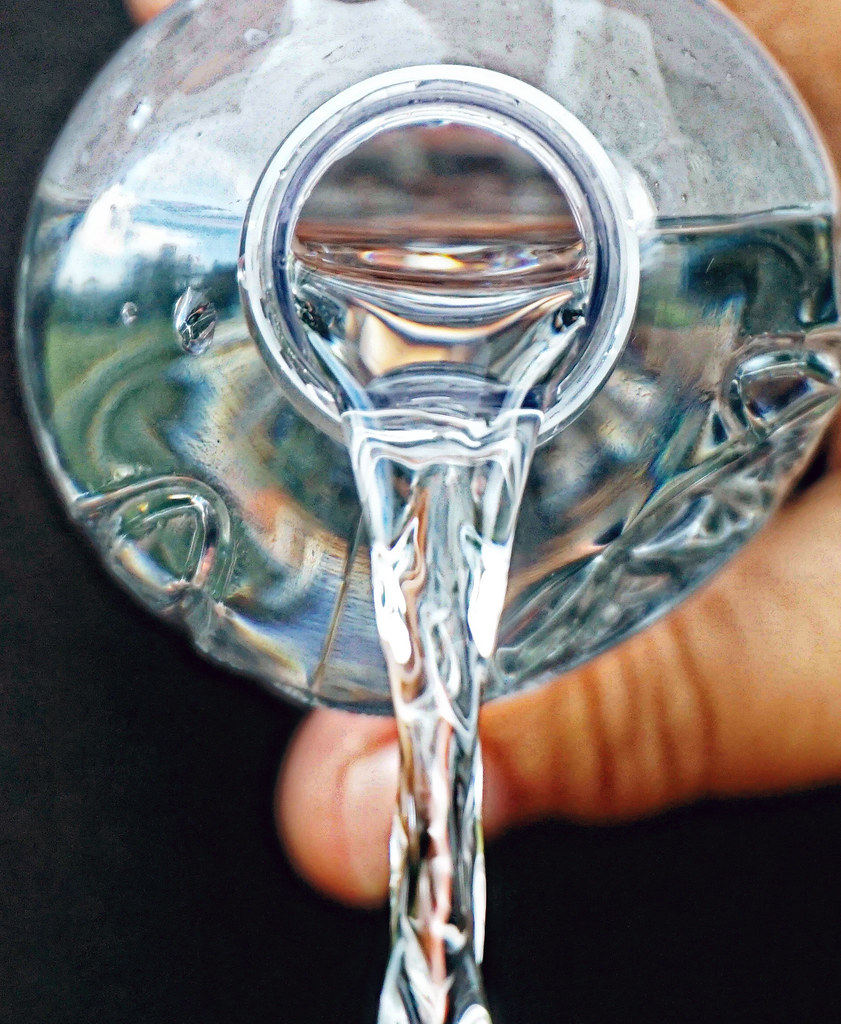
Water, water, everywhere.

You’ve probably heard this before…. Up to 60% of the human adult body is water. The brain and heart are composed of 73% water, and the lungs are about 83% water. The skin contains 64% water, muscles and kidneys are 79% water. Even your ‘solid’ bones are 31% water.

I’m watching the Rugby and the England manager Eddie Jones is sipping on his water and I say to Christine ‘what’s he drinking for he’s not done anything to break sweat’. Then I got to thinking – I suppose being England manager in such circumstances is quite stressful. I wonder what the relationship between hydration and stress is?

Turns out there is a two way relationship. Being dehydrated can cause an

Image result for drink water

increase in cortisol levels. Cortisol is the stress hormone present when we’re feeling the pressure and too much of it coursing through our bodies is not a good thing. It makes sense really as being dehydrated is putting your body under physical stress and stress is multi-faceted – physical, emotional, mental.

You are also more likely to become dehydrated when stressed because of elevated heart rate and heavier breathing. So it’s a vicious cycle. Dehydration leads to stress and stress leads to dehydration.

So how much water should you drink? The NHS recommend drinking 1.2 litres per day while other advice suggests nearly 2 litres. The difference, it is suggested, is due to our climate not being as warm as others. However you’ll need to increase the 1.2 litres if you live and work in a warm environment and are taking exercise. You also need to take into account your size and weight.

Image result for drink water

My suggestion is drink little and often until you find your level. After all we are all different. The colour of your urine can be a good indicator. It should be light yellow, almost clear. It’s useful to start the day with a glass of water and end the day with one. Always drink during and after exercise. And remember even just sat at your desk can be dehydrating you, given its relationship with stress.

Stay well!

Small steps end in big results

Image result for exercise

What’s your relationship like with exercise at the minute? What historically has exercise meant to you? What exercise did you do in the last week?

I used to find that how I felt about exercise was rooted in how I felt about it as a teenager. With my only reference point being PE at school. Cold cross country runs and feelings of inadequacy. The secret is not to compare yourself to others – do what you can and what you feel comfortable with. And crucially – find something you actually enjoy! There will be something out there!

You might well find that you already do more exercise than you think. Low level stuff like gardening, washing the car, walking the dog and pegging the washing out. These are all good things. They involve activity and they involve stretching – both great things. Maybe we need you to push it a little further and get a little breathless? The recommendation of 20 minutes per day still holds good – so we are not talking about hours in the gym or becoming a marathon runner – fine as those things are if they are right for you.

Exercise is a pleasurable activity… honest. Engaging in it releases

Image result for exercise

dopamine – the body’s feel good hormone. Dopamine deficiency is shown to have links to depression so the more of it you have coursing around your body the better. Exercise is also great at mitigating against the effects of stress by ‘using up’ cortisol and adrenaline that are produced by our fight or flight response. These chemicals prime you for physical action but when the stressful event is occurring with you sat at your desk you don’t burn them off. And too much of them has a negative effect on your health and overall well-being.

Image result for exercise

Exercise:
Gives you faster processing
Gives you faster reaction times
Clears you head
Makes you more effective at planning
Gives you better short term memory performance
Gives you more self control

A study by Bristol University found that a 20 minute walk at lunch time could enhance mood and motivation by 41% and could improve the ability to deal with stress by 20%. A Sit Less Move More program evaluated by Pulg-Ribera and colleagues in 2017 noted improvements in staff retention in the work place, less sickness, more mindful work, and a reduction in stress. Now that’s good stuff!

Image result for exercise

So….
Make a plan! What are you going to do and when are you going to do it?
Start small and take incremental steps… start with a 10 minute walk and take it from there.
Write down your plan… writing things down enhances the chances of them actually happening.
Exercise with someone else – it helps motivation.
Tell other people what you’re doing… there’s evidence if we ‘go public’ we’re more likely to do what you say.
And most importantly find something you enjoy
And Just Do It (as Nike would say!)

I have to tell you speak to your doctor if you have any health conditions or haven’t exercised for a long time! I’m not a doctor! Take advice if you feel you need to. This advice is given in good faith based on my own personal experience and reading. Take care.

Discipline! Let’s get to work!

Last night felt like a watershed moment in some ways. Although as with most things about self care these moments are simply reminders of things we already know either instinctively or because we’ve been told them and are choosing to ignore our knowledge.

I was reading Daily Self Discipline by Martin Meadows and he said simply that succeeding in anything is about discipline. And I thought – you are so right! Think about sports men and women. We often fall into the trap of thinking that people are just naturally talented – and there is an element of that. Some people have the physiology or the genetics that maybe gives them a leg up. But none of the great sports people have got to where they are without sheer hard work born out of discipline. In Mindset, Carol Dweck, talks about having a growth mindset rather than a fixed mindset. The person with a fixed mindset says – this is the life I have been dealt and nothing I do will change it. The person with the growth mindset says by diligent hard work, exploration, education, and discipline I can achieve anything. And this is true! She talks about a conversation with tennis superstar John McEnroe who explained that he had a fixed mindset and that he feels, looking back, that this led to his on court tantrums and antics. He felt he was gifted and had a right to win simply because he was John McEnroe. He skipped training, didn’t focus, because he felt he would win no matter what because he had ‘it’ and others didn’t. He feels he would have been even better, making more of what he had been given, if he had a growth mindset.

We can achieve a great deal with discipline. The other example would be eating a healthy diet. It is so easy to give into temptation and can feel so hard to prepare food in advance to take to work or make the healthy choice. But if we do this we will feel more positive and more in control. I know that my healthy choices slip when something is going on that I don’t have control over. It’s then a vicious cycle. I eat something unhealthy or I have a few glasses of wine on a night, and before I know where I’m at my diet has shifted away from my usual healthy eating and a measures approach to being negative in terms of my well-being.

Discipline is easier when you have a plan and integrate things into your routine. I was thinking of all of the positives of my morning walk with the dog. I use it as a kind of meditation, more like mindfulness really. I love just watching the dog being a dog. She loves just doing what dogs should do – without a care in the world. The morning walk with the dog (or without for that matter) has lots of self care pluses! Here they are:

Being outdoors is good for beating stress
Being outdoors in the early morning sunlight primes the process for sleep at the end of the day
Walking for 30 minutes beats stress and means you’ve already had some great physical exercise without barely trying
Walking mindfully, and deep breathing, is good for you. Research with social workers who engaged in mindfulness showed a reduction in sickness and stress levels…. suck in that fresh air!

But, it takes discipline to get out of bed early enough to do this and to undertake the walk without cutting it short or rushing it. Here’s the rub when it comes to discipline. You will feel better if you focus and get things done. Be that walking the dog, or getting that report written, or saving a little money every month, or preparing healthy food to take to work. Life is not easy, happiness is not a given. If you are disciplined in the way you approach the elements of your life you will initiate change…. and then you need the discipline to keep going. It’s hard, not going to lie. But keep going, and when you fall, pick yourself up, refocus, and crack on!

Have a great day!

It’s all about life….

Life is all about transitions…. it’s about starting things and ending things and moving between things. That’s what I love about life. Challenges coming to a conclusion. New challenges to explore. Yesterday saw me watch this years graduates walk across the stage to be given their award. It’s a wonderful day because the journey to a degree is not an easy one. It’s a lot of hard work. But what starting a degree does is set you out a plan. The 3 years of an undergraduate degree, or the 2 of a postgraduate degree, sets out a framework around which all other challenges hang. It absorbs you. For better or worse!

We need challenges. We need to set ourselves targets. There’s evidence that if you have a plan that you record in some way you are more likely to achieve it. That’s remarkable. Just by writing it down it’s more likely to happen.

When I turned 50 (just short of 2 years ago) I set myself a ten year plan and I wrote it down (yes! For those who know me… in my spreadsheet!) My plan was simple. That by the time I was 60 I wanted to be making all my income from writing and other freelance work. I wanted to have the luxury of not having to work for an organisation. A kind of retirement of sorts. A ‘retirement’ to me setting the agenda for the part of my life I get paid for. This was a big task because 10 years, in reality, is not a long time. So, I had to make a plan. I had to start building up my writing. I had to think about the financial impact of such a move. I had to think about the skills I had and the skills I needed to develop. I needed to take a big idea and break it down into smaller ideas, smaller steps.

This relies on a nice little metaphor that I love to use which is – How do you eat a whole elephant? One bite at a time, of course. You couldn’t possibly eat a whole elephant at once! You need to work on things incrementally and what you’ll find is that when you tick a step off your list you will get a psychological buzz and that will generate forward momentum with whatever it is you are wanting to achieve.

I find myself with a day at home today. I had a meeting cancelled this morning so now I have a whole day to myself. I’m feeling a bit anxious about some things I need to achieve over the next 6 months because at the minute I don’t have a plan. Firstly, I need to write a book! I’ve signed a contract so it has to be delivered by the end of the year! And at the minute all it is is a list of chapters with a brief outline…. and I’ve never written a book before! I need to map out how this is going to happen. So while a 10 year plan is important so are shorter term plans. Because of the way my job works it’s useful to have a 6 month plan. So today I’m going to figure out my 6 month plan. What am I going to do between now and the end of the year and how does writing a book fit into that?

I’m running the Kielder Marathon in October and I can apply the same principle. So working backwards from the date of the run I’ll figure out what mileage targets I need to hit week by week. That way, I know what I need to achieve and I’ll diary time out to do it.

And finally, for today at least, I need to figure out how to fit the work I need to do at University into my working week. So I’ll plan where the lectures are, when I’m going to prep them, who I might need to talk to and when I’ll do that, when I’m going to work on placements, and so on and so on….. right up until the end of the year.

And I guarantee by the end of the day I will feel a huge sense of relief because I’ll have a plan. As David Allen (author of Getting Things Done) says, “if you don’t control ‘it’, ‘it’ will control you.” There is concrete evidence that having a plan reduces stress both at work and at home.

So get planning, get organised, let’s nail this!!

Goal setting

How do you set your goals? We all want to achieve. We all want to get better at things. We all want to move ourselves towards goals. But maybe the way we set ourselves targets just isn’t helpful. There is a tendency to want to put figures on things because we all know how figures work. “I want to lose 10 kilos”, “I want to run 5k in 25 minutes”, “I want to run a marathon”. These are all fitness goals but there will be others. Maybe, “I want to save £1000 by the end of year”.

These statements are problematic though because one of the things we are good at as people is not hitting the target. Think back to all of those new years resolutions that go unmet. Think of all of those weight loss strategies that didn’t get you to your ‘goal weight’. Think of all those fitness regimes that didn’t get you ripped and slim.

As soon as you set yourself a fixed goal then you run the risk of missing it. But even if you hit it you’ve still got a problem! Once you’ve hit your goal weight what do you do? Go back to eating like you did? What do you do when you hit that 25 minute 5k? Do you stop running? Well, sometimes we do! Sometimes it’s like ‘right that’s it – I’ve done it so I don’t have to worry about it anymore!’ And the weight goes back on or the fitness slides and you have to start again with another goal.

How about simply framing what you want to do differently? I want to get better at being a healthier eater? I want to get better at being a runner? I want get better at being a saver? These things have no end point. They have nothing to ‘fall off’ or ‘fail at’. You want to become a healthier eater so you start nailing the salads and the baked potatoes and then you have a take away. Well, what you are trying to achieve is still there. You’ve not done anything wrong because just because you had a take away doesn’t mean you can’t continue to try to be a healthier eater. When you choose a measurable goal like weight loss and you don’t lose any weight because of that take away the scales shout at you, make you feel bad, and make you think ‘well hey – I’m never going to hit my target weight – so why bother!’ But you can still follow your dream of being a healthier eater because that’s still an on going proposition – it never ends so it’s always available to you to help you frame what your doing. ‘Hey, I had a pizza, but I’m still trying to be a healthier eater’

The difference is maybe a subtle one but the psychology of it apparently really works. It’s like when you have a big task to achieve like, say, write a 3,000 word report. If your goal is to write the report then every time you sit down to do it and you don’t complete it your mind sees that as a failure – ‘I didn’t finish the report’. But if you break it down to manageable chunks. ‘I need to read this article’, ‘I need to think about the structure of the report’, ‘I need to map out what I want to write’ etc etc then you achieve a result whenever you do these individual things giving you a psychological boost. This is called ‘The Power of Small Wins”. This is the ‘how do you eat an elephant – one bite at a time’ strategy!

There’s a similar thing at play with the psychology of setting goals. If your goal is to run a marathon then every time you don’t run a marathon you haven’t achieved it. If your goal is to work on being a better runner then every time you run you are working on that. If your goal is to be a healthier eater then every time you eat you are working on that. Personally, I find that taking this approach helps me make better choices. What I eat isn’t governed by the scales or a target weight but by simply wanting to try and achieve ‘eating healthier’. Yes, I do hope that what that means is weight loss but if it doesn’t it doesn’t and I will continue to try and eat healthier because the positive impact on my life is broader than what the scales say.

Let’s do it!

I had the most exhausting weekend yet……

What a weekend I had last weekend! I actually never stopped! Yet, I woke up on Monday morning morning feeling refreshed and excited about how much I was going to get done! Why’s this! Why was I not shattered and daunted by the week ahead!

Well, for all it was busy, the weekend was choc full of things, all of which I consider as self care. There’s a meme kicking about that I see that says something like, “self care is not about chocolates and pamper days, it’s about creating a life that you don’t want to escape from”. This weekend has been awesome and tiring both at the same time – and I didn’t want to escape from it! Let me tell you about it.

It started Friday tea time with a 14 mile bike ride home from work. I just took my time, I wanted to be home, but I also wanted to delight in the scenery around me. So, I took a detour down to a little place off my route called Cox Green and I just spent a few moments there looking at the river and the beautiful vista. I then continued my way home. For me, exercise is mindfulness in motion. You can think of all sorts of things if you want to while you exercise. It’s just you. On your own thinking things through and mulling things over. Or it can be you thinking of nothing. Just you and your body doing this thing to the exclusion of everything else. I love the loneliness of a solo run or bike ride. Some quality time with yourself.
Self Care checklist: Alone time, you time, exercise, getting outdoors tick!

Cox Green by Gordon James Brown

Saturday started with Parkrun, starting at Durham’s Maiden Castle and ending by the River Wear in the shadow of the glorious Cathedral. We’ve got quite a little team going on now for Parkrun and we’ve pretty much ran it every weekend this year. So my eldest son Jonathan picks me up and, in the car are usually the Whellan’s brothers and Oliver’s girlfriend Sarah (although she didn’t make it this week). The run and the scenery is great and is an absolute delight. Parkrun is 5k which is doable and not too tough. But for me the most important part of this is the camaraderie of the whole thing. We are all at different levels of fitness but all in it together. The banter in the car on the way there and on the way home is great. And it’s wonderful that these young pups tolerate this old guy tagging along!

The Sunday saw me running again with two of my colleagues from work. We were doing the Sunderland 10k. It was an absolute delight. A huge group of people all with one endeavour in mind. To test themselves against the distance in front of them! There was a great atmosphere as the gun went off and we started and it continued all the way around and into the finish funnel!

Parkrun!

Then, in the afternoon, tired and weary I had a gig to play. I’m a musician in between other things (!) and I was playing in the Union Rooms, a lovely bar near Central Station in Newcastle. Music is a gift to us all. I love playing on my own at home or in front of people in a bar. Music lifts the soul. Or ‘resets’ it, as I like to say. And it creates a wonderful connection between people. It was great to watch people chatting and enjoying themselves as I played, and from time to time joining in singing along to the tunes they recognised.

There’s a Stoic ‘saying’ that ‘the obstacle is the way’. When confronted with an obstacle don’t avoid it – go through it! Because it’s in doing so that we grow and develop. My tiring weekend left me re-energised because of how the things I did contributed to who I am – my idea of ‘self’ – and therefore to my self care. Connections made, existing connections enjoyed, exercise engaged in, getting outdoors, the healing properties of music – food for the soul – all meant that the busy weekend was a refreshing weekend.

The obstacle really is the way

Embrace it!