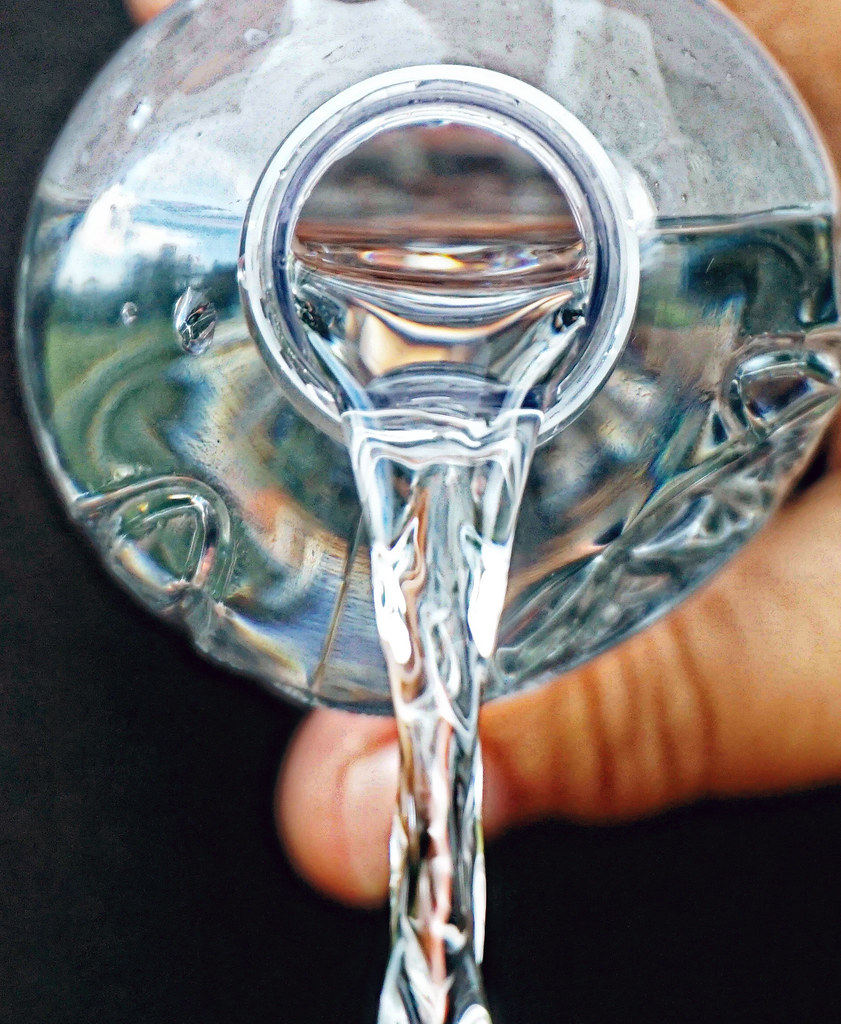
You’ve probably heard this before…. Up to 60% of the human adult body is water. The brain and heart are composed of 73% water, and the lungs are about 83% water. The skin contains 64% water, muscles and kidneys are 79% water. Even your ‘solid’ bones are 31% water.
I’m watching the Rugby and the England manager Eddie Jones is sipping on his water and I say to Christine ‘what’s he drinking for he’s not done anything to break sweat’. Then I got to thinking – I suppose being England manager in such circumstances is quite stressful. I wonder what the relationship between hydration and stress is?
Turns out there is a two way relationship. Being dehydrated can cause an
increase in cortisol levels. Cortisol is the stress hormone present when we’re feeling the pressure and too much of it coursing through our bodies is not a good thing. It makes sense really as being dehydrated is putting your body under physical stress and stress is multi-faceted – physical, emotional, mental.
You are also more likely to become dehydrated when stressed because of elevated heart rate and heavier breathing. So it’s a vicious cycle. Dehydration leads to stress and stress leads to dehydration.
So how much water should you drink? The NHS recommend drinking 1.2 litres per day while other advice suggests nearly 2 litres. The difference, it is suggested, is due to our climate not being as warm as others. However you’ll need to increase the 1.2 litres if you live and work in a warm environment and are taking exercise. You also need to take into account your size and weight.
My suggestion is drink little and often until you find your level. After all we are all different. The colour of your urine can be a good indicator. It should be light yellow, almost clear. It’s useful to start the day with a glass of water and end the day with one. Always drink during and after exercise. And remember even just sat at your desk can be dehydrating you, given its relationship with stress.
Last night felt like a watershed moment in some ways. Although as with most things about self care these moments are simply reminders of things we already know either instinctively or because we’ve been told them and are choosing to ignore our knowledge.
I was reading Daily Self Discipline by Martin Meadows and he said simply that succeeding in anything is about discipline. And I thought – you are so right! Think about sports men and women. We often fall into the trap of thinking that people are just naturally talented – and there is an element of that. Some people have the physiology or the genetics that maybe gives them a leg up. But none of the great sports people have got to where they are without sheer hard work born out of discipline. In Mindset, Carol Dweck, talks about having a growth mindset rather than a fixed mindset. The person with a fixed mindset says – this is the life I have been dealt and nothing I do will change it. The person with the growth mindset says by diligent hard work, exploration, education, and discipline I can achieve anything. And this is true! She talks about a conversation with tennis superstar John McEnroe who explained that he had a fixed mindset and that he feels, looking back, that this led to his on court tantrums and antics. He felt he was gifted and had a right to win simply because he was John McEnroe. He skipped training, didn’t focus, because he felt he would win no matter what because he had ‘it’ and others didn’t. He feels he would have been even better, making more of what he had been given, if he had a growth mindset.
We can achieve a great deal with discipline. The other example would be eating a healthy diet. It is so easy to give into temptation and can feel so hard to prepare food in advance to take to work or make the healthy choice. But if we do this we will feel more positive and more in control. I know that my healthy choices slip when something is going on that I don’t have control over. It’s then a vicious cycle. I eat something unhealthy or I have a few glasses of wine on a night, and before I know where I’m at my diet has shifted away from my usual healthy eating and a measures approach to being negative in terms of my well-being.
Discipline is easier when you have a plan and integrate things into your routine. I was thinking of all of the positives of my morning walk with the dog. I use it as a kind of meditation, more like mindfulness really. I love just watching the dog being a dog. She loves just doing what dogs should do – without a care in the world. The morning walk with the dog (or without for that matter) has lots of self care pluses! Here they are:
Being outdoors is good for beating stress Being outdoors in the early morning sunlight primes the process for sleep at the end of the day Walking for 30 minutes beats stress and means you’ve already had some great physical exercise without barely trying Walking mindfully, and deep breathing, is good for you. Research with social workers who engaged in mindfulness showed a reduction in sickness and stress levels…. suck in that fresh air!
But, it takes discipline to get out of bed early enough to do this and to undertake the walk without cutting it short or rushing it. Here’s the rub when it comes to discipline. You will feel better if you focus and get things done. Be that walking the dog, or getting that report written, or saving a little money every month, or preparing healthy food to take to work. Life is not easy, happiness is not a given. If you are disciplined in the way you approach the elements of your life you will initiate change…. and then you need the discipline to keep going. It’s hard, not going to lie. But keep going, and when you fall, pick yourself up, refocus, and crack on!
We’ve always known that our gut has some sort of influence over us…. “I’ve got a gut feeling”, “It was just a gut reaction”, “I just went for it – it was a gut instinct”. And interestingly these are about feelings, and about emotions.
We’ve known for a long time that a healthy gut has a good effect on our physical health, and science, relatively recently, has been uncovering compelling evidence that our gut biome effects our emotions and therefore our mental health. I wrote a little about it here.
I’ve been exploring fermented foods as we know that they support a healthy gut biome and I’ve discovered the wonderful drink Kombucha! Kombucha is a ‘live’ drink – full of stuff that, it is said, to improve your gut biome.
Kombucha brewing with the scoby (two of them actually) floating on the top
The origins of Kombucha are uncertain. It is thought to have originated in the Far East, probably China, and has been consumed there for at least two thousand years. The Tsin Dynasty (around 221 BC) referred to it as “The Tea of Immortality”. It is thought that the name comes from Japan in 415 AD when a Korean physician called Kombu or Kambu treated the Emperor Inyko with the tea and it took his name, “Kombu” and “cha” (cha meaning tea).
A word of caution…. this is a live drink and, it is reported that, during the brewing and storing of it, things can go astray and result in contaminants that may not be good for you. But, there are also lots of websites that report the benefits of this drink. Research has not been conclusive as to the benefits but certainly lots of people report subjective improvements in their health. The advice is the same as ever… if you have an underlying health condition are young, or old, or pregnant, then definitely consult your doctor first.
You’re going to need a few things to get going. You’re going to need a vessel to brew your kombucha in, green tea bags, sugar (organic ideally – same for the tea bags), and a Scoby. The Scoby looks like a beige rubbery pancake like disc. The Scoby is a culture of bacteria and yeasts. This culture is placed in sweetened green tea and turns a bowl full of sweet tea into a bowl full of the drink. I got my starter pack from the lovely people at Happy Kombucha.
My first scoby from Happy Kombucha!
The kit comes with instructions that are easy to follow but essentially you make 2 litres of green tea (using about 8 tea bags) and add 170g (or thereabouts) of sugar. It’s important to avoid metal utensils when making your kombcuha as contact with metal kills the scoby. You then pour the tea, once it’s cooled to room temperature, into your 2 litre vessel which you’ve popped your scoby into. You then leave this for a period of time (I leave mine for 7 days) at room temperature (low 20 degrees) and the as the Kombucha culture digests the sugar it produces a range of organic acids, vitamins, amino acids, and enzymes, plus the probiotic microorganisms themselves.
Then the brew is ready you decant into containers for storage. Some people let it continue to brew at room temperature for a little longer once decanted to get a more fizzy brew (you need to ‘burp’ your bottles by releasing the gas in them daily to avoid an explosion!) Personally I pop mine straight in the fridge and once it’s chilled it’s ready to drink! It tastes a little like apples juice to me. The longer you brew it the less sweet it becomes as more of the sugar is transformed. It has a slightly yeasty taste, and a lovely fizz. It can have traces of alcohol in it but nothing that’s going to cause you any problems – but worth noting in case you need to avoid alcohol completely.
…and then you start again with more tea, and your scoby that you will have left in a little of last weeks tea. In time your scoby will develop a baby scoby – mine grew one big enough to use in another 2 litre vessel during the first brew!
Scoby up close
You are advised to introduce it to your body gradually before having a bigger glass. I started with probably quarter of a pint a day and I’m now settled at a little under half a pint a day. I’ll keep you posted with how it’s going! It seems to have helped me with acid reflux which is a good thing!
There is more Kombucha know how on the City Homesteads website – click here
Remember Gillian McKeith? She said “you are what you eat” and had a successful TV show in the noughties examining peoples poo and telling them what to eat and what not to eat. And while I wasn’t a fan of her or the show it turns out she was probably ahead of the curve and was onto something!
Veg! Good!
Research has taken this idea of what we eat somehow influencing who we are and shown that what we eat, and more specifically how healthy our gut biome is, effects our emotions and therefore, because our emotions effect how we think, how we feel psychologically.
Your brain and gut are directly connected (along with all other major organs) by the vagus nerve. In fact, in her wonderful book ‘Gut’ Giulia Enders (link at the end of the blog) suggests the self is constructed by the brain drawing on information and feelings from every part of the body. This overturns somewhat the idea that ‘I think therefore I am’ bringing the impact of physical ‘feelings’ into the creation of self. Surely you’ve spotted when your toilet habits are not good, or you’ve overindulged, you feel lousy, sluggish, not motivated? This, it is increasingly being argued, is because your gut has a significant impact on your brain and therefore how you feel emotionally.
In their brilliant and entertaining podcast for Audible, ‘It Takes Guts’, Tim Anderson and Giles Yeo explore the impact of your gut biome on your emotions and find there are significant connections.(It’s free to listener to if you are an audible member…. and if you’re not… why not! It’s a great way to ‘read’ – and you get lots of free material… I’m not on commission – honest). They explore the science and offer some solutions – which I’m going to cover in future blogs. But, it is clear that how you feel in your guts has an impact on how you feel mentally and, in terms of your productivity, how you feel mentally has a huge impact. If you feel low in mood, unmotivated, lacking drive, you are not going to get the best out of each and every day – whether you’re in the office or at home.
Beans! Good! Turned these into ‘houmous’
I was already on a journey of starting to change my nutritional intake. I avoid the word diet at all costs as it has connotations for me and for other people that are about waist loss and are generally negative. What I’m talking about here is not losing weight to be a size 10 or have a 32 inch waist but rather to eat in such a way that it supports your body’s physical and mental function and therefore makes you more productive in life.
I stopped eating meat nearly 3 months ago now and I feel much better for it! But hang on! I don’t really feel it’s not eating meat that’s done this as I know lots of people who eat meat and do great. I feel, for me, that it has meant that I have started eating more vegetables and pulses to replace the meat and what we do know is that those things create a healthier gut biome.
I have also started experimenting with fermented foods. Fermented foods have lots of good bacteria in them that promote good health. I have started to make and drink Kombucha… and I’m going to stick my neck out here, only 7 days into drinking it and say, it definitely has had a positive effect on me overall as well as my guts and bowels improving! I’ve also been eating fermented beetroot and fermented courgette… and I’ll post how I’ve done that soon. They are essentially a sauerkraut which is traditionally made with cabbage. There some great advice about fermenting and more on the benefits of it on the City Homesteads website! Definitely worth a look!
My bottled Kombucha
So, nutrition is the third element of my self care triangle. The other being exercise and sleep. I feel we need these three elements all working effectively in order to improve our well being and our productivity. We will all have a balance of how much of each we need to be getting right to be functioning at our max but we will need some of all of these things. Good quality sleep and the right amount is crucial. Throw in some exercise and some good food and we should be on the road to winning the productivity battle so that wether we’re at work, out for the night, chilling in front of the TV, doing jobs around the house, or playing with the children, we’ll be on top form while we do it, full of energy and enthusiasm to get the most out of each and every thing we do!
Stay tuned! More coming! I’m excited and hope you are! Stephen x
My drive, moving forward is to make as many of the things I eat as possible! I’m sure they’ll be healthier, have less additives, and just make me feel really good about myself! All good! So I thought this weekend I’d try one of our Friday night favs vegetable crisps! I mean how hard can it be! Not hard at all it turns out.
You’re going to need a mandolin – not the stringed instrument (!) but one of the slicing things from the kitchen utensils section. I got mine in Sainsbury’s for £10 – bargain! The one in the picture on the right. Then you are going to need whatever vegetables you want to crisp. I went for beetroot, celeriac, and carrots – just because that’s what I had in. I also did some normal potatoes but they need a slightly different approach – so more on that at the end.
I set the oven to 150 degrees and got slicing. There are 3 settings on the mandolin and I used the middle one. I sliced up the vegetables and the best advice is to slice long slivers as they crisp to nothing in the oven! They will reduce in size by about half. I laid the vegetables out on baking trays all separate – i.e. not overlapping – and popped them in the oven. The carrots, beetroot and celeriac all cooked at about the same rate. You will need to turn them a couple of times and some needed to be prized gently from the tray. Some recipes I looked at suggested spraying the tray with oil – I didn’t do that and none stuck. They took about 20 to 30 minutes to be crisp.
I used 3 trays and needed to do 3 batches to fill an average sized plastic lunch box and that took 2 small beet, half a celeriac and 3 carrots…. I can see why the ones in the shop are as expensive!
I’m going to experiment with flavours but for these I ground up some chilli flakes and salt in my pestle and then sprinkled. They taste gorgeous!! I’m thinking of adding dried herbs, maybe rosemary, to the next batch. I’m also going to try putting the salt and chilli on them while they are still in the oven and a little moist to get it to stick better – maybe you could give that a go and tell me how you get on!?
I also did some normal potatoes and I found I had to cut them a little thicker to get them to be like crisps. But apart from that, and they took a little longer in the oven with being thicker, the idea was the same!
Give it a go and let me know how you get on! Homemade has got to be better!!
Here it is! Your route map to self care. My self care model (lovingly drawn for me by one of our fabulous students Anna Short). It’s simple and straightforward but it’s what you need to get sorted. And over the next few days I’ll tackle each element of the triangle in turn and then we can get on to figuring out how to organise it all!
The three things in the triangle won’t come as any surprise to you. In fact most of what I have to tell you won’t come as a huge surprise. Looking after yourself is one of those things where we all know what to do but we don’t always do it. And we don’t always fully understand the impact on us and our productivity.
So… we’ll talk about sleep, we’ll talk about exercise, and we’ll talk about nutrition. This is not to turn you into tofu eating (although I like tofu), marathon running (although I’ve ran marathons), zen like (although I like some meditation) creatures, but rather to show you how these three things interact and have a massive impact on your productivity in your job and in your home life.
Current research tells us that lack of sleep has a significant impact on the risk of us developing things like cancer or alzheimers, never mind the impact of a poor nights sleep on the next day. Your brain and your gut are connected directly by the vagus nerve and scientists are showing how the quality of what is going on in your gut directly effects your mood. And exercise has been shown to be effective in reducing levels of stress. Also, they are are interlinked….
…I’ll tell you what works for me… ….I’ll guarantee it will be similar as we are made from the same stuff… ….but different because we are all unique…. …..you need to find your own balance…. …I’m here to help! 😉 Read more below if you can decipher my handwriting…..
I’ve always felt that how I start the day is crucial to how the whole day goes. So what I have for breakfast is therefore crucial to what I eat during the rest of the day. A nutritionally sound breakfast gives me a good chance of a nutritionally sound day! That Full English breakfast sends the wrong signals to my brain. Although I’m not decrying the full English completely. Having a decadent breakfast once in a while has its place! Best to avoid those sugary processed cereals though!
So what do I go for!?. Here are my three favourite breakfasts!
Overnight Oats
Simply gorgeous and so easy! I’m not a fan of porridge (I’m not a fan of hot sweet things in general…. sadly I’m fine with cold sweet things!) so getting my oats on a morning (…stop it!) is difficult! But then I discovered Overnight Oats. I’m not one for measurements just go with what it looks like! So, take a pot of yoghurt, or a couple of good scoops, and mix in some oats until it’s ‘claggy’ (for those of you not from the north east of England go for ‘sticky looking’). There needs to be enough yoghurt, but not too much, as the oats are going to absorb the liquid in it to soften. I then add in some seeds – pumpkin seeds are my thing at the minute – and some soft fruit – blueberries, raspberries, strawberries. And leave it in the fridge overnight. If you forget you can get away with doing it on a morning and waiting about half an hour. Not as good but not bad.
I also have a prepared mix to hand most of the time to make this even quicker. I get myself a decent sized jar and half fill it with oats. I then grab a range of dried fruits and nuts. Chuck the nuts in and chop the dried fruit up into small pieces if required. Chuck the dried fruit in and give it all a shake! My favourite dried fruits are apricots, cranberries, mango, and figs.
Don’t be fooled into thinking this is a particularly low calorie option. It’s healthy but fairly calorie ‘rich’ especially once you get some greek yoghurt (my favourite) on there. So if you are dieting then don’t have too much of this!
Scrambled eggs with mushrooms and ham
Chop the mushrooms however you fancy and put them in the frying pan with a little oil. Chop the ham and crack two or three eggs – depending on how fuelled you want to be – into a jug. Chuck the ham in the jug and give a good stir. Once the mushrooms are cooked turn the heat right down – this is the crucial bit as you want the eggs to cook really slowly so they don’t go rubbery – and then pour in the eggs gently stirring to combine them with the mushrooms. Gently does it with the heat – you can’t rush this bit. And once the eggs are just done…. serve. Lots of people tell me that of all the breakfast options out there eggs keep you full for the longest. I have to agree!
Smashed avocado on wholemeal toast
Easy, and lovely. Select two slices of your favourite wholemeal, granary, brown, seedy, nutty bread (or make your own!) and pop them in the toaster. Slice open a ripe avocado and mash in a bowl. Spread on the toast! How easy is that! Get fancy if you want! Personally I like a little splash of extra virgin olive oil in mine as it seems to ‘loosen’ the avocado while you mash it. And I love to chop in a little basil! …and for a nice ‘hit’ try some chilli flakes!
There you are – 3 great ways to start your day! I’m off for my overnight oats now which have been gently doing their stuff in the fridge!