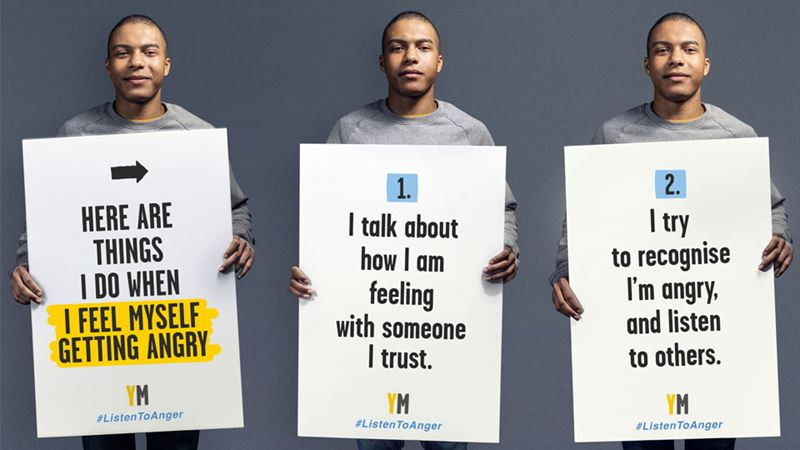
In the final part of this ‘trilogy’ of difficult conversations articles I want to look at anger. Firstly, it’s worth saying that this may not just be the anger of the other person it may be your sense of anger. That feeling that you are becoming angry. That feeling that you are becoming frustrated. Anger often occurs in accelerating cycles both within an individual and between people. So once one person gets angry both people get angry.
First principle when in doubt get out. Sometimes it’s simply better to end a conversation or move the conversation onto something different before returning to it at a later time.
As Groucho Marx once quipped speak when you’re angry and you will make the best speech you will ever regret.
We become angry when there is someone trying to interfere in the space between us and what we intend to do – someone between us and our peace. When we believe that interference is deliberate the impact is stronger. And I think it’s fairly safe to say that the people we work with consider our interference in their worlds to often be deliberate and unwelcome.
What can you do to stop feeling angry or what can you do to stop the other person feeling angry? This is a good question – because of how quickly we react neurologically when someone displays their anger something has already gone badly wrong. Something is not beginning to escalate something has already escalated.
This shows the reality that anger is an innate capacity. It’s required from an evolutionary point of view for self-protection. So, when we feel threatened, we get angry. Anger signals intent. The person is getting angry to protect themselves
Sometimes it’s a behaviour learned culturally. Some observe growing up that getting angry is something people do when they’re trying to assert themselves. Sometimes becoming angry elevates a person’s status – they are listened to. So, it can be experience driven behaviour – a way to cope. Anger is the manifestation of your own nervous system.
Anger blinds you and derails conversation. Anger limits your ability to remain civil. This emotion limits how you access and process information. Once someone us angry, they are not listening or responding rationally they are responding angrily. It’s almost pointless to continue – we need to build those golden bridges from the second article. This is a way to de-escalate the anger and help the other person not feel as though there backing down in some way – not losing face. The things we’ve already talked about – the relationship that you have – the use of the words we and us – will all help to do this.
Do’s and don’ts
don’t meet anger with anger
don’t blame – discuss
don’t make negative assumptions about the other persons intentions or motivations or the source of their anger
do monitor closely yourself and the other person for signs of anger
do change the subject
do reframe the conversation
do pause – take a breath. The goal of pausing in the heat of the moment is to disconnect the automatic link between emotion and action – it serves to slow it down – slow down. When you slow down you calm down
do bite your tongue- do not counterattack- particularly important here is keeping control of your facial expressions and body language
listen listen listen
do not deny the situation is tense. In many circumstances acknowledging the tension or the negative feelings or the frustrations is helpful. Denying these things is seldom helpful
after a tense moment do try to make an empathy statement. This helps foster deeper connexion. For example – I hear you – this must be hard
ultimately make your safety a priority – walk away if you have to
When you think about anger think not only about the other persons but also yours
In the previous article we considered some initial thoughts about what to bear in mind when approaching a difficult conversation. Always be mindful as I said that good relationships are the foundation of what we’re trying to do. These good relationships, these meaningful relationships hinge on factors like dependability, kindness, honesty, empathy, authenticity, and the apparent obvious valuing of the relationship.
So firstly, simply offering a listening ear I feel is an advanced skill. Because often when we’re busy we forget how to sit quietly and simply listen. Doing this gives the opportunity for people to share their words and their feelings and it develops trust. And here is the first thing to think of. If the person says something you don’t understand or flies in the face of the logical progression in your head place that lack of understanding on yourself. So, phrases here to use would be things like, “can you explain that a little further to me”, “I want to be able to understand clearly what it is that you’re telling me”. And let the person talk again while you listen.
What we’re trying to do here is what Boghossian and Lindsay call, in their book “How To Have Impossible Conversations”, building golden bridges. The first part of building a golden bridge is to understand what the other person is saying. Secondly, if this is the case, gently point out discrepancies in what they might be seeing. Get them to think about those discrepancies and articulate them to you in the way that they want to. A golden bridge offers them the opportunity to change what they’re saying, on reflection, without being socially embarrassed by what they have said. I’m sure you’re aware that people engage better with decisions when they feel as though it is them who have made the decision. This is where your effective communication, counselling, and negotiation skills are essential. More on negotiation here. What we’re doing here is trying to head off the conflict before the conflict emerges even when the conversation is difficult. Remember people don’t knowingly desire bad things. People don’t knowingly desire to make decisions that compromise themselves or others. They genuinely think – for whatever reason – they are making a good decision.
Collaborative language
What we’re trying to establish with these advanced skills is that we are in this together within the interaction that is taking place. And the application of this technique is quite simple to describe but often quite difficult to implement.
Start by using the words ‘we’ and ‘us’.
Weinstein and Deutschberger two sociologists said that we is one of the most seductive of English words. Its inclusion in what you say forms a relationship structured in terms of mutuality and interdependence. So, try to replace ‘you’ or ‘I’ with ‘we’.
Also, in the same vein the use of the word ‘us’ is important. “it would be great for us if we could figure out how to move forward on this issue”. “How can we see if that will work”. “How can we give that a go so everybody is safe”.
This next idea also relies on really listening but also on restating the other persons position as well or better than they did.
You should do this before you openly disagree with anything. What this does, at the very least, is show the person that they have been heard, that their voice is important, and that you have accurately heard what they had to say. It also gives them a chance to correct you if that is required. Inevitably you may need to propose a different plan but if they know they’ve been heard they may be more receptive to listening to the alternative.
Taking this approach eliminates the ‘yes but’ statement. When you disagree with something someone has said it’s quite easy to fall into the ‘yes but’ trap. ‘Yes but’ encourages anger and I think it’s worth noting at this point that when someone states a position, they are often stating that position in good faith because for whatever reason, in their position, from their subjective perspective, they think that’s the best thing they can do.
Now they might think that’s the best thing to do because it’s easy or because it doesn’t challenge their world. Or maybe it gets you off their back, but they will authentically think that that’s the best thing to do for them in this moment. Why might that be so?
One of the problems may be cognitive bandwidth. People who have problematic lives, who were often living in poverty, who are often not heard have limited ‘bandwidth’ to consider future options and tend to live in the short term. If their concern in the short-term is to pay the rent or put food on the table, they may not have the cognitive ‘space’ to consider future options. So, if a solution appears to work to them in the short term, or it maintains the life they have so that they are not challenged to change, then they will genuinely believe that that is the best thing to do. When people don’t have a great deal of cognitive bandwidth it’s doubly hard for them to engage in change related tasks. Just imagine for yourself when you are trying to facilitate a change – think of something basic like maybe losing weight or getting fit – if that was the only thing you had to do – if that was the only thing you had to worry about you might be able to give it a good go – you might even start well – but once you have a rough day at the office, or an argument with your partner, or an invite out for a Friday night, how easily the momentum to make the change disappears. And the people we often work with have many many challenges in their lives – you being there maybe being one of them
Rapaport’s rules
Rappoport was a Russian born American game theorist who contemplated a list of rules for offering disagreement or criticism in conversations and we can learn a little something from what he had to say.
Here are his rules….
Rule #1 – expressing the persons position shows that you have made a sincere attempt to understand their position.
Rule #2 – shows that you actually have things in common in relation to the issue despite maybe coming to different conclusions.
Rule 3 – demonstrates mutual learning and respect by showing the person that what they said was informative and valuable. This gets called in a lot of the literature pro social modelling. You are behaving in the way that you want the other person to behave.
So, build Golden Bridges – give people a way out or they may become entrenched in a position even if you’ve convinced them otherwise
Use ‘We’ and ‘Us’ to engender a spirit of ‘in it together’.
Be aware that people in difficult circumstances may have limited cognitive ‘bandwidth’ to consider future options
When it comes to conversations in Social Work practice, particularly difficult ones, we have to start with the question “What are we trying to achieve?” What is the problem we are trying to overcome? Often, I’d suggest, it’s the (almost) impossible. We are trying to have enlightening, helpful conversations, often with difficult messages to deliver, with people who may be in denial about their world and the world out there. In this environment we’re meant to try and do this without aggravating anyone! Without making the conversation difficult and challenging.
So, let’s start by cutting ourselves some slack and acknowledging that sometimes when things go wrong there’s often not a lot we could have done. As I say frequently, the Stoic Philosophers say we can’t control everything so we shouldn’t set our happiness and our view of how well we did on such things. But we must try to predict as much as we can… because conflict – and difficult conversations – are stress inducing – for us and for the other people involved. Best avoided if possible. If not avoidable then managed well.
And it’s not just with service users, parents, or children. It’s sometimes with other professionals and sometimes with our own colleagues in our own teams.
We are involved in deliberate conversations. We need to involve ourselves in listening – but when tense maybe we don’t listen effectively.
There is a way between voice and presence
where information flows.
In disciplined silence it opens.
With wandering talk it closes.
RUMI (13th-century Persian poet)
What’s going on when we are involved in dialogue, conflict, and difficulty? What are the underpinning things that help us avoid this in the first place or navigate through it? Because while the best form of defence is to avoid the conflict in the first place, we have to acknowledge that conflict is, at some point, inevitable.
Some things to bear in mind
There’s always a philosopher, often Greek, that we can turn to and in this instance, I turn to Aristotle’s ‘Modes of Persuasion’. Often in our conversations we are trying to persuade – or at least put forward a position that we want the other person to consider – and Aristotle says there are three crucial things to engage…. Ethos, Pathos and Logos
Ethos
Ethos – your ethics. The question here in the mind of the other person is can you be trusted. The starting point for the individual might be that you can’t be. The reality is that difficult conversations are easier when there is a relationship of trust there. You need to start by building that relationship. It sounds obvious really but in busy practice may be difficult and may not get the attention it deserves.
Trust isn’t about liking each other or what each other is saying it’s about a functional relationship that permits disagreement or conflicting opinion. It also needs to allow, particularly for Social Workers, given the perceived (if not real) position of power we often find ourselves in – balance. Balance of power
A social contract is established in the very early parts of an interaction based on previous knowledge of each other if we have it, or ideas about each other if we don’t have specific knowledge. If you don’t have a relationship with the person, you are likely to be having the relationship the previous Social Worker had. You need to ask, ‘What’s your relationship like with the person – where are you at with them?’ ‘What’s the relationship of the person with social work?’ Overcoming any obstacles that this places in our way by how we communicate is the cornerstone, I’d argue, of social work practice. There is nothing more important. So whatever we discover in thinking about those two questions demands we do something about it – at least have an awareness
Listening is crucial. Nobody cares how much you know until they know how much you care – so the famous saying goes. Build rapport. Assume the other person will be nervous or apprehensive about you being there. Having a ‘professional’ involved in your life brings up all sorts of fears and tensions – don’t add to them. Being honest about difficult things is important – but we need to think about how we frame what we have to say.
Pathos
Pathos is the emotional content of any conversation or relationship we find ourselves in. There is always an emotional content to what we do. Emotional Intelligence is key. We must exhibit emotional control. It’s our responsibility to do so and not expect the same in return. We must manage the emotions of others and that starts with managing our own.
Managing our emotions successfully stifle’s impulsiveness – so it mediates our response – and helps us perform effectively. Recognising emotions in others and knowing how to manage them is a fundamental skill. The problem with this skill is it’s usually forged in the ‘heat of the fire’ rather than been thought about and reflected on before action and after action. What is going to trigger the persons emotions? What emotion? What will I do about it to avoid it or manage it?
Never forget emotions are contagious and easily escalate.
Logos
Finally, Logos – Logic. What we are saying needs to be logical. We need to engage our thinking brain. This relies on us managing our emotional brain (see above!). We need to articulate this logic in a way that the other person can understand. Think clearly before, and during, and after the conversation. Empathise. Persuade. Any conversation is two people in a dialogue trying to find the truth – an agreed truth. A logical truth. Only then can things move forward.
The conversation must connect to how people understand things. We must find the other persons understanding of the thing, know ours, and connect the two. Often when you do this you find people are more ‘movable’ (as you’ve acknowledged their truth) and the ‘truths’ are not as far apart as they appear. There will be some commonality.
Often when we are discussing ‘truths’ like this in practice we need to keep people talking (and we need to keep reflecting) because then we can Develop Discrepancies (there’s or ours).
Developing discrepancies (a feature of motivational interviewing – read about it here) creates a gap between where the person has been (or currently is) and where they want to be. We can use The Columbo Method here. It’s a simple yet clever and cunning way to handle a potential contradiction in what you are being told. Remember the television show Columbo, starring Peter Falk? The fictional Columbo was a detective who solved murder mysteries – hugely popular in the 1970’s. He was a humble and unassuming character who had the ability to get anyone to tell him anything, despite their initial resistance – very disarming. When someone said something to Columbo that was conflicting or inconsistent, he would rub his head and say, “I noticed yesterday you said one thing, and now you are saying something else. I’m confused.” He would say things like, “Could you clarify this?” or “Help me understand.” Columbo did not accuse those he was questioning. By taking the responsibility for his confusion, he disarmed the other person — who then would slowly feel comfortable telling him the things he needed to know to solve the crime. The Columbo Method is to present the facts that appear to conflict, give the person the benefit of the doubt, and then ask questions for clarification. We need to look in this ‘mirror’ ourselves as well. Are we making assumptions that contradict what we are trying to achieve or that are at odds with our professional values.
Ethos – Pathos – Logos
Ethics – Emotions – Logic
Real discussion creates understanding rather than division.
Social work can be seen as an endeavour of attempting to grasp at another person’s reality. We assess people and families striving to be as faithful as possible. In this article I will discuss how Austrian philosopher Ludwig Wittgenstein may assist in providing some warnings and possibly a map of where the limits lie in attempting to describe another human’s existence.
Wittgenstein is often seen as a totally impenetrable and unnecessarily difficult thinker, whose tomes are the jealous property of grey faced professors at posh Universities. I aim to hopefully present some straightforward uses for his philosophy on language and how it can help social work practice.
Life and Times
Wittgenstein’s life story would not fit into one film! Don’t believe me? Here goes!
He was born into a large super wealthy Jewish family in Austria with their wealth matched only by the Rothschild’s (them of the Illuminati). He went to primary school with Adolf Hitler. As a toddler he made machines out of scrap discarded items in his home, he designed a new method to heal wounds after car accidents, he invented the corner radiator, created a precursor to the jet engine and liked a pint round Jesmond when working in the RVI. Despite this list he was the least famous member of his family. One his brothers was the best concert pianist in the world which he did playing only with one hand (strangely there is an episode of MASH based on his life).
Despite his wealth he left the 7 palaces and even more grand pianos (his siblings had one each) and served in the first World War with him single handily diverting machine gun fire on the Russian front and being awarded medals for bravery. During this time on one of the most brutal campaigns in WW1 he wrote one of the greatest works of philosophy the Tractatus.
However the true genius of Wittgenstein is that he is two philosophers in one as his later work comes to re-meet and reinvent (or more accurately decimate) his earlier work, with this hinging on language being variously limited, meaningless and redundant.
Language according to Wittgenstein is best seen, and perhaps can only be seen, in the context of a game, with a game being described as an activity where participants have a pre-understanding of some commonly held rules. The important point here is the meaning is held only between the active participants. To an outsider it is meaningless.
This chimes exactly with a recent Radio 4 documentary about a young parent’s experiences of the family court where their children are removed. One quote in particular about the barristers and the social worker struck me – “it was like a play where everyone but me had a script and knew their lines but me(sic)”.
This highlights a true Kafkaesque nightmare. This parent does not understand the very language that is being used to deny her of her most basic right to be a mother to her child. How do we, in the most caring of professions, engage in such a cruel language game?
It is highly likely that the barrister, the judge and the solicitors have never seen one second of the parent being a parent yet they are able to make complex arguments, statements and decisions on that very matter. Their Jargon is as removed from the reality as their experience is. The below attempts to formalise this picture.
This frames language as being the main agent of oppressive practice. Power is held by those whose professional and remote jargon trumps real experience every single time. This reminds me of an old thought I had at my first Section 47 strategy meeting when I realised (despite being a newly qualified worker), I was the only person in the room to have seen the family, but everyone else’s perception held much more sway and influence. What a strange set of affairs! It’s all a bit like reviewing a film without seeing it. At best you will only offer a derivative generic version of what’s come before, which is shorthand for terrible social work practice, “I don’t need to visit the family I have worked with neglect etc for over twenty years” is surely the defence of the team manager. Do we overvalue an argument from career experience at the expense of the view from the practitioner who has seen the “whites of the family’s eyes” and visited their home? If good social work aims to get to the essence or the true nature of a child and their family’s life this cannot be done from a remote place. You’ve got to be sat at the board to play the game.
Wittgenstein provides a good example that chimes well with social workers, that of the family resemblance. Look at the family picture below:
It is clear that they are all related and resemble each other; however their quality cannot be pinned down to a few simple elements. It is a collective range of positive and negative features that create a very real but fuzzy concept. This feels familiar. As social workers we often have to describe things like the mood in the house or the relationship between individuals, how close are we getting to the real picture, especially when we only demonstrate our evidence through written assessments.
Indeed, as social workers we must be cautious that whilst we strive to understand the context of the child and the parent, our language can only grasp at their reality fleetingly. To say we have fully captured (the language of a bounty hunter??) the child in our assessment is to crush their experience into oblivion. ‘I know better than you about your own experience’, is a disturbing thought in the extreme. Conceptually this can be seen as Naïve Realism (see poster). My world view is the solely correct one.
I’ll close on one of Wittgenstein’s most famous quotes, “If a Lion could talk, we could not understand him”
The message here hinges on a double meaning of understanding. Whilst we could understand the grammar, words and sentences if the lion spoke perfect English all of the common concepts would not be shared ones. Their lives as a lions are inaccessible to ours as humans with no common rules for the exchange.
Luckily as social workers we do not have such a chasm to cross, however, we must acknowledge there remains differences and fuzziness that cannot be fully held by our assessment and certainly cannot be got at remotely by professionals who have never met the family. So, tread carefully, meet families where they are (actually and figuratively) and be cautious of language’s exclusory and assumptive power.
You might also like the following from George and the Social Work Shorts Team talking more about Wittengstein’s Lion
George has been a social worker for 10 years working mainly in child protection and Early Help. He has lectured with Jamie Scorer at New College Durham, University of Sunderland and University of Northumbria in solution focused practice.
I honestly don’t know why but I’m a huge fan of ideas and theories that emerged in the late 50’s and 60’s. It was certainly a time when ideas about the importance of ‘self’ took hold with people like Rogers and Maslow exploring how to be our best selves – scaling the dizzy heights of self-actualisation! One such idea to come out of that same era was Transactional Analysis which is a way of examining the interactions between people.
It was developed by Eric Berne (1910-70) in the late 1950’s as a basis for understanding behavior through communication. Its origins are in groupwork where the transactions – the communication interactions – were analysed to develop understanding. It draws on a range of theoretical perspectives and considers ideas about the subconscious mind and its influence, so, is psychoanalytical. It is humanist in that sees the individual as important, and cognitive as it considers cognitive processes and seeks when necessary to attempt to adapt cognitive processes.
It can be used to explore the Individual, two person relationships and group interaction. Let’s explore its components.
Strokes
‘Strokes’ is a motivational concept where a ‘stroke’ is an act of recognition from one person to another. The communication of acceptance or ‘liking’, is referred to as positive stroking, whereas criticism and ‘discounting’ are negative stroking. There are parallels here with the concept of reinforcing in behaviorism and also ideas of affirmation and validation
Positive strokes would be things like praise, compliments, recognition, affection, rewards, sympathy, consolation, and even self-satisfaction from a job well done. Negative strokes would be put downs, criticism, ridicule, scolding, or punishment. Strokes can be ‘Conditional’ that is they relate to what you do and are not directly about you as a person – ‘you did that task very well’. Whereas unconditional strokes are not about what you do but are about you – ‘I really like you’. There is no condition just a statement.
Strokes can have ulterior motives where people say things to gain favor. I remember one student I taught used to say things like, ‘You’re looking good today Stephen – lovely shirt’, usually around assignment marking time!
Ok-ness
This idea refers to a basic attitude of acceptance towards self and others and states that people adopt one of four positions.
I’m Ok – You’re not Ok – this is rejection and belittling of the other. Maybe it’s ‘I don’t like you’ or ‘I don’t like what you represent’. It could be because the other person is constructively challenging and the person doesn’t like being challenged.
I’m Ok – You’re Ok – the preferred position – acceptance of self and others. This is the state we need to try and establish when working with people. Such a position can generate forward momentum.
I’m not Ok – You’re Ok – reflects avoidance of the other and maybe suggests things to be explored with the person. At least if the person thinks ‘you’re ok’ then this may give you a starting position as they may trust what you are saying.
I’m not Ok – You’re not Ok – Berne suggests reflects a depressive hopeless attitude to life. The question is how to create forward momentum and change in such a position.
Eric Berne
Ego states
Berne suggest there are three ego states – the parent, the adult, and the child. We can all, whether we are adults, parents or children adopt these ego states.
The Parent Ego state is when we adopt behaviours, thoughts and feelings copied from parents or parent figures so is a ‘taught’ ego state. The Adult Ego state is found in behaviours, thoughts and feelings which are a direct response to the here and now and are a ‘thought’ ego state. The Child Ego state is where we replay behaviours, thoughts, and feelings from childhood and is a ‘felt’ state.
Parent (“exteropsyche”): is a state in which people behave, feel, and think in response to an unconscious mimicking of how their parents (or other parental figures) acted, or how they interpreted their parent’s actions. For example, a person may shout at someone out of frustration because they witnessed that as a response, a way of being, in a parent or important person.
Adult (“neopsyche”): a state of the ego, which is very pragmatic and practical, thinking things through logically to make predictions and maybe absent of major emotions that could affect success. Learning to strengthen the Adult is a goal of Transactional Analysis. While a person is in the Adult ego state, they are directed towards an objective appraisal of reality. This resonates so much with me in terms of my writing about productivity and being organised. Developing this ego state means we can relate to people and events in a structured way. Not lacking emotions necessarily but being in control of them.
Child (“archaeopsyche”): a state in which people behave, feel and think similarly to how they did in childhood. The Child is the source of emotions, creation, recreation, spontaneity and intimacy. We need to spend some time in this state I’d argue but it needs to be carefully managed.
Transactions that are complimentary sustain and lead to smooth conversation
So, Adult to Adult could result in solving a problem, whereas Parent to Parent could lead to critical gossip (something lots of people enjoy! We are only human!). Child to Child or Parent to Child could be about playing together.
Crossed transactions cause communication to be broken and give us what is sometimes referred to as ‘a bumpy conversation ride’. Where the stimulus in the conversation originates in Adult and is directed to Adult but the respondent returns conversation from say Child directing it to Parent, or equally, Parent to Child, we may see a problem. I’m wanting to have a serious productive conversation, but I get a petulant child response, or a critical parent response and I’m left on the back foot not knowing quite what happened. Or indeed I’m after a bit of jovial childlike banter and I make a joke that falls flat on its face when someone responds from Adult and I’m left deflated. This happens a lot with my jokes…I need to think about that…. 😉
Within each of these ego states are subdivisions. Parental figures are often either more nurturing or more criticising. Childhood behaviours are either more natural (free) or more adapted to others. These subdivisions categorise individuals’ patterns of behaviour, feelings, and ways of thinking, that can be functional, beneficial, and positive, or dysfunctional, counterproductive, and negative.
Critical Parent can be lecturing or judging – all about what you should do or shouldn’t do. Remember this is not just ‘real’ parent to ‘real’ child – you can be ‘in’ Critical Parent in adult conversations. ‘I don’t know what you do with your time. I need the report now!’
Nurturing Parent on the other hand is sympathetic, advising, and takes care. ‘You seem to be missing deadlines can we talk about what we can maybe do to help?’
In the same problem above Adult may be objective, rational, and problem solving. ‘Let’s reach an agreement on giving you a little longer but it must be done by then. Let’s see what work we can take off you to give you time’.
The Adapted Child may then play the game (Berne loves game playing ideas) and may manipulate the situation trying to drive Adult into Nurturing Parent. ‘I’ve just found everything so hard lately’. Or maybe will be submissive and conform to Adult expectations. ‘Yes, whatever you want me to do’.
The Natural Child might be playful or impulsive and may rebel. ‘Sorry but I can’t I’m taking today off – nobody bothers about the dates things are due anyway!’
How is this relevant to SW?
It helps us understand the other person
It gives us opportunity to consider how to respond in a helpful way to build rapport.
It helps communication by trying to shift the other persons ego state to Adult to establish an Adult to Adult conversation.
TA tells us you can have considerable impact on modifying behaviour by how you communicate. The Adult ego state seeks to ‘control’ the other ego states.
Using TA for effective communication
For effective communication you need to keep the transaction complementary i.e. focus on sender to receiver and receiver to sender where the message is sent to the ego state from which you expect a reply. Using ego states we can look at how others communicate and how we communicate with others. It’s possible to identify which ego state we are in and which ego state we are expecting a reply from.
We can also use TA to help us plan transactions. For example, we can identify which ego state would be most valuable for us to send the message from and which ego state it would be better for it to be received by. If we receive a reply from the wrong (non expected) ego state then we can either try to shift the other person’s ego state or if we cannot do this it may be better to stop the communication and try again another time when the person may be in a different ego state.
We can listen to people’s communication to identify if they are habitually in one ego state and then decide if communication to that ego state would be appropriate or not. TA therefore can be used to elicit the reactions you want from other people (and this will happen consciously or unconsciously). We are trying to achieve Adult to Adult
We can help communication if we need to by trying to shift the other person’s ego state by inviting people to move into a different ego state. They may not always move into it though, particularly if someone is habitually in one ego state. Do this by acknowledging their current ego state (by the appropriate message or response) and then invite them into another ego state by the words (and body language) which you use.
Transactional Analysis implies that you can have considerable impact by the way you communicate with others.
You can use your Adult ego state to think about what behaviour is appropriate and then engage in that way to facilitate helpful conversations.
As social workers and social work students we understand, I suspect, the importance of effective communication and spend a lot of time thinking about what we should say and how we should say it. We think about what signals we send through our tone of voice and our body language. But, do we give enough time to listening and thinking about how to listen?
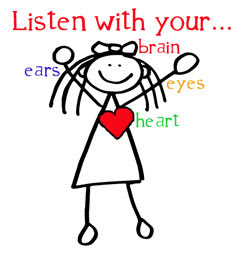
Listening is a physical and cerebral act. We need to engage our ears and our brains. As we physically hear we should be working through what is being said, why it’s being said, and just what does it all mean. All the time thinking about direction for the conversation. Keep all of your plates spinning at once springs to mind! So our brains need to be engaged in the activity and we need to appear present, not distracted, while all of this is going on. Exposure to doing this is really the only way you learn. I work with students from time to time on communication and they tend to leap straight to problem solving before finding out enough. There’s an urgency to intervene, to offer a solution, when often people just want to be heard. Simple? Not really!
Listening attentively is part of demonstrating empathy (but not the whole story!) We are trying to understand what a person means by understanding their position. We are trying to understand how they feel – something I feel we often miss at the expense of trying to get to the facts (I think evidence based practice has kicked intuition into touch at times). We are trying to ‘feel’ with the other person what their experience of reality is and try to show our understanding by feeding some of it back to them to confirm or develop our understanding. You can also show this non verbally through your facial expressions and body language.
You can never fully understand how the person feels and what they are experiencing but you must try to get close. As I once read somewhere (and I wish I could find where – if you know tell me!) – empathy is walking in the other persons shoes but with your own socks on!
As practitioners we can’t always rely purely on our empathetic listening – there’s a tension between empathy and actually generating a direction – we are not simply in conversation – we are in a conversation with a purpose. We need to think, while ‘in action’ how to help a person move forward or we risk reinforcing the persons position having had them ‘tell all’ and simply leave them there. That’s not good! We have to deal, as far as we can, with what we are told. All of this builds up a working alliance, understanding, and trust. ‘Here is someone who is listening and is trying to help’.
The tension at times can be that we also need to listen objectively with a certain level of detachment. I don’t like that word but I still think it’s the right word. You have to be there in the moment, in the persons shoes (but with your socks on!) but also outside of the moment to offer that objective view that is also required just as much as the subjective view – or how would we ever get anywhere?
We need to be cautious that our objective view is not fuelled by our own value base and therefore imposes, through any power we may have, or be perceived to have, our way forward. To do this then we need to practice in a certain way. We need to engage in a equal conversation. Avoid phrases, or imparting knowledge that shows a power imbalance. Don’t interrupt but rather wait patiently giving supportive non verbal cues. We need to seek to understand both thoughts and feelings from the other persons perspective guarding against ‘expectant listening where you hear what it is you want to hear filtering out the bits of the message that don’t fit with where you want to take a situation. Don’t filter out things you believe to be untrue or irrelevant but hear them and consider them fully. If someone is telling you something that is not the truth – then why? When working with people with some sort of impairment or disturbance of mind their response may seem irrelevant in terms of what you’ve just asked but may be very relevant in terms of something they are trying to tell you. In these circumstances and others explore what you hear both literally and for underlying messages.
Also, attend carefully to messages the person sends about themselves and how they view themselves. Stereotypes exist not only in our minds but also in the minds of the people who the stereotype is deemed to fit. The media is a powerful thing and people will be acutely aware of how people in their position are portrayed and may well buy into that portrayal. In the way we talk and present we tell others, and feedback to ourselves, just what we think about ourselves. You may well need to unpick stereotypes that are influencing people in how they think about themselves.
So communication is physical and cerebral. We need to engage in both empathetic and objective listening. Most of all, for me, we need to show that we are alongside people and not there to simply ‘do to them’. Talking and listening are both powerful tools!
Communication is absolutely fundamental to social work practice. As well as communication taking place between individuals it also takes place within specific contexts. This is about environment but also the contextual framework in which the communication act takes place. Let’s have a look at a range of contextual factors
The Physical Context
This is firstly about the local environment in which the communication act is taking place. So , as social workers this may be in a range of settings. Primarily the majority of face to face communication is going to take place in people’s homes or in an office environment. The advantage of a person’s home is clearly that they are more likely to feel comfortable to an extent. It is their usual environment. Your presence is going to change the impact of that depending on how they perceive you. For example, do they perceive you as a threat to their autonomy, or do they perceive you as an ally. How you approach the initial stages of your dialogue will have an influence here (more on that in a later blog). The physical context can come with some obstacles. The environment may be noisy, other people may be close by which may not help in having personal conversation, it may be very warm or cold. All of these things will have an impact. Try to minimise noise. Ask politely for the television or the radio to be turned off. Suggest moving to the kitchen or returning at a different time for example. From time to time if service users were attending other locations, for example, a day centre, I would suggest meeting them there rather than at home. This may not be as comfortable for the individual in terms of it not being ‘their space’ but may have the benefit of being able to secure a private space for open conversation.
There are other sorts of ‘noise’ that may encroach on the physical context. The person may be unwell, or may have just taken medication that makes them drowsy. The may therefore not be as engaged. People may be hearing and responding to voices which will impact in their focus. The ‘noise’ that comes with the power they may perceive you as having may mean they don’t readily open up to you and only reveal limited information. (I intend to expand on this in a later blog).
Office visits, for me, should be avoided whenever possible. Obviously where risk to your personal safety is an issue then having a service user visit you where personal risk is managed is essential. But where there are safe alternatives office visits, I find, are often not productive. The power balance is shifted very much to you and the organisation and, I feel, people are less likely to relax and engage fully. There is also a lot to be said for seeing people in their own environment. Doing this will give you valuable information and you can use cues around the person to stimulate conversation. Asking about people in photographs was always a great opportunity for me, when working with older people, to find out more about their history and their family.
The Cultural Context
Cultural perceptions of power, position and authority also have an impact on how you communicate with people. I don’t know about you, but I communicate very differently when out for a drink with friends compared to when I’m work. We communicate differently in different settings based on what is expected of us culturally. For example, think of the hushed tones we often find ourselves speaking in when in a church, or the boisterous language used when in the pub. There is a language with goes with different cultural environments. There are colloquial turns of phrase that need to be understood and interpreted, and maybe unpicked, to make sure of understanding. If you are communicating with people in different locations they may expect different things from you or perceive you differently. In a care home, for example, someone may feel they have limited choice as to whether they speak to you or not so may readily agree when really they may not want to, while in their own home, they may well ask you to ‘come back later’. People may feel less empowered to make their own decisions when in the cultural context of the care home where they may feel their personal autonomy is eroded.
The Social-psychological Context
As I’ve already alluded there is a social and psychological status to us as individuals. As a social worker you have a real, and also a perceived, position in society and therefore in the minds of the people you may want to communicate with. Some of this may come with negative perceptions of you based on your position. We assume different roles with different gravity as practitioners. That of social worker, Best Interest Assessor (BIA), Approved Mental Health Practitioner (AMHP) to name a few. And all of them come with different levels of power. BIA’s and AMHP’s have considerable power while social workers may actually be perceived as having more power than they actually have. This can create a barrier if not managed effectively. So, the words you use to introduce yourself, and the manner in which you do so, may help to overcome some of this. Those initial few minutes (some would argue seconds!) are crucial in establishing a level of rapport.
The Temporal Context
This is the communication event’s position within a sequence of other events. “It’s not all about you”, as people are fond of telling me! The conversation you are about to have has been preceded by events for you and will be followed by events for you that you are already aware of. Don’t forget this is the same for the person you are talking to. They may have just had a great morning and be on top of the world or they may have had an anxious few hours waiting for your visit. They may have just received good or bad news, or just had a lovely, or fractious, visit from a family member. You will probably have no knowledge of this so how you initially approach your conversation should bear this in mind and should aim to establish emotionally and psychological how the person is and therefore how you may need to tailor the conversation to their requirements. Also, they will have things happening after your conversation, as will you. This may lead to someone wanting to prolong the conversation or cut it short and both of these things can have a direct impact on the quality of the interaction. No doubt you will have prepared for the conversation but will the other person? You will find you therefore can’t simply launch into your agenda at your pace but will have to effectively judge how to approach the other person.
So, be conscious of how you can best ‘shape’ the physical environment, be aware of any cultural norms that may be having an impact, and be mindful of the place the conversation is within yours, and the person’s, day.
coming soon
‘Noise’ and its impact on communication
The importance of conversational ‘openers’
Communication skills are the bedrock of social work practice in all situations – when working with service users or their carers, presenting a case in court or at panel, or liaising with other professionals. How you engage, listen, and deliver your message is of huge importance. Words are powerful and body language is powerful. So how you use your communication can make or break a situation, can escalate or deescalate conflict, and can certainly change, for better or worse, the outcome of your involvement with individuals.
Carl Jung says that “The meeting of two personalities is like the contact of two chemical substances; if there is any reaction, both are transformed”. In this quote we see the power of communication. How we communicate can be dependent on our personality, dependent on what we ‘bring to the table’ and how we use it. When two people meet something will inevitably occur and something or someone will change or be transformed. Even if you walk into a room and the other person there ignores you they have told you something in that action and that will impact on what you do next. What you do next will impact on their next response. In this situation the ignoring is a reaction in itself. We can’t help but communicate!
William James offers us this, “A man (sic) has as many social selves as there are distinct groups of persons about whose opinion he cares. He generally shows a different side of himself to each of these different groups”. My first practice educator when I was training told me after my first observed practice, as social workers we are actors on the stage. He wasn’t suggesting that we fake anything but was alluding to the point that in trying to build a professional relationship quickly with someone we need to be who they need us to be. We need to find some common ground through our communication to start to build a relationship, engender trust, and demonstrate empathy. As a simple example, I would sense the broadness of my accent shift depending on the accent of the person I was with. I felt this was reflecting and responding to who they are and showing that we, inevitably, have some similarities. In a sense this was a subconscious reaction on my part bourn out of trying to establish a human, emotional connection.
There is more to communication in social work practice than simply having a conversation. I remember reading the phrase somewhere that it is a ‘conversation with a purpose’. So, what is that purpose?
Well, firstly we should endeavour to make it a positive experience. Now, I’m not dismissing the fact here that some of the messages social workers need to deliver are difficult messages and some of those messages may not want to be heard by the people we are working with but still, we should approach all conversation looking for positive outcomes. We should demonstrate compassion for the situations people find themselves in and not appear punitive in our actions. Our role is to minimise, as far as is possible, the potential for conflict and hostility that may result from what needs to be said. Aside from difficult conversations we should use our ‘human touch’ skills to make people feel at ease, as far as you ever can, especially in the early stages of relationship building.
So, an important part of our communication is therefore to relate to the other person. To form and establish relationships where we can work with and, where appropriate, on behalf of, the individual. We should listen more than we speak. We should be aware of body language and what someone is communicating through that. The ‘music behind the words’ as Lishman would put it.
We also may find we need to use communication to influence, to put other options and to consider strategies for change. We may want to strengthen certain attitudes while asking people to consider the impact of others. At times we may need to challenge, sensitively, and in a spirit of cooperation. When challenging we need to ensure that we are not trying to move someone to change or think differently from our own personal value base but rather that we are working with an understanding of theirs. What do they value? What is important to them? What do they feel they need to change?
We must not fall in the trap of thinking that we only communicate to acquire knowledge of the person. We communicate to build a relationship, to create trust, and to demonstrate empathy. Get it wrong and these things aren’t achieved. Get it right and we can create movement and develop understanding.
The other facet to communication is that we learn about ourselves. We learn about what makes us ‘tick’, what challenges us, what makes us uncomfortable. We need to listen to ourselves while we are communicating, creating a feedback loop, reflecting in action, and modifying our style as we go to enable us to work effectively with the individual we are with.
I love the Pelican Originals, which were published by Penguin from the ’30s to the ’80’s. I’ve got myself a little collection that I’m building; I love the blue spines and the cover art, especially of the ’60’s ones, and now when you buy them in second hand book shops they have that ‘browned’ look of old books. Love it! But… that wasn’t what I came here to tell you about…..
We talk a lot in social work about communication. We understand the importance of words but also the importance of non verbal communication. And one of the important factors we discuss is eye contact. So, you know how important eye contact is in demonstrating that you are there with the person, and how it goes some way towards showing empathy. Well, there are some interesting things that sit behind all of that.
I’ve been reading (some of) The Psychology of Interpersonal Behaviour by Michael Argyle (1967), a Pelican Original! And he tells us some interesting things. He says that there is evidence that as early as four weeks old babies show more interest in the human face than in other objects. He feels that this fascination with the face is an innate reaction and further that in research by Coss (1965) it was found that patterns resembling eyes produce a greater emotional response from adults than other similar patterns (pg. 26,27). So, eye contact is important to us from an early age and Argyle comments that, for babies, following with the eyes is the equivalent to physical (i.e. following by walking) following. A visual dependence for eye contact is formed.
When talking about eye movements (pg. 44) he particularly observes that eye movements play an important part in maintaining the flow of conversation. The speaker looks up to gain feedback (is the other person interested, attentive) and will make eye contact for longer to signal that it is time for the other person to speak. Eye contact, he says, increases the sense of intimacy.
So, he suggests there are different elements to eye contact (pg. 84-93). There is looking as seeking information, andthere is looking as a signal or social technique (e.g. to initiate a reaction, to show emotion). Also, there is a motivational basis to looking. Looking may be rewarded with information, a smile maybe, affirmation that we are being listened to and valued. As he said, this basic motivation to seek such responses may well go back to being a baby. He states that being looked at is emotionally rewarding. In tests on rhesus monkeys brain stem activity increases when they are looked at by humans, he says. He points out, however, that long gazes can feel uncomfortable, even threatening, suggesting that if eye contact starts to feel like ‘being observed’ it can disturbing.
Interesting!?
“The Psychology of Interpersonal Behaviour”, by Michael Argyle, (1967 – the year I was born! – I know hard to believe!) is a Pelican Original, published by Penguin Books.
Effective communication is paramount in working with a person with dementia where verbal communication may have declined (expressive ability) and where comprehension of language may be difficult (receptive ability). Communication cannot be left to chance but needs to be effectively thought through and managed from a theoretical and personal perspective. That is, what does theory tell me about how to communicate and how do I use myself as a tool in this exchange?
Communication in general relies on both verbal and non-verbal exchanges of information and is described as a sophisticated art (Junaid and Hegde, 2007) and noted as the heart of intervention (Lishman, 2009). Listening needs to be a physical, cerebral and emotional act if we are to ensure its effectiveness and if we are to demonstrate empathy within a practice situation. Lynch (2014) suggests that there is a distinct difference between listening and hearing – with hearing being the more important of the two. He suggests people can listen without necessarily hearing, but not vice versa. Hearing requires engagement and not just physical presence.
Your demonstration of your presence is particularly important when working with people with dementia to ensure they remain engaged with you in dialogue. They are more likely to remember how they felt during the exchange rather than the actual content, so your body language and attentiveness is of paramount importance.
Communication is a valuable ‘end’ in itself as it supports the individual’s sense of self; their personhood as Kitwood (1997) puts it. What gives people a sense of self is how others are with them and how they react to them. In maintaining our sense of self we need others to legitimise who we are in a social situation. But for the practitioner communication is also a means to an end in terms of information gathering with a view to assessment and support planning. What can appear to be simple conversation – chatting about their life, their family, likes, dislikes and aspirations – is rich in information for the social worker.
It is advisable when working with anyone, but particularly those with dementia, to ‘tap into’ this rich seam of information. This type of general conversation can form part of the assessment in itself as it helps you explore the person’s short- and long-term memory, their ability to articulate, their language skills, their ability to track conversation and return to earlier themes; all of which gives you valuable information in how to continue to communicate. You will need a constant cycle of reflection regarding the person’s communication skills and preferences during the interaction to ensure a successful exchange.
The use of silence should not be underestimated in any communication. For people with dementia it can give space to think and consider a response and as long as the silence does not become overbearing it can be a valuable tool. Silence can also communicate other things such as an individual’s annoyance with a question, or that it is not a question they want to answer at that time. Interpreting which questions are answered and which are not may enhance overall understanding of the interaction and indeed the person (Lynch 2014).
You will need to work at the pace, and on the subject matter, of the person’s choosing, at times gently responding to, and steering, the conversation. After all, this conversation has a purpose but needs to feel natural and not invasive, although invariably there will be some questions and subjects that simply need to be addressed at an appropriate time. When in conversation it is important to ‘listen to’ the emotion attached to words or phrases; the ‘music behind the words’ as Sutton (Lishman, 2009) puts it. This will give you an indication of the importance of some statements in relation to the individual’s view. For example when someone says ‘my son can only visit once a week as he is really busy’ you may be able to note in the intonation whether the person is comfortable with this and accepts it or is annoyed by it.
What practical things help? Small et al (2003) and Wilson et al (2012) give us some clear observations, and some debate, on how to approach communication with someone with dementia. Good practice would lead us to, eliminate environmental distractions and create an atmosphere where it is apparent time is available so that the person is not rushed. You should use short, simple sentences, which include only one question or point and use repetition and paraphrasing to ensure understanding before moving on. You should allow plenty of time to respond to each question and not to interrupt, finish or pre-empt answers; and encourage people to talk around a subject where they may be having difficulties with finding the word or recalling information.
There is also a suggestion that the use of pronouns can lead to problems so it is better to say, “Mary visits twice a week”, rather than, “she visits twice a week”. Being specific is helpful. There is some discussion around slowing down speech, but if speech is slowed too much the person may not be able to retain the information from the start of the sentence once the end of the sentence is reached. This point serves only to illustrate that the need to adjust your communication style within a theoretical practice framework is essential.
Other practical considerations to bear in mind include thinking about the time of day you talk to someone with dementia as there is a tendency for mental ability to fluctuate throughout the day and it often declines the later it gets. The impact of medication, particularly where it causes drowsiness, will also need to be considered.
Particularly for those in the later stages of dementia, but universally to a significant degree, is the importance of tone, volume, and pace of conversation where understanding of vocabulary is compromised. Where expressive language has declined for the individual, conversational communication remains important in terms of the person’s view of self and in developing your understanding of them. Where people can no longer communicate verbally, communicating continues to be a human urge and if denied it denies the person.
People will find ways to communicate at a fundamental level such as facial expression, gestures, and movement (Ellis and Astell, 2010). Specific information may need to be sourced from elsewhere, but the person with dementia needs to remain included in the whole process even where the level of factual, accurate information is limited. Continue to maintain eye contact with them and ask questions even if someone ultimately has to answer the question on their behalf. This element of human contact and inclusion signifies that the individual remains important within the overall exchange.
Communication remains key to both including the person and gathering information during every aspect of working with someone with dementia, from assessment to discussing personal budgets, from putting together a support plan and reviewing it, to safeguarding and assessing risk. Clarity is of the utmost importance. It is important to use non-ambiguous language, to break complex information down into smaller statements or questions, and to return to statements or questions to confirm understanding. You may want to think of other ways like leaflets or written notes of main points to help the person ‘remember’ what has been discussed. They may need a reference point to scaffold their memories.
References:
Ellis, M., & Astell, A. (2010). Communication and personhood in advanced dementia. Healthcare Counselling and Psychotherapy Journal, April, 32-35.
Junaid, O., & Hegde, S. (2007) Supportive psychotherapy in dementia, Psychiatric Treatment vol. 13, 17–23
Kitwood, T. (1997) Dementia Reconsidered: The Person Comes First (Rethinking Ageing), Open Univerity Press
Lishman, J. (2009) Communication in Social Work, Palgave Macmillan
Lynch, R., (2014) Social Work Practice with Older People (A Positive Person-Centred Approach), Sage
Small, J, Gutman, G, Makela, S, & Hillhouse, B 2003, ‘Effectiveness of communication strategies used by caregivers of persons with Alzheimer’s disease during activities of daily living’, Journal Of Speech, Language & Hearing Research, 46, 2, pp. 353-367
Wilson, R., Rochon, E., Mihailidis, A., & Leonard, C. (2012) Examining Success of Communication Strategies Used by Formal Caregivers Assisting Individuals With Alzheimer’s Disease During an Activity of Daily Living Journal of Speech, Language, and Hearing Research, Vol. 55, 328-341












 Strokes
 Ok-ness


 How is this relevant to SW?
 As social workers and social work students we understand, I suspect, the importance of effective communication and spend a lot of time thinking about what we should say and how we should say it. We think about what signals we send through our tone of voice and our body language. But, do we give enough time to listening and thinking about how to listen?
 Communication is absolutely fundamental to social work practice. As well as communication taking place between individuals it also takes place within specific contexts. This is about environment but also the contextual framework in which the communication act takes place. Let’s have a look at a range of contextual factors


