After a 13 year break I have returned to University to complete an Education Masters at Sunderland. This week I have been writing my first essay and returned to the business of academic referencing.
My inner free child has been screaming variously, “why bother” “don’t the lecturers already know all this”. Then my adult subliminal voice replies, “it’s just the academic game just play along like a good boy”.
So is there real value to this referencing malarkey? I’ve got two stories that may persuade you that there is.
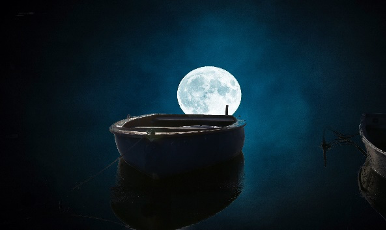
On Saturday all the family visited the Moon at Durham Cathedral. I would recommend people go and see and enjoy the beautiful stark but strangely fitting scene of the moon floating about at the front of the cathedral. In a brief conversation with my son about the weight of the Moon (yes I meant mass science nerds) I was roused by a thought about who was buried at the back of the church and the importance to this massive lunar bauble.
As you enter the church the moon, you can’t miss it, is to the left, but to the right is buried one of England’s and the North’s true heroes St Bede the venerable.
Born in Jarra entering the monastery at 12, he is known as the father of English history, a poet, scientist, mathematician, astronomer, statesman and more or less he is the reason why the year is 2021 today and we celebrate Easter when we do.
Bede like all good scientists took the data from previous works , made clear his sources, then verified, improved and reevaluated at each step his findings all with an open and critical mind.
Whilst calculating the dates of the moveable feast that is Easter Bede made a stunning connection,
It is as if [the ocean] were dragged forwards against its will by certain exhalations of the Moon, and when her power ceases, it is poured back again into his proper measure. (Wallis 1999)
Durham is a really small city and it must have more classists, historians and religious thinkers per head than anywhere else in England.

So how have they honoured this amazing connection between Bede who is buried at one side of its cathedral and a massive moon at the other. Well nothing…. no mention no reference no link. Does Bede’s legacy not deserve even a mention? I often wonder if he lived 300/400 years later and studied in Oxford would he be seen on a similar footing to Newton or Darwin, both similarly motivated by religious views of the universe in their works.
To put right this injustice we just need a reference……………
Apart from getting angry about moons and long dead saints this week I also enjoyed an episode of Melvin Bragg’s podcast In Our Time. Quite simply if you’re interested in a topic and you don’t start here you have made a wrong turn.
The episode I listened to was the about the Manhattan project (Bragg, M 2021) , the amazing story of how the nuclear bomb was built, with the most incredible part being that the first experimental paper was wrote in the University of Manchester only in 1939 (Meitner, Lise; Frisch, O. R. (1939)) (detailing the potential of a uranium reaction causing an explosion) and the bomb was built tested and dropped in 1945 (a mere 6 years). No scientific endeavour has ever moved at a faster pace, conflict leading to creation then destruction.
To create the bomb the US army assembled the equivalent of the Avengers of scientists to work secretly in the New Mexico desert (ala Breaking Bad, both near hot dog jumping frog Alberquere, Prefab sprout 1988);
Oppenheimier, The American Prometheus,( Kai Bird and Martin Sherwin (2005)),
Feynman , The Raconteur, surely your joking Mr Feynman, Feynman (1985 )
Bohr, Master of the Atom
Fermi, The pope of physics, The last man who knew everything,Schwart D, }(2017)
Schwartz, David. (2017). The Last Man Who Knew Everything: The Life and Times of Enrico Fermi, Father of the Nuclear Age. Basic Books, December 2017.
N.B The person who formed the ‘Avengers’ despite not actually joining up with them in the research was a certain Albert Einstein, I guess he was somewhere between Dr Strange and Charles Xavier .
However it is not with these amazing characters that the next vignette focuses on its another forgotten hero (like Bede) this unassuming fella Georgy Florov. Never heard of him (I hadn’t) well he may possibly saved us all from a nuclear holocaust.

Georgy was part of the soviet airforce in WW2 and despite them fighting against the Nazi’s along with the Americans they were highly suspicious of their capitalist frenemies and endeavoured to match them step for step in every possible endeavour (the space race to the moon being an example).
Georgy prior to entering the airforce was a scientist in the emerging field of atomic reactions and energy. He left his studies for the war effort at a time of great development in the subject. In 1942 he was summoned for a guest lecture in Kazan. Georgy’s scientific curiosity lead him almost straight to the library after his lecturer to discover how his field had progressed whilst he had been away at his military outpost.
Once in the library he looked for journals and references over the past few years in particle physics, strangely he could find nothing. Not a scrap was published from any of the ‘Avengers’ that I listed above, i.e the greatest minds and experimenters in their field.
How could this fertile rapidly emerging field not produce any papers or any new references in the past few years especially from all these big hitters in the prime of their academic lives. Georgy moved the chess pieces in is head and came to the conclusion that the academic silence meant that the Americans where developing the bomb and they had pulled all the top minds into a secret operation.
Georgy wrote to Stalin in the clearest possible terms,
“We must immediately build the uranium bomb without delay”
Thus began the soviet nuclear programme and the cold war.
Without paining too much over the game theory Hawk v Hawk explanation of how Georgy may of saved us all here is a causal explanation.
- Nazi’s surrender may 1945, never developing a nuclear bomb
- USA develop the bomb and use it at Hirsohima and Nagaskai August 1945
- Eisenhower considers using bomb again in Korean war of 1953 against communist China.
- USA decides against using bomb as Communist USSR may retaliate.
- In the Cold war and subsequent wars nuclear bombs are not used. MAD (mutually assured destruction) becomes the logical position if super powers use their weapons against one another.
…….. no Georgy no MAD.
So be like Bede and Georgy and not like Durham Cathedral, value the references – the work that has come before. Scaffold your own work on what has come before, pay your academic dues. If you don’t you might also miss something as obvious as a giant 23ft floating Moon right next to the burial site of Bede.
This mature student tried his best in his first essay in 15 years ……..
As a fun task how many of the people mentioned in this essay have chemical elements named after them.
Bibliogrpahy
Bragg, M. (2021) In Our Time: Manhattan project. [Podcast]. 01 November. Available at: [Podcast]. 01 November 2021. Available at: https://www.bbc.co.uk/programmes/m00108h11 November
FEYNMAN, . (1985). “Surely you’re joking, Mr. Feynman!”: adventures of a curious character. New York, W.W. Norton
Kai Bird and Martin Sherwin (2005), American Prometheus: The Triumph and Tragedy of J. Robert Oppenheimer. Alfred A. Knopf, 2005
Meitner, Lise; Frisch, O. R. (1939). “Disintegration of Uranium by Neutrons: a New Type of Nuclear Reaction”. Nature. 143 (3615): 239–
Prefab Sprout (1988) “King of Rock and Roll, Album from Langley to Memphis”, Label KitchenWare
Schwartz, David. (2017). The Last Man Who Knew Everything: The Life and Times of Enrico Fermi, Father of the Nuclear Age. Basic Books, December 2017.
Wallis, Faith (1999). Bede: The Reckoning of Time. Liverpool University Press. ISBN 0853236933.