Language and Power in Social Work, a fresh perspective from the Philosophy of Ludwig Wittgenstein

Social work can be seen as an endeavour of attempting to grasp at another person’s reality. We assess people and families striving to be as faithful as possible.  In this article I will discuss how Austrian philosopher Ludwig Wittgenstein may assist in providing some warnings and possibly a map of where the limits lie in attempting to describe another human’s existence.

Wittgenstein is often seen as a totally impenetrable and unnecessarily difficult thinker, whose tomes are the jealous property of grey faced professors at posh Universities.  I aim to hopefully present some straightforward uses for his philosophy on language and how it can help social work practice.

Life and Times

Wittgenstein’s life story would not fit into one film! Don’t believe me? Here goes!

He was born into a large super wealthy Jewish family in Austria with their wealth matched only by the Rothschild’s (them of the Illuminati). He went to primary school with Adolf Hitler.  As a toddler he made machines out of scrap discarded items in his home, he designed a new method to heal wounds after car accidents, he invented the corner radiator, created a precursor to the jet engine and liked a pint round Jesmond when working in the RVI.  Despite this list he was the least famous member of his family. One his brothers was the best concert pianist in the world which he did playing only with one hand (strangely there is an episode of MASH based on his life).

Despite his wealth he left the 7 palaces and even more grand pianos (his siblings had one each) and served in the first World War with him single handily diverting machine gun fire on the Russian front and being awarded medals for bravery. During this time on one of the most brutal campaigns in WW1 he wrote one of the greatest works of philosophy the Tractatus.

However the true genius of Wittgenstein is that he is two philosophers in one as his later work comes to re-meet and reinvent (or more accurately decimate) his earlier work, with this hinging on language being variously limited, meaningless and redundant.
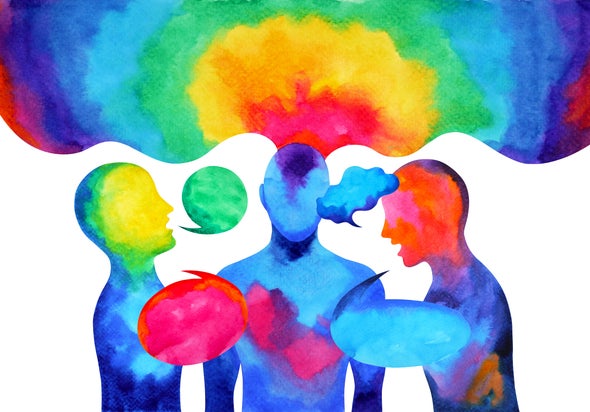
Our Language Affects What We See - Scientific American

Language according to Wittgenstein is best seen, and perhaps can only be seen, in the context of a game, with a game being described as an activity where participants have a pre-understanding of some commonly held rules. The important point here is the meaning is held only between the active participants. To an outsider it is meaningless.

This chimes exactly with a recent Radio 4 documentary about a young parent’s experiences of the family court where their children are removed. One quote in particular about the barristers and the social worker struck me – “it was like a play where everyone but me had a script and knew their lines but me(sic)”.

This highlights a true Kafkaesque nightmare. This parent does not understand the very language that is being used to deny her of her most basic right to be a mother to her child.  How do we, in the most caring of professions, engage in such a cruel language game?

It is highly likely that the barrister, the judge and the solicitors have never seen one second of the parent being a parent yet they are able to make complex arguments, statements and decisions on that very matter.  Their Jargon is as removed from the reality as their experience is.  ­­­­The below attempts to formalise this picture.

This frames language as being the main agent of oppressive practice. Power is held by those whose professional and remote jargon trumps real experience every single time.  This reminds me of an old thought I had at my first Section 47 strategy meeting when I realised (despite being a newly qualified worker), I was the only person in the room to have seen the family, but everyone else’s perception held much more sway and influence.  What a strange set of affairs! It’s all a bit like reviewing a film without seeing it. At best you will only offer a derivative generic version of what’s come before, which is shorthand for terrible social work practice, “I don’t need to visit the family I have worked with neglect etc for over twenty years” is surely the defence of the team manager.  Do we overvalue an argument from career experience at the expense of the view from the practitioner who has seen the “whites of the family’s eyes” and visited their home? If good social work aims to get to the essence or the true nature of a child and their family’s life this cannot be done from a remote place. You’ve got to be sat at the board to play the game.

Wittgenstein provides a good example that chimes well with social workers, that of the family resemblance.  Look at the family picture below:

It is clear that they are all related and resemble each other; however their quality cannot be pinned down to a few simple elements. It is a collective range of positive and negative features that create a very real but fuzzy concept.  This feels familiar. As social workers we often have to describe things like the mood in the house or the relationship between individuals, how close are we getting to the real picture, especially when we only demonstrate our evidence through written assessments.

Indeed, as social workers we must be cautious that whilst we strive to understand the context of the child and the parent, our language can only grasp at their reality fleetingly. To say we have fully captured (the language of a bounty hunter??) the child in our assessment is to crush their experience into oblivion. ‘I know better than you about your own experience’, is a disturbing thought in the extreme. Conceptually this can be seen as Naïve Realism (see poster). My world view is the solely correct one.

I’ll close on one of Wittgenstein’s most famous quotes, “If a Lion could talk, we could not understand him”

The message here hinges on a double meaning of understanding. Whilst we could understand the grammar, words and sentences if the lion spoke perfect English all of the common concepts would not be shared ones. Their lives as a lions are inaccessible to ours as humans with no common rules for the exchange.

Luckily as social workers we do not have such a chasm to cross, however, we must acknowledge there remains differences and fuzziness that cannot be fully held by our assessment and certainly cannot be got at remotely by professionals who have never met the family. So, tread carefully, meet families where they are (actually and figuratively) and be cautious of language’s exclusory and assumptive power.

You might also like the following from George and the Social Work Shorts Team talking more about Wittengstein’s Lion

https://anchor.fm/socialworkshorts/embed/episodes/Social-Work-Shorts-Episode-10-Presents-Beers-and-Ideas—Philosophy-and-Social-Work—Wittgensteins-Lion-e10sbfi

George talks about Poverty in this Social Work Shorts Podcast

https://anchor.fm/socialworkshorts/embed/episodes/Social-Work-Shorts-Episode-15-Insights-1—Poverty-and-Children-and-Families-Social-Work-e14i2k7

Or listen to George talk to Stephen about Risk

https://anchor.fm/socialworkshorts/embed/episodes/Social-Work-Shorts-Episode-25-Insights-8-Stephen-in-conversation-with-George-Bull-about-Risk-in-light-of-the-murder-of-Arthur-e1bfo48

About the writer…..

George Bull

George has been a social worker for 10 years working mainly in child protection and Early Help. He has lectured with Jamie Scorer at New College Durham, University of Sunderland and University of Northumbria in solution focused practice.
Thoughts on ‘Radical Perspectives On Mental Health’

I had the luxury of a spare Saturday yesterday (12th February 2022) that coincided with an online festival of presentations and discussion on all manner of things from philosophy to science, all the way around culture and back again. It was the Winter Revel brought to us by How The Light Gets In.

I’ve been to one of their online festivals before and loved listening to people who were new to me and people whose books I’d read. They have some ‘heavy hitters’ on the bill. 

Lucy Johnstone | In-depth interview

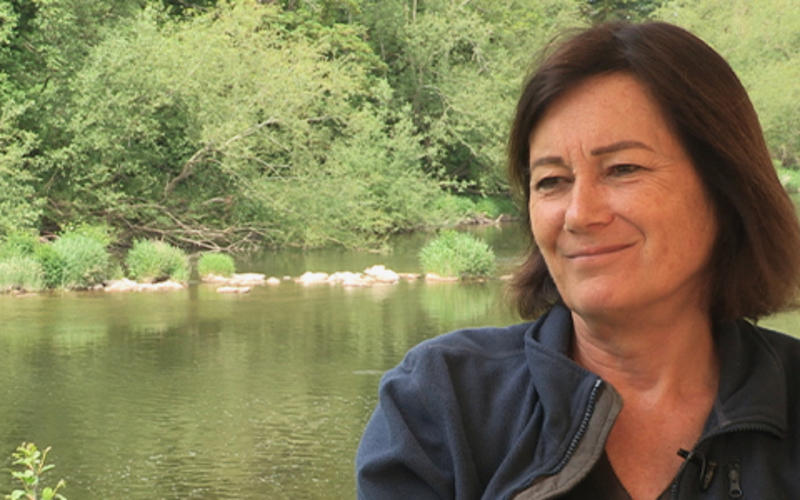
I was so pleased to listen to Lucy Johnstone’s (left) take on Mental Health…. a radical take, as she put it, in many ways. Lucy is is a UK clinical psychologist, trainer, speaker and writer, and a long-standing critic of biomedical model psychiatry. She has worked in adult mental health settings for many years, alternating with academic posts.

She said a number of interesting things that critique the current professional and public perception of mental health that I am still thinking through for myself but I felt were worthy of getting out there for further exploration. You can comment below or join the chat at our Social Work Shorts Discord server – you’ll need to download the app or desktop version and then follow this link. 

So what did she say!?

She started by quoting Dr Allen Francis the chair of the DSM IV Committee (the mental health diagnostic manual) as saying ‘there is no definition of a mental disorder ….it’s bullshit.’ Johnstone was keen to point out in saying this and the other things she said she wasn’t denying the very real and problematic experiences that people have. She was simply suggesting that we are approaching it in the wrong way ….and she did offer a solution which I’ll get to later. She confirmed the view of Francis stating that diagnosis is not scientifically valid saying that diagnosis is circular. You’re hearing voices – you have schizophrenia – how to we know you have schizophrenia – you’re hearing voices etc. This points to the fact that mental health diagnosis is social not medical. The person doesn’t fit with what society perceives as ‘normal’.

She went on to suggest that psychiatry rarely helps people. She wasn’t saying that it sometimes didn’t help but that mostly it doesn’t. In fact she suggested that psychiatry can sometimes reinforce the stigma that goes with having a mental health problem. She suggested also that well intentioned anti-stigma campaigns often do quite the opposite and reinforce the ‘othering’ of people with such ‘problems’. They are based, she feels, on an illness model rather than a model that centres emotional suffering. She noted that the mantra ‘we all have mental health’ elevates the normal range of emotions and feelings to a higher level and problematises or medicalises a range of feelings that sit within a ‘normal’ range. Again she was not saying that people with emotional difficulties should not be supported but rather that the elevation is inappropriate for many. Self diagnosis is unhelpful and also so is the over medicalisation of a range of emotions.

The problem with diagnosis and the diagnostic manual she suggests is that 9 out of 10 of us at some point will meet the criteria for one or other of the ‘mental illnesses’ so eventually it will be 10 out of 10 so then we all are mentally ill and systems get overwhelmed and people that should be at the top of the priority list for support don’t get it. Of course such over diagnosis plays right into the hand of pharmaceutical companies who can offer us medication.

In relation to current treatments she makes the startlingly obvious point that is overlooked that despite such treatments rates of distress across the world are rising. So if what you’re doing isn’t working maybe it’s time to do something different.

First of all what is the problem!?

She suggested that economic conditions brought about by neoliberalism had created job insecurity, reduced welfare services, reduced community ties, excluded some groups and led to materialist values which in turn has led to an increase in mental health problems. It takes me back to a quote from Alvin Toffler that I often use from his book Futureshock written in 1970. He predicted that the change of pace he saw then would continue into the future (our present) and people wouldn’t be unable to keep pace with the change. Add into this Debord’s view in his The Society of the Spectacle that people’s worth will become tied up not in what they ‘are’ but in what they have. This leads to a drive to consume more and more to signal to others our success. This creates a tension that he refers to as an ‘opium war’ that forces people to equate goods with satisfaction. Mental health ‘problems’ are therefore rooted in a social phenomenon that has a psychological impact. This requires us to change the social world to make it a better ‘fit’ with the universal human condition

Johnstone, with Mary Boyle propose in their book ‘A Straight Talking Introduction to the Power Threat Meaning Framework: An alternative to psychiatric diagnosis’ an alternative. The framework mentioned in the title Power Threat Meaning.

The framework haas been developed by a core group of psychologists and service users over a 5 year period laying out the following key principles. The framework builds on trauma informed practice, de-medicalises and de-professionalises mental health intervention, explores how distress makes sense in a context and creates no separate group of the mentally ill.

The framework asks some core questions:

  • What has happened to you? (How is Power operating in your life?)
  • How did it affect you? (What kind of Threats does this pose?)
  • What sense did you make of it? (What is the Meaning of these experiences to you?)
  • What did you have to do to survive? (What kinds of Threat Response are you using?)
  • What are your strengths? (What access to Power resources do you have?)
  • and to draw it all together What is your story?

Johnstone suggests that this framework draws on the importance of the group to the individual, acknowledges our relationship tot he natural world, integrates mind, body, and spirit with that natural world and builds on (among other things) community narratives and values.

Now if like me you’re a social work you’re probably thinking…. that sounds like it aligns with social work practice and values very well to me! What do you think? Hearing Lucy Johnstone talk about this felt like turning a corner and was so refreshing. Check out the book. It’s available here from the publishers web site and all the other usual places.

A Straight Talking Introduction to the Power Threat Meaning Framework: An alternative to Psychiatric diagnosis 9781910919712

Power & Autonomy

When we think of power, we usually think of hierarchical power exercised over us by those in certain positions. There is also power in culture. Harari, in his book Sapiens, says cultures have typical beliefs, norms and values but that they are in a constant state of flux and that culture is changed through environment. He says that cultures are simply stories we tell ourselves, stories that we are conversant with. These stories have power because they hold values in them – ways of being, seeing the world, and behaving.

Our social work favourite – Thompson’s PCS model – says that the personal is embedded in the cultural and that cultural is embedded in structural. I’d suggest that this can bring each of these level into conflict with each other in a power struggle for dominance. Think about the white teenager in conflict with the culture norm of their family who are comfortable with racist jokes or cultural norms around the role of women that are in conflict with an ideological view of equality. I wonder is power about who decides what is right? Is there a ‘right’. Or are there many rights? Are people not free to choose their version of right? If they are not where’s the line?

Those who have power or are perceived to have power end up making the decisions…. Don’t they? Sometimes people have a legitimate power that is bestowed on them through position – but sometimes there’s perceived power in the labels that people have – people assume social workers have more power than they often do

Tedam in the Chapter Developing Cultural Competence in Bartoli’s Anti-Racism in Social Work Practice says that culture is difficult to define, it adds to, but doesn’t need to define, someone’s identity – it doesn’t constitute the whole person – but how often do those in power make assumptions it does? It can include ethnicity, religion, beliefs, taboos, language, and history. Ayn Rand, controversial writer in the 60’s who heavily influenced Thatcher and Reagan, says in her essay on racism in The Virtue of Selfishness that history has no business influencing the individual – for her the individual is everything (hence the title of the book). I would tend to agree with this. History has the power to influence culture and culture influences individuals – but we are more than our history. “Glory the past and your future dries up”. says Bono in God Part II on U2’s Rattle and Hum album

Disclaimer! – I’m not suggesting we lose sight of what history has taught us – or indeed that I agree with everything in Rand’s essay – but I do agree that people should be able to shape their own lives and ‘self’ despite their cultural heritage.

Karen Healey in Social Work theories in Context says some things we should be mindful of. She says power is not necessarily repressive. It can be – but it doesn’t have to be. Power can be liberating – ask those who feel they have a lot of it! How power is used, not who has it, shapes the outcome of it. Because… Power is exercised rather than possessed – power isn’t something we have to distribute but rather it is something we exercise over people as a result of position, authority, or because we can because others feel they lack it. When we talk about empowerment, I feel we often talk about it like – as the powerful person – we have it and we can do something that somehow gives the other person some of it. This is not the case.

She says power is analysed as coming from the bottom up. We all can exercise power. But often we don’t realise we can, and if we don’t know we can then we don’t know that we can. We remain disempowered. It’s about showing people how to exercise power rather than thinking we can give them some of ours – that’s not easy and there are all sorts of things that can get in the way. Often how the person views themselves or how the person feels individuals and society views them. Thompson’s PCS model again.

Relating this to social work and drawing on Foucault’s view (also in a Karen Healey book Social Work Practices) Foucault argues that helping professionals play a vital role in providing a bridge between the individual and the efficient management of “men and things”. Societal control if you like, agents of the state maybe? That’s a contested idea but worthy of some consideration. ‘Caring’ interventions he says allow the state to manage and discipline citizens. Think of those with substance misuse problems who can’t get their mental health issues addressed until they are substance free. Such intervention result in a conduit for state control. Power produces a certain kind of population. A one that is subjugated and produces a certain type of ‘self’. Foucault doesn’t deny the existence of structures but says such structures don’t produce ‘local’ power. But rather it is local power – power exerted between individuals – that enables the global phenomena of power.

There are links here then to Autonomy – we need to know we can exercise power to be autonomous – power to control our own destiny if you like. We have autonomy as practitioners and how we use that autonomy is in our hands. But also, how we apply our power, perceived or otherwise, enhances or restricts the power of those we work with.

Davies in Social Work with Adults says autonomy is the right to make your own decisions on personal matters and to be free from interference from the state, noting, however that autonomy is not absolute. We can’t simply do what we want.

He says that where power is exercised through intervention in citizens lives it should be transparent – there should be no hidden agenda – it should be clear what is going on. It should be fair – which begs the question what is fair and who decides what is. Also, rational – what we do should make sense – we should be able to explain it – and it should all stack up. It should be lawful – social work is a profession with a legal framework to adhere to – we need to do that. And finally, it needs to be impartial – this links to being fair I suppose. We shouldn’t disadvantage someone because of our own personal values or opinions. The same should apply for the organisations we are part of. It’s worth considering whether this is the case?

What we do, our actions, should seek to show people the power they can exercise not limit their ability to do so.