Who IS to blame….?

The Guardian this morning (August 1st 2019) reports that social workers are being blamed for their own stress and burnout. You can read the article here.There are some very damning statistics in there about how social workers are feeling about this and how they are maybe being made to feel by employers. Indeed, the HCPC standards of proficiency include things about developing resilience and utilising self care (although not exactly in those words).

In the world of ‘things’ resilience is defined as the ability to resist stress (think of an iron girder), or the ability to spring back into shape. In the social work worlds resilience is defined as the ability to bounce back from the emotional trauma of practice. But I’m not convinced that is exactly all it is. The Guardian points out that there is a lack of an agreed definition or even a sense of what it exactly is but it does seem that the word resilience, more often than not, is prefixed by the word ’emotional’ as though that is the only, or primary, form of resilience.

I think resilience is multi-faceted. And I do think there is a personal responsibility element to it. I am not going to argue here against the very clear fact that workloads for social workers are too high and available resources are too low but I am going to argue that that is not the only factor. This is based on my observation that some people are coping well, some are doing ok, and some are not doing well at all, in very similar environments. So, I do think there is more to it than too many cases and not enough time. Although I am keen to stress that I think that is probably one of the more significant factors. And I think it’s worth saying here that workloads in most professions are too high – it’s not just social work…

Emphasising the personal responsibility element of resilience plays right into the hands of the dominant neo-liberal agenda endemic in the political stand point but nevertheless there are some things that can be done to enhance resilience that can only be personal. Let me explain. Resilience is not just about the ‘bounce-back’ from emotional trauma – it is about other things. We need to be physically resilient, not just for our work life but also for our life outside of work. We try and compartmentalise ‘work’ and ‘life’ in pursuit of ‘work-life balance’ when really what we should be doing is creating one balanced life that includes the things we get paid to do, the things we don’t get paid to do, and our rest and recuperation. Physical resilience helps us cope with all manner of things. This is why exercise is so important in managing stress. It has been shown that moderate levels of exercise (a brisk 20 minute walk) reduces feelings of stress (as well as reducing levels of cortisol and adrenaline in our bodies – the physical manifestation of stress). So, if you are exercising you will be more physically resilient. What you eat is equally important. The science of ‘the second brain’, as many researchers are referring to our gut, is young, but there are clear signs that what you eat has an impact on your gut biome and in turn on how you feel and how you cope with stress. How you sleep has a huge impact on your productivity and how productive you are, or are not, and therefore has a huge impact on stress. It is in this element – self care – where it is clear that personal responsibility is required in order to achieve physical resilience. No one can make you go for a walk, eat well, or go to bed at a reasonable time – only you can do that. This physical resilience has a direct impact on our emotions, our ability to manage them, and therefore on how we respond to stressful situations in all areas of our lives.

There is also another element to resilience. The ‘Organised’ element. If you have control of what you can control – if you have some sort of system that records and manages all of that for you – then when something throws your world into chaos you will have the capacity to deal with it better. David Allen (Author of Getting Things Done) talks about having a mind like water. When a rock is thrown into a still pond it creates ripple and these ripples eventually dissipate and then the pond is returned to calm. This is how your mind should be. This relies on what he calls a trusted system that contains everything that needs to be done, everything in your ‘sphere of responsibility’ as I like to call it. There is a lot of your life, at work and at home, that you can control and structure so that you can leave it safely alone while you deal with the crisis that will inevitably manifest itself at some point. By being organised and controlling what you can you will be more psychologically resilient. Research into the Getting Things Done methodology that Allen proposes has shown that by having everything you need to do, or may want to do in the future, recorded in a trusted system, feelings of overwhelm and stress are reduced. It doesn’t get the things done but it stops you trying to remember everything, gives you a sense of control and order, and frees up psychological capacity to do whatever needs doing right now.

There’s no denying that the emotional impact of working with people has an impact and that impact needs to managed somehow. By dealing with the things we can deal with ourselves, exercise, nutrition, sleep, and being organised, we can free up more of our capacity to deal with the emotions and demands of the job. I say again, I am absolutely not saying that we have no problems in social work with case loads and resources, but taking some care of yourself and having a system to be organised have been shown to help. Fact.

So, the government have some responsibility in terms of funding, the regulator has some responsibility in terms of advocating for the profession, senior managers in local authorities have a responsibility to engage in the local political agenda around funding and resources, but you also have a role in making sure you are ready for the task. You can make a contribution, you can make a difference. Why would you not want to look after you!? Why would you not want to do at least something? There is clear evidence it helps. It won’t make the problem go away but it might help you manage some of the fall out. You are too important to leave it to others. That’s the personal responsibility bit. That’s why you need to do something because you are too important not too.

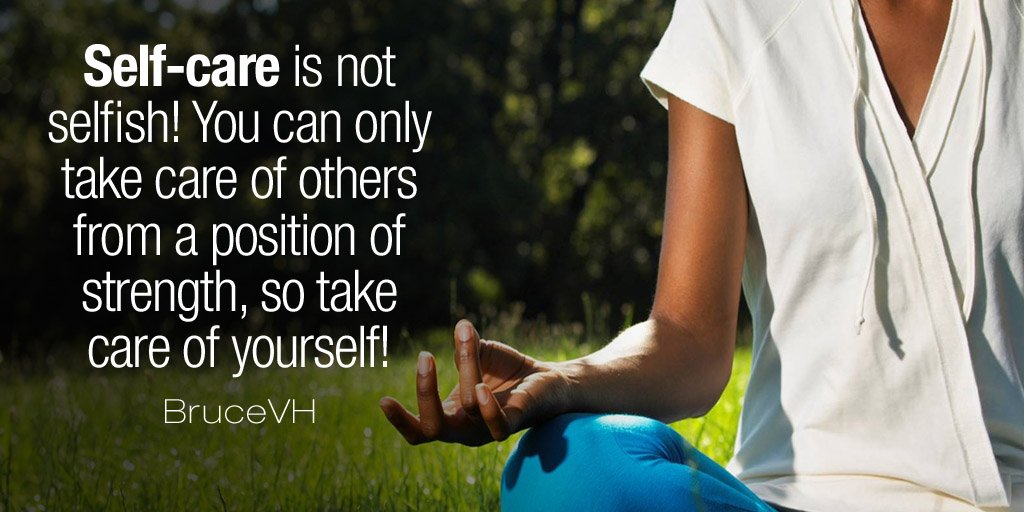
Self care is an essential, not a luxury in any profession.

10 things to make 2023 great!

2023 is set to be a great year don’t you think! There are some things that I need to absolutely focus on! There are some things I need to do better and there are some things I could do with doing a little less! Now though is a good time for me to embarking on a mission of self improvement. Things are settled. We’re in our new house and have managed to get done some of the things that needed doing and this will hopefully free up some time, some enthusiasm and some psychological capacity to achieve more. Here are the things I’m going to do and I’d urge you to do!

Get outside more

I love to run and cycle. I enjoy a good walk. Over the last couple of months I’ve started going to more gym classes so, while this is not a bad thing, it’s meant less outside time. And I love outside time! What are the benefits of being outside..

  • You will experience a great sense of well-being. Breathing in fresh air, embracing the space around you, feeling the cold upon your cheek. Even at this time of year getting wrapped up and going out for a walk will give you a boast.
  • And you’ll burn some calories! And let’s be honest we’re probably about to have too many of them in the next week or so! For those a little fitter get your running shoes on, on get your bike out and go out and get breathless and feel that cool refreshing air in your lung. Outdoor workouts are better than indoor ones. For example, running. Outdoors you are contending with different terrains or you are running against the wind… all better for you than the treadmill I feel!
  • Green exercise – or exercise in a natural environment – has been shown to boost self esteem and mood and you’ll get a well needed, at this time of year, boost in vitamin D which is reported to be good for your immune system – Now that’s got to be good!

Get lost in the moment

This one is simple. Just experience what is currently happening to you. The water on your skin in the shower, the air passing into and out of your lungs, the taste of the food in your mouth, the song on the radio….. Do any of these things or any others to the exclusion of other thoughts and distractions. The benefits of simply taking some time out to be mindful of a particular thing will reap benefits. Before you know where you are at you might find yourself wanting to try meditation! You never know!

Get myself (more!) organised

Being organised gives you a great sense of control and fuels your well being. As I’m fond of saying – if you don’t control it then it will control you. Try applying the two minute rule or grab a copy of David Allen’s book ‘Getting Things Done’. I can tell you, hand on heart, at work and at home my life is so much better for getting myself organised. I can do it better though, especially at home, to make sure I make the most productive use of the time I have. For me time is the most precious commodity we have and we waste it at our peril.

Drink more water

This one should be easy to do surely! How hard can it be to go to the tap and fill a glass up and just drink it! I know!! So why don’t I do it! I even have my phone remind me to drink water every few hours and still I don’t drink enough! Water is refreshing, calorie free, and it’s absolutely crucial for you body to function effectively. So come on! Flush those kidneys and feel great. More on this here.

Drink less coffee and alcohol

I don’t know how this one is going to go for me! I love coffee! And I do like the odd tipple on an evening. I read somewhere drinking coffee borrows time from later in the day…. You will crash later and be less productive. And drinking alcohol borrows time from tomorrow as it will affect your sleep and therefore your feeling of well being the next day. Must try harder!

Read for 15 minutes a day

I read every day. Knowledge is life improving, how could it not be! Reading for 15 minutes a day at an average speed of a page a minute will get you through a 300 page book in 20 days. That will get you through at least 15 books a year. Not a bad start to enhancing your knowledge! And I bet if you get the habit you’ll read more! Add the next thing on the list in and you’ll be amassing information at a fair rate of knots!

Embrace audio books

Time is the most precious of commodities and I want to put as much of it as I can to good use. It takes me 40 minutes to drive to work and the same to get back home or 30 minutes to walk the dog. Sometimes I listen to music – that’s a good thing. Sometimes I listen to the news on Radio 4….. but now mostly I listen to audio books and they are great! I get mine through Audible. They download to my iphone and play through the car stereo seamlessly! The books are anything from 4 to 7 hours long and one lasts me through most of the month when interspersed with other things…. And that’s another 12 books in a year… done! Sorted!

Set small achievable goals

How do you eat an elephant? One bite at a time! Several books I’ve read talk about setting achievable goals and some of the models I talk about in some workshops show that breaking down big tasks into smaller steps achieve progress. Problems or projects seem daunting when you just think of the end goal. But if you think of the many small steps and tackle them one at a time you stand more chance of achieving success! My goal for this year is weight loss – more about the steps I’m taking later. I’m read Mini Habits: Smaller Habits, Bigger Results by Stephen Guise where he talks about setting himself the target of doing one sit up a day… that was all! Just one! And he explores where that got him! Worth a read!

Sit quietly from time to time

This is a bit like ‘getting lost in a moment’ but slightly different. Getting lost in a moment can be about getting engrossed in an activity. But sometimes we need to just sit quietly. It could be, but doesn’t need to be, meditation. It could be sitting quietly while clearing your mind but, for me, more than this, sitting quietly can be a time for you to think things though in a calm, focussed way. In the rushing about of modern life our responses are, dare I say, reactionary rather than well thought through often. I’m going to sit and experience time just passing in a quiet state from time to time, maybe first thing on a morning…. Now that’s good use of time!

Once a month mix it up

Don’t get into a rut. For all the things above keep mixing it up. Been out running a lot this month? Then next month go out walking! Been spending quiet time on a morning? Then, for the next month do it on your lunch break… you get the idea. From an exercise point of view your body gets used to what you ask it to do so mixing it up challenges it to ‘re-think’. As for your mind, giving yourself space at different or being in the moment for different experiences will help you understand yourself and what works for you and what will, hopefully, lead you to a greater sense of well-being, a greater sense of inner-peace.

I’m going to try all of these things and I’ll let you know how I get on. Let me know what you get up to!

Where did it all go wrong?

This is huge isn’t it? This thing that we’re going through at the moment. This huge transformation of how things work and how we go about our business. As someone who loves to write about how we can look after ourselves, how we can self-care, I have found myself at a loss to write anything. “What do I know?” is how I have felt.

Starting to read a new book this morning (Antifragile by Nassim Nicholas Taleb) I was struck by some things he said which resonated for me (and I’ve only read the prologue!!). Here they are:

“…ones personal experience gives the stamp of authenticity and sincerity of opinion” (p. 15). This is indeed true. If you haven’t lived it how can you write about it.

“I write with my scars, hence my thought is inseparable from autobiography” (p.18). So true. In explaining how things are, and how they might be, you have to weave them into your story. We have gone to great pains in our book to tell a story and offer advice that only includes things we have tried for ourselves when it comes to self-care, well-being, and emotional regulation. That’s why I’ve not written anything yet about ‘lockdown’ and how to thrive in it.

Also, there are too many variables. I am in very fortunate position of not being on the ‘frontline’ like lots of social workers and social work students I know, and have not lost my livelihood as a consequence of the current circumstances. I can largely do my job from home and my family are safe and well. I feel very lucky and humbled by the stories of those who must, and do, continue to go about their roles to maintain some semblance of order for the rest of us.

What do you write in such dire circumstances when you haven’t experienced the circumstances for yourself? I did what I usually do when there’s something I don’t know about; I turned to the books and read, while I experienced personally and vicariously what was going on to try and make sense of our predicament.

It’s strange what you are drawn to at such times. In the same way as ‘rubber-neckers’ can’t resist looking at the car crash I turned firstly to The Plague by philosopher and writer Albert Camus, and discovered by a quirk of fate the writings of Martha Gellhorn in her collection of articles The Face of War covering her time as a journalist from the Second World War to, and beyond, the Vietnam War, and what I discovered fascinated me.

I was delighted in Camus’ fictional narrative to see him write, “…one easily passes the time away when one has routine”. And there was my first indication of what I came to conclude about where we are now, namely, my insistence that routine is everything. What you do in the morning sets you up for the day, how productive you are during your day depends on how you have planned, and planning thrives on routine, and your evening should have routine, a rhythm if you prefer, that prepares you for sleep through activities of recuperation that in turn prepares you for the next day. Everything may well have changed in your environment but you still need to give yourself the security of a routine. That’s important.

The story in The Plague followed a familiar narrative as what unfolds followed what I had seen unfolding, to one degree or another, across the first month or so of the Covid19 experience. “Pestilence”, he says, “is very common, but we find it hard to believe in a pestilence when it descends upon us” (p.30), was reminiscent of those who said early on that this would all just ‘blow over’. The story unfolds of more deaths, of temporary morgues, and a long term ‘lockdown’. Startlingly similar to the true events of now.

I was also struck by the line, “It is at the moment of misfortune that one becomes accustomed to truth” (p.89). We find ourselves in an age of lies I feel. We lie to ourselves about where the true nature of humanity lies and are lied to, to fuel that, by capitalist advertising and a political ideology that thrives on capitalist and consumerist ideas. ‘You can buy yourself the dream!’ Except, as it turns out, you can’t. Because, as it turns out, there is something bigger than capitalism…. the unexpected. How quickly the pillars of the world we live in have fallen.

Alvin Tofler, in his book Futureshock, predicted that the change of pace he saw in 1970 would continue into the future (our present) and people wouldn’t be unable to keep pace with change. The future, he says, for many ,will have arrived to soon. The world we live in works well for those who have enough but lets down badly those who don’t. Unfortunately we get to personally define, based on what we see and on what we are ‘fed’, what enough is and the trend is that for lots of people they always want more. Enough is never enough. Because once you have what you thought was ‘enough’ it is not enough any more. You want the next enough to satisfy yourself. So those that don’t have and those that think they don’t have need (in the case of the former) and want (in the case of the later) more. And we get sold the dream of having more and when we don’t get it we can feel we’ve failed in some way. ‘Ordinary’ and ‘normal’ aren’t good enough in this world. Except they are. And there’s nothing wrong with either. In stopping trying to strive for more than we need we may find we have everything we need. That would be great and very privileged place to inhabit.

Gellhorn (p.95) says about the English, “when they are really up against it their negative qualities turn positive, in a glorious somersault. Slowness, understatement, complacency change into endurance, a refusal to panic, and pride, the begetter of self-discipline”. How much we need some of that war time transformation now! She is writing this during the Second World War and, for me, this transformation is so lacking in the panic buying of toilet rolls (of all things), in the ‘how am I going to survive not getting my nails done’, or, ‘how am I going to manage without getting to the pub’, mentality we have seen so early on.

The people Gellhorn is writing about have endured years of war, bombing, fear, and uncertainty. Yet, here we are, in the triumphant age of self, where what I want to do is more important than the need of the many, flailing about with a complete lack of fortitude only days and weeks into this set of circumstances. Where did it all go wrong? When did we become lacking in back bone and balanced thought?

When Camus says, and I repeat for you, “It is at the moment of misfortune that one becomes accustomed to truth”, it leads me to think, I hope that in these difficult times we have something of a reset where people reevaluate what is important to them, their truth. Because in doing so we can maybe reconnect with the reality of the human condition, begin to look after ourselves, our families, and our communities and off-set some of the damage done as a consequence of the 60’s ‘self revolution’ reinforced by the political ideology of the 80’s to the present day.

Taleb (p.20) defines 3 positions in which he suggest’s all things exist and into which I feel our emotional responses fit. He suggests things are either fragile, robust, or antifragile. ‘Fragile’ needs tranquility and certainty. The reality is there is little of that in the world at any time, and less now. The ‘robust’ position defines (in my interpretation) someone who is resilient. Someone who is able to cope with the ebb and flow of life, who is buffeted by the wind, and stays strong. The antifragile position that Taleb proposes moves beyond this and suggests that the antifragile actually grow in disorder and benefit from it and volatility. Resilience (again in my interpretation) is enhanced by being confronted by such uncertainty and the consequences of it.

This falls neatly in line, I feel, with Goleman’s triad of emotional styles (from Emotional Intelligence: Why it matters more than IQ). Taleb’s fragile correlates to Goleman’s ‘engulfed’. People who have an emotional style of ‘engulfed’ are easily swamped by their emotions and are helpless to escape them. They are emotionally fragile. Some people are ‘robust’ which aligns with Goleman’s style of ‘accepting’. Such people accept their emotions and are clear about what they are feeling but don’t try to change. They don’t try to move on and develop from their emotional reference points. Those who are ‘antifragile’ are those who align to ‘self-aware’ in Goleman’s model. They are aware of their emotions and have a sophisticated response to them. They understand their inner responses to the external vagaries of life and know how to manage them. Such people, Goleman says, are usually autonomous individuals who understand their boundaries, have a positive outlook on life and are in good psychological health.

I find that those people who are ‘self-aware’, competent pilots of their own lives, as Goleman puts it, tend to be those who take seriously self-care, reflection, and the development of their inner-selves through mindfulness and meditation. Self-care is about understanding the impact of sleep, what you eat, and exercise on your emotional, as well as your physical self. Reflection is about taking time out, journalling maybe, and considering what you have done, why you did it, and what you might want to do next. Not overthinking, not dwelling on things unnecessarily, but rather taking charge of your thinking about your actions and responses and dealing with how you feel about how you feel (or felt!)… and then moving on from it. Meditation can give you time out to aid recovery and there are many ways to meditate. I like to meditate ‘on’ something (more here). Put into my head an idea or a problem and spend some time with it, turning it over, examining it, trying to conclude something about it. This in many ways is mindfulness. Dedicating yourself to a task to the exclusion of everything else. Focussing on one thing at a time in an effort to get something done. People who do one thing at a time with focussed concentration tend to get things done.

Stay in control. Learn to take charge of your emotions.

Control them rather than have them control you.

That’s the starting point for navigating yourself through these current times whatever your personal position.

And as we seem to becoming fond of saying, and rightly so…. Stay safe.

Stephen’s book, written with Lisa Watson and Steph Hunter is due out in early May and is called “How to Thrive in Professional Practice”. The book is an engaging yet undemanding read, and pulls together the various individual strains of self-care, spirituality and common sense, housing them under one external literary jacket, in a ‘whole system’ approach. A one stop ‘bible’ to give social workers and other professionals an uncomplicated, easy to read, go to resource that empowers them to manage and maintain their wellbeing through personal responsibility and self-care.

It takes longer than you think…

Turns out writing a book takes longer than you think and takes up more time than you could ever imagine!

I’ve recently finished writing a book with Lisa Watson and Steph Hunter and it’s been wonderful experience to get my words onto paper ‘long form’. I love writing blogs that are quick to read but for anyone who enjoys writing then writing a book has to be something on your things to do list! So the book “How to Thrive in Professional Practice: A Self Care Handbook” will be out in the spring – in early May! Now that’s exciting! Available now to preorder. We talk about stress and burn out in social work and the context in which social work takes place because we’re all social workers but, to be honest, social work barely gets a mention in a lot of chapters. So it won’t matter what profession you are from what we are talking about will resonate. The reality is that all professional practice is blighted by the same problems these days. Too much to do, too little time, too few people to do it.

That means that people short change themselves by not prioritising their self-care. In professional practice and, to be honest, in all walks of life, self care is a necessity not a luxury.

So here’s the ironic thing! While writing the book on self-care my own self care took a bit of a nose dive! This means I can completely relate to people when they say, “But I don’t have time to go for a run / meditate/ eat well [delete as applicable or add your own!!]”. I didn’t lose the thread completely. My nutrition wasn’t too bad, I still did some yoga and meditation (but not a lot), and I still managed to run at least once a week.

But you see, this is the point with the model of self-care that I endorse. Life does come with its ups and downs. Your available time comes and goes. Your motivation waxes and wanes. But, if you know the golden rules you know where to get back to when you’ve ended up in the undergrowth. You won’t have completely ‘got lost’ along the way. You’ll have still done some things because once you create habits the are difficult to completely break free from. Good ones and bad ones.

Image result for writing a book

So if you find you’ve lost your way a little, don’t sweat it. We all do. Make those small changes, step by step, that I talked about in the last blog and get yourself back on track. Don’t set your goals too high but do set them.

Here’s mine for the coming weeks:
Have more nights per week with no alcohol than nights I have alcohol (because I do like a glass of red)
Run twice a week (I already do parkrun every week so that’s just one more)
Cycle once a week
Meditate for 5 minutes a day
Drink more water
Eat exactly what I’ve been eating but smaller portion sizes

Doable? I think so!
You on board
2020 is going to be great!

You can preorder the book at the following link
How to Thrive in Professional Practice

How to Thrive in Professional Practice

Small steps end in big results

Image result for exercise

What’s your relationship like with exercise at the minute? What historically has exercise meant to you? What exercise did you do in the last week?

I used to find that how I felt about exercise was rooted in how I felt about it as a teenager. With my only reference point being PE at school. Cold cross country runs and feelings of inadequacy. The secret is not to compare yourself to others – do what you can and what you feel comfortable with. And crucially – find something you actually enjoy! There will be something out there!

You might well find that you already do more exercise than you think. Low level stuff like gardening, washing the car, walking the dog and pegging the washing out. These are all good things. They involve activity and they involve stretching – both great things. Maybe we need you to push it a little further and get a little breathless? The recommendation of 20 minutes per day still holds good – so we are not talking about hours in the gym or becoming a marathon runner – fine as those things are if they are right for you.

Exercise is a pleasurable activity… honest. Engaging in it releases

Image result for exercise

dopamine – the body’s feel good hormone. Dopamine deficiency is shown to have links to depression so the more of it you have coursing around your body the better. Exercise is also great at mitigating against the effects of stress by ‘using up’ cortisol and adrenaline that are produced by our fight or flight response. These chemicals prime you for physical action but when the stressful event is occurring with you sat at your desk you don’t burn them off. And too much of them has a negative effect on your health and overall well-being.

Image result for exercise

Exercise:
Gives you faster processing
Gives you faster reaction times
Clears you head
Makes you more effective at planning
Gives you better short term memory performance
Gives you more self control

A study by Bristol University found that a 20 minute walk at lunch time could enhance mood and motivation by 41% and could improve the ability to deal with stress by 20%. A Sit Less Move More program evaluated by Pulg-Ribera and colleagues in 2017 noted improvements in staff retention in the work place, less sickness, more mindful work, and a reduction in stress. Now that’s good stuff!

Image result for exercise

So….
Make a plan! What are you going to do and when are you going to do it?
Start small and take incremental steps… start with a 10 minute walk and take it from there.
Write down your plan… writing things down enhances the chances of them actually happening.
Exercise with someone else – it helps motivation.
Tell other people what you’re doing… there’s evidence if we ‘go public’ we’re more likely to do what you say.
And most importantly find something you enjoy
And Just Do It (as Nike would say!)

I have to tell you speak to your doctor if you have any health conditions or haven’t exercised for a long time! I’m not a doctor! Take advice if you feel you need to. This advice is given in good faith based on my own personal experience and reading. Take care.

I had the most exhausting weekend yet……

What a weekend I had last weekend! I actually never stopped! Yet, I woke up on Monday morning morning feeling refreshed and excited about how much I was going to get done! Why’s this! Why was I not shattered and daunted by the week ahead!

Well, for all it was busy, the weekend was choc full of things, all of which I consider as self care. There’s a meme kicking about that I see that says something like, “self care is not about chocolates and pamper days, it’s about creating a life that you don’t want to escape from”. This weekend has been awesome and tiring both at the same time – and I didn’t want to escape from it! Let me tell you about it.

It started Friday tea time with a 14 mile bike ride home from work. I just took my time, I wanted to be home, but I also wanted to delight in the scenery around me. So, I took a detour down to a little place off my route called Cox Green and I just spent a few moments there looking at the river and the beautiful vista. I then continued my way home. For me, exercise is mindfulness in motion. You can think of all sorts of things if you want to while you exercise. It’s just you. On your own thinking things through and mulling things over. Or it can be you thinking of nothing. Just you and your body doing this thing to the exclusion of everything else. I love the loneliness of a solo run or bike ride. Some quality time with yourself.
Self Care checklist: Alone time, you time, exercise, getting outdoors tick!

Cox Green by Gordon James Brown

Saturday started with Parkrun, starting at Durham’s Maiden Castle and ending by the River Wear in the shadow of the glorious Cathedral. We’ve got quite a little team going on now for Parkrun and we’ve pretty much ran it every weekend this year. So my eldest son Jonathan picks me up and, in the car are usually the Whellan’s brothers and Oliver’s girlfriend Sarah (although she didn’t make it this week). The run and the scenery is great and is an absolute delight. Parkrun is 5k which is doable and not too tough. But for me the most important part of this is the camaraderie of the whole thing. We are all at different levels of fitness but all in it together. The banter in the car on the way there and on the way home is great. And it’s wonderful that these young pups tolerate this old guy tagging along!

The Sunday saw me running again with two of my colleagues from work. We were doing the Sunderland 10k. It was an absolute delight. A huge group of people all with one endeavour in mind. To test themselves against the distance in front of them! There was a great atmosphere as the gun went off and we started and it continued all the way around and into the finish funnel!

Parkrun!

Then, in the afternoon, tired and weary I had a gig to play. I’m a musician in between other things (!) and I was playing in the Union Rooms, a lovely bar near Central Station in Newcastle. Music is a gift to us all. I love playing on my own at home or in front of people in a bar. Music lifts the soul. Or ‘resets’ it, as I like to say. And it creates a wonderful connection between people. It was great to watch people chatting and enjoying themselves as I played, and from time to time joining in singing along to the tunes they recognised.

There’s a Stoic ‘saying’ that ‘the obstacle is the way’. When confronted with an obstacle don’t avoid it – go through it! Because it’s in doing so that we grow and develop. My tiring weekend left me re-energised because of how the things I did contributed to who I am – my idea of ‘self’ – and therefore to my self care. Connections made, existing connections enjoyed, exercise engaged in, getting outdoors, the healing properties of music – food for the soul – all meant that the busy weekend was a refreshing weekend.

The obstacle really is the way

Embrace it!

Work smarter, not harder

Productivity

Productivity

Work Smarter Not Harder


Organisation skills and productivity

Firstly, in talking about and exploring organisation skills and productivity, and self care and its impact on productivity, my intention is not for social workers to be given more. It is to try and give social workers the skills and ideas to be more efficient at what they are doing, more organised, more disciplined maybe, so that they can get out of the door on time (emergencies aside) confident that all is in order (not necessarily done but in order) and all is as well as it can be. The pay off for this is an increased ability to be able to switch off. You know everything is in order ready for you to pick up the next day – so, hopefully, more often than not, you can put it out of your head. The same is true and more important I feel for a weekend so that you have the time to recharge. So that’s my motivation – I can’t see a problem with that. I can see how managers might hi-jack the idea and see it as a way to give people more… or we could give the majority of managers I know the credit and accept that they’d rather manage happy staff. Managers are not evil. Well not all of them 😉

Being Organised is a skill to hone

Let's get productive!

We teach student social workers communication skills when to a greater or lesser extent they can already communicate. Why? Because professional communication is different. We teach student social workers report writing skills. Why? Because professional writing is different to letter writing, or academic writing. So why not teach them ‘being organised and productive’ skills because… being organised and productive as a professional does require a skill set and a knowledge base different to what people already may know. And I know from talking to students and practitioners that some of them are productivity ninja’s and some students turn up to start their social work degree without a diary because they hadn’t thought they’d need one…. and a whole range in between. Because if you don’t know, you don’t know.

Backed by science

There have been huge advances in brain scanning and imaging that means we can see what’s going on in our heads when we’re stressed, or when we are meditating, or when we are in the flow. We know what works and we know the impact of what doesn’t work – unmanageable stress and sickness. All of the ideas I put forward are backed by science and research

There are some ideas here on Social Work Shorts – click Productivity or Self Care at the top of this page to find them. There are a some ideas there to get you started. I feel I need to pull them all together into a ‘method’ to show how they all fit together so that’s coming soon.

Try these:
The stress isn’t going away so what are you going to do about it?

The Two Minute Rule

Frogs, Elephants, and the 2 minute rule

The Power of Small Wins

Do you care? The importance of looking after yourself

Also if you click the link right at the top you’ll find some podcasts covering similar material

Or click here

Enjoy! Go get your day!