10 things to make 2023 great!

2023 is set to be a great year don’t you think! There are some things that I need to absolutely focus on! There are some things I need to do better and there are some things I could do with doing a little less! Now though is a good time for me to embarking on a mission of self improvement. Things are settled. We’re in our new house and have managed to get done some of the things that needed doing and this will hopefully free up some time, some enthusiasm and some psychological capacity to achieve more. Here are the things I’m going to do and I’d urge you to do!

Get outside more
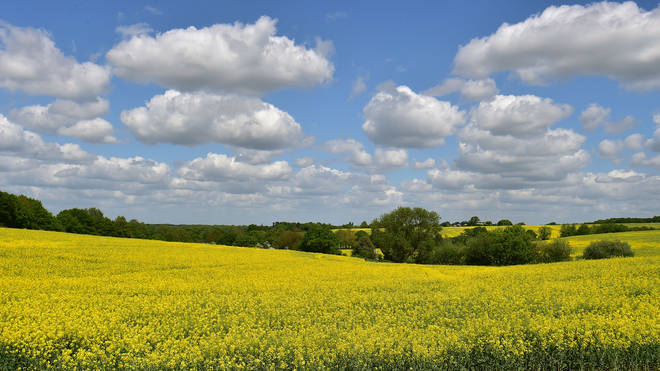
I love to run and cycle. I enjoy a good walk. Over the last couple of months I’ve started going to more gym classes so, while this is not a bad thing, it’s meant less outside time. And I love outside time! What are the benefits of being outside..

  • You will experience a great sense of well-being. Breathing in fresh air, embracing the space around you, feeling the cold upon your cheek. Even at this time of year getting wrapped up and going out for a walk will give you a boast.
  • And you’ll burn some calories! And let’s be honest we’re probably about to have too many of them in the next week or so! For those a little fitter get your running shoes on, on get your bike out and go out and get breathless and feel that cool refreshing air in your lung. Outdoor workouts are better than indoor ones. For example, running. Outdoors you are contending with different terrains or you are running against the wind… all better for you than the treadmill I feel!
  • Green exercise – or exercise in a natural environment – has been shown to boost self esteem and mood and you’ll get a well needed, at this time of year, boost in vitamin D which is reported to be good for your immune system – Now that’s got to be good!

Get lost in the moment
This one is simple. Just experience what is currently happening to you. The water on your skin in the shower, the air passing into and out of your lungs, the taste of the food in your mouth, the song on the radio….. Do any of these things or any others to the exclusion of other thoughts and distractions. The benefits of simply taking some time out to be mindful of a particular thing will reap benefits. Before you know where you are at you might find yourself wanting to try meditation! You never know!

Get myself (more!) organised

Being organised gives you a great sense of control and fuels your well being. As I’m fond of saying – if you don’t control it then it will control you. Try applying the two minute rule or grab a copy of David Allen’s book ‘Getting Things Done’. I can tell you, hand on heart, at work and at home my life is so much better for getting myself organised. I can do it better though, especially at home, to make sure I make the most productive use of the time I have. For me time is the most precious commodity we have and we waste it at our peril.

Drink more water

This one should be easy to do surely! How hard can it be to go to the tap and fill a glass up and just drink it! I know!! So why don’t I do it! I even have my phone remind me to drink water every few hours and still I don’t drink enough! Water is refreshing, calorie free, and it’s absolutely crucial for you body to function effectively. So come on! Flush those kidneys and feel great. More on this here.

Drink less coffee and alcohol

I don’t know how this one is going to go for me! I love coffee! And I do like the odd tipple on an evening. I read somewhere drinking coffee borrows time from later in the day…. You will crash later and be less productive. And drinking alcohol borrows time from tomorrow as it will affect your sleep and therefore your feeling of well being the next day. Must try harder!

Read for 15 minutes a day

I read every day. Knowledge is life improving, how could it not be! Reading for 15 minutes a day at an average speed of a page a minute will get you through a 300 page book in 20 days. That will get you through at least 15 books a year. Not a bad start to enhancing your knowledge! And I bet if you get the habit you’ll read more! Add the next thing on the list in and you’ll be amassing information at a fair rate of knots!

Embrace audio books

Time is the most precious of commodities and I want to put as much of it as I can to good use. It takes me 40 minutes to drive to work and the same to get back home or 30 minutes to walk the dog. Sometimes I listen to music – that’s a good thing. Sometimes I listen to the news on Radio 4….. but now mostly I listen to audio books and they are great! I get mine through Audible. They download to my iphone and play through the car stereo seamlessly! The books are anything from 4 to 7 hours long and one lasts me through most of the month when interspersed with other things…. And that’s another 12 books in a year… done! Sorted!

Set small achievable goals

How do you eat an elephant? One bite at a time! Several books I’ve read talk about setting achievable goals and some of the models I talk about in some workshops show that breaking down big tasks into smaller steps achieve progress. Problems or projects seem daunting when you just think of the end goal. But if you think of the many small steps and tackle them one at a time you stand more chance of achieving success! My goal for this year is weight loss – more about the steps I’m taking later. I’m read Mini Habits: Smaller Habits, Bigger Results by Stephen Guise where he talks about setting himself the target of doing one sit up a day… that was all! Just one! And he explores where that got him! Worth a read!

Sit quietly from time to time

This is a bit like ‘getting lost in a moment’ but slightly different. Getting lost in a moment can be about getting engrossed in an activity. But sometimes we need to just sit quietly. It could be, but doesn’t need to be, meditation. It could be sitting quietly while clearing your mind but, for me, more than this, sitting quietly can be a time for you to think things though in a calm, focussed way. In the rushing about of modern life our responses are, dare I say, reactionary rather than well thought through often. I’m going to sit and experience time just passing in a quiet state from time to time, maybe first thing on a morning…. Now that’s good use of time!

Once a month mix it up

Don’t get into a rut. For all the things above keep mixing it up. Been out running a lot this month? Then next month go out walking! Been spending quiet time on a morning? Then, for the next month do it on your lunch break… you get the idea. From an exercise point of view your body gets used to what you ask it to do so mixing it up challenges it to ‘re-think’. As for your mind, giving yourself space at different or being in the moment for different experiences will help you understand yourself and what works for you and what will, hopefully, lead you to a greater sense of well-being, a greater sense of inner-peace.


I’m going to try all of these things and I’ll let you know how I get on. Let me know what you get up to!

Cache Podcast – Well-being

Earlier last year I had the pleasure of talking to Dawn Mulvaney from Cache for their Podcast – ‘Pod-cache’ – about my favourite subject well-being. You can listen to it below!

Cache offer high quality qualifications for the care and education industry, and are the UK’s leading sector specialist.

I write for them regularly on their Cache Alumni site on all manner of things like social work and social care, communication, and self care. It’s free to register for a year and you don’t have to give any payment details.

The health benefits of Mushrooms

“Mushrooms are miniature pharmaceutical factories, and of the thousands of mushroom species in nature, our ancestors and modern scientists have identified several dozen that have a unique combination of talents that improve our health”.

(Quote by Paul Stamets, (2011)

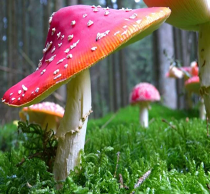
It’s surprising what mother nature gives us as a means of keeping us healthy. Have you ever considered the medicinal benefits of mushrooms? 

Disclaimer

Before we take a closer look, as always, seek medical attention or advice before pursuing any natural remedies and this blog is NOT about diagnosing any condition or even saying the following products will be right for you. So please use your own judgement and common sense especially if pregnant, nursing or on other pharmaceutical medication. Nor have I received any payment from the below mentioned companies.

Also, it is extremely dangerous to pick your own mushrooms as there are many which are poisonous and can result in death. We are not advocating you do this. We would advise you buy from a reputable source as an alternative.

What are Mushrooms exactly?

Encyclopaedia Britannica, (2020) explains mushrooms are…..”…..edible sporophores…. fleshy fungus fruiting structure of fields and meadows….”  Paul Stamets, (2011) explains there are an estimated 2-4 million species of ‘fungi’, with 150,000 thought to be mushroom-forming fungi, although only 14,000 species are formally identified.

Ancient History

Mushrooms used for medicinal purposes is not a new concept as revealed by the frozen human mummified remains of Ötzi, found on the Ötztal Alps on the Austrian–Italian border in 1991. Ötzi is believed to have died around 3300 BCE, and amongst his remains were Birch Fungi, known for their Anthelmintic properties, (Capasso, 1998), and the ability to expel parasitic worms and other internal parasites from the body.

Egyptian Hieroglyphics suggest society saw mushrooms as a plant of immortality, (Grocycle, no date). They would also apply a poultice of mouldy bread to infected wounds, (ACS, 1999).

Texts about Chinese Medicine dating as far back to 100 BCE discuss various mushrooms and fungi that were used to treat cancer, respiratory ailments, and many other conditions, (Grocycle, No date).

Modern Times

Whilst not all mushrooms are edible, culinary mushrooms such as Shiitake, Maitake, Oyster, Enoki, Shimeji, and Pioppinos are low in fat, have no cholesterol and are rich in vitamins, so from a nutritional viewpoint, help with boosting the immune system, (Stamets, 2011).

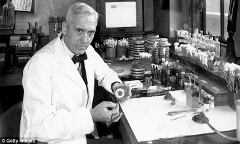
Picture-courtesy-of-Getty-Images

It’s interesting to note the medicines available to us these days such as antibiotics. It is mind boggling to think that as little as a hundred years ago, if you developed a bacterial infection such as Pneumonia or blood poisoning from a simple scratch, the chances were, you may well have died. The discovery of Penicillin by Alexander Fleming in 1928 changed how we treat infections, when he identified the healing properties of ‘mould juice’, (ACS, 1999).

Mycologists, (people who study Fungi) and other types of scientists are now starting to understand how mushrooms can offer safer alternatives to many modern pharmaceuticals.

Here are some of the more popular benefits.

Antiviral, and Antibacterial Properties

Like all live moulds and fungi, they are a food source, so as a means of staving off being eaten or to fight off bacteria which may kill them fungi produce toxins to protect themselves. It is these toxins that can act as natural antibiotics in our bodies when we consume them.

High in Antioxidants

UV sunlight, inflammation, air pollution, and smoking all contribute towards Free Radicals that can cause oxidative stress and damage to our cells and DNA. Mushrooms contain antioxidants which seek out free radicals and thus diminish the damage they cause. I view them a bit like Batman seeking out villains in Gotham City!!

Beta Glucan:
is a substance that helps to stimulate the immune system.

Polysaccharides Compounds:
found in mushrooms are known to offer anti-cancer, anti-obesity, anti-diabetes, and antibiotic properties.

Health Benefits

As we have mentioned above, there are a huge range of mushroom types, but generally the health benefits include the following:

  • Help prevent DNA damage, cell mutation, and tumour formation so aid fight against cancer and Leukaemia
  • Loaded with antiviral and antibacterial properties so are good for boosting your Immune System
  • Contain natural ‘Statins’, the compound used to lower blood cholesterol that can cause hardening of the arteries, thus can protect against heart attacks, strokes and heart disease.
  • Improving Energy Levels due to compounds that increase the flow of oxygenated blood cells to muscles, clearing toxins from the body that otherwise can leave you feeling tired.
  • improving Brain Health by producing nerve growth in the brain, to improve memory, focus and cognitive functioning.
  • Low in fat and calories, so a diet high in mushrooms can aid weight loss (which brings with it its own health benefits)
  • Has a hypoglycaemic effect, meaning they lower and regulate blood sugar levels, good for diabetes
  • Mushrooms inhibit histamine release so are good for relieving symptoms of asthma or allergies

Some Basic Types And To Use Them

Some of the more popular and well known ‘healthy’ mushrooms are:

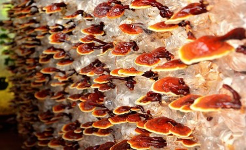
Reishi Mushrooms which grow on the side of trees, they are too bitter to eat, but their Terpenoids compounds mean they are good for reducing inflammation. They also help with heart disease, cancer, diabetes and liver damage to name few.

Reishi Mushrooms

Consumed either in soup or made into a tea, they are usually dried and come in either powder or capsule form.

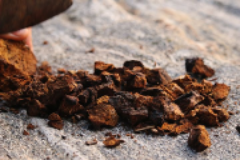
Chaga Mushrooms grow on Birch Trees, (not to be confused with Birch Fungi found on our Ötzi man). Come across this and you would be forgiven for thinking it is charred wood as it looks more like charcoal, again not edible in its natural state.

Chaga Mushrooms

Often combined with other mushrooms, Chaga can be consumed as herbal tea, in a powder or capsule form. Its healing properties are believed to aid the fight against cancer, improve immunity, chronic inflammation, blood sugar and reduce cholesterol levels.

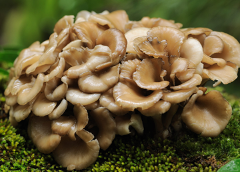
Maitake Mushrooms

Unlike the above two, Maitake Mushrooms are edible and are said to have a mild flavour and grow at the bottom of Oak, Elm, and Maple trees, normally found in parts of Japan, China, and North America.

Maitake Mushrooms (image courtesy of Andrew Weil)

Maitake are a good candidate for all of the above health benefits but are also useful for fighting cold and flu viruses, managing both high and low blood pressure, boosting immune function and reducing side effects of chemotherapy. You can add to any meals such as salads, stir fry, pasta and also be taken in either liquid or capsule form.  

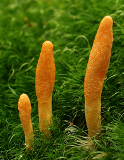
Cordyceps Mushrooms

For an unknown reason, I like the word Cordyceps, just thought, I’d throw that snippet of useless information in there! Cordyceps is considered to be a ‘parasitic’ fungus in as much as its spores attach to the larvae of insects such as ants and caterpillar’s.

Cordyceps Mushrooms (Image courtesy of Wikimedia)

It feeds and sprouts on its host insect growing into a mushroom and remains attached for most of its life, growing mainly in high altitude regions of about 3800 m above sea level, in cold, grassy, alpine meadows of the Himalayan mountains. So evidently not the edible type!

Cordyceps is known to enhance energy, aerobic capacity (breathing), reduce fatigue, anti-sickness, promotes health kidney function and can even boost low sex drive!   You can buy cordyceps in tinctures, liquid extracts, capsules, and powders.

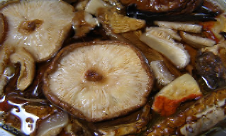
Shiitake Mushrooms

Thanks to Catherine Tate, Shiitake mushrooms are probably one of the more well known, edible variety. Native to East Asia, Shiitake grow on decaying hardwood trees in United States, Canada, Singapore, China, with 83% of the worlds production coming from Japan. Coming in dried and fresh varieties shiitake mushrooms can be used in dishes such as stir-fries, soups and stews

Shiitake Mushrooms

Benefits include being antibacterial and antiviral, fight infections, cancer, strengthen bones, reduce high blood pressure. They also come in powders, capsules and liquid format.

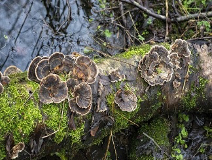
Turkey Tail Mushrooms

Growing on almost any type of wood, these mushrooms can be found in woodlands all over Europe and China. The tend to grow in colonies and their black, brown shades of thin, wavy rosettes bodies take on a similar appearance of the plumage of a turkey’s tail, hence its name!

Turkey Tail Mushrooms

Although edible, they are known to be very chewy, so powder or capsule form tends to be the most common. Turkey Tail Mushrooms are said to be useful in reducing phlegm, increasing energy, helping with pulmonary problems, promoting a healthy liver, boost immune system, effective in managing diabetes and reducing inflammation.

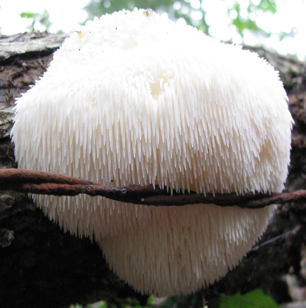
Lion’s Mane Mushrooms

Doesn’t take much guess work to understand how this mushroom gets its name. Its large, shaggy white appearance resembles a lion’s mane. Edible, some describe its flavour as akin to crab or lobster and can be eaten raw, cooked, dried or steeped as a tea.

They grow on hardwoods such as oak, maple and birch, found in Europe, North America, Japan, China and Korea.

Lion’s Mane Mushrooms (Image Courtesy of Medicinal Herbals)

Lion’s main mushrooms are believed to promote mental wellbeing, reduce symptoms of depression, slow down signs of memory loss and reduced cognitive functioning, promote good digestive health, reduce risks associated with heart disease, beneficial for diabetes, reduce inflammation, fight against cancer and boosts immune system. Primarily capsule form, but is also available as a powder.

Conclusion

Its astonishing how beneficial mushrooms are said to be. I can remember drinking mushroom infused coffee and whilst it does sound pretty gross, actually it tasted ok. There is a range of products on the market these days and I have to say one of my favourite brands has to be Vida Divina. This is because I have had close links with the company for a few years now so have a good understanding of their products which is what got me interested in the concept of mushrooms for promoting good health. But having said that there are other companies and products available.

Given their general ability to the boost immune system, reduce inflammation as well as having antibacterial and antiviral properties I would say we are onto a winner with these. 

If you’d like to grow your own mushrooms there’s some great advice here

Much Love Lisa


Health Benefits of Mushrooms blog
By Lisa Watson,

Co-author, How to Thrive in Professional Practice: A Self-care Handbook available for pre-order here www.criticalpublishing.com/how-to-thrive-in-professional-practice

Further reading

I came across some really useful websites if you wanted to take a closer look at the mushrooms mentioned above, a lot of which I have used as references:

https://www.healthline.com/health/food-nutrition/maitake-mushroom

https://www.drweil.com/vitamins-supplements-herbs/herbs/maitake/

https://www.healthline.com/nutrition/chaga-mushroom

https://www.healthline.com/nutrition/reishi-mushroom-benefits#section7

https://www.ncbi.nlm.nih.gov/pmc/articles/PMC3121254/ (Cordyceps)

https://www.healthline.com/nutrition/cordyceps-benefits#section2

https://www.healthline.com/nutrition/shiitake-mushrooms

https://www.healthline.com/nutrition/turkey-tail-mushroom

https://www.healthline.com/nutrition/lions-mane-mushroom

I also came across an article about immune boosting as whole

https://www.healthline.com/nutrition/immune-boosting-supplements

If you wanted to check out Vida Divina products more, you can visit their website: https://vidadivina.com/

References

Alexander Fleming Image https://media.gettyimages.com/photos/prof-alexander-fleming-working-in-laboratory-picture-id50489701?s=612×612

American Chemical Society, (1999) Discovery and Development of Penicillin https://www.acs.org/content/acs/en/education/whatischemistry/landmarks/flemingpenicillin.html

Birch Fungi Image https://www.norfolkwildlifetrust.org.uk/wildlife-in-norfolk/species-explorer/fungi/birch-polypore

Capasso, L. (1998), 5300 Years Ago, The Ice Man Used Natural Laxatives And Antibiotics, Lancet, 352 (9143): 1864

Cordyceps Mushroom Image https://upload.wikimedia.org/wikipedia/commons/5/53/2010-08-06_Cordyceps_militaris_1.jpg

Encyclopaedia Britannica, (2020) Mushroom, Fungus   https://www.britannica.com/science/mushroom

Grocycle, (No date) Medicinal Mushrooms: The Complete Guide  https://grocycle.com/medicinal-mushrooms-the-complete-guide/

Lion’s Mane Mushrooms Image  https://medicinalherbals.net/wp-content/uploads/2016/09/Lions-Mane-Mushroom.jpg

Maitake Mushroom Image https://cdn.drweil.com/wp-content/uploads/2016/09/vitamins-supplements-herbs_herbs_maitake_20090976.jpg

Paul Stamets Interview with Patricia Fitzgerald, www.huffingtonpost.com. November 2, 2011. https://www.huffpost.com/entry/mushrooms-breast-cancer_b_1070744

To De-caf or Not to De-Caf 

Hug in a mug

One of the first things I do on a morning is make myself a cup of coffee. A well-known brand of instant coffee granules and splash of skimmed milk, then I settle in my armchair to debate the morning’s news. It helps me wake up and enables me to face the day ahead, especially during the week, when the day ahead entails doing good deeds! It dawns on me that I’m using caffeine to kick start my day, but would de-caf coffee do the same? Is there any difference between fully caffeinated or de-caf? Which is better for you? Lets take a closer look.

Background to Coffee in The UK

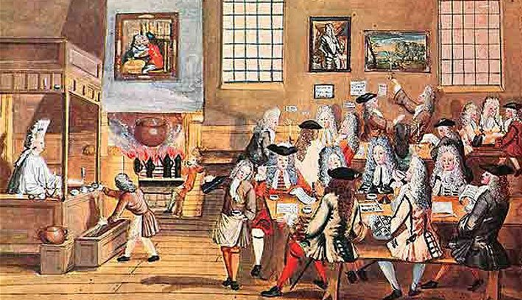
The first coffee house to open in the UK, was in Oxford, England AD 1652. Later the same year one opened in London and from there onwards, they became fashionable places to meet, conduct business,  and ‘see and be seen’.

A cup of coffee cost a ‘penny’ and coffee houses soon became known as ‘penny universities’. In London alone, by 1739, there were over 550 coffeehouses, however by the end of the same century tea became the new fashion and coffee became less popular.

London Coffee House in the 1700’s

The Temperance Movement during the reign of Queen Victoria brought back to life coffeehouses as a suitable alternative to public houses for working class people to meet and socialise and so coffee regained popularity. It was not until the late 20th century that coffee houses took on the status we know today with the rise of companies such as Costa, Starbucks and Coffee Republic, (info taken from Ben Johnson, Historic UK).

The British Coffee Association states in the UK, we consume approximately a whopping 95 million cups of coffee a day (I think I drink about half of those Lol! – Stephen). 80% of UK households buy instant coffee for in-home consumption, whilst 80% of people visit coffee shops at least once a week and 16% visiting them daily. 

Background to De-caf

That’s a lot of coffee!  Coffee beans that have had at least 97% of their caffeine removed is referred to as decaffeinated. The first known de-caffeination process is known to have been invented by Ludwig Roselius, a German coffee merchant in 1903 with him patenting the process in 1906.

“The Roselius Process” involved rinsing coffee beans with a water / salt solution, (brine) and Benzene. Benzene is no longer used as it is highly toxic and known to be carcinogenic.  There are 4 main decaf processes, all of which continue to use water. 

Direct Solvent Based Decaffeination Process involves steaming unroasted coffee beans before rinsing them in a solvent, usually either methylene dichloride or ethyl acetate extracting the caffeine whilst leaving the other ingredients unharmed. The process is repeated until the desired amount of caffeine remains to meet the required standards to enable the product to be named de-caff (Ramalakshmi and Raghavan, 1999). In Europe, soluble/instant coffee must contain a maximum of 0.3% caffeine to enable it to be labelled as de-caf.

Indirect Solvent Based Decaffeination Process involves soaking coffee beans in hot water for several hours to extract as much of the caffeine from the beans as possible. The beans are then removed from the water before Methylene Chloride solvent is added to the liquid in order to bond with the caffeine which form a compound which is skimmed from the surface of the mixture. The coffee beans are re-introduced to absorb the de-cafeinated liquid, (Kencaf, 2016).

Swiss Water Process involves combining green coffee extract, (GCE a solution containing the water-soluble components of green coffee which has had the caffeine removed) and caffeine rich green coffee. Gradient pressure forces caffeine molecules to migrate from the caffeinated coffee to the green coffee extract.

Once the green coffee extract is caffeine rich, carbon absorbers are used for percolation in order to attract the caffeine molecule from the GCE. Once GCE is once again lean of caffeine it is then used to remove additional caffeine from the green coffee and the whole process is repeated with a new batch. The process takes around 8-10 hours, (Emden, 2014)

Carbon Dioxide Decaffeination Process involves steaming green coffee beans. The beans are then added to a high-pressure vessel that is sealed and liquid Carbon Dioxide, (Co2) forced into the coffee at pressures of 1,000 pounds per square inch to extract the caffeine, (Lorenzo 2014).

Carbon dioxide aids the dissolving of caffeine drawn from the beans. The caffeine laden CO2 is then transferred to another container where the pressure is released and the CO2 returns to its gaseous state, leaving the caffeine behind. The caffeine free CO2 gas is pumped back into a pressurized container for reuse (Ramalakshmi and Raghavan, 1999).

Caffeine is it good or bad for you?

Kick starting the day with a large cup of coffee is not just a hug in mug, it literally does help wake us up. Caffeine helps open our airways allowing increased blood flow to muscles which tighten in readiness for action. Caffeine also increases our blood pressure, the liver releases sugar into the bloodstream thus giving us a surge of energy. In a complex physiological process, caffeine helps the body prepare for upcoming activity, pretty similar to the way the body responds to “fight or flight” response to danger. 

Cappelletti, et al (2015) claim after water, coffee worldwide, is the most consumed beverage with  people drinking approximately 1.6 billion cups a day.

Some benefits of caffeine include:

Improved Mood, reaction time, memory and mental function (Nehlig, et al 1992)

Increased metabolic rate and fat burning, (Bracco et al, 1995)

Enhanced athletic performance, (Doherty and Smith, 2004).

Benefits of De-caf      

In the west, coffee is the largest source of antioxidants according to Liang and Kitts (2014). One of the things to understand is de-caf is not 100% caffeine free, however, generally it tends to be milder in taste and smell than regular coffee. Despite its reduced caffeine content, Buscemi et al (2010) claim de-caf coffee still contains similar amounts of antioxidants, albeit slightly lower in volume.

Antioxidants

Antioxidants help combat free radicals which are basically waste products from physiological chemical reactions within the body, when these reactions build up on the bodies’ cells, it can lead to oxidative damage. Oxidative damage has been linked with health conditions such as heart disease, cancer and type 2 diabetes. (Healthy Options, 2019)

Is there much difference healthwise between the two?

Studies seem to indicate both caffeinated and de-caf coffee may have similar health benefits when it comes to health conditions such as Type 2 Diabetes, Liver Function Aging and Neurodegenerative Diseases, whilst decaf is noted as being more beneficial with reducing reflux acid and risks associated with rectal cancer, (Bjarnadottir, 2017).

Does Caffeine have the edge?

Whilst de-caf has a massively reduced caffeine content, it is only natural the benefits of caffeine will be more prevalent in fully caffeinated products. But then again there has been more research done around the health benefits of caffeine over de-caf !

Some people’s central nervous system can become overwhelmed with too much caffeine, thus experience anxiety, restlessness or heart arrhythmia, so those with chronic heart disease should probably tend to limit caffeine intake, (McCusker et al, 2006)

Conclusion

There is simply no denying coffee is a firm favourite with the nation and will continue to be so for the foreseeable future. From what I can see in reality I don’t seem to think either de-caf or caffeinated coffee have much difference to them in terms of health benefits. I can always remember years ago watching a documentary showing the process for stripping caffeine from coffee beans and thinking probably safer to just drink normal coffee!!

Although I must admit doing the research for this blog has given me a better understanding of the de-caf process and I will look towards the de-caf variety again moving forward. But for now, I’m going to pop the kettle on and make a cuppa whilst I ponder further. Care to join me?

There are lots more interesting coffee facts here
from our good friends at Happy Barista

By Lisa Watson, Co-author of, How to Thrive in Professional Practice: A Self-care Handbook – click here

REFERENCES

Ancient Pages (No date) Picture of London Coffee House http://www.ancientpages.com/2018/06/18/king-charles-ii-of-england-banned-coffeehouses-in-1675/accessed 23.03.2020

Bjarnadottir, A, (2017),Decaf Coffee: Good or Bad? https://www.healthline.com/nutrition/decaf-coffee-good-or-bad accessed 19.03.2020

Bracco, D, Ferrarra, J.M., Arnaud, M.J.,Jéquier, E and Schutz, Y (1995) Effects Of Caffeine On Energy Metabolism, Heart Rate, And Methylxanthine Metabolism In Lean And Obese Women  in The American Journal of Physiology 1995 Oct;269 https://www.ncbi.nlm.nih.gov/pubmed/7485480

British Coffee Association (No date) Coffee Facts https://www.britishcoffeeassociation.org/coffee-in-the-uk/coffee-facts accessed 23.03.2020

Buscemi, S., Batsis, J.A., Arcoleo, G. and Verga, S. (2010) Coffee And Endothelial Function: A Battle Between Caffeine And Antioxidants? in European Journal of Clinical Nutrition. 2010 Oct;64(10):1242-3.    https://www.ncbi.nlm.nih.gov/pubmed/20664622 accessed 23.03.2020

Doherty, M. and Smith, P.M. (2004) Effects Of Caffeine Ingestion On Exercise Testing: A Meta-Analysis in International Journal of Sports Nutrition and Exercise Metabolism 2004 Dec;14(6):626-46.   https://www.ncbi.nlm.nih.gov/pubmed/15657469/ accessed 23.03.2020

Emden, Lorenzo. “Decaffeination 101: Four Ways to Decaffeinate Coffee” Coffee Confidential. Retrieved 29 October 2014.

Healthy Options, (2019) What Are Free Radicals?https://www.healthyoptions.com.ph/newsdigest/thanks-to-vaccines/what-are-free-radicals accessed 19.03.2020

Johnson, B, (no date), English Coffeehouses, Penny Universities https://www.historic-uk.com/CultureUK/English-Coffeehouses-Penny-Universities/ accessed 23.03.2020

Kencaf, (2016) KVW – The Most Common Decaffeination Process  https://kencaf.com/kvw-the-most-common-decaffeination-process/ accessed 23.03.2020

Liang, N. and Kitts, D.D.(2014) Antioxidant Property Of Coffee Components: Assessment Of Methods That Define Mechanisms Of Action in Molecules. 2014 Nov 19;19(11):19180-208. https://www.ncbi.nlm.nih.gov/pubmed/25415479

McCusker, R.R., Fuehrlein, B., Goldberger, B.A., Gold, M.S. and Cone, E.J. (2006) Caffeine Content Of Decaffeinated Coffee in Journal of Analytical Toxicology (2006) Oct;30(8):611-3.

Nehlig, A., Daval, J.L and Debry, G. (1992) Caffeine And The Central Nervous System: Mechanisms Of Action, Biochemical, Metabolic And Psychostimulant Effects in Brain Research Brain Research Reviews. 1992 May-Aug;17(2):139-70 https://www.ncbi.nlm.nih.gov/pubmed/1356551 accessed 23.03.2020

Ramalakshmi, K. and Raghavan, B. (1999). “Caffeine in Coffee: Its Removal. Why and How?” in Critical Reviews in Food Science and Nutrition. 39 (5): 441–56.

Gonna make you sweat!

So, what’s your relationship like with exercise!? On and off? Non existent? Gym bunny!? What exercise did you do last week? What are you planning this week? And why does it matter?

Exercise is the second element in the self care trinity (more here). We’ve already talked about the importance of sleep so let’s grapple with this component and figure out why it’s good for us… because it is…. honest!

There are obvious physical benefits to exercise like improving bone density, promoting muscle growth, keeping you supple, promoting healthy skin …and the list goes. But I’d like to concentrate here on the impact on our psychological and emotional well being. Is exercise a stress buster!?

You are sat at your desk and you have a million things to do, so many things you don’t know what to do next, and your boss pitches up and asks if you can fit in doing something else! How do you feel! Overwhelmed, angry, tearful? People feel a range of things in these situations and sometimes these emotions are not helpful. Some of these emotions activate our ‘fight or flight’ response. When we feel threatened in some way our body prepares us for action by flushing us full of cortisol and adrenaline so that we are ready to respond. This useful reaction harks back to our days as hunter gatherers where we would need to run away from big scary things like tigers! These chemicals prepare us for flight – a physical response…. or indeed ‘fight’ ….but maybe not in the tiger scenario!

But the modern world is not like that. For a lot of us we are sat at our desks when we feel threatened. Here we are threatened by the demands of the job, not an animal with hostile intent (unless that’s how you think about your boss! ;0)). But our bodies don’t know that. So, they sense the threat and prepare the response and you then…. continue to sit there. But your body is ready! Fully armed to fight or flee. In his book “When the Body Says No, The Cost of Hidden Stress”, Gabor Mate tells us that “stress affects and involves virtually every tissue in the body” (pg. 33) and acts on tissues in the immune system. When stress is chronic, that is long term, it leads to an overactive immune system that produces toxic chemicals in the body. He goes on to explain that for many who are in constant state of stress they normalise what stress feels like so are not conscious of feeling stressed despite their body still initiating the internal chemical stress response. He gives many examples in the book of current research that is making strong links between chronic stress and diseases like Alzheimers and MS.

So, what does this have to do with exercise? Well, exercise reduces, burns off if you like, cortisol and adrenaline. As I say, the fight or flight response has produced these chemicals to prepare you for physical action, so, physical action is required to use it up. Given the reality that stress is unavoidable in life, and in many ways short periods of stress can be useful as it give impetus and motivation, exercise needs to be an essential component of self care to mitigate against a bodily chemical response that, for most office based stressors, is not required in the way it once was.

Not only does exercise use up cortisol and adrenaline it produces dopamine. Dopamine is released during pleasurable activities like enjoying food and sex as well as physical exertion through exercise. Deficiency in dopamine has been linked to depression. You may well have heard the term ‘runners high’ which is that euphoric feeling you feel after a run. That’s where it comes from! Exercise also produces noradrenaline, which regulates mood, learning and memory, and produces serotonin, a lack of which has been linked to a range of health conditions.

Rest easy though… we are not talking about turning you into a marathon runner! One single session of exercise has been shown to improve mental performance, give faster mental processing, clear your head, make you more effective at planning, improve memory, and improve self control!

A study by Bristol University showed that exercise boosted mood and motivation by 41% and increased the ability to deal with stress by 20% …..and we’re only talking about a walk that leaves you a little out of breath – the perfect thing to do on your lunch break (have a look here to read about the importance of a lunch break)!

Researcher Pulg-Riberia and colleagues analysed a Sit Less Move More worked based programme and found that by simply engaging in some gentle exercise during the working day there was an improvement in staff retention, sickness levels, and a reduction in stress which led to more mindful work practice. What a huge benefit to employer and employee!

So, how are you going to go about this? Are you going to ‘go about’ it? I hope this little insight into some of the evidence suggest to you that you should….

Firstly, if you’ve not exercised in a while, or ever, get yourself checked out at you GP surgery and then make a plan! I love a plan! And here’s some tips!
– Walk before you run! Literally and metaphorically! Start small.
– Do what you love. If you try running and don’t like it – don’t do it! There are so many options… walking, yoga, resistance training, exercise classes, gardening, washing the car – they all count! Just do them at a pace that leaves you a little breathless
– Write it in your calendar. There is so much evidence that shows if you write it down you are more likely to do it.
– Prepare. Make sure you have what need. Make it easy for yourself. Put your kit out the night before, our your trainers by the door.
– Exercise with someone. This is probably the best advice for people starting out. If you commit to do something with someone else you won’t want to let them down. So get yourself a walking buddy and get going!

The Department of Health (UK) recommend 150 minutes of moderate exercise like walking or swimming per week. That’s two and a half hours, or, half an hour a day over 5 days. So if you go for a half hour walk everyday in your lunch break (….have you got the point about taking a lunch break yet!?) you’ll have done what the government recommend! That’s it! You’re done! Go you!!

If you want to be more vigorous and go for a run they suggest only 75 minutes is required! That’s a couple of half hour plus a bit runs and you’re done! Easy!

You should also include some stretching (have a look here) and strength training. Strength training doesn’t need to be lifting weights but can be simply engaging in some exercises that use your body weight. Have a look here.

There is also a fabulous workout for weight loss program here and lots of other very useful articles – check it out!

…and I’ll leave you with this

Let me introduce you to the triangle!

Here it is! Your route map to self care. My self care model (lovingly drawn for me by one of our fabulous students Anna Short). It’s simple and straightforward but it’s what you need to get sorted. And over the next few days I’ll tackle each element of the triangle in turn and then we can get on to figuring out how to organise it all!

The three things in the triangle won’t come as any surprise to you. In fact most of what I have to tell you won’t come as a huge surprise. Looking after yourself is one of those things where we all know what to do but we don’t always do it. And we don’t always fully understand the impact on us and our productivity.

So… we’ll talk about sleep, we’ll talk about exercise, and we’ll talk about nutrition. This is not to turn you into tofu eating (although I like tofu), marathon running (although I’ve ran marathons), zen like (although I like some meditation) creatures, but rather to show you how these three things interact and have a massive impact on your productivity in your job and in your home life.

Current research tells us that lack of sleep has a significant impact on the risk of us developing things like cancer or alzheimers, never mind the impact of a poor nights sleep on the next day. Your brain and your gut are connected directly by the vagus nerve and scientists are showing how the quality of what is going on in your gut directly effects your mood. And exercise has been shown to be effective in reducing levels of stress. Also, they are are interlinked….

I’ll tell you more…. stay tuned!

Do you care!? The importance of looking after yourself

selfcare

I saw this image above last night on a friends facebook feed and loved it. I think it’s absolutely right. How can you take care of others if you are not taking care of yourself. If you’re stressed and frazzled, feeling lethargic and tired, feeling snowed under with stuff to do, how on earth are you going to ‘be there’ ‘in the moment’ with the people you are trying to support? You will be distracted and you won’t be delivering the best service you can. And if left unattended this will lead to self doubt, anxiety and stress.

You need the tools to be able to do something about this. I’m not sure professional training programmes and employers adequately teach people how to self-care. Yes, I hear about some employers running a session on mindfulness from time to time but I don’t hear of trainers and employers routinely teaching students and staff how to self care.

And you know what…. it’s not rocket science! But…. it is science. Advances in how we can observe the brain in action have led us to understand much more effectively how we work and therefore what we can do about it. You will already know all of these things but may need reminding or may not be fully aware of the importance of them.

Here’s a flavour of a few things that help support your psychological capital so that you can be productive and do a good job. I’ll start with the thing that me posting the above image led to a conversation about…..

Take a break
I can’t stress enough the importance of taking a lunch break! Never mind your legal right to one (which you have!) the impact of not taking a lunch break is significant.  There is evidence that says that simply by taking a 20 minute break away from your desk at lunch time and eating something healthy or maybe going for a short work will improve your productivity in the afternoon. You will get back more than the 20 minutes you might feel you are losing in improved functioning and improved concentration. Also, you’ll be less irritable. This is a win, win, win! A win for you because you’ll get more done and feel a whole load better, a win for your employer because you’ll get more done and you will alleviate some of the symptoms of stress which may well lead to reduced sickness, and it’s a win for the service users you are working for because you’ll be more focussed on them either face to face or in the work you are doing on their behalf in the office. A report in the Telegraph states that those who are most productive take a short break about every hour!

Exercise
You can use your 20 minute lunch break to go for a walk! If you want to improve your well being through exercise you may be surprised at how very little achieve’s a great deal. I’m not talking about you becoming a gym bunny! I’m talking about some regular moderate exercise. Research has shown that one single 20 minute exercise session (and that could just be a brisk walk) leads (in the short term) to faster cognitive processing, more effective planning, better short term memory, and more effective self control. Bristol University research showed that some exercise before work or at lunch time boosted mood by 40% and the ability to deal with stress by 20%. These things are a ‘no brainer’. Short and regular maintenance improves your outcomes!

Self Management
Being organised makes you feel more in control. I use something I learnt on a speed awareness course as an analogy here (I know I know Speeding is bad! I’ve learnt my lesson). We were told on the course that the three things that cause car crashes are speed, space and surprises. [More on this here]. And I think we can use that to think about Person Crashes! If we are hurtling along at break neck speed without taking stock then we will eventually crash. Something will go undone, or a deadline will be missed. Having a routine that makes you look at what’s to do on a daily basis will help avoid this. We need space – and I’ve talked about that above. Space to switch off for a short period so we can recharge. Diary in the lunch break. Have a morning routine that gives you some space to prepare for the day. Schedule a coffee mid morning. Find space for you to recharge. And finally surprises! If you are in the right frame of mind because you’ve had space and if you have a trusted system that means you know everything that is to do you will find it easier to deal with the surprises life throws at you. If you are using your diary effectively you’ll be able to see where the space is and use it to deal with that surprise or move stuff into it to deal with the surprise now!

There’s more on this here.

There are other things that I’ll talk about soon – mindfulness, sleep, nutrition, emotional intelligence – to name a few. But… for now…. make a start! Schedule that lunch break! Go for that walk! Trust me! It will help