Stephen Covey’s 7 Habits for Highly Effective People

How to Form Better Habits as an Entrepreneur

The message that I’m going to give you here is a simple one….

Keep engaging in the same habits and you’ll get the same results
Engage in different habits you’ll get different results

Simple!

So if you are aceing all of your habits – good job! But maybe a little reflection on our habits at some point is good for us all. What are the things that are constantly getting in your way? What are the things you do that seem to keep throwing you off course? What might you want to change, what might you want to be different? What habits would make things better. Pick better habits and you’ll get better results.

When thinking about developing a habit – Think trajectory as well as goal

We set goals quite easily but we need to plan how to get there. Habits help us achieve things. Habits help us achieve our goals (or they get in the way!)
How you go about your business is more important than the goal (even though the goal is important). ‘I will run 3 miles’ is a goal – but you won’t ever do it unless you figure out what the process is to get there. You need to break the goal down into manageable steps and form habits to get you there. And if you engage in negative habits they’ll get in the way of running 3 miles.

Small changes over a period of time lead to big changes

Changes that are small and seem unimportant (going for a walk, eating well, drinking less caffeine) appear unimportant but compound over time – daily choices compound over time

Small – fairly inconsequential steps – lead to massive transformations. We needed to develop positive habits (and maybe hang onto one or two of the bad ones ;-)!) The problem is some of the ways we operate can have a negative impact on us overall.

Zoom out

The problem is when we’re stressed – when we’re up against it – we tend to have a narrow view of what’s going on – we focus on the single thing causing us stress. What we need to do is zoom out and look at the big picture. And when we stand back a clearer picture often emerges. When we stand back it allows us to think about a priority. It gives us the space to consider next steps. It gives us the chance to consider what we may need to change in our environment or in terms of our habits – what we need to change in ourselves. Looking at the bigger picture can help us overcome overwhelm as long as when we’re looking at the bigger picture we take what we find, break it down into what needs to be done, and then make a start.
Stop Setting Goals And Start Building Habits - Focus

Construct habits one step at a time – start small looking for small changes that will lead to transformation

So, what habits might we want to think about establishing – what things can we focus on that over time might transform how productive we are at life….

Stephen Covey’s 7 Habits

Proactive vs. Reactive: How Savvy Use of Analytics Helps Contact Centers  Navigate and Adapt to Uncertainty | NICE inContact

1. Be Proactive

The problem is that people are much more inclined to be reactive. Rather than plan, rather than control what they can, they just wait to see what happens and then react. One of the things we can do is bring the future into the present and consider it, so that we can, as far as possible, predict it. This has a fancy word. It’s called planning. ‘Control it or it will control you’ (David Allen – Getting things Done)

Visualize: Business Lesson #1 - International Image Institute

2. Begin with the end in mind

Where are you going and how are you going to get there. Visualise what you want to achieve this week, this month, this year… this life! This is rooted in your values. Covey talks about Personality Ethics – how you look from the outside – your image – your concern for how other people view you. He says that this is not what we should be rooted in but rather we should be rooted in character ethics – what we are inside. The fabric of our person, not what we look like to other people is what’s important. Values – your values – should drive your goals and your habits

First Things First - YouTube

3. Put first things first

There is a disconnect about how we talk about the things that we know are good for us – or the things that we want to do – and actually doing them. Most of know what we should eat and that we need to exercise but do we do these things effectively!? We procrastinate – which is the art of ruining your life for no apparent reason!

We allow ourselves to disconnect from the things that really matter
From activities, family, friends and rest.

You need to figure out what your first things are by ‘Beginning With The End In Mind’ and then by ‘Being Proactive’ in pursuing your first things first. The science and the research tells us what the first things should be. Rest and recovery, sleep, exercise, nutrition, connecting with others.

How to Create Marketing Win-Win Scenarios - Trade Press Services

4. Think Win-Win

Thinking win-win is about connecting things together (This is not quite how Covey talks about it – but similar). Combine things to encourage habits by connecting something you don’t like doing with something you do like doing – win – win. Instead of walking the dog on a morning – I run with the dog. The dog gets ‘walked’ and I get a run!

Or see planning as a productive process, not time wasted, but time invested
It will mean that you feel more in control of the tasks you have to do and then when you get to the task it will mean you should have everything you need in place. You’ll be in the right place at the right time for the task you are undertaking. So stopping and taking precious time out will be good for you and will mean you get to stand back and take stock and then be better organised – win – win

Research tells us that unmanaged – incomplete tasks drain psychological energy and capacity but managed tasks – even when still not completed -have less of a psychological drain. This allows you to focus on the task at hand while the other tasks wait patiently for their turn. So spending that precious time in planning means you can leave behind the things that are waiting to be done and get on with the next thing you need to do.

Journal Club: How much you think you understand depends on what you believe  others understand | National Academy of Sciences

5. Seek first to understand and then to be understood

By understanding the other person first, you will have taken time to build a relationship and you will be able to cooperate effectively in whatever you are doing. This will support a good working relationship or a good family relationship and will improve the emotional content of interactions.

Seeking to understand may be self reflection. You may be trying to know yourself better or understand what you may need to changed. Know yourself to lead yourself.

Use These 5 'Cogs' to Plan Lessons Like a Pro

6. Synergise

The whole is greater than the sum of the parts. In all the areas of self-care (physical, emotional, practical) small steps over time will lead to big changes and all of these things interact and support each other…..
– you eat better – you feel more like exercising – you exercise – you sleep better – you sleep better you work better – you work better (more efficiently) you feel more able to rest – you rest better you feel more able to look after your nutrition or you exercise – and so it goes.

Also, collaborate – synergise with others. Work with your family on meal prep, buddy up for exercise, make a pact to take a lunch break and lunch together with a colleague.
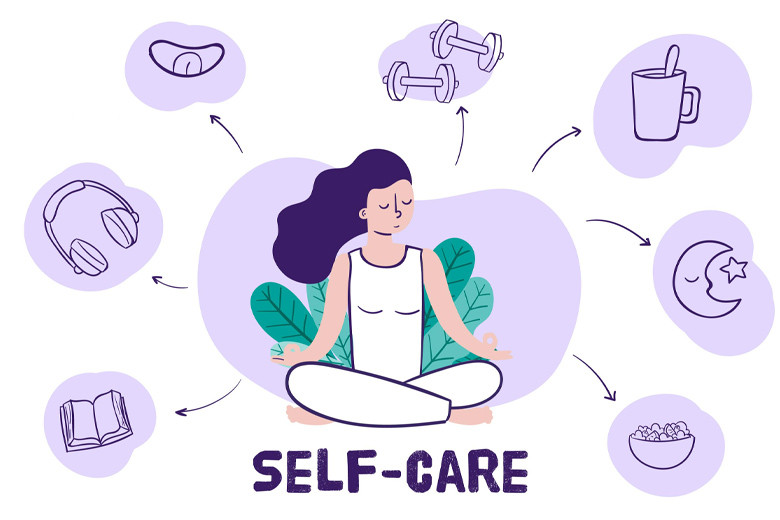
Self-care is very important. Here's why you need to invest in YOU! |  Goodhomes.co.in

7. Sharpen the saw

Self care is a necessity not a luxury. If you spend all of your time sawing down trees your saw will become blunt. If you don’t take time to sharpen your saw the trees will take longer and longer to cut down. We need to keep our minds sharp by resting and recovering effectively and by initiating good self-care.

Growing Healthy Habits - CrossFit Leyland

Keep engaging in the same habits and you’ll get the same results

Engage in different habits you’ll get different results

Be productive everywhere!

Let me explain just what I mean by being productive!

The problem when I say ‘be productive’ is that most people immediately start to think about being productive at work, or maybe at study. But for me that misses out whole other parts of our lives where it is great to be productive.

You may think I’m mad when I say that we need to rest productively. Surely that doesn’t add up. Surely the point of resting is to be not productive. Well, maybe that is so in terms of how we think often think about rest. But how many of us try to rest, relax, and recuperate only to find our minds drawn back into what needs to be done in others places? How many of us try to rest in ways that aren’t helpful… or productive.

Let me give you an example of unhelpful rest….. I love to ‘rest’ by drinking a bottle of red wine …but ….I pay for it the next day. The rest I engaged in wasn’t productive. Yes it helped me switch off, it did help me relax. Alcohol does that. But was it productive? Now this is not a binary. It’s not as simple as – some things are productive (or helpful) and some things are not. In fact Professor David Nutt in his book ‘Drink?’, while being clear that there is no safe drinking limit (alcohol is for the most part not good for us) we all have a point where we get the benefits from it without the negative effects the following day. My point is about 2 small glasses of red wine. I feel relaxed and have no ill effects on my sleep or the next day. The problem though is that after 2 glasses of wine it’s so easy to have a third or fourth! Inhibitions and control obliterated – full-tilt wine drinking!

That’s my nemesis anyway. Yours may be different. You might ‘rest’ by engaging in social media and that is fine. I love social media. But, like the alcohol example, once you start mindlessly scrolling and not actually mindfully engaging you will ‘come up for air’ half an hour or more later and feel cheated. I know, believe me, I know!

We need to engage with our rest so that it’s productive. We need to plan what we are going to do and then engage in it mindfully. All that simply means is become absorbed in it to the exclusion of everything else so that we can switch off to all of the other things going on – take a rest from the rest of life in a way that is not detrimental to us later. Give ourselves some head space. Do something that enriches us not takes more from us. I’d argue that overusing social media (mindlessly scrolling), over eating, drinking too much, watching just whatever happens to be on TV rather than carefully choosing something… all have a negative consequence.

And that’s the thing with self-care. In fact that’s the thing with any action. There will be a consequence. This is why we have to personalise our self care. If you are happy with the consequence of your action (I mean truly happy!) then keep doing that. If you feel any sense of guilt or regret then you probably aren’t happy with the action. So change the action. Keep engaging in the same habits you get the same results. Change the habit you get different results says James Clear in his book ‘Atomic Habits’.

There was a study I read about some time ago. The researchers explored the difference between people who planned their weekends and then engaged in the activities they had planned and people who just did whatever came to them and drifted through the weekend. They found that people who had planned their weekends and did the things they planned felt a sense of achievement and felt rested (productive rest) while those who drifted mindlessly through the weekend felt frustrated that their weekend was nearly over and wondered what they’d done with the time (negative rest). The fascinating thing was that when they looked at what each group had done they had largely done the same things. Yet the planners had less of those Sunday night, back to work tomorrow blues, because they had productively rested.

Planning, as I say time and time again, is everything. Make a plan, deliver on the plan, repeat!

Hot Wax!

If you’ve heard me talk about self-care for well-being and productivity before you’ll have heard me say that self-care is about more than just bubble baths and candles…. Because it is! But…..

It sometimes is absolutely about bubble baths and candles!

I was overjoyed to find out about a new local venture in Newcastle – Hot Wax. So, I hooked up with them to have a look at their candles which are made of soy wax. What’s that you may ask!? All you probably need to know is – as you’d imagine – it’s made from soybean oil. There are ‘green’ benefits to using soy wax. It’s made from plants, it’s a renewable source, it is clean burning so doesn’t release toxins, and soy wax candles burn 40-50% slower than paraffin wax candles so they are good for your finances. Who would have thought!

Hot Wax sent me a Eucalyptus and Rosemary candle to try from their range of hand poured candles in a jar.

Eucalyptus is well known for its health benefits and is a prized fragrance of master perfumers all the world over. It has a fresh clean aroma which is sometimes described as minty, woody or citrusy. What’s not to like! And then you add in Rosemary! Magic. And it is. The candle smells great and fills the room with fragrance.

A study at Chulalongkorn University in Bangkok put some science behind the magic when they found that there were benefits to inhaling the gorgeous smell of Rosemary that produced beneficial effects on mood! Northumbria University in the UK found that Rosemary improved contentedness. Being in good mood and content is something we’d all like to strive for as an outcome of our self-care!

So, you see bubble baths and candles do have their place in your strategy! What better thing than on a Friday night lighting a candle, putting some quiet music on, and clearing you head ready for the weekend. (Or any other night, or time of day, for that matter!)

Give Hot Wax a try and indulge in an olfactory experience! Or put another way – light a candle and smell something awesome ….and drift away!

Trying to do a bit….

It’s really difficult to figure out where to buy things for the best. Companies sometimes aren’t what they seem. How do you factor in all of the costs for a product? How do you figure out if a product is ethical or the company that produces it is ethical? And why am I talking about this on my self-care page?

Well, I think that self-care is rooted in values. Self-care is not selfish. Looking after yourself first is important but once you have that sorted then you need to think about looking after other people and things. The planet is high up on the list of things I want to look after. So as self-care, I feel, is about living a life that aligns to your values I want to do what I can to align what I can to my values as closely as I can. This is not going to be perfect and is a work in progress… so before you start with ‘ah but, yes but….’ bear that in mind. I still eat avocados. But have it under review while I figure what, if anything, I can do. They are really good for you (and lush) – so what do you do?

As ever my maximum is small steps over a long period of time have big impacts. So far I’ve started having my milk and eggs delivered by a local producer rather than buying from the supermarket… and a few other things. Let me tell you

My strategy is this. Buy local from independent retailers or producers. Then, buy from national independent retailers and producers. Then, buy local from larger organisations. Then buy national from larger organisations. Then global if ya gotta!

This lead me to discover a coffee roaster in a little village close to where I live. Fika! Matt and Lynn are the founders of the company because… as they put it…..

“we’re mad about coffee.”

They also go on to say “We also have great respect for the land and the people that farm it to bring the best quality speciality coffee to the UK.  Fika means a social break in Swedish and our brand is inspired by Swedish folk art but our love for coffee actually originated from a six-year stint in Melbourne. We’re based in the fine cathedral city of Durham and are super excited to open the city’s first speciality coffee roastery so if you’re ever in town, please drop by or call in advance for a special sneak peek into the wonderful world of coffee roasting.”

The coffee is great! My favourite is Fika Brasil – Bom, Jesus .

And I’m currently trying the Fika East Timor – Cristo Liuria – which is devine. Click the link to find out more about East Timor and it’s coffee growers. It’s the kind of information that Fika provide alongside selling me coffee that I love as I can find out where my coffee is coming from and the positive impact (however small) my purchase may be having.

There’s also some great advice on the Fika blog about making your brew. Try this – To plunge or not to plunge?

So while I’m not exactly buying local – in the sense the coffee comes from Brazil and East Timor – I’m buying from a local company that strikes me as being interested in the growers with an ethical eye. My purchase is also stimulating the local economy rather than lining the pockets of some corporate giant. That makes be feel pretty good. Oh… and Matt and Lynn seem to be lovely people! That helps as well!

A little gem!

I came across this book referenced in another book and then did a little digging to find out more about Thomas Mitchell, Farmer. Because his book ‘Essays on Life’ written in the early part of the 20th Century is a little gem – full of words of wisdom.

[From: https://thomasmitchellfarmer.wordpress.com/]
Just before the First World War destroyed a generation and divided Europe for almost a century, a farmer in a remote part of Scotland sat down at the age of 43 to write his thoughts on how to live a good life. He records the values of his time and his own take on them. His is now a voice from the past that demands our attention, not necessarily to emulate it but to encourage us to consider what we have lost and gained.

He was Thomas Mitchell.

In the first essay in the book he illuminates us on the Art of Living. Because it is an art! I feel, and always have, that we are creative animals. Art is unique to us as a species and packed full of meaning for life. And life is embodied in art. Artistic endeavour and its output tells us so much about who we are. So there is an art to living.

Usefulness

Mitchell suggests that there are some key things. The first is usefulness. He says that we all have a purpose – something useful we can do that contributes not only towards our livelihood but also to our fellow ‘man’. Even when we do not choose the work we do he suggests we must do it to the best of our ability. If we carry the spirit of usefulness into daily work the this lends a dignity to work that imparts pleasure.

Happiness

The second element to the art of living is happiness. This is something of a current theme for me [more here] as I feel happiness in a particular form is liberating and forms the heart of a well lived life. But happiness is not to be found in things or in the excitement of ‘this or that’ but rather in the steady metre of life. The living of a good life day by day is one that resonates with values of humility, common good, and the joy of the current moment. There is a desperation that we cling onto that we hope will bring us happiness in living for future events rather than living now. Mitchell suggests that the secret of a happy life is ‘the art of extracting comfort and sweetness from every circumstance. The world is to us’, he says, ‘is pretty much what we make it.’ Are we a person of things rather than experiences. Are we a person of ‘it will be better tomorrow, it will be better when I’ve…..’ or are we a person of ‘what can I make of this moment.’

Take care of yourself reminder handwriting on an isolated sticky note

Character

Mitchell goes on to suggest that character, the distinctive mark that gives you your personality, is crucial. We are influenced he says by what we inherit but this only gives us a tendency towards a way of being and doesn’t define us. Our infancy and childhood shape us and the habits we form throughout life shape our essence. One element of character he points to is the ability to speak for yourself and think for yourself. Not to simply be buffeted around by the opinions of others. We should be tolerant of the opinions of others and reflect on them but ultimately make up our own minds on the right course of action. I am led back here to the roots we establish in the world by virtue of our values. They will give us our compass.

Self Control

The penultimate principle of his Art of Living is self control. Mastery of self and particularly of the emotional self I have always felt is crucial. This is something I talk about a lot and is Daniel Goleman’s idea that we can be competent and effective ‘pilots of our lives’ if we are emotionally intelligent and therefore exhibiting self control. Every pleasure, Mitchell observes, that is pursued to excess becomes harmful. And here we are in an age of far reaching mental unrest because, I feel, we can indulge ourselves in all manner of things thrown at us in the name of capitalism and consumerism. Pleasures, he goes on to say, are essential but if we exercise no self-control towards them they may produce ‘ill-health, misery, and weakness, in body or mind’. How true.

Self Respect

The final element is self respect. This to me taps into the foundation of self-care. You must have respect for yourself so that you want to take care of yourself. It is of little value if you show your respect for others and neglect your respect for yourself as, eventually, you will not be available to the other people, either physically or emotionally, to show them the respect they also deserve. This starts with self-respect not with respect for others – that comes second. Mitchell notes that self-respect is a regard for your own name and reputation. If we are to maintain our reputation we have to strive to do things at work, at home, or with friends, (or anywhere!) as well as we can and that starts with being ready for the task and being ready for the task starts with self-care.

You can buy the book here – Amazon
Or here through the publisher Vagabond Voices

Finding success

Image result for success

I recently came across a podcast that shared some words of wisdom from 15 Secrets Successful People Know About Time Management, by Kevin Kruse. I’ve picked a few to write about that i thought had resonance for me and could be applied to the sort of things I think about in relation to productivity.

Time is an asset

Time, Kruse says, is our most valuable and also our most scarce asset. I like to think of time like money. You can either invest it, spend it, or waste it.

Investing time means using your time to take care of yourself – investing your time in you. Spending your time means giving it up in the pursuit of undertaking a task – maybe something you get paid for doing or something you have to do that you don’t get paid for. You have to find harmony between these two things – invest sufficiently so that you are not overspending. A lack of investment and overspending of time leads to negative feelings such as feeling overwhelmed. When we invest in rest we prepare ourselves for the exertion of spending our time. Just in the same way as when we invest (or save) our money we prepare ourselves for spending it.

The other thing we can do with time is waste it. Do I have to explain that one? I don’t think I do. But I would say is that when we do waste our time we’re left feeling bad about things because we think of all the things we could have done. Just to be clear though when I think about wasting time I don’t mean time we spend in rest even if that is binge watching Netflix. If you have set your intention to that and you have engaged with it and it is restful then that is an investment. It’s more the mindless scrolling through social media or drifting aimlessly through a whole weekend that I mean.

Make sure you plan.

Plan your weekend then engage in it. Plan your working day then engage it. Get into micro planning. Have a daily startup plan. Have a working day startup plan. Have a working day closedown strategy. Plan these things to make best use of your time. Assuming you sleep for 8 hours a day you have 960 minutes each day to go at. Make sure you invest or spend them all and don’t waste any. You don’t get them back!

Work from your calendar not a to-do list

Image result for calendar

This is something that David Allen also says. He says to do lists don’t work. We tend to make them when we’re out of control and we are never sure that everything is captured on them. And… we never get to the end of them before moving on to something else, hitting a crisis, and writing another to-do list. Kruse says that 41% of the jobs on a to-do list don’t get done.

Stick strictly to a schedule. Everything you need to do goes into your calendar. Everything. That way you can plan every day. I do this in the morning at 8.30 and on an afternoon at 4.30 and then a bigger planning session on a Friday to plan the week ahead (and sometimes further). After you’ve planned you pick up whatever task is in your calendar at whatever time and do it knowing that you will have put the right thing to do at that point in your calendar. The less choice points you give yourself the less you will procrastinate. Never (unless you are in planning mode) think what am I going to do next. Plan then do. When you are doing this….

Batch your work in themes

Image result for writing

The productivity literature refers to this as ‘chunking’. Put tasks that require the same set of mental attentions together. Here’s what I do. I thought about my job (I’m a lecturer and writer). My work breaks down into three sets. I am always either talking (lectures, meetings, conversations with colleagues), writing (blogs, lectures, book chapters, video scripts), or I am reading (minute notes, books, research papers, text books). I try as far as I can to group tasks that fall into these groups together. Once I switch on the parts of my brain it takes to do these things, the longer I can keep them switched on, the better. When I read I start slowly but the longer I read for the faster my reading speed becomes. Chunk similar tasks together as much as you can.

Say ‘No’

Image result for no

Saying ‘yes’ to something means you will have to say ‘no’ to something else. There are only so many minutes in the day. The problem is saying ‘yes’ makes us feel good! But just because someone knocks on your door doesn’t mean you have to open it. While I think we should all work hard and step up when there’s something to do – don’t go jumping in. Think. Ask yourself – am I a good person to be doing this – does it fit my skill set. Ask, does this support my immediate goals – what do I need to do that needs to be done – does this new thing fit in with those things or is the time frame long enough that I can get to it after I have achieved my immediate goals. Don’t just say ‘Yes’ then think about these things! Because you’ve already said ‘yes’ so it’s too late now! Act in haste repent at leisure as my Mam has often said to me when I’ve just acted in haste!

Spend you time wisely.

Say ‘no’ when you should (and when you can ….sometimes we just have to suck it up). Plan your time meticulously – it’s precious – and make the most of every minute by chunking similar tasks together when you can.

Image result for success

Find success!

Reworked – Let me tell you about the new book!

Excited to be telling you that today (Friday 15th January 2021) the new book is out! Strictly speaking it’s a reworking of the other book – a remix if you like for the music people among you!

We wrote a book (myself, Lisa and Steph) and we aimed that book at Social Workers because we are all social workers and wanted to provide some sort of ‘toolbox’ to social workers to help them with their self-care, wellbeing, and productivity, because we knew for ourselves and from our social work friends that social work takes its toll.

But, what we and the publisher noted, as we were finishing the book and it was set for publication, was that the advice in it was relevant to so many more people than just social workers because many people in many workplaces experience work based stress and indeed many people experience the stresses of life overall. The book would work for everyone.

So, the publisher, Critical Publishing, had me re-write the book for the general market as the launch of their Business in Mind series – and there are more books to come in that series! Exciting!

So there are two ‘How to Thrive….’ books. How to Thrive in Professional Practice is the one aimed at Social Workers and How to Thrive at Work is the one aimed at everyone (and social workers would find it useful too). So buy one or the other – whichever suits who you are – but don’t buy both as they are very very similar.

I would say though there’s a very nice chapter in the How to Thrive at Work one on Rest which isn’t in the first one…. and even though I say it myself it’s a very nice addition!

Whichever you were to buy – I hope you get something from it!

Happy days!

Happiness – the elusive goal!

Happy Christmas we have all just been saying to each other. And then Happy New Year. We’re obsessed! Once a year we say Happy Birthday to each other as well. Clearly ‘Happy’ is very important to us. Yet it alludes us – or at least its elusive more often than we’re like it to be. Daniel Levitin in his book ‘The Organized Mind’ says that generally we think life should be easy, so, when it proves difficult we don’t like it.

‘Life’ (in all its guises) is largely difficult and takes some ‘doing’ and every so often we get that little pocket of happiness. So, if there are little pockets of happiness then the more we can find them then the more we can be happy – and happy people get more done – more in their work lives and more in their personal lives

Sometimes we look for happiness in things – but that’s not where to find it. Advertisers and sellers of things wouldn’t tell us that though. ‘Buy this’, they say, ‘and it will make you happy, have the perfect life’ etc etc. This comes with a ‘Halo Effect’. The thing you buy is wonderful. The new TV, the new car. But after a while it becomes just the car you get from A to B in or the TV you watch Masterchef on. Oh – except you are now in debt possibly paying for it for the next ‘however long’ and now you’re not happy anymore!

Mihaly Csikszentmihalyi says we have to find joy in everything in order to create flow. Flow is that ability to move effortlessly from thing to thing and get things done. But he means joy in everything – not just that new purchase. Joy in the washing and ironing, joy in the reporting writing. By doing this we will find flow and flow leads to people being happy.

We find happiness in the most unusual places sometimes

Sometimes, I’d argue, we get joy in difficult and problematic things. In Alex Pang’s book ‘Rest’ he talks about how difficult things – things that we are trying to master but are difficult – are actually restful and good for us – something that is mentally absorbing, that feels difficult to do, is deeply satisfying – such things – difficult things – hard work – make us happy.

In a Jewish Parable there are two men arguing over some knotty issue in the Torah. God gets annoyed so comes down from on high and says, ‘I’ve listened to you two argue about this for 20 years so let me tell you what it means’. ‘No’, they say, ‘what right have you! Clear off!’ They delight in the difficult thing – they are thinking, striving, and making a connection with one another.

I find that I am a person who finds great joy in the process rather than the outcome. Stoic philosophers say that some things are outside of our control, but we still need to do them. Some things are completely under our control and some things are not fully under our control, but we have influence. The influence is where we have control.

The secret, they would tell us, is to focus on the bit you can control and as Massimo Pigliucci (in a video presentation I watched recently on iai.tv) said “bet your happiness on those things”. We have no choice other than to take the stuff we can’t control just as it comes, because, well, we can’t control it. We also have limited control over the outcome of things. I can control when I write a blog, what I write about, what words I use, and take great joy in the doing. But I very little control over how you receive it. That is dependent on so many things, like, what you already know about the subject, what you think of me, whether you agree or disagree with the idea. So I set my happiness on the doing of it (I am currently very happy in the doing!) and not on how many ‘likes’ it gets, or how many people read it…. although I do hope you enjoy it. The pleasure and happiness is in the doing not in the plaudits.

So we need to find our happiness in every moment – the work we do – the study we do – the fun we have – tidying things up – we need to find joy in all of these things. Where do you find your joy and where do you find your happiness I wonder? And here’s the thing – if we think that everyone else has found it and we haven’t – then – sorry – for the most part they haven’t either.

Sometimes those difficult things will be at work, some will be home, some we’ll create all on our own by not being in charge of ourselves – how we approach things – how we set our minds to what is to do

Daniel Gilbert in ‘Stumbling on Happiness’ says that we come into this world wanting to control things and we go out the same way – and that research suggests that if at any point during our arrival in, and departure from, this world, we lose our ability to control things we become unhappy, feel helpless and hopeless and can become depressed. I hate to use the ‘P’ word again but planning is the key. Bringing the future into the present so we can have a look at it and control, I’d suggest, is the root to happiness. Delight in the doing!

We look into the future so we can make predictions about it and control it – that’s where happiness is.

Priority

It’s taken me a while but I’ve finally finished it. I started reading Robert A. Heinlein’s ‘The Moon is a Harsh Mistress‘ in July of this year. It was an interesting choice as I don’t usually read fiction and I’m not a fan of sci-fi particularly. But I’ll have seen some cool character in a film reading it and will have ordered it on Amazon in the blink of an eye. It is, by all accounts, a classic – and I would agree. For all it has taken me a while to read that was more because I needed to read lots of other things while working my way through it. It is indeed a good yarn. It’s a book of revolution.

no procrastination concept – do it now

But what has this to do with self care and productivity I hear you ask? Well, it threw me this line towards the end. “When faced with a problem you do not understand, do any part of it you do understand, then look at it again.” Brilliant! We are often confronted with things that are challenging, things we don’t quite get. Tasks that seem too big, that don’t match the skills we have. But there is often a bit of it we can do. Do that bit.

My favourite ‘quote’ about procrastination is that it is the art of ruining your life for no apparent reason. Sometime we put off and put off because the task seems too difficult and we don’t quite get some aspects of it. So, we don’t do any of it! But if we just tiptoed into the bits we do understand and could do, then maybe the difficult bits would seem, well, less difficult. Sometimes I find in making a start and doing something the next step, that I hadn’t spotted, reveals itself. I don’t understand something so I do something with what I do understand and in doing so something falls into place and the next thing seems more understandable or more achievable.

I find this a lot when trying to understand some complex idea or process. It all seems too difficult. But if I, for example, read the first thing I come across – take from it what I can, and the read the second thing. The second thing sometimes makes more sense. And then I move onto a third thing and that makes more sense than the first two things and then eventually I’m all over it. This relies on another favourite idea of mine – small steps, over a period of time, lead to big changes.

What’s stopping you from starting?

Make a start

You never know where you might end up!

Night Owls?

I recently did a Facebook Live on Sleep – which is here – and I was asked afterwards whether being a ‘night owl’ was damaging to your health. My instinctive reaction was ‘yes’ because I’m always telling people that the best sleeping pattern is to be in bed by about 10.30 and to rise at 6.30. I genuinely believe this on a personal so my answer is ‘yes’. The reason I believe this is because of what I’ve read. But a simple ‘yes’ is simply not good enough. So, as it’s been a while since I’ve read about sleep, I had to go back to the literature to find out a better answer than ‘yes’. Although the answer is still ‘yes’…… kind of.

As you may be aware we all have a circadian rhythm. An internal clock that keeps everything ticking over nicely, driven by the chemical and biological rhythms of our bodies.
And it is true that some of us have a propensity towards being morning larks and some of us have a propensity towards being night owls. That’s the way our circadian rhythms are. The other factor we need to consider is that we need about 8 hours of sleep. Now – from what I read – I’d say – the 8 hours is a little more important than the timing of when we start and end sleep. To a degree if you are a night owl and like to go to bed at 12 then this is ok. You are programmed to go to bed at that time by your circadian rhythms. I’m not sure I wholly agree with this – I think we artificially keep ourselves awake beyond a sensible time to retire – but I’m going to go with it! So – if you are a night owl and want to go to bed at 12 then fine. But – and here’s where it starts to get interesting and where the problem lies – you still need 8 hours sleep. So that will take you to 8 a.m. The problem with this is that for the majority of people sleeping until 8 is not an option. Most of us start work at 9 (or earlier) and have to travel to work. So, at best, your morning, starting at 8, is going to be a hurried affair with little time to take stock of the day, have breakfast, and emerge into the day slowly and deliberately.

A study by Northumbria University in 2018 found that it is such social factors, or the choices that people engage in when being night owls, that causes some of the problems. They found that people who go to bed later tend to have unhealthier diets, consume more alcohol, sugars, caffeinated drinks and fast food than early risers. You are maybe more inclined to drink coffee later because all of the other signs that your body relies on to get to sleep, for example it being dark, are pushing you to go to sleep – but you don’t. Also if you go to bed at 12 and need to be up at 6 then you have lost two hours sleep so maybe you then drink more coffee (or caffeine) to stay awake during the day. When tired and stressed we tend to grab high sugar high fat snacks because these are easy sources for our bodies. I’m confident that at 11 p.m. you are unlikely to think – ‘tell you what, I’ll rustle up a salad!’?

In the Northumbria University study night owls consistently reported more erratic eating patterns as they had a tendency to miss breakfast and eat later in the day. Probably, I imagine, because they didn’t have time for breakfast with getting up later or were tired and lacking motivation to make something. Fatigue has a huge impact on motivation. Also, possibly as a consequence of erratic diet, the diet of night owls was found to contain less grains, rye and vegetables and they ate fewer, but larger, meals. Morning larks, interestingly, eat slightly more fruit and vegetables per day.

This could explain why night owls have a higher risk of suffering from chronic disease. Eating late in the day was linked to an increased risk of type 2 diabetes because circadian rhythms influence the way glucose is metabolised in in the body. Night owls often eat close to going to bed which increases blood glucose levels just before they go to bed which could negatively effect metabolism as this is not in tune with biological processes. People with an evening preference were 2.5 times more likely to have type 2 diabetes than those with a morning preference.

Why is 8 hours important? In his book ‘Why We Sleep’ Matthew Walker explains that we have a pattern to our sleep. At the start of the night our sleep is predominantly NREM (Deep Sleep) heavy and at the end of the night (or early morning) our sleep is REM heavy. Both have important functions that we can’t afford to miss. So, assuming whatever your bedtime is – let’s say you are definitely a midnight person (bear in mind I’m not convinced by this argument – I still say 10.30 is the best time for us biologically!) and you stop up late till 2 in the morning, your body started to try and do what it needed to do at 12, so you have lost what it was trying to do between 12 and 2. You’ve lost that NREM sleep that does a lot of sorting out of memories before consolidating them.

One thing that night owls do is sleep less during the week and then catch up on a weekend. Walker is clear. What you have lost as a consequence of the shortened nights sleep can not be caught up by sleeping for longer on a weekend. Not only that but you then end up losing lots of hours from your weekend which could have been used more productively and can put you further out of step with the society you are living in.

One thing that is worthy of consideration though, if we accept that it’s ok to be a night owl and sleep 12 till 8 or 2 till 10, or whatever, is that if this works for you then maybe we need more flexible working and social arrangements so that night owls are not placed in this position of their biological chemistry being badly aligned to social expectations? Personally I’m not convinced that staying up till 2 in the morning is good for you. But maybe the problem is that night owls have to live a life of misalignment?

There is a well research health impact. Shift work, which often places people into the night owl bracket whether they like it or not, is the only non-chemical item on the American Cancer Society’s carcinogens list, and other evidence shows that night owls can experience weight gain and diabetes because of diet, and are more susceptible to depression and psychiatric disorders. Now this is an interesting conundrum. Usually we associate a poor sleep pattern with being a symptom of depression and poor mental health. But actually, Walker says that we need to start exploring if it is in-fact poor sleep that is a cause of these things. The reality is it probably works both ways.

This is not fatalistic though! If you are a night owl and you want to stick to being a night owl then so be it but be conscious of what you can do to mitigate any negative factors – in essence that’s what all self care is about.

Make sure that you get 8 hours of sleep a night. I’m convinced this is a mush more decisive factor in your well being than whether you go to bed at 10, 11 or 12. This will give you a problem though depending on what time you need to be up the next day. But it is crucial as you can’t catch up on what you lost at the weekend.

So, second, don’t try and catch up on weekend! Get 8 hours and get them at the same time day in day out!

Next, watch what you eat. Be particularly careful what you eat late on a night and don’t eat just before you go to bed. Also, try and give yourself some space on a morning to eat breakfast. Watch your choices throughout the day. It seems to me that this is a significant factor rather than simply the time you go to bed. Are you making poor choices because you are tired because you are not getting your 8 hours because you went to bed at such a time that you couldn’t get them?

If you want to change your sleep pattern it is doable I believe. But, like everything, it takes time. There are idea in these blogs that might help:
How do you sleep?
And Sleep….
They both contain the same information

The secret to success is not to suddenly try to change from going to bed at midnight to going to bed at 10! That’s not going to work and will lead to frustration. Try to adjust your going to bed time by about 20 minutes a week. Crucially go to bed at the same time every night and once you have adjusted to that try another 20 minutes.

Episode 2 of How to Thrive is all about sleep